
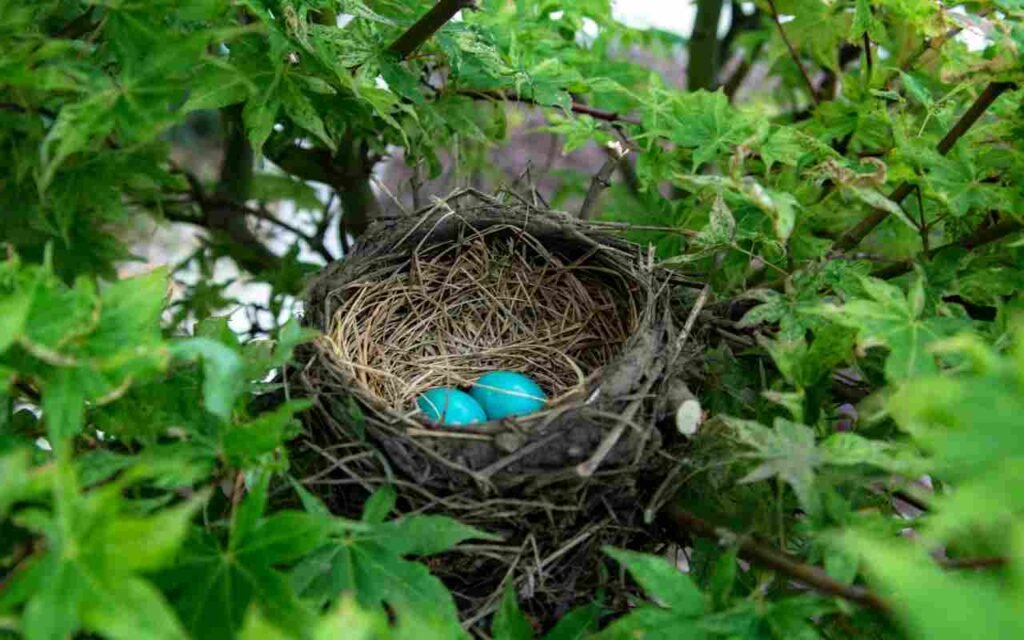
Creating a garden where birds choose to raise their families requires more than simply installing nest boxes and hoping for the best. While preparing your garden for nesting birds establishes the foundation, encouraging birds to nest in your garden is fundamentally about earning their trust.
Birds assess potential nesting sites through multiple sensory channels, evaluating safety, food availability, water access, and shelter before committing to what represents their most vulnerable life stage.
This article answers the critical question: “How do I make my garden the most attractive nesting site in the neighborhood?” by examining the specific environmental conditions that persuade birds to select one location over countless alternatives.
- Birds choose nesting spots based on safety, food availability, water, and proper shelter.
- Native plants attract more insects, which are essential for feeding nestlings.
- Layered landscaping with trees, shrubs, and ground cover supports more species.
- Moving water sources act as visual and auditory lures but must be cleaned regularly.
- Mix natural nest sites with correctly sized and well-placed birdhouses.
- Offer safe nesting materials like twigs, pet fur, and natural fibers.
- Protect nests with thorny shrubs, pole baffles, and limited predator access.
- Leave untidy corners for ground-nesting species.
- Minimize human and pet disturbance, especially March–July.
- Prep early so birds discover your garden while scouting in late winter.
Watch: How to Encourage Birds to Nest in Your Garden
Watch this explainer video to understand how to encourage birds to nest in your garden, from ideal nesting spots to the best materials and cover.
Show Transcript
0:00
So, you’ve got the bird feeder up. You see birds grabbing a quick snack, but they never seem to stick around, right?
0:06
Well, if you want to go beyond just being a pit stop and actually get birds to raise a family in your yard, you’re in exactly the right place.
0:14
Let’s dive into how to turn your garden into a true nesting hot spot.
0:19
There’s a big difference between being a snack bar and being a home. On one hand, you’re just a temporary meal. On the other, you’re a place where a bird feels safe enough to make a real commitment.
0:32
Our goal here is to convince birds that your garden is the best, most resource-rich spot in the neighborhood to raise their young.
What Birds Look For
0:39
So, what’s the secret sauce? What makes a bird pick one yard over another?
0:44
It’s not random luck. Birds make very specific choices based on what they see and feel in your garden.
0:56
Think of it as bird real estate. Birds are tiny feathered home buyers, scouting for the perfect neighborhood.
1:07
They’re picky. They want a place where raising chicks is low risk and safe.
Pillar One: Habitat
1:17
The first, and most important step, is building the habitat.
1:20
Before buying a cute birdhouse, you need a solid foundation. That means providing the right food and structure.
1:33
Here’s a key fact: baby birds don’t eat seeds—they eat insects. Caterpillars are the number one food source.
1:39
Native plants support those insects. A single native oak tree can support over 500 species of caterpillars. That’s an all-you-can-eat buffet for nesting birds.
1:52
Planting natives like elderberry, dogwoods, and coneflowers will attract insects—and therefore nesting birds. Ornamental plants from big box stores? Birds might visit, but they won’t find what they need to nest.
2:09
It’s not just what you plant—it’s how.
2:12
Create different layers of habitat. Some birds nest on the ground, like sparrows. Cardinals love low shrubs. Others want high canopy spots.
2:37
Layered landscaping opens up real estate for multiple species to move right in.
Pillar Two: Amenities
2:45
Once the foundational habitat is built, it’s time to add amenities—things that make your garden irresistible.
2:57
Here’s a fun fact: birds don’t just use their eyes when choosing a home. They use their ears.
3:04
The sound of moving water is like a neon sign saying, “Safe water source right here!”
3:18
A stagnant birdbath won’t cut it. Use moving or dripping water. Keep it shallow—an inch or two deep is enough.
3:29
Place it near shrubs. Birds need a quick escape route if predators appear.
3:38
Birdhouses are another key. You can buy a beautiful handcrafted nest box, but the wrong location means it will stay empty.
3:50
Face the entrance east or southeast to avoid the hot afternoon sun. Mount it at the right height for the species you want. Never put it in the middle of an open lawn—privacy and cover are essential.
4:17
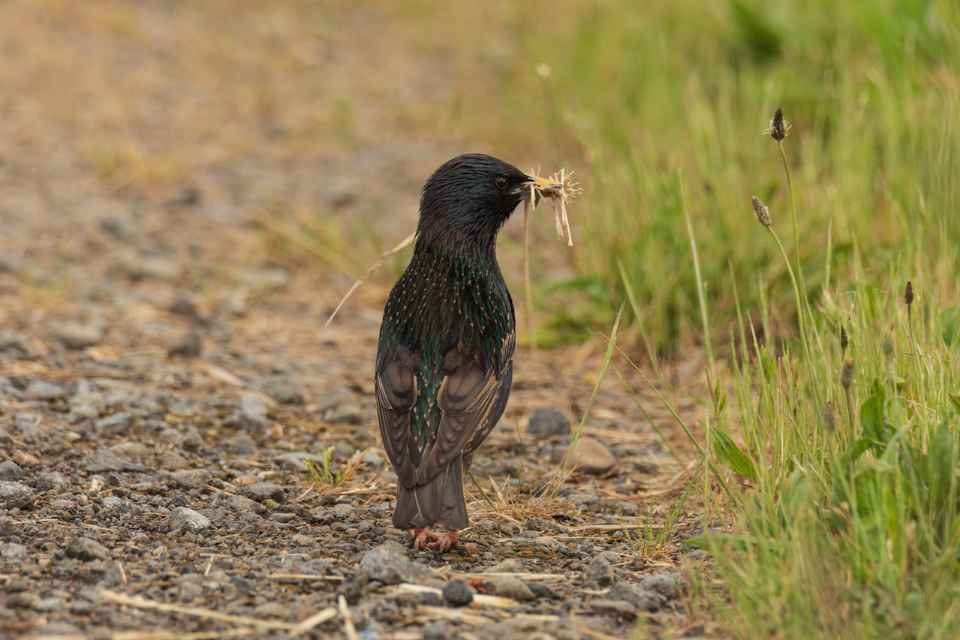
Offering building materials gives birds a head start: small twigs, grass clippings, pet fur. Avoid dryer lint, plastics, or long strings—they’re dangerous.
Pillar Three: Security
4:37
Habitat and amenities are great, but survival depends on security.
4:50
The biggest reason nests fail isn’t weather or food—it’s predators: cats, raccoons, snakes, even jays.
5:02
A perfect garden won’t keep birds if it doesn’t feel safe.
5:08
Your security plan is simple: smart landscaping with thorny shrubs like roses or barberries, predator baffles on poles, and multiple escape routes.
5:31
Timing matters. Birds scout territories early—often in late winter. Get your garden ready in February or March: clean old nests, prep water sources, prune plants before they start building.
Bringing It All Together
5:49
We’ve gone through transforming a quiet garden into a vibrant ecosystem where birds not only visit but raise families.
6:01
The formula is four pillars:
- Native plants for baby bird food
- Layered landscaping for shelter and options
- Safe water and well-placed nest sites
- Predator protection for security
6:22
Focus on those, and you’ll succeed. It’s not about decorations or fancy feeders—it’s about ecology.
6:28
As one quote says: if you build the right habitat, the birds will find it. Your investment pays off with the joy of watching new life begin in your own backyard.
6:41
So, the final question: which bird family will be the first to sign the lease in your beautiful new neighborhood?
Security First: The Psychology of Nesting
Birds possess highly sophisticated predator-avoidance instincts that drive nesting site selection. According to research published in Avian Conservation and Ecology, nest concealment significantly reduces predation during the nestling stage of grassland birds.
The study found that overhead visual concealment had a significant effect on daily nest survival rates to predation, suggesting that aerial predators play an important role in shaping ground-nesting birds’ breeding success.
The perception of safety matters as much as actual security. Research in Proceedings of the Royal Society B demonstrates that pied flycatchers can perceive differences in mammalian nest predation risk through visual and olfactory cues, and they avoid nest sites manipulated to reflect predator presence.
Birds breeding in areas with higher perceived predation risk nested four days earlier and laid 10% larger clutches, demonstrating how predation risk fundamentally alters reproductive strategies.
The critical factor is what ornithologists call the “predator-free vibe.” Birds often reject nesting sites where they feel exposed or vulnerable, even when predators are not actually present. Perception of safety strongly influences their choice, sometimes more than the physical characteristics of the site itself.
In one study on nest site selection published in PMC, dusky warblers chose safer sites farther from the ground and in more isolated bushes when predatory Siberian chipmunks were abundant. These locations came with higher exposure to cold winds, showing that perceived safety often outweighs other environmental costs.
Gardens that encourage nesting provide protective cover within 10-15 feet of potential nest sites. This distance allows parent birds to perch and scout the area safely before approaching the nest, and provides escape routes if predators appear. Dense shrub layers, evergreen plantings, and strategically placed brush piles create the structural complexity birds instinctively seek.
Research on Eurasian curlews published in Journal of Avian Biology found that birds nesting in densely vegetated areas may sacrifice the ability to easily detect predators in favor of superior camouflage, employing a “sitting tight” strategy when threatened.
The visibility from the nest matters tremendously. Birds choose sites where they can monitor approaches from multiple angles while remaining concealed from aerial and ground predators.
According to research published in Frontiers in Ecology and Evolution, magpies and grey magpies selected optimal nesting sites characterized by tree heights of 25 meters and tree coverage below 60%.
Nesting at greater heights reduces detection chances by ground predators such as snakes and rodents, while nests above 25 meters become vulnerable to aerial predators.
Creating this security-focused environment means resisting the urge to over-prune and over-tidy. Leave lower branches intact on trees and shrubs to provide multiple perching levels.
Plant evergreens like junipers and hollies that offer year-round concealment. Establish visual barriers between nest sites and high-traffic areas of your property to minimize the perception of human threat.
The Living Pantry: Insects Over Seeds
The most critical misunderstanding about attracting nesting birds centers on food. While seed-eating adult birds visit feeders throughout winter, nesting season demands an entirely different nutritional profile.
According to research by University of Delaware entomologist Doug Tallamy, 96% of terrestrial bird species feed their nestlings insects, not berries or seeds, regardless of what the adult birds consume.
The reason is straightforward: nestling development requires enormous quantities of protein and fat. Parent birds must deliver soft-bodied insects that nestlings can swallow and digest easily.
According to research documented by the National Wildlife Federation, one pair of Carolina chickadees requires between 6,000 to 9,000 caterpillars to successfully raise just one clutch of young.
Research highlighted by Audubon confirms that a single clutch of Carolina chickadee chicks can feast on upward of 9,000 caterpillars in the weeks between hatching and taking flight.
Caterpillars represent the ideal nestling food. The Institute for Environmental Research and Education explains that caterpillars are especially popular due to their soft bodies and high protein content, providing exactly what rapidly growing nestlings require.
They’re soft, easily swallowed, and won’t damage the throats of young birds. Other critical insect prey includes spiders, beetles, flies, and various larvae.
The connection between native plants and insect availability cannot be overstated. According to Penn State Extension research, many insects depend upon very specific plants for their survival because they evolved together over thousands of years.
A native white oak tree can support over 500 different species of caterpillar while providing nesting sites for birds and acorns for wildlife.
The 70% native plant biomass threshold represents the minimum necessary to sustain insectivorous bird populations, but achieving this requires planning and commitment.
Focus on keystone species that support the highest insect diversity. Oak, cherry, willow, birch, and native poplars excel at caterpillar production. Understory natives like viburnums, elderberries, and native dogwoods provide additional insect resources while offering nesting structure.
Critically, native plants provide more bugs for birds to eat, with research showing native caterpillars need native species for their own food. Non-native ornamental plants, while beautiful, have little value to insects that evolved in North America. Without insects, baby birds literally starve to death despite abundant seed sources nearby.
Visual and Auditory Lures: Water as a Beacon
Water represents one of the most powerful attractants for house-hunting birds. According to the Cornell Lab of Ornithology, birds need a dependable supply of fresh, clean water for drinking and bathing, and putting a birdbath in your yard may attract birds that don’t eat seeds and wouldn’t otherwise come to your feeders.
The sound of moving water acts as an especially powerful lure. According to Georgia Department of Natural Resources wildlife biologists, the combination of the sound and sight of moving water acts as a bird magnet, though the reasons aren’t fully understood. The movement catches birds’ eyes and suggests that water is fresh and clean. Additionally, the sound of moving water can be heard from a distance, broadcasting the garden’s hospitality to prospecting birds.
Creating this effect requires minimal investment. A simple dripper made by punching a small hole in a bucket or two-liter bottle filled with water and hung above a birdbath produces the methodical dripping sound and ripples that attract birds. Solar-powered fountains offer a hands-off alternative that creates continuous water movement without electricity costs.
The visibility and accessibility of water matter tremendously during nesting season. Parent birds visit water sources frequently for drinking and bathing, using these visits to assess the overall safety and resource availability of potential territories. Keep water sources clean and full. A busy bird bath where multiple species congregate signals to prospecting birds that the area is safe and well‑resourced.
Water placement should complement rather than compromise nest site security. Position bird baths 10-15 feet from protective shrubs where birds can escape if threatened, but not so close that predators can use the cover to ambush bathing birds. Ensure clear sight lines so birds can monitor for danger while drinking.
The 2026 insight that distinguishes truly bird-friendly gardens is embracing “untidy” corners specifically for ground-nesting species. While manicured lawns dominate conventional landscapes, ground-nesters like towhees, juncos, and some sparrow species require areas with thick leaf litter, fallen branches, and tall grass clumps.
These messy zones provide both nesting sites and foraging habitat where parent birds find insects, earthworms, and spiders. Creating one or two deliberately unmaintained corners measuring 10 by 10 feet accommodates these species without sacrificing overall garden aesthetics.
Here’s where most people drop the ball with garden water sources: they set it up and forget about it. Stagnant water doesn’t just fail to attract birds, it can actually harm them by spreading diseases. According to the Audubon, unclean birdbaths can transmit avian diseases like salmonellosis and avian pox. For a safe and chemical-free approach, see our guide on how to clean a bird bath without chemicals.
Accommodating Different Nesting Styles
Birds employ remarkably diverse nesting strategies, and gardens that support only one style exclude many potential residents. Understanding these differences allows you to provide appropriate resources for multiple species simultaneously.
Cavity Nesters
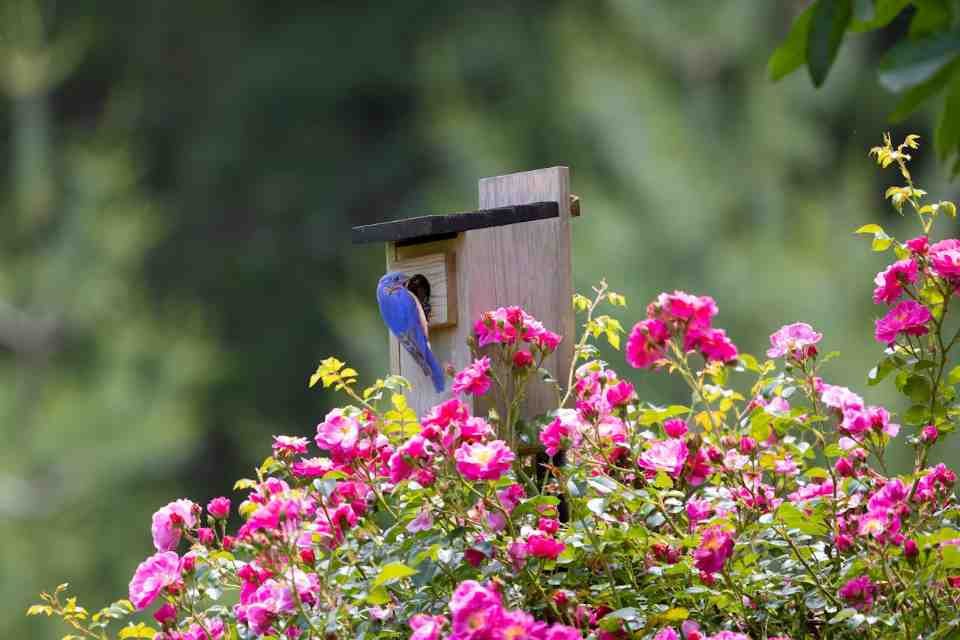
Cavity-nesting species including chickadees, titmice, nuthatches, bluebirds, and small woodpeckers require enclosed spaces for nesting. Natural cavities in dead trees (snags) provide optimal sites, but artificial nest boxes serve as valuable alternatives in landscapes lacking mature trees.
Cavity nesters exhibit strong territorial behavior, defending areas around their nest sites against other cavity-nesting species. Proper spacing of nest boxes (minimum 50-100 feet apart for most species) prevents aggressive interactions that waste energy birds need for reproduction. The entrance hole diameter determines which species can access the box: 1.25 inches for chickadees and titmice, 1.5 inches for bluebirds, 2.5 inches for larger woodpeckers.
These species typically raise a single brood per season, with incubation periods of 12-14 days followed by 15-21 days until fledging. During this time, parent birds make hundreds of feeding trips daily to satisfy hungry nestlings.
Open Cup Nesters
The majority of songbirds construct open cup nests in shrubs, trees, or on horizontal branches. Cardinals, robins, mockingbirds, catbirds, thrashers, and most warblers fall into this category. These species require dense vegetative structure that conceals nests from above and from the sides.
According to research, open cup nesters select sites based on multiple factors including foliage density, branch structure, height above ground, and distance from potential predator perches. Native shrubs with multiple branching points at 3-8 feet heights provide ideal platforms. Thorny species like native roses, hawthorns, and brambles offer additional predator protection.
Open cup nesters may attempt multiple broods per season if conditions allow. The first nesting attempt typically occurs in April or May, with second or third attempts following successful fledging. Each attempt requires 10-14 days for incubation plus 9-15 days until fledging, during which parent birds must maintain constant vigilance against predators while delivering thousands of insects to growing nestlings.
The Hummingbird Special Case
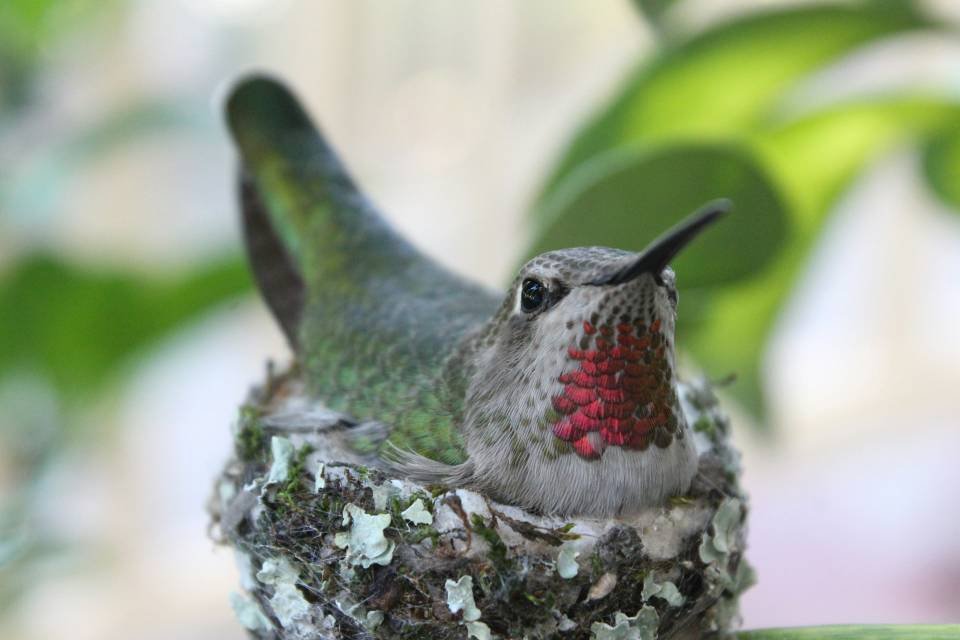
Hummingbird nesting requires a completely different approach. These tiny architects build nests about the size of ping pong balls using spider silk as construction adhesive. You can’t provide nest boxes for hummingbirds, but you can create irresistible habitat.
Plant nectar-rich native flowers in succession for continuous blooms, avoid pesticides religiously (hummingbirds need tiny insects for protein), and provide fine materials like plant down or pet fur for nest construction.
I planted a native trumpet vine along my fence three years ago specifically for hummingbirds. Now I have at least two nesting pairs each season, and watching them build their impossibly tiny nests never gets old 🙂
Ground and Low Nesters
Ground-nesting and low-shrub-nesting species include juncos, towhees, ovenbirds, some sparrow species, and killdeer. These birds require thick brush, tall grass patches, or dense ground cover where they can conceal nests at or near ground level.
Creating suitable habitat for ground nesters conflicts with conventional lawn care practices. These species need areas measuring at least 100 square feet where grass grows 8-12 inches tall, leaf litter accumulates 2-3 inches deep, and fallen branches provide cover. Native bunch grasses, sedges, and low-growing shrubs create the structural complexity these species seek.
Ground nesters face the highest predation rates of any nesting guild, with success rates often below 30% in suburban environments. However, they compensate through multiple nesting attempts and by selecting the densest available cover. Gardens providing suitable ground-nesting habitat support species that many neighbors never see.
Reducing Human and Pet Disturbance
Even gardens with excellent food resources, water, and nesting structure fail to attract breeding birds when human and pet activity creates chronic disturbance. Birds assess disturbance levels when selecting nest sites, avoiding areas where they repeatedly encounter threats.
The critical period for minimizing disturbance extends from March through July in most temperate regions, encompassing nest building, egg laying, incubation, and nestling care for most species. During this window, restrict activities near known or suspected nest sites.
Avoid pruning shrubs and trees during nesting season. Many birds nest in vegetation that appears unsuitable to human eyes, and well-meaning pruning destroys active nests. Delay major pruning until August when most birds have completed breeding. Similarly, postpone power washing, deck staining, and other disruptive outdoor projects.
Lawn mowing represents an unavoidable disturbance, but timing matters. Mow during midday when parent birds are actively feeding rather than during early morning or evening peak feeding periods. If you discover a ground nest, mark its location and mow around it, creating a protective buffer of 10-15 feet.
Cat management is non-negotiable for successful bird nesting. Free‑roaming cats are the biggest threat to nesting birds, killing an estimated 2.4 billion birds annually in the U.S., according to the American Bird Conservancy. Keep cats indoors year‑round, especially during March through July. Even well‑fed pet cats retain hunting instincts and can kill birds opportunistically.
Noise levels influence nest site selection and reproductive success. Avoid operating loud equipment near nesting areas. Reduce outdoor entertainment volume during nesting season. Some research suggests chronic noise exposure affects nestling growth and parent feeding rates.
Walking paths and high-traffic areas should be routed away from dense shrub plantings and other prime nesting habitat. Birds tolerate predictable human presence along established paths but abandon nests near routes where people walk unpredictably.
Garden maintenance activities that support nesting birds include refreshing mulch around native plantings, weeding to prevent invasive species from displacing natives, and monitoring nest boxes for invasive species. Clean nest boxes after each brood fledges to reduce parasite loads for subsequent users.
Monitoring Progress and Adjusting Strategies
Successfully encouraging birds to nest requires patience and observation. Gardens need 2-3 years to develop the mature structure and insect populations necessary to support breeding birds. During this establishment period, monitor which species visit your property and note their behaviors.
Document which native plants attract the most insect activity. Species that host numerous caterpillars and other insects become high-priority plants for expansion. Conversely, natives that don’t support abundant insects may be replaced with more productive species.
Track water source usage throughout the day and season. If bird baths see little activity, experiment with different locations, add moving water features, or try varying water depths.
Note where birds forage most frequently. These areas indicate successful insect production and should be expanded while maintaining their current management practices.
Observe predator activity honestly. If you regularly see cats, raccoons, or other predators, your garden may not provide adequate nest site security. Additional protective plantings, better cat control, or predator guards on nest boxes may be necessary.
The Cornell Lab’s NestWatch program provides tools for recording and submitting nest monitoring data that contributes to scientific understanding while helping you identify what works in your specific garden.
Frequently Asked Questions
How long does it take for birds to start nesting in a new garden?
Established bird populations may begin exploring well-resourced gardens within weeks of habitat installation, but actual nesting typically requires 2-3 years. Birds need time to discover new territories during their spring prospecting period, assess food availability through direct observation, and evaluate safety through multiple visits.
Gardens featuring mature native trees and shrubs attract nesting birds faster than newly planted landscapes. However, installing nest boxes can yield results within a single season if boxes are positioned correctly and local populations of cavity-nesting species exist. Patience is essential, as birds remember productive nesting sites and return annually once they’ve successfully raised young in your garden.
Why are birds not nesting in my birdhouse?
Multiple factors prevent birdhouse occupancy. Incorrect entrance hole size excludes desired species while permitting invasive birds like house sparrows or starlings to claim the box. Improper height placement, wrong orientation, or insufficient distance from human activity causes birds to reject otherwise suitable boxes. Boxes mounted on trees rather than poles face higher predation risk, deterring birds from nesting.
Lack of adequate food resources within the territory means even perfect nest boxes sit empty, as birds won’t attempt breeding where they cannot feed nestlings. Competition from invasive species that claim boxes before native birds arrive prevents occupancy. Predator accessibility through missing or inadequate guards makes boxes too risky for nesting attempts.
What is the best way to attract nesting birds quickly?
The fastest approach combines multiple strategies simultaneously. Install species-appropriate nest boxes by February in northern regions, January in southern areas. Ensure boxes have correct entrance hole sizes, predator guards, proper height and orientation. Establish or expand native plant communities immediately, prioritizing fast-growing natives like oaks, cherries, and native shrubs that support high caterpillar abundance. Add moving water features since the sound attracts prospecting birds from considerable distances.
Create protective cover within 10-15 feet of potential nest sites using dense shrubs and evergreens. Eliminate pesticide use completely to allow insect populations to rebound. Keep cats indoors and minimize disturbance during March through July. While habitat maturation requires years, combining these strategies produces results within 1-2 seasons rather than 3-5 years with piecemeal approaches.
Conclusion
Encouraging birds to nest in your garden fundamentally requires earning their trust through demonstrable safety, abundant food resources, accessible water, and minimal disturbance. Security manifests through protective cover within 10-15 feet of nest sites, allowing parent birds to scout approaches while remaining concealed from predators.
The living pantry of native plants produces thousands of caterpillars and other insects that represent the only suitable food for 96% of nestling birds. Moving water acts as an auditory beacon that broadcasts garden quality to prospecting birds while busy bird baths signal safety through social proof.
Accommodating diverse nesting styles through cavity nest boxes, dense shrub plantings for cup nesters, and deliberately untidy corners for ground nesters expands the range of species your garden supports. Reducing human and pet disturbance during the critical March through July breeding window prevents nest abandonment and allows parent birds to focus energy on raising young rather than avoiding threats.
The transition from a garden birds visit to one where they raise families requires patience, observation, and willingness to prioritize ecological function over conventional aesthetics. Birds remember productive nesting sites and return annually, building population density over time as offspring return to breed near their natal territories. By understanding what drives nesting site selection and providing those specific conditions, your garden becomes the most attractive nesting site in the neighborhood.