Species Comparisons

Side-by-side comparisons of different bird species to help you quickly spot the differences in appearance, behavior, and calls.

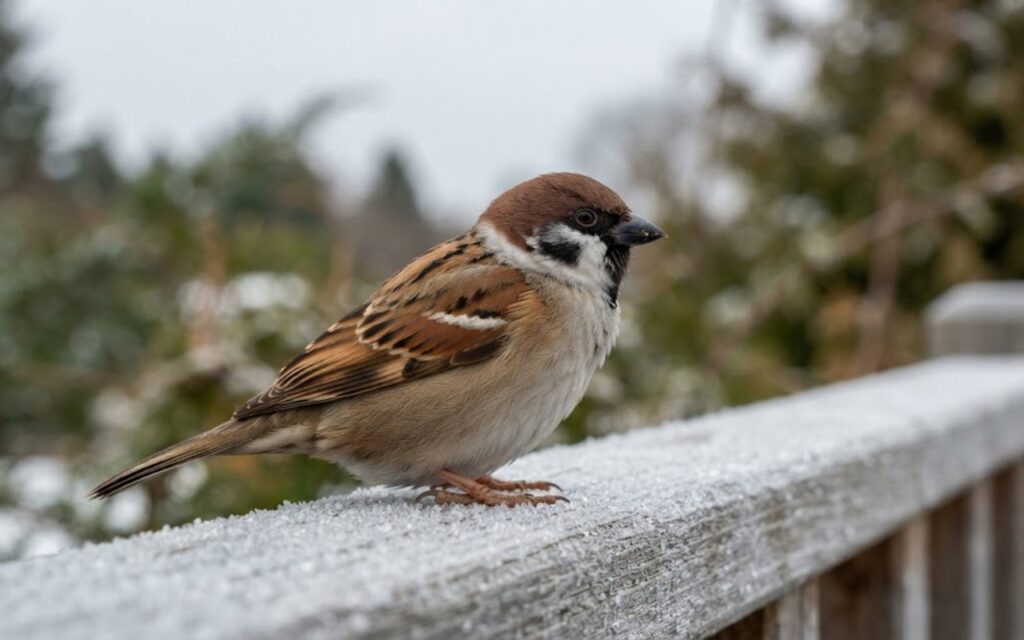
A raw, unedited landscape bird identification photo showing a Eurasian Tree Sparrow displaying its solid chocolate-brown crown and distinct black cheek spot on a frosted cedar branch.

House Sparrow vs. Eurasian Tree Sparrow: The Complete Identification Guide

Telling the difference between a House Sparrow vs. Eurasian Tree Sparrow comes down to spotting a few fine head markings and noticing how the birds group together. Backyard birders frequently confuse these two closely related weaver finches because they share similar body shapes, stout seed-cracking bills, and rich brown plumage patterns. Once you know where

House Sparrow vs. Eurasian Tree Sparrow: The Complete Identification Guide Read More »
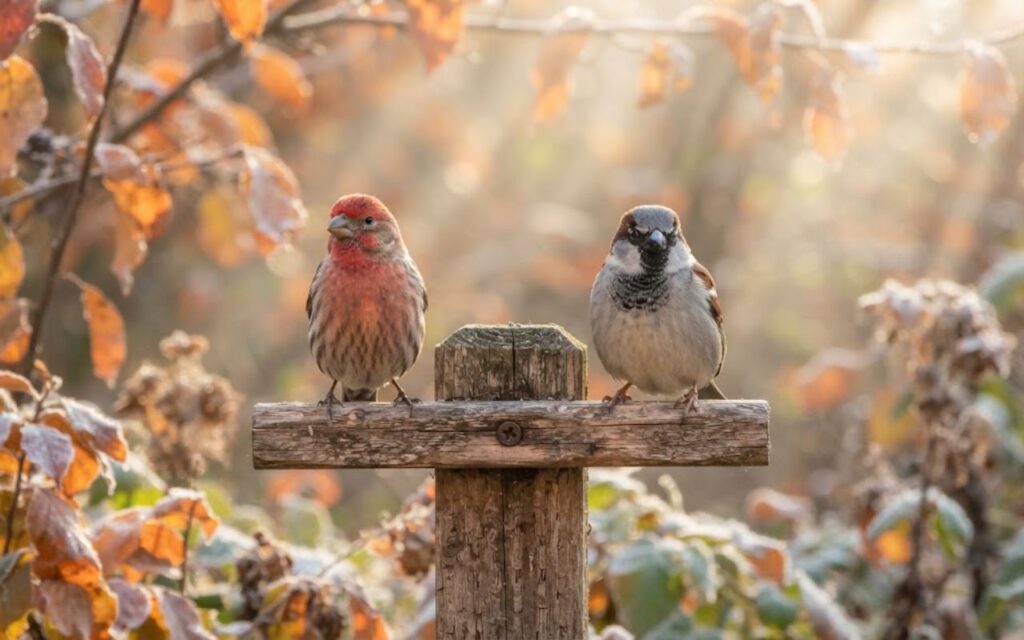
A real-world, unedited bird identification photo showing a red, streaked House Finch perched next to a grey-capped House Sparrow with a black bib on a cedar branch.

House Finch vs. House Sparrow: The Complete Bird Identification Guide

Telling a House Finch vs. House Sparrow apart at your feeder station can be frustrating when dozens of small brown birds swarm your seed trays at once. Both species thrive in suburban yards and readily crowd backyard perches, yet they belong to entirely different bird families with distinct behaviors, diets, and field marks. Once you

House Finch vs. House Sparrow: The Complete Bird Identification Guide Read More »
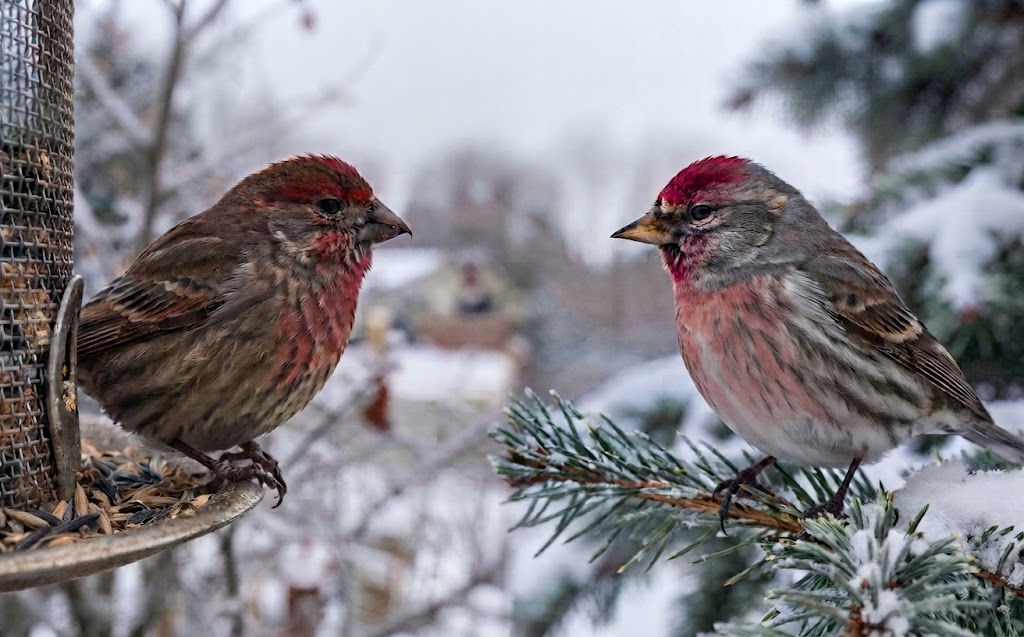
A real-world bird identification photo showing a blurry-headed, thick-streaked House Finch on a mesh feeder tray facing a raspberry-capped, straight-billed Cassin's Finch on a snowy pine branch.

House Finch vs. Cassin’s Finch: Key Differences and Identification Guide

Telling the difference between a House Finch vs. Cassin’s Finch can frustrate even experienced birders when a flock lands on a feeder. Both of these red-capped finches share similar body sizes, overlapping ranges in western North America, and an appetite for black oil sunflower seeds. Small field marks make identification simple once you know where

House Finch vs. Cassin’s Finch: Key Differences and Identification Guide Read More »
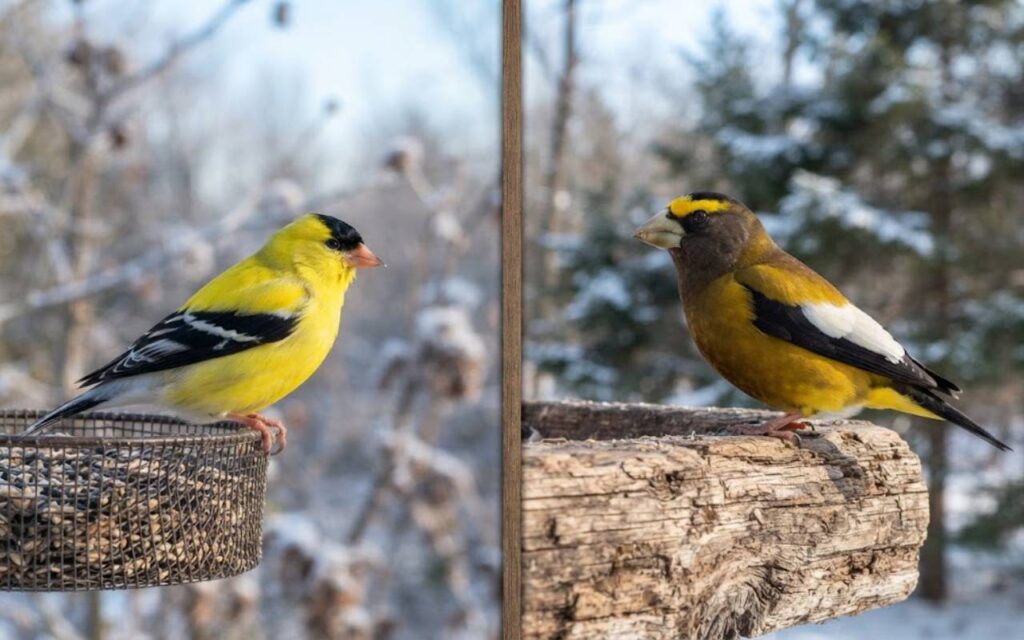
A side-by-side comparison photo showing a tiny, small-billed American Goldfinch on the left split and a massive, thick-billed Evening Grosbeak with a yellow eyebrow on the right split.

American Goldfinch vs. Evening Grosbeak: Identification and Feeder Setup Guide

Telling the difference between an American Goldfinch vs. Evening Grosbeak comes down to body scale, bill mechanics, and feeding posture. Both species display striking yellow and black feather patterns, but confusing them usually happens when viewing silhouettes against bright skies or sorting through drab winter flocks. Backyard observers frequently encounter identification challenges during northern irruption

American Goldfinch vs. Evening Grosbeak: Identification and Feeder Setup Guide Read More »

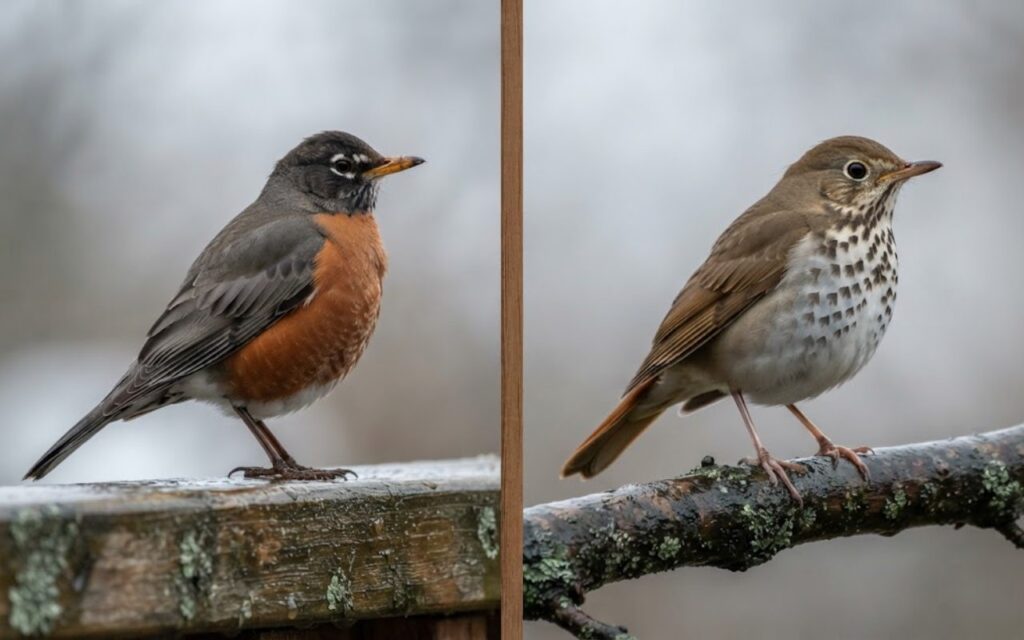
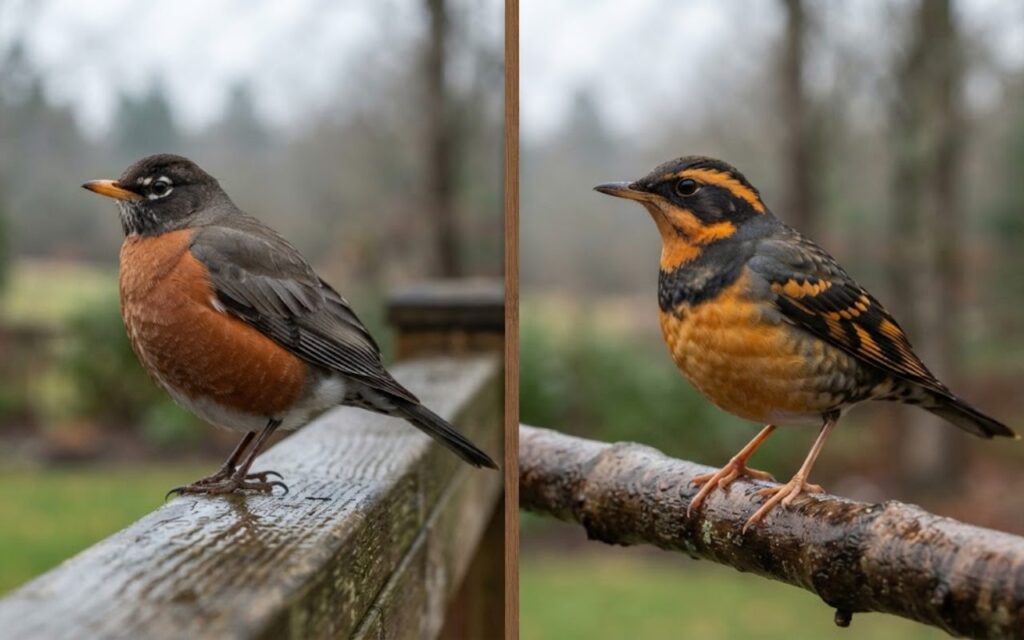
A side-by-side bird identification photo showing a plain orange-breasted American Robin on a wooden railing next to a spotted-breasted Hermit Thrush with a warm rufous tail on a branch.

American Robin vs. Hermit Thrush: Key Differences and Identification Guide

Telling the difference between an American Robin vs. Hermit Thrush comes down to body structure, chest patterns, and subtle field behaviors. Both birds belong to the thrush family, yet they occupy distinct niches in size, demeanor, and habitat use across North America. Many birders stumble when spotting these species in thick shadows or during seasonal

American Robin vs. Hermit Thrush: Key Differences and Identification Guide Read More »
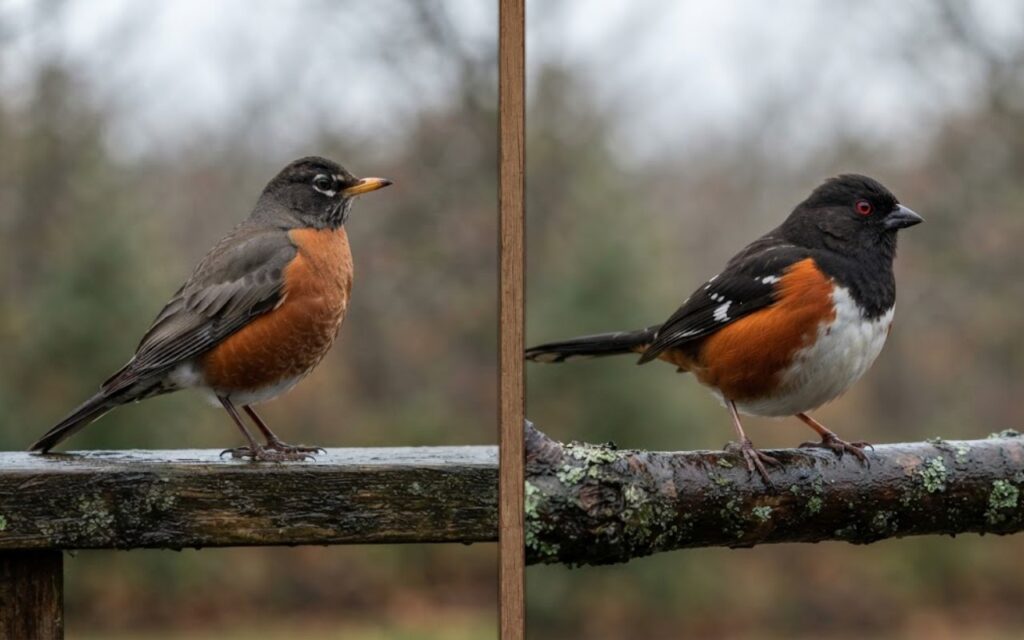
A side-by-side bird identification photo showing a plain orange-breasted American Robin on a wooden rail next to a black-hooded Eastern Towhee with a white belly and orange sides on a mossy branch.

American Robin vs. Eastern Towhee: The Ultimate Bird Identification Guide

Telling the difference between an American Robin vs. Eastern Towhee often trips up backyard bird watchers catching quick glimpses through thick garden shrubs. Both species display contrasting dark upperparts paired with vibrant warm-toned bellies, making a fleeting glance misleading. A closer look at feather patterns, ground behavior, and beak structure quickly clears up any confusion.

American Robin vs. Eastern Towhee: The Ultimate Bird Identification Guide Read More »

A side-by-side comparison photo showing a plain orange-breasted American Robin on the left split and a dark-banded, orange-winged Varied Thrush on the right split.

American Robin vs. Varied Thrush: The Ultimate Bird Identification Guide

Telling the difference in an American Robin vs. Varied Thrush sighting often comes down to quick wing markings and posture when a bird flashes through backyard brush. Both species share the classic thrush silhouette and rich orange plumage, which leads to frequent misidentifications across western backyards. Birders on Pacific Northwest forums regularly post photos of

American Robin vs. Varied Thrush: The Ultimate Bird Identification Guide Read More »

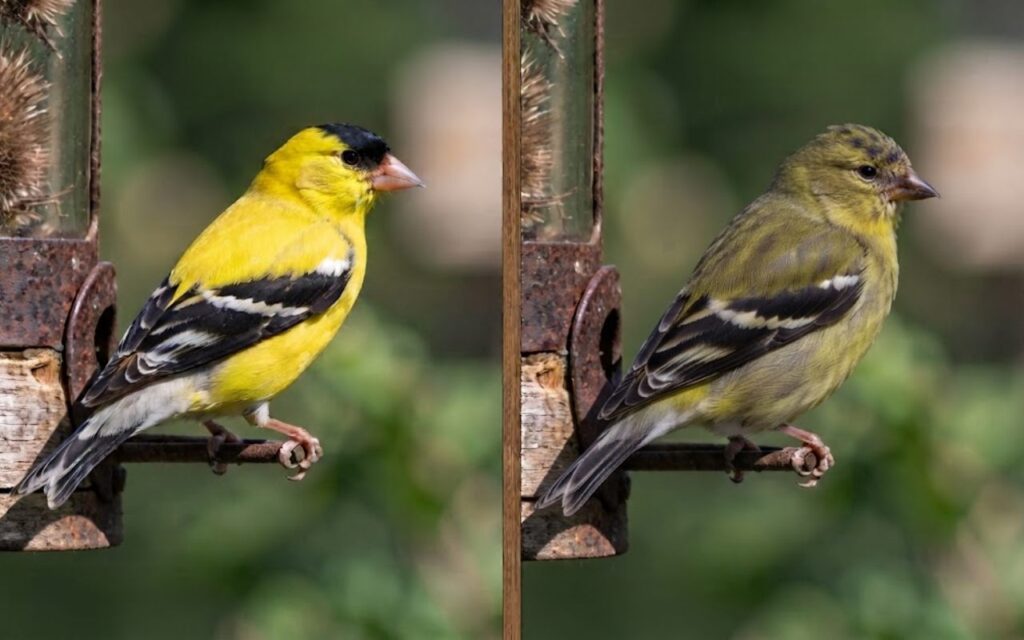
• A side-by-side comparison photo showing a bright yellow-backed American Goldfinch on the left split and a dark green-backed Lesser Goldfinch on the right split. 📌 High-Velocity Viral Pinterest Prompt (Style: Text-Free Split-Contrast / Zero Text Glitches) text A professional, ultra-vivid viral Pinterest pin template in a crisp 1000x1500px vertical 2:3 aspect ratio, engineered as a clean Side-by-Side Split Compare layout. The entire canvas is divided perfectly down the center into two equal vertical split halves by a thin, natural dark wood line that stretches continuously from the absolute top edge down to the absolute bottom pixels. The left vertical half is a single photograph capturing a hyper-detailed macro profile of a single male American Goldfinch perched on a rail, highlighting its bright lemon-yellow back mantle and clean white undertail feathers. The right vertical half is a matching single photograph capturing a hyper-detailed macro profile of a single male Lesser Goldfinch perched on the same rail, intensely showcasing its solid dark olive-green back mantle and continuous yellow underbelly plumage stretching down to the base of its tail. Both photographs flow continuously from the top edge all the way down to the absolute bottom pixels with rich digital camera lens grain under a soft morning sky. Stamped borderless horizontally straight across the center-upper third of the split canvas is a bold, unstyled matte charcoal-black background strip. Printed inside this dark layer in perfectly horizontal, left-aligned rows is the high-impact curiosity hook: "THE GOLDFINCH CAP" typeset in an oversized, heavy crisp-white sans-serif block font, followed directly underneath by "American vs Lesser Goldfinch ID Guide" in a sharp, high-contrast flat electric-saffron editorial sans-serif font. The text reads naturally from left-to-right with zero vertical elements or long paragraphs. --ar 2:3 Use code with caution. 🛠️ High-Intent Pin Conversion Metadata • 📌 Pin Title • American Goldfinch vs Lesser Goldfinch: Quick ID Guide • 📝 Pin Description • Confused by the bright yellow finches crowding your backyard niger seed trays? Discover the real differences between an American Goldfinch vs. a Lesser Goldfinch on FeatheredGuru.com. Learn how to instantly separate them using back mantle colors, undertail coverts, wing bars, and regional boundary maps. • 🔗 Destination Link • https://featheredguru.com Now that your SEO description is optimized at 145 characters, entities are strictly singular, and your Pinterest comparison template flows continuously to the bottom pixels with fixed text placement, let me know if you want me to draft: • The 4 diagnostic field identification markers formatted to match your strict AI Puffer block-formatting rules (using raw keyboard hyphens like - to map out back mantle variations, undertail color checks, flight silhouette movements, and geographic range limits). • A guide on separating female American Goldfinches from female Lesser Goldfinches during confusing late-autumn winter molt cycles. Let me know which track you want to build next! Try without personalization

American Goldfinch vs Lesser Goldfinch: Quick ID Guide to Tell Them Apart

Mastering an American Goldfinch vs Lesser Goldfinch: Quick ID challenge in the field requires looking beyond basic yellow feathers. Birders across western regions frequently struggle to separate these two small finches when they visit the same backyard feeders or weed patches. While breeding males in peak summer plumage seem unmistakable in field guides, real-world lighting,

American Goldfinch vs Lesser Goldfinch: Quick ID Guide to Tell Them Apart Read More »

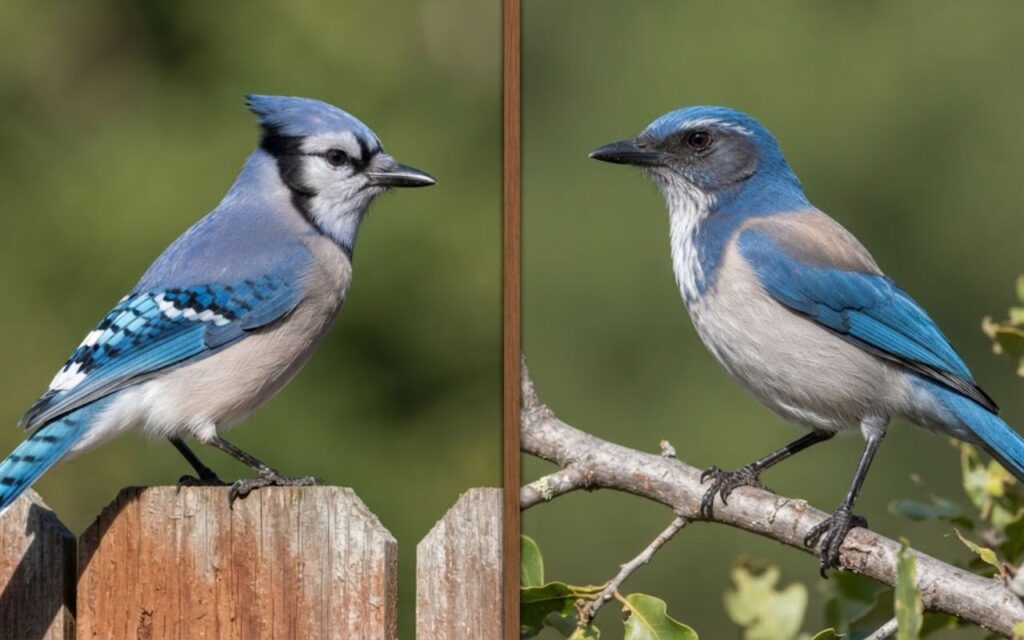
A side-by-side comparison photo showing a crested, white-barred Blue Jay on the left split and a flat-headed, gray-backed California Scrub-Jay on the right split.

Blue Jay vs. California Scrub-Jay: Key Differences and Identification Guide

Navigating a visual identification between a Blue Jay vs. California Scrub-Jay requires looking past shared blue feathers to evaluate head structure, chest markings, and geographic coordinates. Both corvids exhibit striking cerulean shades, but they belong to entirely different genera with unique evolutionary paths. Understanding their morphological contrasts and behavioral signatures quickly settles one of the

Blue Jay vs. California Scrub-Jay: Key Differences and Identification Guide Read More »

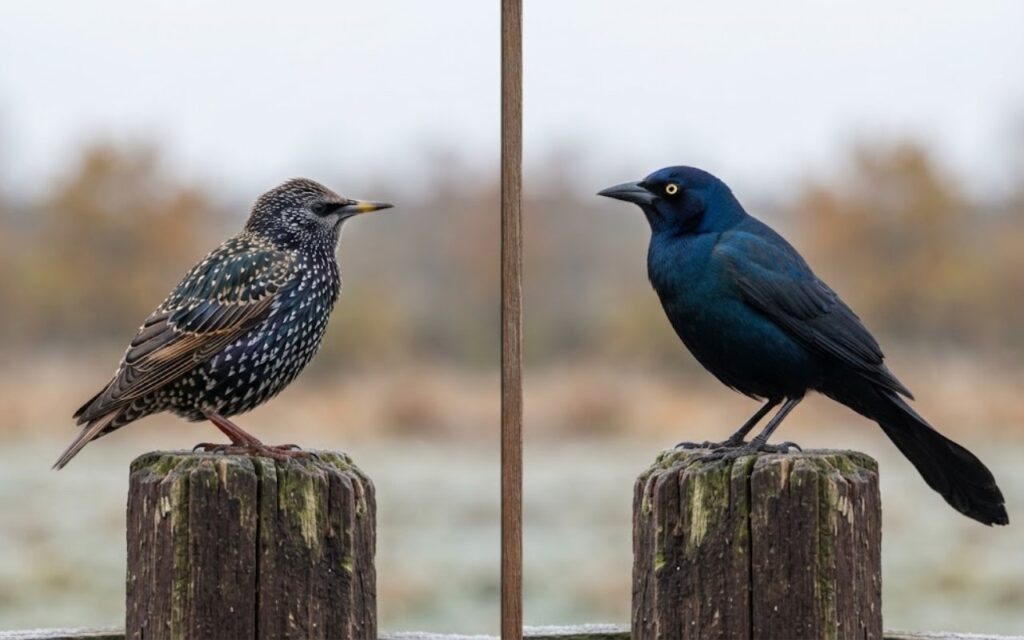
A side-by-side comparison photo showing a short-tailed, white-spotted European Starling on the left and a long-tailed, yellow-eyed Common Grackle on the right.

European Starling vs. Common Grackle: Key Differences and Identification Guide

Distinguishing between a European Starling vs. Common Grackle can challenge even attentive backyard observers when light conditions mute their iridescent plumage. While both species often converge on suburban lawns and feeding stations in mixed flocks, they belong to entirely different avian families with distinct evolutionary adaptations, flight dynamics, and structural dimensions. Understanding these foundational physical

European Starling vs. Common Grackle: Key Differences and Identification Guide Read More »

Consent Preferences
Scroll to Top