
American Robin

Insights into the behavior and identification, habits, and tips for attracting American Robins to your backyard.

An American Robin perched on a large rock.

How to Identify an American Robin: A Complete Backyard Guide

Wondering how to identify an American Robin in your yard? Recognizing the American Robin (Turdus migratorius) is simple once you know what to look for. This common North American thrush has clear field marks. Its bold coloration, upright posture, and predictable foraging methods make tracking easy for beginners. Analyzing these unique traits helps you avoid […]

How to Identify an American Robin: A Complete Backyard Guide Read More »
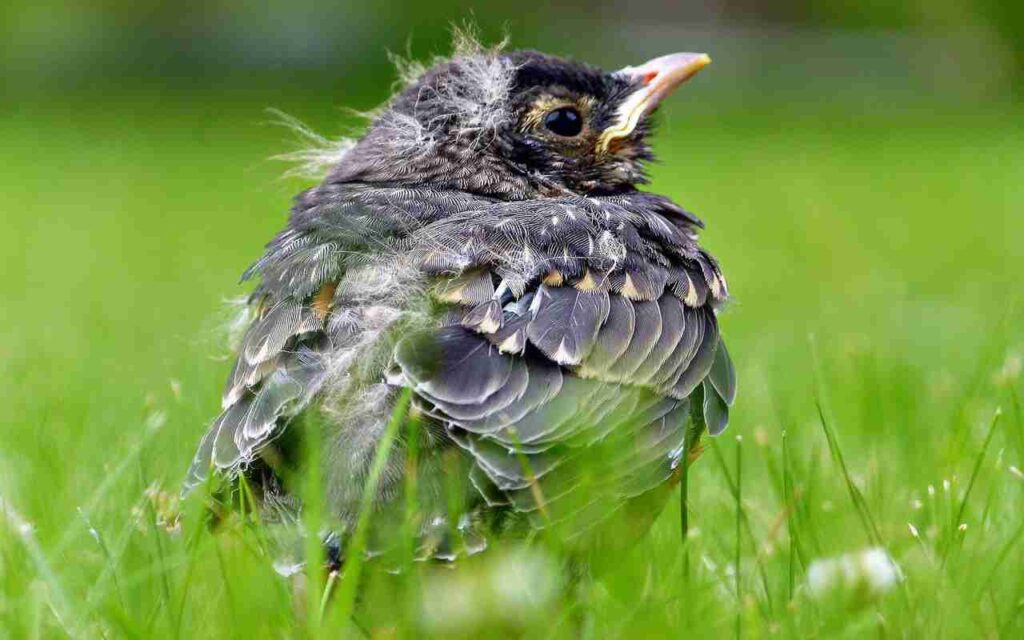
A fledgling American robin with fuzzy head tufts and spotted plumage sitting in a green garden lawn.

How to Protect Young American Robins in Your Garden: The Ultimate Guide

Learning how to protect young American robins in your garden starts by understanding the critical 3–5 day ground window that determines if a fledgling survives its first week outside the nest. Most young robins leave home at 13 days old before they can fly vertically. During this vulnerable ground-dwelling phase, they must hop awkwardly to strengthen their flight muscles through repetitive wing-flapping and short flutter-jumps. Rather than

How to Protect Young American Robins in Your Garden: The Ultimate Guide Read More »

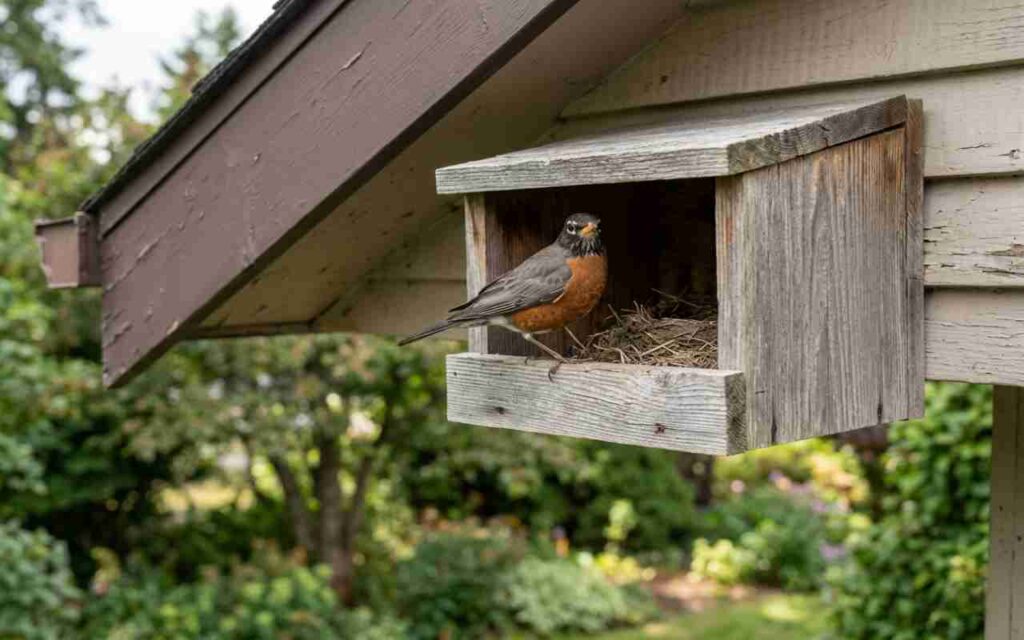
An American robin perched on a wooden nesting shelf with an open front mounted under a house eave. AI-generated illustration for educational clarity.

American Robin Nesting Behavior: How to Support a Successful Brood

Most people fail to attract robins because they make one key mistake. They fill tube feeders with sunflower seeds and wonder why robins never visit. American robin nesting behavior shows that these soft-billed omnivores need diets incompatible with most commercial birdseed. Their conical bills are made for grabbing earthworms and berries, not cracking hard seeds.

American Robin Nesting Behavior: How to Support a Successful Brood Read More »

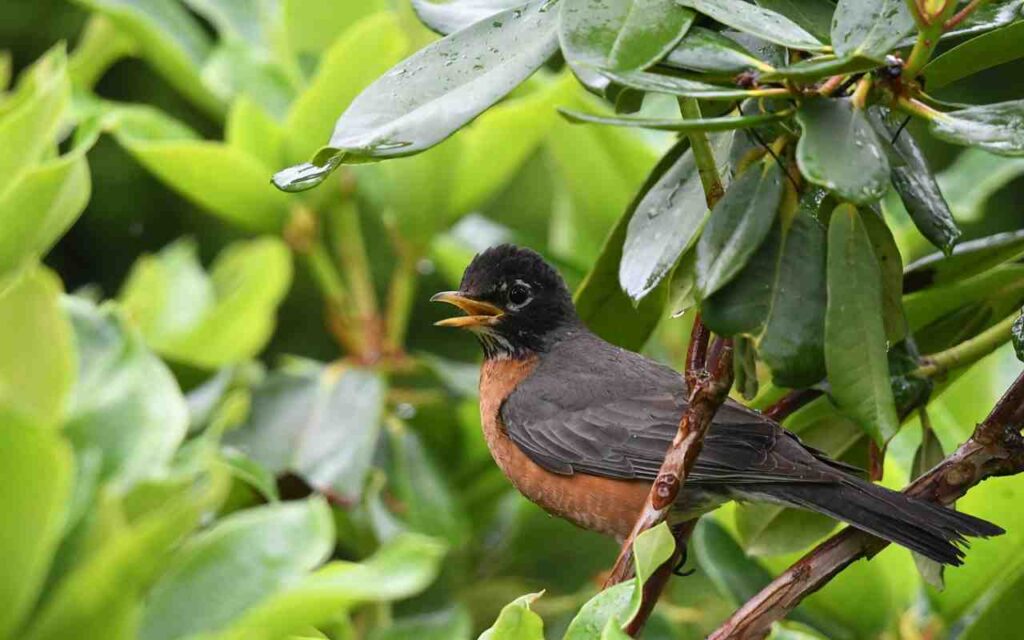
Close-up of a male American Robin singing with its beak open, perched on a wet green branch during a spring rain shower.

Understanding American Robin Songs and Calls: Audio Identification Guide

While most birders recognize the iconic dawn chorus starting at 4:30 AM, learning how to identify American robin songs and calls transforms a simple backyard melody into a window into avian social dynamics. Few grasp the full acoustic repertoire these birds use for territorial defense, mate attraction, and fledgling coordination. From sharp alarm notes signaling

Understanding American Robin Songs and Calls: Audio Identification Guide Read More »

A male American Robin splashing vigorously in a shallow stone birdbath, illustrating the effectiveness of the shallow-water attraction pillar.

How to Attract American Robins to Your Backyard (The Ultimate Guide)

Most people fail when learning how to attract American robins because they commit one error: filling tube feeders with sunflower seeds. As soft-billed omnivores, American robins (Turdus migratorius) have dietary needs incompatible with 99% of birdseed. Their conical bills evolved for grabbing earthworms and berries, not cracking hard shells. Success requires shifting from traditional bird-feeding assumptions to strategies based

How to Attract American Robins to Your Backyard (The Ultimate Guide) Read More »

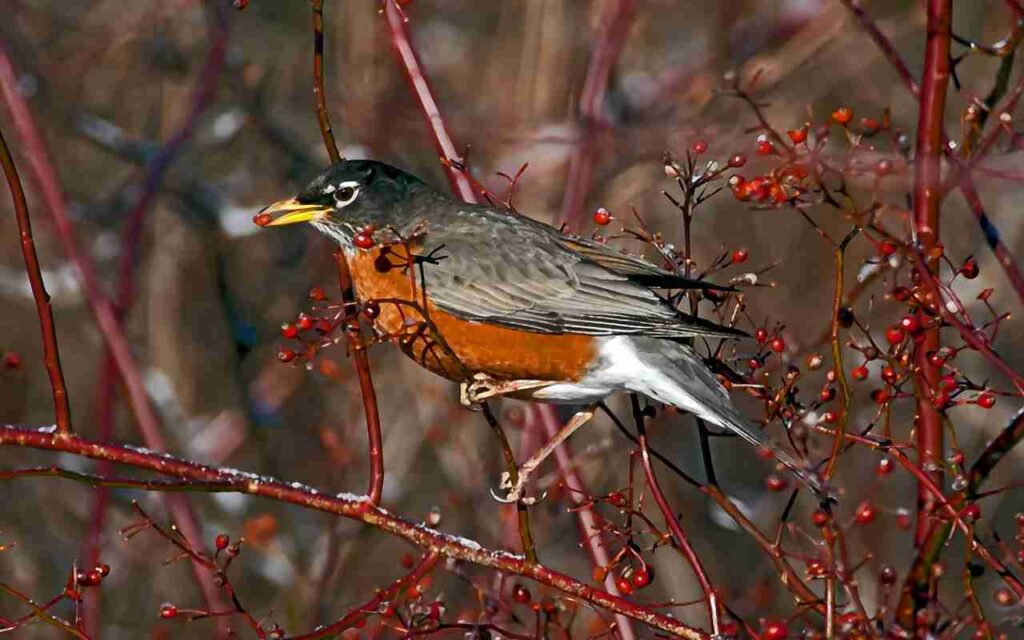
An American Robin perched on a winter branch, mid-swallow while eating a bright red berry, illustrating the species' seasonal shift to a fruit-based diet.

What Do American Robins Eat in Different Seasons? (The Ultimate Guide)

The American robin’s diet is a 12-month puzzle that resists simple labels. If you have ever wondered what American robins eat in different seasons, the answer is a dramatic dietary pivot from protein-heavy invertebrates in the spring to sugar-rich fruits and berries in the winter. Research shows a single robin can eat 14 feet of earthworms in a day, showing the

What Do American Robins Eat in Different Seasons? (The Ultimate Guide) Read More »

Consent Preferences
Scroll to Top