How-To Guides

Practical tutorials and solutions for backyard birdwatching, from attracting birds to keeping pests away.

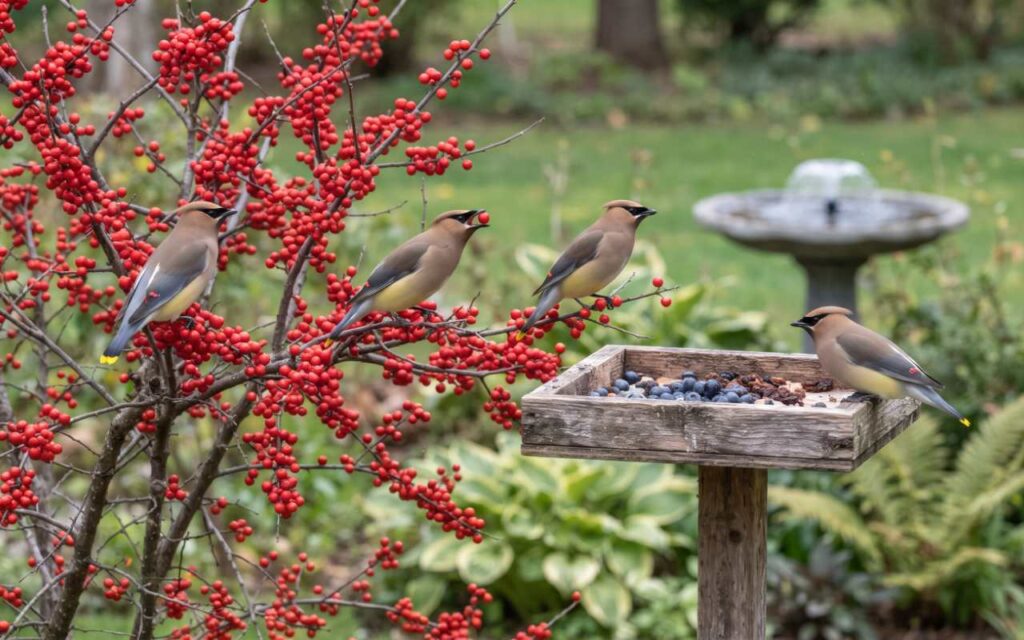
Four sleek Cedar Waxwings with black face masks and yellow-tipped tails eating bright red winterberry holly berries and thawed blueberries from a wooden platform tray near a shallow garden birdbath.

10 Simple Ways to Attract Cedar Waxwings to Your Garden

Learning how to attract Cedar Waxwings requires a completely different backyard strategy than attracting cardinals, finches, or chickadees. Because Cedar Waxwings are nomadic frugivores that travel in tight, high-pitched whistling flocks, they almost completely ignore standard tube feeders filled with sunflower seeds, millet, or suet. Instead, Cedar Waxwings drop into gardens that offer persistent berry-producing

10 Simple Ways to Attract Cedar Waxwings to Your Garden Read More »

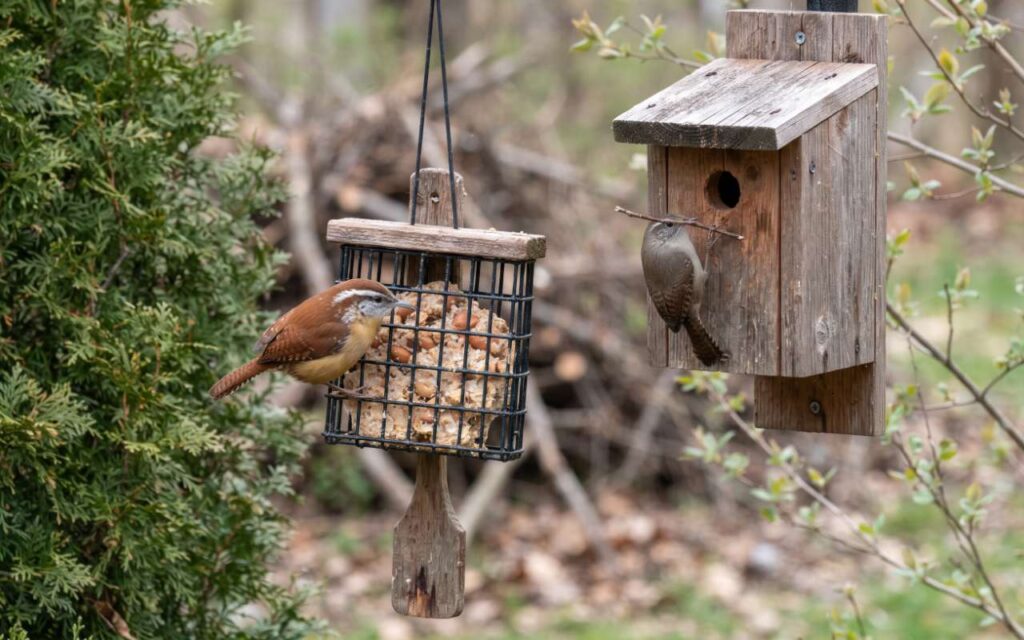
Carolina Wren with a bold white eyebrow stripe eating from a wooden suet cage feeder beside a House Wren holding a nesting twig on a cedar birdhouse near dense backyard shrubs.

12 Proven Ways to Attract House Wrens and Carolina Wrens

Learning how to attract House Wrens and Carolina Wrens requires understanding one major seasonal difference between these two energetic songbirds. House Wrens migrate south each autumn after raising summer broods (with only small populations overwintering in the extreme southern United States), whereas Carolina Wrens stay all winter across their eastern and central North American range,

12 Proven Ways to Attract House Wrens and Carolina Wrens Read More »

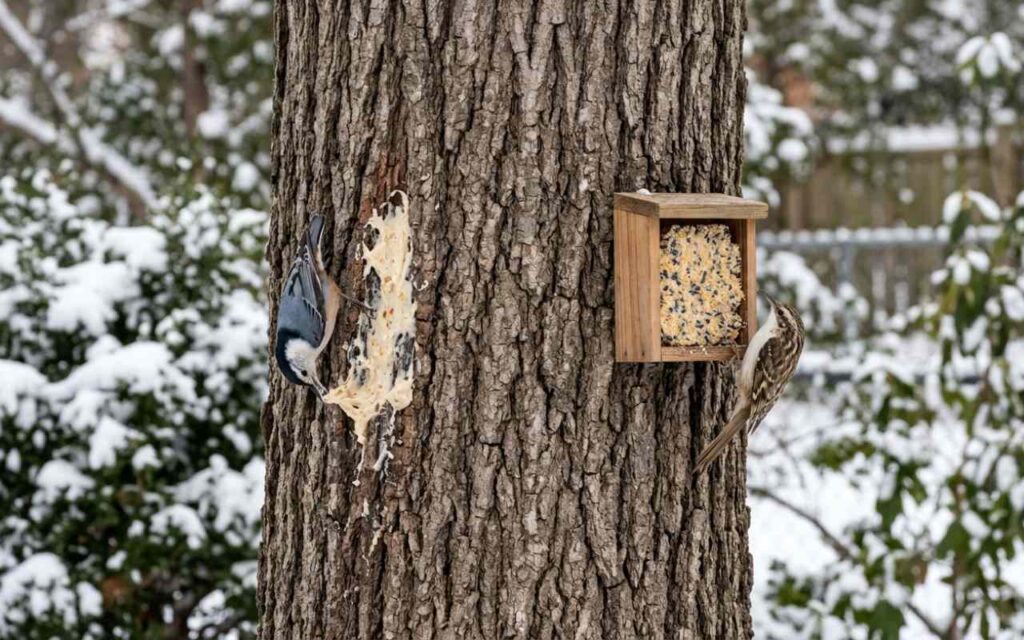
White-breasted Nuthatch climbing headfirst down a rough tree trunk to eat spreadable bark suet beside a Brown Creeper climbing upward toward a trunk-mounted suet feeder in winter.

10 Easy Ways to Attract Nuthatches and Creepers to Your Feeders

Learning how to attract nuthatches and creepers to your feeders requires matching your setup to how these two acrobatic bark-foragers climb trees. While nuthatches spiral headfirst down trunks looking for seeds and insects, Brown Creepers brace their stiff tail feathers against rough bark and spiral upward from the base of a tree, meaning both species

10 Easy Ways to Attract Nuthatches and Creepers to Your Feeders Read More »

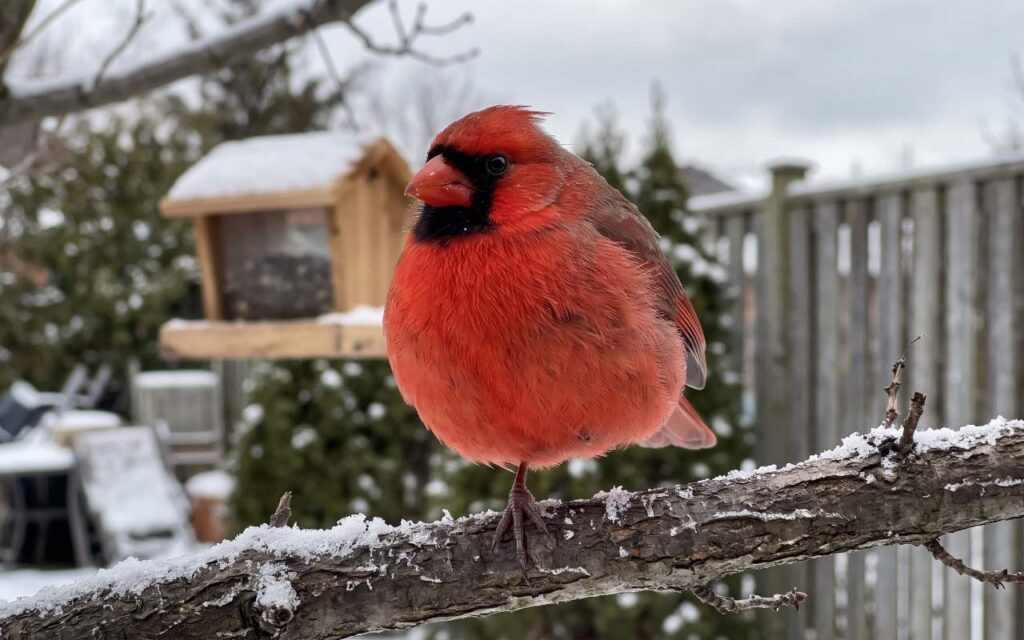
Puffed-up male Northern Cardinal standing on one leg on a snow-dusted tree branch in a winter backyard with a wooden bird feeder in the background.

Why Backyard Birds Stand on One Leg in Freezing Weather (And How They Balance)

Backyard birds stand on one leg in freezing weather primarily to cut heat loss through their unfeathered legs and feet by roughly 50 percent. While a songbird’s body is wrapped in insulating down and contour feathers, its lower legs and toes are covered only in thin scales. Tucking one limb up into warm belly plumage

Why Backyard Birds Stand on One Leg in Freezing Weather (And How They Balance) Read More »

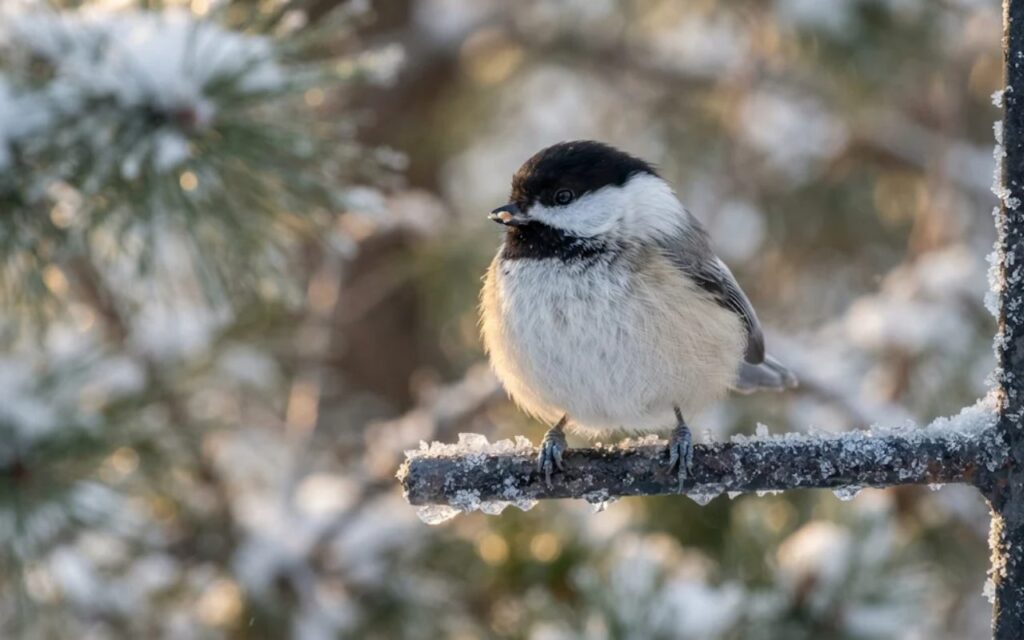
Close-up wildlife photo of a puffed-up Black-capped Chickadee gripping a frost-covered metal bird feeder perch with bare scaly toes on a freezing winter morning.

Do Birds Freeze to Death? Why Bare Feet Don’t Freeze Solid on Icy Metal Perches

Birds rarely freeze to death through their bare feet because a circulatory system called countercurrent heat exchange keeps their core warm while letting their toes safely cool to just above freezing. Combined with dry, sweat-gland-free scales and low-fluid tendons, songbirds can grip sub-zero metal perches and stand on ice without frostbite or sticking. Watching a

Do Birds Freeze to Death? Why Bare Feet Don’t Freeze Solid on Icy Metal Perches Read More »

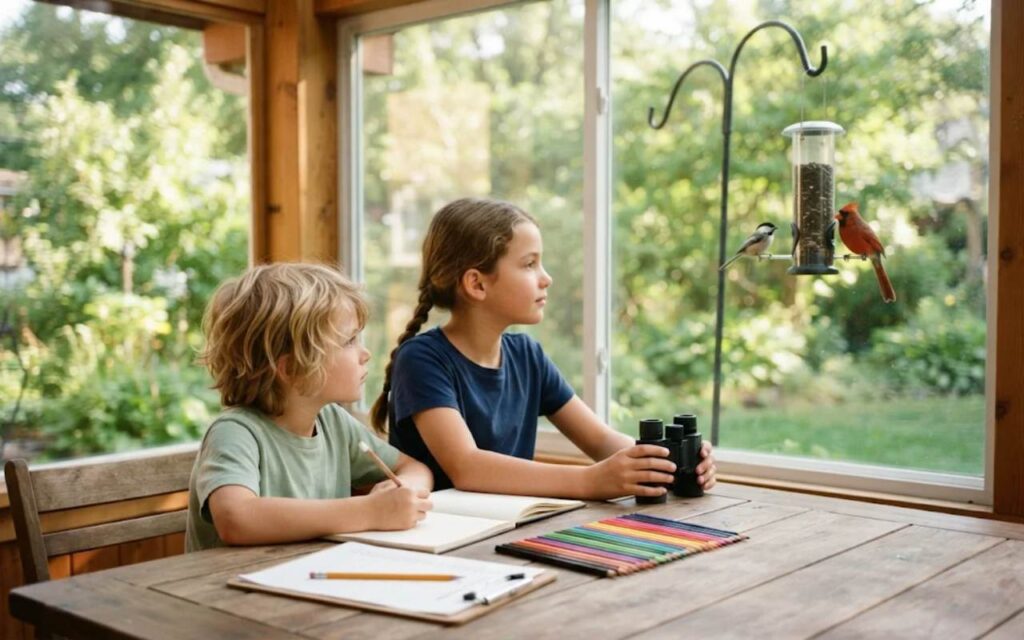
Two children sitting at a wooden sunroom table with binoculars, a clipboard, and colored pencils watching a Black-capped Chickadee and male Northern Cardinal on a sunflower seed tube feeder outside the window.

Backyard Birdwatching Activities for Kids: 8 Fun, Screen-Free Projects

The best backyard birdwatching activities for kids pair hands-on feeder building and habitat projects with short, interactive observation games like sound mapping, feather-color bingo, and 10-minute feeder counts. Young children rarely enjoy sitting motionless for an hour waiting for a rare warbler to appear, so successful family birding flips the script by letting kids actively

Backyard Birdwatching Activities for Kids: 8 Fun, Screen-Free Projects Read More »

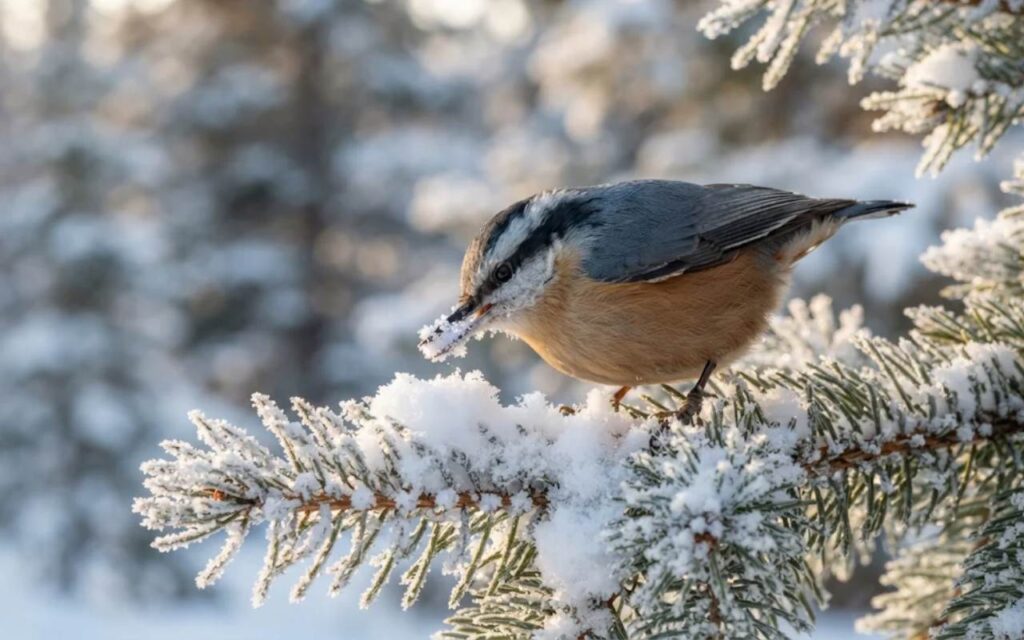
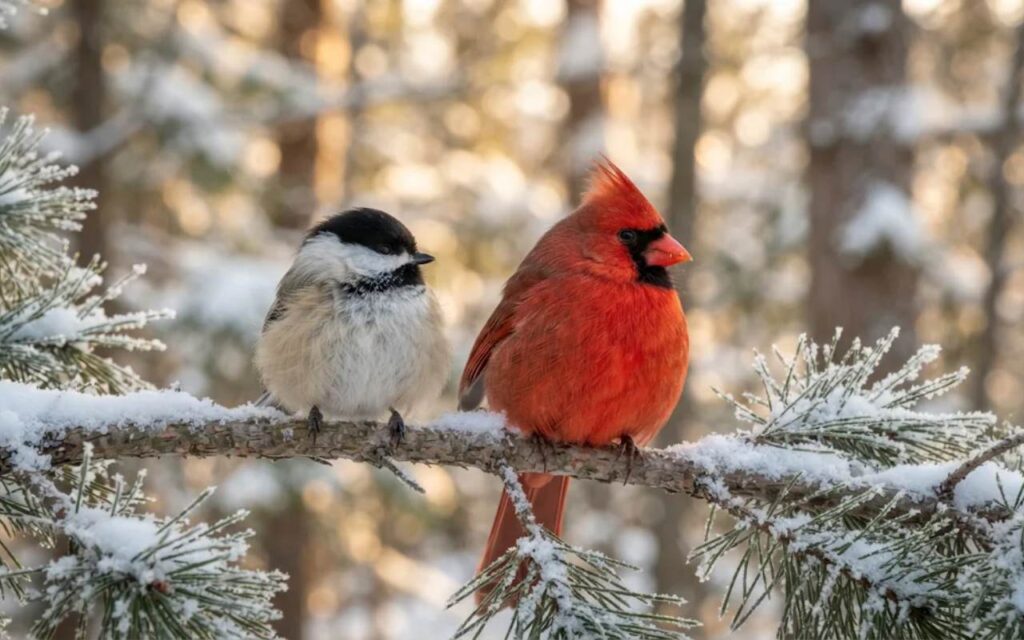
Puffed-up Black-capped Chickadee and bright red male Northern Cardinal perched side by side on a snow-dusted pine branch on a sunny winter morning.

How Do Birds Stay Warm in the Winter? 8 Biological & Behavioral Secrets

Birds stay warm in the winter by trapping heat inside dense plumage, recycling warmth through specialized leg blood vessels, shivering flight muscles, burning daily fat reserves, and roosting in cavities or snow burrows. While human core temperature sits around 98.6°F (37°C), songbirds maintain an internal temperature of 102°F to 109°F (39°C to 43°C), even when

How Do Birds Stay Warm in the Winter? 8 Biological & Behavioral Secrets Read More »

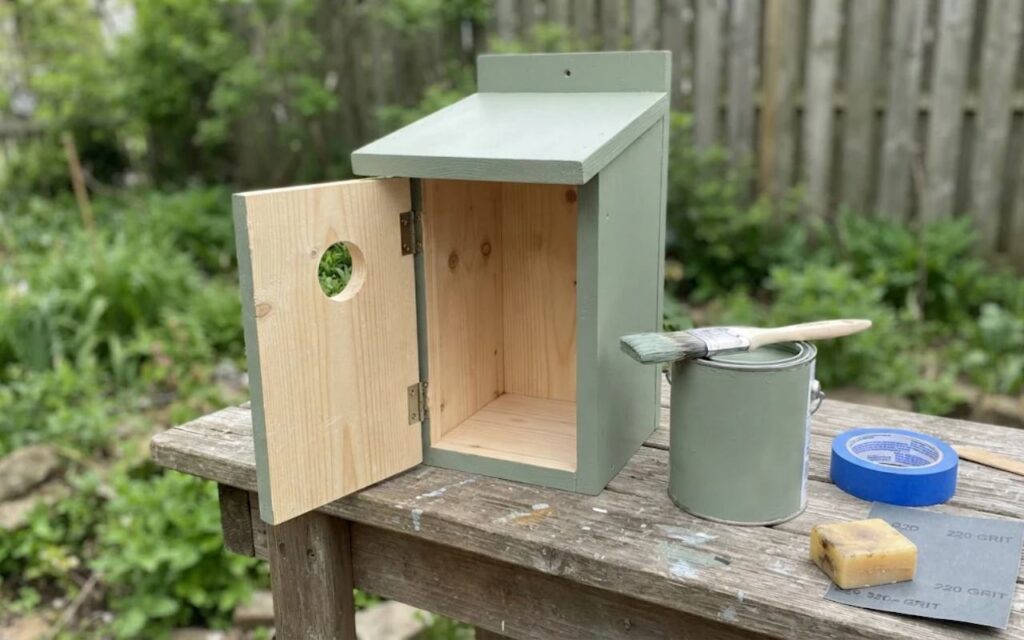
A wooden birdhouse painted matte sage green on the exterior with its hinged cleanout door swung open to reveal a raw, unpainted pine interior and entrance rim, resting on an outdoor wooden workbench beside an unbranded paint can, paintbrush, blue painter's tape, 220-grit sandpaper, and a block of beeswax.

Is It Okay to Paint a Birdhouse? Safe Colors, Finishes, and Avian Rules

Yes, it is okay to paint a birdhouse, provided you apply zero- or low-VOC, 100% water-based exterior acrylic or latex paint strictly to the exterior surfaces in light, muted earth tones and leave the entire interior raw wood. While wildlife biologists recommend untreated, unpainted cedar or pine by default, a breathable exterior coat on soft

Is It Okay to Paint a Birdhouse? Safe Colors, Finishes, and Avian Rules Read More »

Consent Preferences
Scroll to Top