
Every summer, backyard enthusiasts unintentionally harm the hummingbirds they want to attract. Learning how to keep hummingbirds safe is crucial because clean feeders and fresh nectar can hide threats like fermented sugar water, red-dyed solutions, and garden chemicals. Their high metabolism, wingbeats over 50 per second, and body temperatures up to 107°F make them far more fragile than larger, slower birds.
This guide covers the safety steps every steward needs. You’ll learn the cleaning schedule that prevents fatal fungal infections, why systemic pesticides are deadly even on ornamental plants, and feeder placement rules that reduce window strike deaths. Most importantly, you’ll gain the knowledge to spot real emergencies and respond correctly, avoiding well-intentioned mistakes that can doom these tiny pollinators. 😃
- Keep hummingbirds safe by avoiding fermented nectar, red dyes, and chemicals.
- Clean feeders on a temperature-based schedule to prevent fungal infections.
- Use vinegar or bleach for cleaning; avoid dish soap that harms feathers.
- Place feeders under 3 ft or over 15 ft from windows to prevent collisions.
- Remove systemic pesticides to protect birds and their insect food sources.
- Watch for predators and use bee guards to reduce feeder competition.
- Never offer honey water or hold sick birds; call licensed rehabilitators.
- Use pure white sugar for nectar; avoid brown sugar, organic sugar, or sweeteners.
- Consistent, informed care creates safe habitats where hummingbirds thrive.
How to Keep Hummingbirds Safe: 7 Critical Tips
Before we break down the text, watch this short explainer video for a high-level look at the most critical hummingbird hazards you need to avoid.
Show Transcript:
[0:00] Why Hummingbird Safety Matters in Your Backyard
There’s nothing quite like the moment a hummingbird zips into your yard. It feels magical. But here’s the uncomfortable truth: some of the things we do to attract hummingbirds can accidentally put them in danger. In this video, we break down the science-backed steps you need to turn your backyard from a potential hazard into a true hummingbird haven.
So let’s ask the big question right away. Is your backyard helping hummingbirds, or could it be harming them? Stick with us, because by the end of this video, you’ll know exactly how to keep hummingbirds safe all summer long.
[0:32] What You’ll Learn in This Hummingbird Safety Guide
In this explainer, we’ll cover:
- A hidden danger that often lurks inside hummingbird feeders
- Proper feeder cleaning and nectar safety
- Common backyard threats many people overlook
- What to do if you find a sick or injured hummingbird
- How to shift from simply enjoying hummingbirds to actively protecting them
Let’s start with a threat that surprises a lot of people.
[0:53] The Hidden Killer Inside “Clean” Hummingbird Feeders
Even a feeder that looks spotless can hide a deadly risk. One of the most common causes of hummingbird deaths at feeders is a fungal infection called candidiasis. This fungus grows in nectar that has started to ferment, especially in warm weather.
Candidiasis causes a hummingbird’s tongue to swell, making it impossible for the bird to eat. As the bird weakens, its immune system collapses, allowing the fungus to spread even faster. Tragically, the bird can starve while surrounded by food.
What makes this even worse is how easily it spreads. A single infected hummingbird can visit multiple feeders, turning them into contamination points across an entire neighborhood.
[2:00] The Good News: This Is Almost 100% Preventable
Here’s the upside. This problem is almost completely preventable with proper feeder care. The most important factor is temperature.
Heat causes nectar to ferment quickly, so feeder cleaning schedules should be based on outdoor temperatures:
- Below 70°F: Clean feeders every 5 days
- 70°F to 90°F: Clean every 2 to 3 days
- Above 90°F: Clean and refill feeders daily, no exceptions
[2:38] How to Clean Hummingbird Feeders Safely
For regular cleaning, use a simple solution of one part white vinegar to four parts water. If you see black mold, a diluted bleach solution is appropriate, followed by thorough rinsing.
Never use dish soap. Soap residue can strip the natural oils from hummingbird feathers, making them vulnerable to cold and moisture.
[3:01] The Only Safe Hummingbird Nectar Recipe
Hummingbird nectar should be simple:
- 1 part plain white sugar
- 4 parts water
That’s it. Do not use red dye, brown sugar, organic sugar, or honey. These can contain minerals or compounds that are harmful to hummingbirds or promote fungal growth.
Research shows that red dye can reach concentrations far higher than levels linked to DNA damage in lab studies. The red color on the feeder itself is all hummingbirds need to find it.
[3:38] A Safe Feeder Isn’t Enough Without a Safe Yard
Even a perfectly maintained feeder won’t help if the surrounding yard is dangerous. One of the biggest threats hummingbirds face comes from something most of us look through every day: windows.
An estimated 1 billion birds die each year in North America from window collisions, and hummingbirds are especially vulnerable due to their speed and territorial behavior.
[4:14] The 3-Foot or 15-Foot Feeder Rule
To reduce window strikes, follow this simple rule:
- Place feeders within 3 feet of a window, or
- Place them more than 15 feet away
When feeders are close, birds can’t build up enough speed to be seriously injured. When they’re far away, birds have time to recognize the glass as a barrier. The danger zone is the space in between.
[4:36] Why Insects Are Critical for Hummingbird Survival
Hummingbirds aren’t fueled by sugar alone. Nectar is their energy source, but 60 to 80% of their diet comes from insects and spiders, which provide essential protein.
This is why pesticides are so dangerous. Some chemicals contaminate nectar and can slow a hummingbird’s metabolism by up to 25%. At the same time, pesticides wipe out the insects hummingbirds rely on, leading to malnutrition.
[5:16] What to Do If a Hummingbird Is in Trouble
Despite best efforts, you may encounter a hummingbird that appears injured or unwell. Knowing what not to do is just as important as knowing what to do.
Avoid these common mistakes:
- Do not give honey water
- Do not “wait and see”
- Do not assume a still bird in the morning is dead
Hummingbirds often enter torpor, a temporary state that conserves energy overnight.
[5:28] Unexpected Predator: Praying Mantises
Large praying mantises can ambush hummingbirds at feeders, especially late in summer. If you spot one on a feeder, gently relocate it at least 100 yards away. Mantises are beneficial insects and don’t need to be harmed.
[6:07] When to Contact a Wildlife Rehabilitator
Never attempt to nurse a hummingbird yourself. Their metabolism is extremely fast, and delays can be fatal. The best action is to contact a licensed wildlife rehabilitator immediately.
A trusted resource is AHNow.org, where you can find trained professionals equipped to save injured hummingbirds.
[6:32] From Hummingbird Fan to Responsible Steward
Protecting hummingbirds is about informed choices. A casual observer may rely on red dye or weekly cleaning schedules. A responsible steward understands that feeder color, temperature-based cleaning, and pesticide-free yards are what truly keep hummingbirds safe.
Hummingbirds aren’t decorations. They are wild animals with very specific biological needs.
[7:28] Final Thought: Is Your Backyard a Haven or a Hazard?
Now you have the knowledge. You understand the risks and the solutions. The choice is yours. Will your backyard be a place of danger, or will it become a true life-saving haven for hummingbirds?
The Silent Killer: Preventing Fatal Tongue Infections
Understanding Candidiasis
Candidiasis, a fungal infection caused by Candida species, represents one of the most common yet preventable causes of hummingbird mortality at backyard feeders. The infection begins when sugar water ferments, creating the warm, moist, nutrient-rich environment that Candida fungi require for explosive growth.
According to educational materials from the Audubon Society of California, the fungus can infect the hummingbird’s tongue and make it swell up, causing the condition known as Hummers Candidiasis. Once swollen, the hummingbird can’t eat, painfully starving it to death as it coats the tongue and covers the trachea. The fungus colonizes the oral cavity and esophagus, creating white plaques that swell and ultimately prevent the bird from feeding.
The progression is swift and devastating. Initial infection causes mild swelling that makes swallowing uncomfortable. Within 48-72 hours, the swelling intensifies to the point where the bird’s tongue becomes too enlarged to function properly. The bird continues visiting feeders but cannot extract nectar efficiently. As caloric intake drops, the bird’s metabolism slows, further weakening immune responses and allowing the fungal infection to intensify.
The Starvation Loop
Infected hummingbirds enter what rehabilitation specialists call the starvation loop. The swollen tongue prevents adequate feeding, triggering metabolic stress that suppresses immune function. Weakened immunity allows faster fungal growth, which increases tongue swelling, further reducing feeding capacity. The cycle accelerates until the bird starves despite being surrounded by food sources.
The problem extends beyond individual birds. According to research on disease transmission in hummingbird populations, an infected bird visiting multiple feeders spreads fungal spores to every feeding port it contacts. Other birds visiting those contaminated ports ingest the spores, initiating new infections. A single infected bird can contaminate an entire neighborhood’s feeding stations within a week, creating a disease outbreak that kills dozens of hummingbirds in rapid succession.
Visual symptoms include lethargy, prolonged perching near feeders without feeding, repeated attempts to feed followed by head shaking, and ruffled feathers indicating general poor health. By the time these symptoms become obvious, the infection has typically progressed beyond the point where the bird can recover even with professional veterinary intervention.
The Temperature-to-Cleaning Matrix
Heat-Based Fermentation Rates
Sugar water ferments at rates directly proportional to ambient temperature. Warm temperatures accelerate bacterial and fungal growth in nectar, creating toxic conditions that poison hummingbirds through direct consumption and subsequent oral infections.
Use this temperature-based cleaning schedule to prevent fermentation before it reaches dangerous levels:
Under 70°F: Clean and refill every 5 days. Cool temperatures slow microbial growth, allowing nectar to remain safe for extended periods.
71-80°F: Clean and refill every 3 days. Moderate heat accelerates fermentation. Nectar begins showing early signs of degradation (slight cloudiness, faint odor) by day 4.
81-90°F: Clean and refill every 2 days. High temperatures create optimal conditions for rapid bacterial proliferation. Nectar can develop dangerous microbial loads within 48 hours despite appearing clear.
91°F+: Daily cleaning and nectar change required. Extreme heat causes fermentation within 24 hours. Sugar water can begin fermenting in direct sunlight within 12 hours at temperatures exceeding 95°F.
Why Cloudy Nectar is Already Toxic
By the time nectar appears cloudy, microbial populations have reached levels far exceeding safe thresholds. According to research on sugar water fermentation, cloudiness indicates bacterial concentrations in the millions of colony-forming units per milliliter. These bacteria produce toxic metabolic byproducts including alcohols, organic acids, and waste compounds that damage hummingbird digestive systems.
Cloudy nectar also indicates active yeast fermentation producing ethanol. While the alcohol concentrations remain too low to cause intoxication, the fermentation process creates the acidic, nutrient-rich conditions that Candida fungi require. Birds consuming fermented nectar simultaneously ingest both toxic bacterial metabolites and fungal spores capable of colonizing their oral tissues.
Never assume that slightly cloudy nectar is “still good enough.” The visible cloudiness you can see represents only the final stage of a contamination process that began days earlier. Harmful bacteria and fungi were already present at dangerous levels before cloudiness became detectable. Discard any nectar showing the slightest haze, and clean the feeder thoroughly before refilling.
Safe Cleaning Agents: Skip the Dish Soap
The Soap Residue Risk
Dish soap contains surfactants designed to break down oils and fats. These same chemicals can compromise the waterproofing of hummingbird feathers by stripping away the natural oils that birds spread during preening. Even thorough rinsing leaves molecular-level soap residues that birds ingest when feeding.
Hummingbird feathers require precise oil balance to maintain their water-repellent properties. According to research on avian feather structure, the microscopic barbules that create waterproofing can be damaged by surfactants, reducing insulation capacity and increasing vulnerability to hypothermia during cool nights or rainstorms.
The Vinegar Protocol
Use a 1:4 white vinegar to water ratio for routine feeder maintenance. The acetic acid in vinegar kills bacteria, fungi, and mold spores while breaking down sugar residues and biofilm accumulation. Fill the feeder with the vinegar solution, allow it to sit for 15-30 minutes, scrub thoroughly with a bottle brush, and rinse completely with hot water until no vinegar scent remains.
Vinegar provides effective sanitization without leaving harmful residues. The acid evaporates during rinsing, unlike soap molecules that bind to plastic and glass surfaces. This makes vinegar the safest choice for regular cleaning when feeders show normal use patterns without heavy contamination.
The Bleach Protocol
For feeders showing black mold growth or heavy bacterial contamination, upgrade to a 1:9 bleach to water solution. Bleach provides broader antimicrobial action than vinegar, killing resistant organisms including black mold spores that vinegar cannot eliminate.
Mix one part plain chlorine bleach with nine parts water. Completely disassemble the feeder and soak all components in the bleach solution for 30 minutes. Scrub feeding ports, gaskets, and all crevices where biofilm accumulates. Rinse exhaustively under running water for at least 3 minutes per component. Allow parts to air dry completely before reassembly and refilling.
Never mix bleach with any other cleaning products, especially vinegar. The chemical reaction produces toxic chlorine gas dangerous to both humans and birds. Use either vinegar or bleach for a given cleaning session, never both.
The Physics of Placement: Preventing Fatal Window Strikes
The 3-Foot or 15-Foot Rule
Window strikes kill an estimated 1 billion birds annually in North America. Hummingbirds prove particularly vulnerable due to their high-speed flight and territorial aggression that triggers pursuit flights toward windows reflecting sky or vegetation.
According to ornithologists and bird placement research, feeder placement follows a physics-based safety rule. Position feeders either closer than 3 feet from windows or farther than 10-15 feet away.
Feeders placed within 3 feet of glass prevent hummingbirds from building sufficient momentum to sustain fatal injuries during collisions. A bird taking off from a feeder 2 feet from a window and flying directly into the glass travels only that short distance before impact, limiting velocity to levels that cause stunning rather than death. The bird may hit the window but survives with minimal injury.
Feeders placed beyond 15 feet from windows give hummingbirds enough space to recognize glass as a barrier and adjust their flight path. At these distances, birds approach windows at angles that reveal the glass surface rather than showing only reflections, reducing the likelihood of impact.
For a full explanation and proven fixes, see our guide on how to prevent birds from hitting windows.
The danger zone exists between 3 and 15 feet. This distance allows hummingbirds to build flight speed while remaining close enough to windows that reflections appear as open flight paths. Birds accelerate toward what they perceive as sky or trees, building momentum sufficient to cause fatal head trauma or broken necks upon impact.
Why Hawk Silhouettes Fail
Hawk silhouette decals do not prevent window strikes. Birds quickly recognize these static shapes as harmless. Even freshly applied decals lose effectiveness within days as birds learn they pose no actual threat.
Effective window treatments work by making glass visible rather than by scaring birds away. Apply UV-reflective decals or films that birds can see but humans cannot. Hummingbirds perceive ultraviolet light invisible to human eyes, making UV patterns highly visible to them while remaining nearly invisible to people viewing windows from inside.
Alternatively, install paracord “zen curtains” outside windows. Hang vertical paracord strands spaced 2-4 inches apart from an exterior mount above the window. The cords move in wind, creating visual barriers birds recognize as obstacles. This solution provides protection while maintaining light transmission and outward views for human occupants.
The Protein Gap: Why Pesticides Starve Hummingbirds
Hummingbirds as Insectivores
Despite their association with nectar, hummingbirds function primarily as insectivores. Nectar provides only carbohydrates for energy. Protein, essential amino acids, fats, vitamins, and minerals all come from insects and spiders that constitute 60-80% of hummingbird diets by nutritional value.
According to research on hummingbird nutrition, these tiny birds require enormous quantities of insect protein to support their extreme metabolism. A single female raising nestlings may capture 2,000+ small insects daily to meet her own needs plus those of developing chicks. The insects provide the building blocks for muscle tissue, feathers, enzymes, and all cellular structures.
Systemic Pesticides and Direct Toxicity
Research published in Scientific Reports examined the effects of neonicotinoid pesticides on ruby-throated hummingbirds. Within 2 hours of exposure to imidacloprid, hummingbirds exhibited significant depression in energy expenditure, with the high-exposure group showing 25% reduced metabolic rates compared to controls.
Neonicotinoid pesticides are systemic, meaning they’re absorbed into all plant tissues including nectar and pollen. According to research from Environment and Climate Change Canada, imidacloprid has been detected in hummingbird cloacal fluid from sites near conventionally treated gardens at concentrations of 3.63 parts per billion, confirming that hummingbirds consume these pesticides when feeding on treated plants.
The metabolic disruption occurs at environmentally relevant concentrations. Hummingbirds exposed to pesticide levels matching those found in residential gardens experienced measurable energy expenditure declines within hours. For birds operating on razor-thin energy margins, even small metabolic reductions can prove fatal during migration or cold weather when energy demands peak.
Indirect Starvation Through Insect Loss
Systemic pesticides kill the insects hummingbirds require for survival. According to research published in Nature, areas with higher neonicotinoid concentrations in surface water showed corresponding declines in insect populations and subsequent crashes in insectivorous bird numbers.
Hummingbirds feeding in pesticide-treated gardens face dual threats. The nectar itself contains toxic compounds affecting metabolism and immune function. Simultaneously, the insect populations these birds depend on for protein collapse, creating nutritional deficiencies that compound pesticide stress. The combination proves far more damaging than either factor alone.
Eliminate systemic pesticides from properties where you feed hummingbirds. Products containing imidacloprid, clothianidin, thiamethoxam, and related neonicotinoids provide long-lasting pest control but kill the beneficial insects hummingbirds require. Switch to targeted pest management using physical barriers, beneficial predators, and non-systemic treatments applied only to affected plants rather than blanket applications.
Managing Backyard Bully Hazards
Praying Mantis Predation
Large praying mantises (Mantis religiosa and related species) hunt hummingbirds at feeders. These ambush predators position themselves on feeder structures and strike at feeding birds, grasping them with spiked forelegs capable of penetrating through feathers to deliver fatal bites to the head or neck.
According to documentation from wildlife rehabilitation facilities, praying mantis attacks on hummingbirds increase during late summer when mantises reach full adult size and hummingbird populations peak during fall migration. The attacks occur most frequently at feeders positioned near vegetation where mantises can approach undetected.
Inspect feeders daily during August and September. Look for large mantises (3+ inches long) positioned on feeder tops, hanging from feeding ports, or lurking on nearby vegetation within striking distance. Remove any mantises found near feeders and relocate them at least 100 yards away to prevent immediate return. Mantises navigate primarily through sight and cannot travel long distances to relocate specific feeding stations.
Avoid killing mantises as they provide beneficial pest control. Simply relocate them to areas away from hummingbird activity. Consider hanging feeders on open poles or shepherd’s hooks positioned away from shrubs and tall perennials where mantises typically hunt.
Bee and Wasp Deterrents
Honeybees, bumblebees, and wasps compete with hummingbirds for nectar access. Large numbers of stinging insects can dominate feeders, preventing birds from feeding and creating stress that drives hummingbirds to seek food elsewhere.
Install nectar guards on feeding ports. These small plastic grids allow hummingbird bills to pass through while preventing bees from accessing nectar. Most modern feeders include built-in nectar guards; retrofit older models with aftermarket guards available from birding supply retailers.
Select feeders with bee-resistant designs featuring feeding ports above the nectar reservoir rather than below it. Hummingbirds can feed from any orientation due to their hovering ability, but bees prefer to feed while standing on solid surfaces with nectar below them. Top-feeding designs reduce bee accessibility while maintaining full hummingbird access.
Provide alternative water sources for bees. Place shallow dishes filled with water and stones (creating landing platforms) 20+ feet from hummingbird feeders. Bees seeking water will use these dedicated sources instead of visiting feeders. This solution benefits both hummingbirds and bee populations, which require water for thermoregulation and hive humidity control.
Emergency Protocol: Helping Sick or Injured Birds
What Not to Do
Never attempt to pet, hold for extended periods, or transport a grounded hummingbird unless it’s clearly injured and cannot fly. Many people discover torpid (hypothermic) hummingbirds in early morning and mistake metabolic shutdown for injury or illness. These birds are fine and will warm naturally with sunrise, flying away within 30-60 minutes.
Do not offer honey water to sick or injured hummingbirds. Honey promotes Candida fungal growth and can contain bacterial spores that cause deadly infections in birds with compromised immune systems. Only plain sugar water (1 part white sugar to 4 parts water) is safe for emergency feeding, and even this should only be attempted by licensed rehabilitators with proper training.
Avoid keeping injured birds for observation periods longer than the time required to contact professional help. Well-meaning people often keep birds overnight “to see if they improve,” but this delay reduces survival chances. Hummingbirds dehydrate rapidly when not feeding, and injuries that seem minor can prove fatal without immediate professional intervention.
When to Seek Professional Help
Contact a licensed wildlife rehabilitator immediately if you observe:
Birds that remain grounded for more than 30 minutes and cannot fly when approached. This indicates injury, illness, or severe exhaustion requiring professional assessment.
Visible injuries including drooping wings, inability to perch, bleeding, or distorted body positions. These symptoms require veterinary evaluation and treatment beyond what untrained people can provide.
Birds showing neurological symptoms such as head tilting, circling, seizures, or inability to maintain balance. These indicate head trauma, toxin exposure, or disease requiring immediate medical intervention.
Emaciated birds with prominent keel bones (breastbone) visible through feathers. This extreme weight loss indicates starvation from injury, illness, or parasitic infection.
Finding Licensed Rehabilitators
Use the Animal Help Now directory at ahnow.org to locate licensed wildlife rehabilitators in your area. The database provides contact information organized by geographic location and species specialty. Many rehabilitators accept emergency calls 24/7 during peak wildlife season from spring through fall.
Call before transporting a bird to confirm the facility accepts hummingbirds and has current capacity. Some rehabilitators specialize in certain species or have limited space during busy seasons. Confirming acceptance prevents wasted time and additional stress on an already compromised bird.
If a rehabilitator cannot immediately accept the bird, they can provide guidance on temporary care while they arrange transfer to another facility. Follow their instructions precisely regarding handling, housing, and feeding. Hummingbirds require specialized care different from other bird species, and generic “bird rescue” advice often proves inappropriate.
Hummingbird Safety FAQ
Is red dye safe for hummingbirds?
No. While direct toxicity studies on hummingbirds cannot be performed due to federal wildlife protection laws, research on Red No. 40 (allura red) in mammals shows DNA damage at doses of 10 milligrams per kilogram of body weight. A hummingbird consuming enough dyed nectar to meet daily energy needs would ingest approximately 10 times the concentration that causes DNA damage in laboratory animals.
According to observations from wildlife rehabilitators, hummingbirds fed red-dyed nectar continue excreting red-stained droppings for over 24 hours after the dyed food is removed. This indicates the dye passes through kidneys rather than being metabolized, suggesting potential for kidney damage from chronic exposure.
Red dye is completely unnecessary. Hummingbirds locate feeders through red plastic components, not through nectar color. Natural nectar is colorless. Use plain white sugar dissolved in water at a 1:4 ratio for safe, attractive hummingbird food.
Will leaving feeders up stop migration?
No. Migration timing is triggered by day length (photoperiod), not food availability. According to research on hummingbird migration physiology, declining daylight hours trigger hormonal changes that initiate migratory restlessness and fat deposition regardless of food abundance.
Hummingbirds have evolved to migrate based on photoperiod because day length provides a reliable signal of approaching seasonal changes, while food availability varies unpredictably. Birds leaving feeders full of nectar are responding to internal biological programming, not food scarcity.
Leaving feeders available during migration actually benefits late migrants and stragglers. These birds require high-calorie food sources to fuel their journeys. Removing feeders early eliminates critical resources that struggling birds need for survival.
Is organic or brown sugar safe to use?
No. Organic sugar contains the same sucrose as white sugar but may include additional molasses residues. Brown sugar contains iron from molasses, which is toxic to hummingbirds in the concentrations present in brown sugar solutions.
According to avian nutrition research, excess dietary iron causes hemochromatosis in birds, leading to liver damage and death. Hummingbirds require only trace iron amounts that occur naturally in insects. The iron levels in brown sugar solutions far exceed safe thresholds.
Use only pure white granulated sugar (cane or beet sugar). Both types consist of 99.9% sucrose with negligible mineral content, matching the composition of natural flower nectar. Avoid powdered sugar (contains cornstarch), raw sugar (contains molasses), honey (promotes fungal growth), and all artificial sweeteners (provide no nutrition).
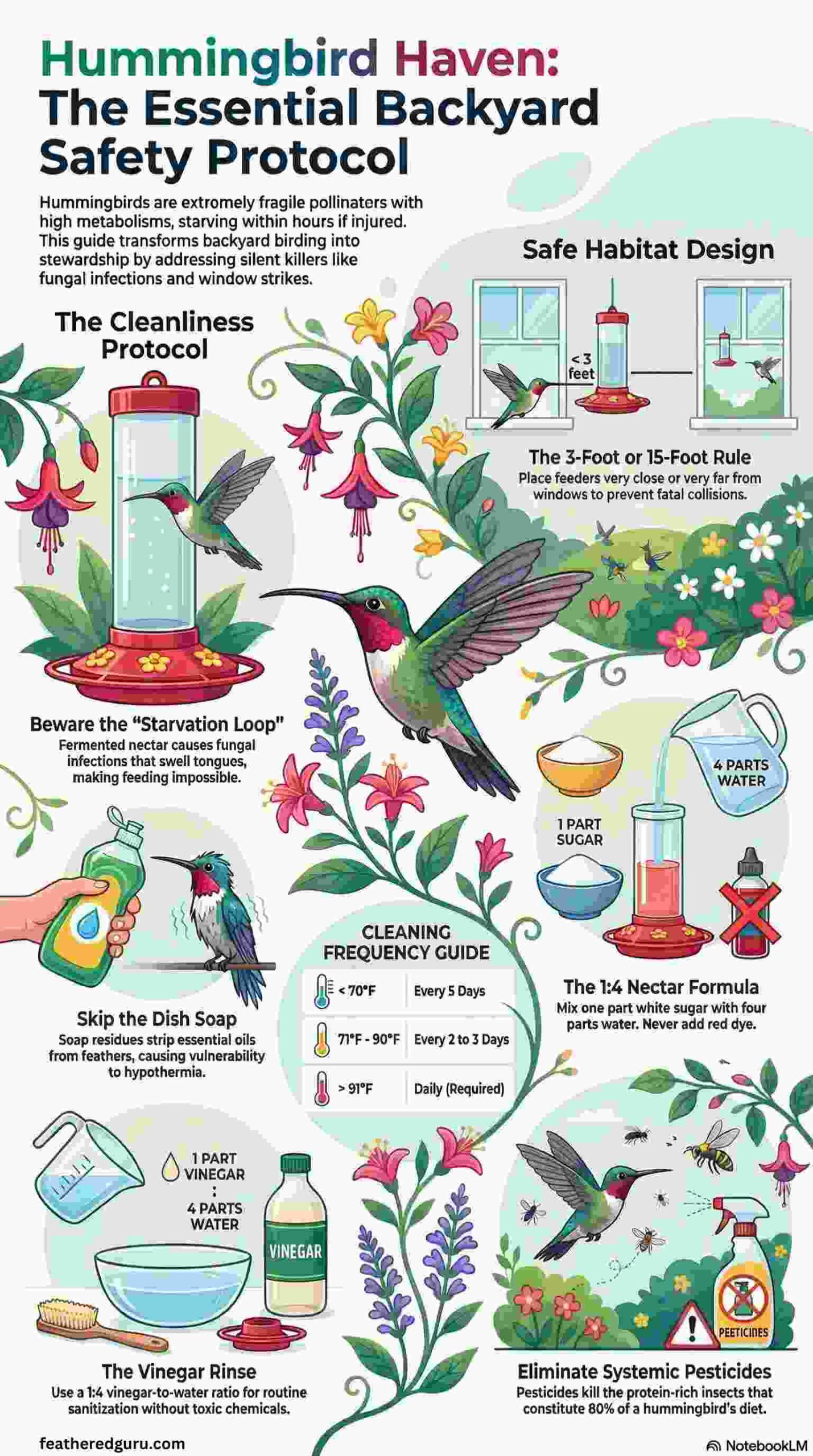
The Hummingbird Safety Checklist: Everything at a Glance
Still memorizing the steps? Use this visual summary as a quick-reference guide to ensure your backyard stays a five-star sanctuary all season long.
Conclusion: Prevention Through Knowledge
Hummingbird safety requires understanding the unique vulnerabilities created by extreme metabolism, small body size, and specialized feeding behavior. These birds cannot tolerate contamination levels that larger birds handle without issue. They cannot survive pesticide exposures that songbirds endure. Their protein requirements make them dependent on insect populations that most people never notice disappearing.
The good news is that most hummingbird deaths from backyard hazards are completely preventable through informed management. Temperature-based cleaning schedules prevent fungal infections. Proper feeder placement eliminates window strikes. Removing systemic pesticides protects both the birds and the insects they require. Avoiding red dyes and brown sugar prevents chronic toxicity. These simple actions, applied consistently, transform deadly landscapes into safe havens.
Success requires viewing hummingbirds not as decorative additions to gardens but as wild animals with specific biological needs and vulnerabilities. When those needs are met and those vulnerabilities are addressed through science-based management, hummingbirds thrive. When well-intentioned people rely on outdated advice or commercial products marketed for convenience rather than safety, birds die despite everyone’s best intentions.
The choice is simple. Follow the protocols outlined in this guide, prioritize bird health over convenience, and create habitats where hummingbirds flourish. Or continue with traditional practices that look right but deliver wrong outcomes. The birds themselves provide the feedback, returning year after year to yards that keep them safe and disappearing from yards that don’t.
For additional information on supporting hummingbird populations, explore guides on attracting hummingbirds to your yard, selecting plants that provide natural nectar, and making safe homemade nectar. Understanding hummingbird biology and behavior and migration patterns provides additional context for creating year-round support for these remarkable birds.