
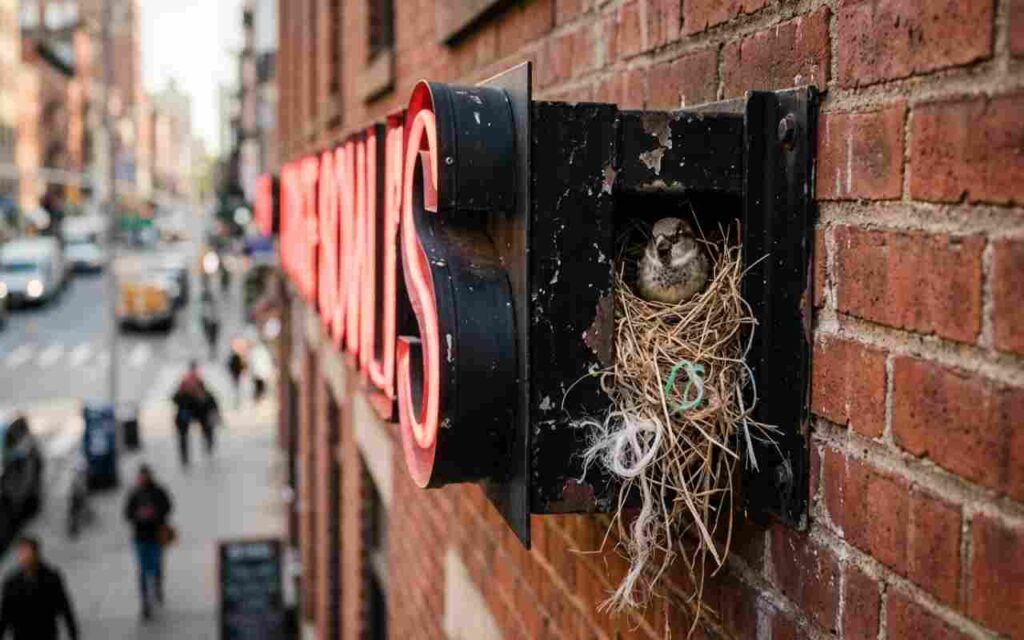
Walk down almost any city block and look up at the gap behind a storefront sign. You will likely see a tuft of dry grass and a fragment of a plastic bag wedged into the mounting bracket. This isn’t just random debris; it is the biological blueprint of House sparrow nesting habits in urban areas: a survival strategy refined over ten millennia of co-evolution with human architecture.
As a true anthropodependent species, the House Sparrow (Passer domesticus) has transformed our infrastructure into a vertical forest. From the hollow channels of neon signage to the pressurized airflow of HVAC vents, their reproductive success is now structurally anchored to the foundations of our settlements.
In these concrete jungles, the Urban Heat Island effect creates a thermal loophole, extending the breeding season by several weeks and allowing for up to four annual broods. However, this architectural exploitation comes with a physiological cost, a paradox known as the Urban Penalty. This guide audits the forensic details of city nesting, from thermal site selection to the practical management of this persistent urban resident.
Quick Answer: Where do House Sparrows nest in urban areas?
In urban environments, House Sparrows are secondary cavity nesters that exploit man-made infrastructure, primarily nesting in building eaves, HVAC vents, storefront signage letters, and gas station roofs. They favor high-density areas with older architecture, such as open clay tiles or traditional brickwork, which offer more crevices than modern glass facades. Urban nests are often 8–30 feet off the ground for predator protection and are constructed using a mix of dried grass and anthropogenic materials like string, paper, and plastic. Breeding typically begins in March and can continue through August, with pairs raising up to four broods per season.
Urban Architecture: A Video Field Briefing
Understanding how House Sparrows exploit the “Thermal Loophole” of city life requires a closer look at the intersection of biology and engineering. To provide a clearer perspective on the Gap Metrics and Urban Penalty discussed in this guide, I have compiled a focused video analysis that audits the specific structures these birds prioritize in high-density urban environments.
Show Transcript:
0:00
It started with a faint scratching sound inside my wall. For weeks, I assumed it was pipes or maybe mice, but it kept getting louder. What I discovered was not a pest problem, but the beginning of a deep dive into urban bird behavior and house sparrow nesting habits.
0:24
That noise was a house sparrow. And I quickly realized these small brown birds are not just random visitors. They are highly adapted urban birds running a surprisingly advanced nesting system right inside our buildings.
0:45
The sound always happened when I used my dryer. So I checked the vent and saw a sparrow poking its head out with grass in its beak. That is when it clicked. I did not have a rodent problem. I had a nesting bird using my home.
1:04
I started observing more closely. Not just my house, but nearby buildings too. It became clear that sparrows are not choosing random spots. They select nesting sites based on safety, warmth, and access to materials.
1:30
My dryer vent was perfect sparrow habitat. The opening was small enough to block predators, the hood kept the nest dry, and warm air from the dryer acted like built-in heat for eggs and chicks. Even better, lint provided soft nesting material.
2:01
Once I saw this, I started noticing sparrow nests everywhere. Store signs, vents, gaps in brick walls, and building edges all served as nesting sites. These birds thrive in man-made structures designed for shelter and warmth.
2:27
From a sparrow’s perspective, urban spaces are ideal. Hollow letters on signs act like enclosed shelters. Buildings provide protection from predators and weather while creating stable microclimates for nesting success.
2:51
Older buildings with cracks and eaves offer even more opportunities. In contrast, modern glass and steel buildings are almost unusable for birds. Architecture directly affects bird survival in urban environments.
3:18
Then I learned about the urban heat island effect. Cities retain heat from concrete and asphalt, making them warmer than surrounding areas. This gives house sparrows a major advantage during breeding season.
3:44
In cities, sparrows can start nesting as early as March. That is weeks earlier than rural populations. This extended breeding window allows them to raise more broods per season and increase population growth.
4:16
Next, I looked at what they use to build nests. At first, I expected natural materials like grass and twigs. But urban sparrow nests are a mix of natural and human-made debris.
4:37
They use paper, plastic, string, and other waste. But one material stood out. Research shows that nearly 90 percent of urban house sparrow nests contain cigarette butts.
5:04
At first, this seemed harmful. But there is a surprising reason. The nicotine in cigarette filters acts as a pesticide, reducing mites and parasites that can harm nestlings.
5:27
However, this comes at a cost. The same chemicals that protect the nest can cause DNA damage in chicks. Sparrows are adapting to urban environments, but not without consequences.
5:50
This led me to a bigger concept called the urban penalty. Even though city bird populations may appear large, individual birds often face more stress, poor nutrition, and lower health compared to rural birds.
6:16
Urban sparrows rely heavily on human food like bread and scraps. While this provides calories, it lacks the protein young birds need, especially from insects. Survival is possible, but optimal health is not.
6:41
So while house sparrows are successful in cities, their lifestyle involves trade-offs. Fewer predators, but lower-quality food and exposure to pollutants.
7:14
This brought me back to my own home. That scratching noise turned into a real lesson about urban wildlife and bird adaptation. I realized I needed a balanced approach.
7:31
After the nesting season ended, I inspected my home. Any gap larger than about an inch can become a nesting site. I installed a vent cover and sealed openings with wire mesh.
7:56
The goal was not to eliminate birds, but to prevent unsafe nesting in vents while allowing them to use more suitable locations nearby. This is a practical approach to bird control and home protection.
8:15
That small experience completely changed how I see my surroundings. Buildings are not just structures. They are part of a shared ecosystem with urban birds and wildlife.
8:34
Now, when I hear birds or see movement around buildings, I recognize the behavior behind it. House sparrows are resilient, adaptable, and constantly interacting with the environments we create.
8:58
Next time you walk outside, take a closer look at vents, signs, and small gaps in buildings. You might not just see a bird. You might see a carefully chosen nesting site and a species that has mastered urban survival.
The Architectural Forensic: Top Urban Nest Sites
HVAC and Utility Vents: The Goldilocks Zone
Dryer vents, kitchen exhaust ports, and HVAC intake openings represent the most consistently occupied urban nest sites across North America and Europe. These openings share a cluster of structural features that align precisely with what house sparrows seek: a circular or rectangular opening in the 3-to-4-inch diameter range and a horizontal or downward-angled entry that resists rain intrusion.
Warmth from the exhaust or intake flow and physical inaccessibility to most predators complete the picture. This combination of thermal stability and security makes active HVAC infrastructure among the most desirable real estate a city sparrow can find.
Dryer vents are particularly favored because they emit warm, humid air during active use, which maintains nest temperature and accelerates egg incubation during cold spring nights. The lint that accumulates around vent openings is also directly incorporated as soft lining material, creating a ready-made insulation layer the birds did not have to gather from elsewhere.
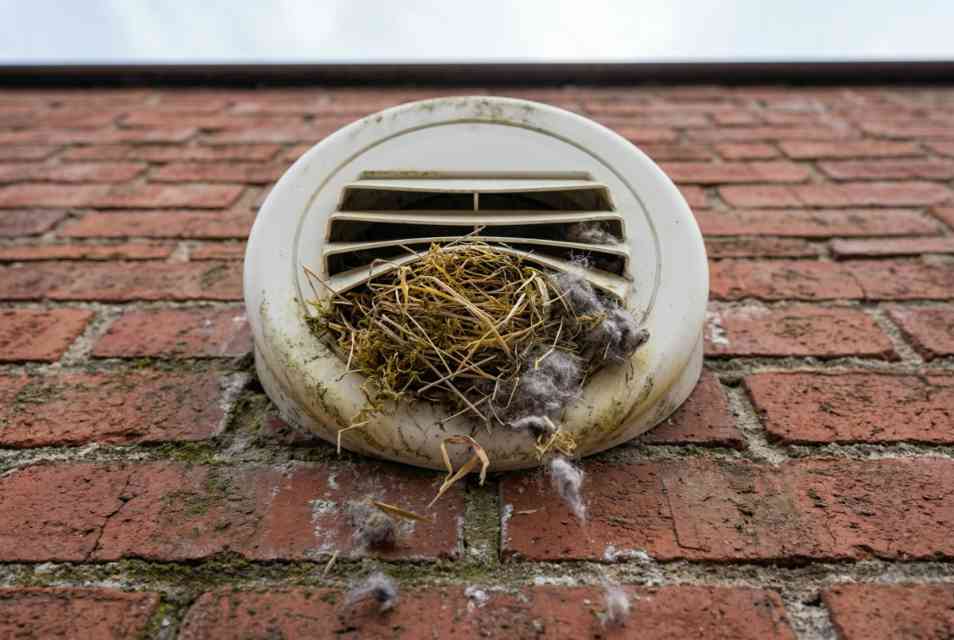
The practical problem this creates is significant. A nest built inside a dryer vent constitutes a fire hazard and reduces appliance efficiency. Building managers in cities where house sparrows are established should conduct quarterly inspections of all accessible vent openings and install fine-mesh exclusion screens rated for the appropriate airflow volume before the February-to-March nest site selection window.
Storefront Signage and Channel Letters: Predator-Proof Architecture
The hollow plastic and metal channel letters used in illuminated storefront signs are among the most secure house sparrow nest sites in any urban environment. Each letter is essentially a sealed cavity with a single small opening at the back mounting point, predator-proof walls, and a light source that generates low-level warmth during operating hours.
House sparrows access these cavities through the cable entry gaps or through the open back panels of letters that are not flush-mounted against the facade. Once inside, the enclosed cavity provides complete protection from aerial predators and from the rain. The warmth from the lamp or LED array creates a microclimate that can raise interior nest temperature several degrees above ambient, a meaningful advantage during early spring breeding attempts when overnight temperatures are still variable.
A study of urban house sparrow nest site selection published in Urban Science (Bernat-Ponce et al., 2024), which mapped 584 house sparrow nests across three Spanish cities, confirmed that the species strongly prefers enclosed cavity structures associated with buildings.
Proximity to parks offering invertebrate prey and to food-generating locations such as schools and outdoor cafes also predicted nest placement. This reinforces that urban sparrows select nest sites as integrated components of a foraging territory rather than in isolation.
Eave and Frieze Board Advantages: Why Older Buildings Win
Modern glass, steel, and smooth concrete facades offer almost nothing to a cavity-seeking sparrow. The trend toward flush, gap-free building construction in contemporary urban architecture is one of the documented contributors to house sparrow population decline in European cities, where the replacement of Victorian and Edwardian brickwork with modern glass facades has reduced available nest sites in inner-city neighborhoods by measurable amounts.
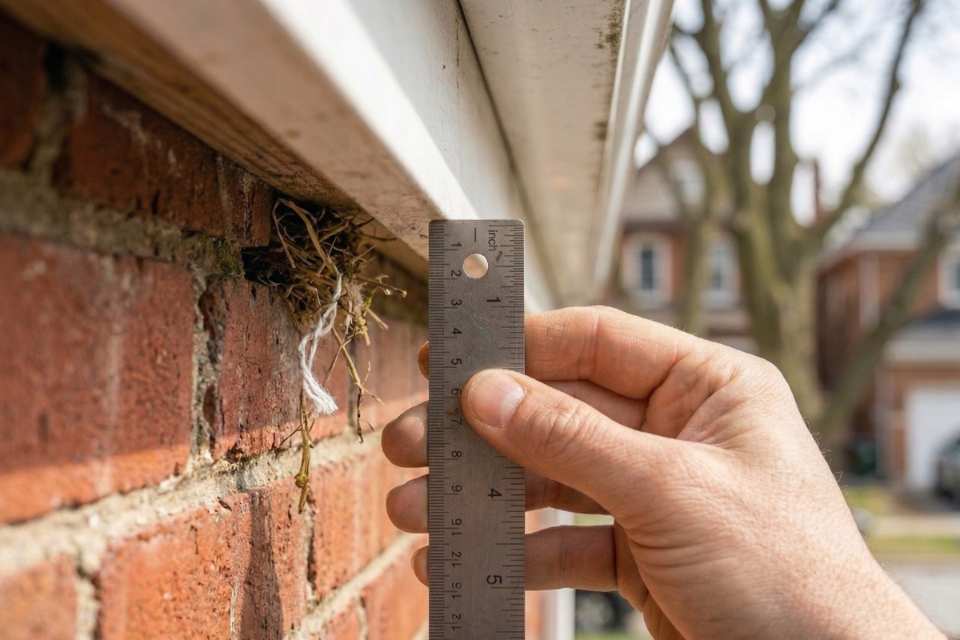
Older masonry buildings, by contrast, are riddled with sparrow-scale cavities. Gaps between mortar courses and brickwork that has pulled slightly away from lintels, spaces behind decorative frieze boards and corbeling, the voids behind loose soffits and under deteriorating wooden eave fascia, all of these provide the 1.25-to-1.5-inch entry opening that admits a sparrow while excluding most competitors and predators.
Cornell Lab of Ornithology’s All About Birds documents that house sparrows strongly prefer man-made structures including eaves, walls of buildings, and street lights over natural nest sites such as tree holes. This preference is not simply behavioral flexibility: it reflects the species’ evolutionary history as a secondary cavity nester adapted to the architectural vocabulary of human settlement across millennia.
The vertical placement preference is also structured. Urban sparrows concentrate nesting activity in a band roughly 8 to 30 feet above ground level. This range places nests above the reach of terrestrial predators while keeping them below the heights where wind exposure becomes a nest stability risk and where access from building elements such as roof edges, gutters, and eave overhangs is most reliable.
Urban Breeding Cycles: The Heat Island Effect
The Urban Heat Island (UHI) is the documented phenomenon in which city environments are measurably warmer than surrounding rural and suburban areas, driven by heat retention in asphalt, concrete, and building surfaces, reduced vegetative cover, and waste heat from human activity and infrastructure.
For the house sparrow, the UHI is a reproductive advantage. Research synthesized in a comprehensive review published in Global Change Biology (PMC) confirmed that in temperate continental and polar cities, the UHI relaxes thermoregulatory costs for birds during winter and can extend the effective breeding season by allowing earlier nest initiation in spring and later brood attempts in autumn.
In practical terms, an urban sparrow in Chicago or Toronto can initiate first clutches several weeks earlier than its rural counterpart. It can often squeeze in an additional brood cycle per season that would not be energetically feasible in cooler surroundings.
In most of North America and temperate Europe, house sparrows can produce 2 to 4 broods per season. In warmer cities and southern latitudes, up to 5 or 6 clutches have been documented in a single year.
Each clutch contains 3 to 5 eggs, and incubation lasts 11 to 14 days, with fledging at 14 to 17 days post-hatch. The compactness of this timeline means a productive urban pair can move from nest initiation to independent fledglings in under 6 weeks per brood.
The warmth of urban nest sites, particularly those associated with active HVAC vents or electrical signage, contributes an additional thermal subsidy on top of the broader UHI effect. Nest sites that maintain above-ambient temperature through equipment waste heat can extend the effective breeding window by weeks at the extremes of the season, further increasing the potential brood count for pairs occupying premium city infrastructure.
Anthropogenic Nesting: Building with City Refuse
The house sparrow nest is architecturally simple but compositionally complex. The structural layer consists of coarse materials: dry grass stems, plant stalks, and, in urban environments, shredded paper, synthetic fiber, and plastic twine. The inner lining is soft and insulating: fine grass, hair, and feathers dominate in natural environments, but urban nests substitute dryer lint, cotton batting, synthetic foam fragments, and string in significant proportions.
A field study published in PubMed (Radhamany et al., 2016) examined the nest composition of house sparrows across urban, suburban, and rural gradients in southern India, identifying 11 plant species, 2 types of animal matter, and 6 distinct categories of anthropogenic material in collected nests, including plastic pieces and fine rope.
The study confirmed that urban nests contained a measurably higher proportion of synthetic and processed materials than rural ones. The proportion of anthropogenic material increased in step with urbanization level, consistent with the availability hypothesis: birds incorporate whatever material is locally accessible in the required particle size and texture range.
Research published in PMC (Philosophical Transactions of the Royal Society B) found that anthropogenic nest materials are now routine components of urban songbird nests globally. Cotton threads, plastic broom fibres, paper, sweet wrappers, cigarette butts, polyethylene, paper towels, wet wipes, synthetic cotton, dental floss, and bottle labels have all been documented in urban bird nests.
The availability hypothesis proposes that birds use whatever materials their immediate territory provides in the required particle size and texture range. For city sparrows, that territory is stocked with industrial and domestic waste rather than plant fiber.
Cigarette filters deserve specific attention because their incorporation is not purely opportunistic. Suárez-Rodríguez et al. (2013), published in Biology Letters, found that house sparrows actively selected cigarette butts as nest lining material.
Nests containing cellulose fibers from cigarette filters had measurably lower ectoparasite loads than those without. The nicotine residue appears to act as a chemical repellent against mites and other nest ectoparasites, and 89.29% of analyzed house sparrow nests contained cellulose from cigarette butts.
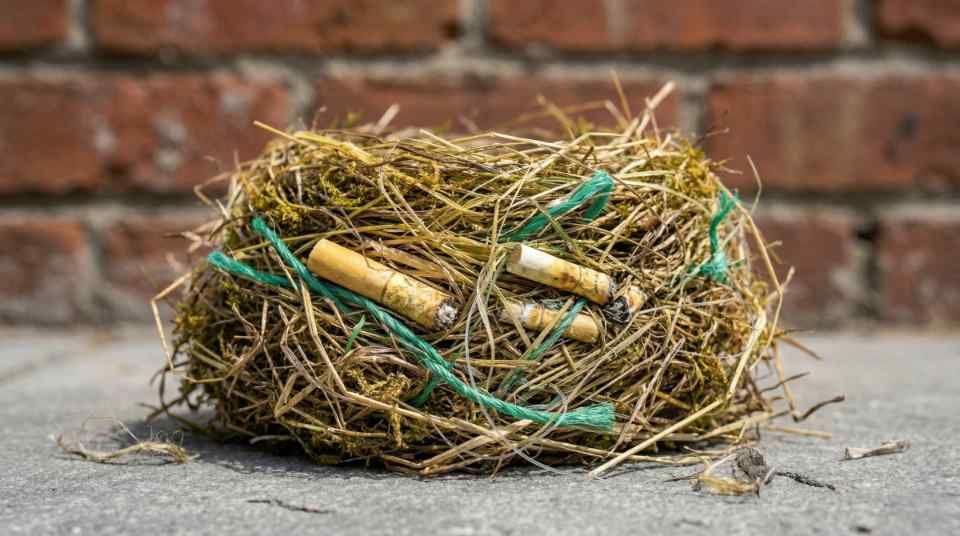
There is, however, a documented cost. Research published by Suárez-Rodríguez and Macías-García (2014) found that chicks raised in nests with high cigarette filter content showed genotoxic effects, measurable DNA damage in cells, that were not present in chicks from nests with lower filter incorporation. The short-term parasite deterrent comes with a long-term developmental cost that may contribute to the reduced fledgling body condition documented in some urban populations.
The Urban Penalty: Why City Success Is a Paradox
The house sparrow is an “urban exploiter,” a species that reaches higher population densities in cities than in any natural habitat. Yet the same research literature that documents its urban abundance also consistently documents its urban disadvantage: urban house sparrows are smaller, leaner, and produce lower-quality fledglings than their rural and suburban counterparts, even when adult food supply is reliable.
The paradox has several interlocking causes. High nest density in urban environments elevates competition for the best cavity sites and increases the frequency of nest intrusion by other sparrows.
The food supply for nestlings, which depends on accessible invertebrates, is structurally impoverished in densely paved city centers where soil and vegetation are minimal. And the diet of urban adults and chicks skews toward human food waste, especially bread, which is nutritionally poor relative to the seed and insect diet that fuels healthy sparrow development in agricultural and suburban settings.
Vitamin D deficiency has been proposed as a specific mechanism in urban chick mortality. Urban nestlings raised primarily on bread scraps and other processed carbohydrates lack both the vitamin D precursors found in insect prey and the UV radiation exposure, often blocked by building shadows and pollution particulates, that allows birds to synthesize vitamin D through skin metabolism.
This deficiency compromises bone development, immune function, and post-fledging survival. The result is a population that reproduces at high rates but loses a disproportionate share of its output before those fledglings reach breeding age.
The net result, documented in multiple European urban monitoring studies, is that city house sparrow populations can maintain apparent numerical stability through high breeding frequency while actually experiencing a chronic recruitment deficit. The flock you see foraging outside a sandwich shop today represents a population that is, on average, reproducing at or near the replacement threshold rather than growing.
Protecting Infrastructure: Preventing Urban Nesting
Exclusion Metrics: The Gap-Sealing Standard
The most effective long-term strategy for preventing house sparrow nesting in building infrastructure is exclusion: physically sealing all openings below the 1.25-inch threshold before nest site selection begins in late winter.
House sparrows require a minimum entry opening of approximately 1.5 inches in diameter to access a nest cavity comfortably. Openings smaller than 1.25 inches (approximately 3 cm) are generally impassable for adults of the species.
This defines the exclusion standard: any gap, vent opening, or structural void below that threshold should be sealed or screened with hardware cloth or stainless steel mesh rated at 3/4-inch opening or smaller, which is fine enough to exclude sparrows without blocking airflow for vent applications.
The practical importance of cavity access for urban populations was confirmed experimentally by Angelier and Briscoux in a field study published in the Journal of Avian Biology (Wiley). Equipping 11 sites along an urbanization gradient in western France with nest boxes, they found that rural sites showed higher nest box occupancy than urban ones.
This indicates that in medium-sized cities with typical mixed architecture, cavity availability is not the only limiting factor, but that in larger and more densely modernized cities it becomes a meaningful constraint. The study underlines that the architectural quality of the building stock, specifically the presence of cracks, eave gaps, and traditional tiled roofs, directly determines local house sparrow nesting density.
Timing is critical. House sparrows in most of North America begin investigating potential nest sites in late February, with active nest construction beginning in March. Exclusion work conducted before mid-February prevents site acquisition entirely.
Exclusion attempted after a pair has begun nest construction but before eggs are laid is legally permissible, as house sparrows are not protected under the Migratory Bird Treaty Act. Exclusion attempted after eggs are present is both legally and practically more complex. For guidance on navigating these timelines, our guide on how to stop birds from nesting in vents covers the full exclusion protocol.
Behavioral Deterrence: Reflective Surfaces and Optical Gel
Where physical exclusion is not practical, behavioral deterrence products have documented effectiveness for ledge and open-surface nest sites. Reflective tape and metallic flash strips disrupt the predictable visual environment that house sparrows use to assess site safety. Surfaces that shimmer unpredictably read as unstable or dangerous, and sparrows preferentially avoid them for nest site establishment.
Optical gel products, sold under brand names such as Bird-X and Transparent Bird Gel, create a surface that birds perceive visually as fire or a hazardous reflection and physically as an unstable, sticky substrate. These products have been used on urban window ledges, sign letters, and parapet walls where exclusion mesh cannot be installed without compromising the architectural surface.
Neither reflective tape nor optical gel is a permanent solution. Both lose effectiveness over time as birds habituate to the visual signal or as the product degrades under UV exposure. They are most effective when applied as part of a short-term management cycle during the nest site selection window and combined with the physical exclusion of the cavities the birds are most likely to target.
Urban vs. Rural Nesting Forensics
| Variable | Urban | Rural / Suburban |
|---|---|---|
| Preferred nest site | HVAC vents, signage letters, eave gaps, traffic signals | Building eaves, tree cavities, barn rafters, nest boxes |
| Nest height range | 8–30 ft (concentrated near human activity) | 4–40 ft (wider range, more tree sites) |
| Primary structural material | Dry grass, shredded paper, plastic twine | Dry grass, plant stalks, coarse plant fiber |
| Primary lining material | Dryer lint, synthetic fiber, feathers, cigarette filters | Feathers, fine grass, animal fur, plant down |
| Broods per season | 3–5 (extended by UHI warmth) | 2–3 (limited by cooler spring/autumn) |
| Nest initiation date | Late February to early March | Late March to April |
| Fledgling body condition | Lower (poorer invertebrate supply, bread diet) | Higher (more diverse insect prey available) |
| Predator pressure | Lower (fewer raptors, enclosed cavities) | Higher (more aerial predators, open sites) |
| Ectoparasite load | Variable (cigarette filters in lining may suppress) | Typically lower due to natural lining materials |
| Population trend | Declining in many European cities since 1990s | More stable; agricultural areas provide grain |
The 2026 Urban Nesting Site Blueprint
The house sparrow’s vertical preferences in urban environments cluster in a predictable band. Ground-level sites below 8 feet are actively avoided because they are accessible to cats, rats, and dogs. Sites above 30 feet on unprotected facades face wind exposure and require approach flights that increase predation risk from perched hawks.
The optimal range, 8 to 30 feet, concentrates around the features most common at that height in a typical city block: storefront eave lines, second-story window ledges, commercial signage mounting brackets, and the utility infrastructure that clusters on the first and second floors of mixed-use buildings.
Within that vertical band, sparrows prioritize cavities on the south and west faces of buildings, which receive maximum solar warming through the day. East-facing sites are less preferred because they lose solar gain in the afternoon when ambient temperatures are typically at their daily high. North-facing cavities are strongly avoided except in high-density urban cores where the UHI effect is pronounced enough to partially compensate for the solar deficit.
The horizontal selection logic is proximity to food. Nests are sited within the adult foraging range, typically less than 200 meters from reliable seed or scrap food sources. In practice, this means feeders, outdoor dining areas, fast-food service entrances, park benches, and transit station platforms all function as anchor points around which nest site selection clusters within the surrounding building fabric.
Coexisting with the City’s Most Resilient Resident
The house sparrow’s urban nesting success is a product of thousands of years of mutual adaptation between the species and human built environments. Every architectural feature we consider standard, the cavity behind a sign, the gap above a door frame, the vent in a foundation wall, maps onto a feature the sparrow’s nesting behavior has been shaped to exploit.
Coexistence on manageable terms requires understanding that behavioral deterrence and physical exclusion must be applied proactively, before site selection occurs, and maintained consistently. A pair that establishes a successful nest site in a city building will return to that site in subsequent years with strong fidelity. A pair that cannot access its preferred site may shift to a secondary site rather than leaving the territory entirely.
The most effective long-term management posture is not total exclusion but selective exclusion: identifying and sealing the infrastructure sites that create genuine damage or hazard, primarily vent systems and electrical enclosures, while tolerating or even providing purpose-made nest boxes at alternative sites.
Purpose-built house sparrow nest boxes installed at appropriate heights on building facades redirect nesting activity away from problematic infrastructure. This approach removes the birds from conflict zones without removing them from the urban ecosystem entirely.
For the deeper picture of how house sparrow territorial behavior, foraging patterns, and social dynamics shape their impact on a managed yard or building, our guide to house sparrow habits covers the full behavioral ecology of this species across all seasons.
For managers dealing with active feeder competition, our article on how to keep house sparrows away from feeders translates the same biological understanding into practical deterrence strategies. And if you are trying to distinguish house sparrows from similar native species at your feeder or nest box, our guide to house sparrow juvenile vs adult identification covers the key plumage and behavioral markers at every life stage.
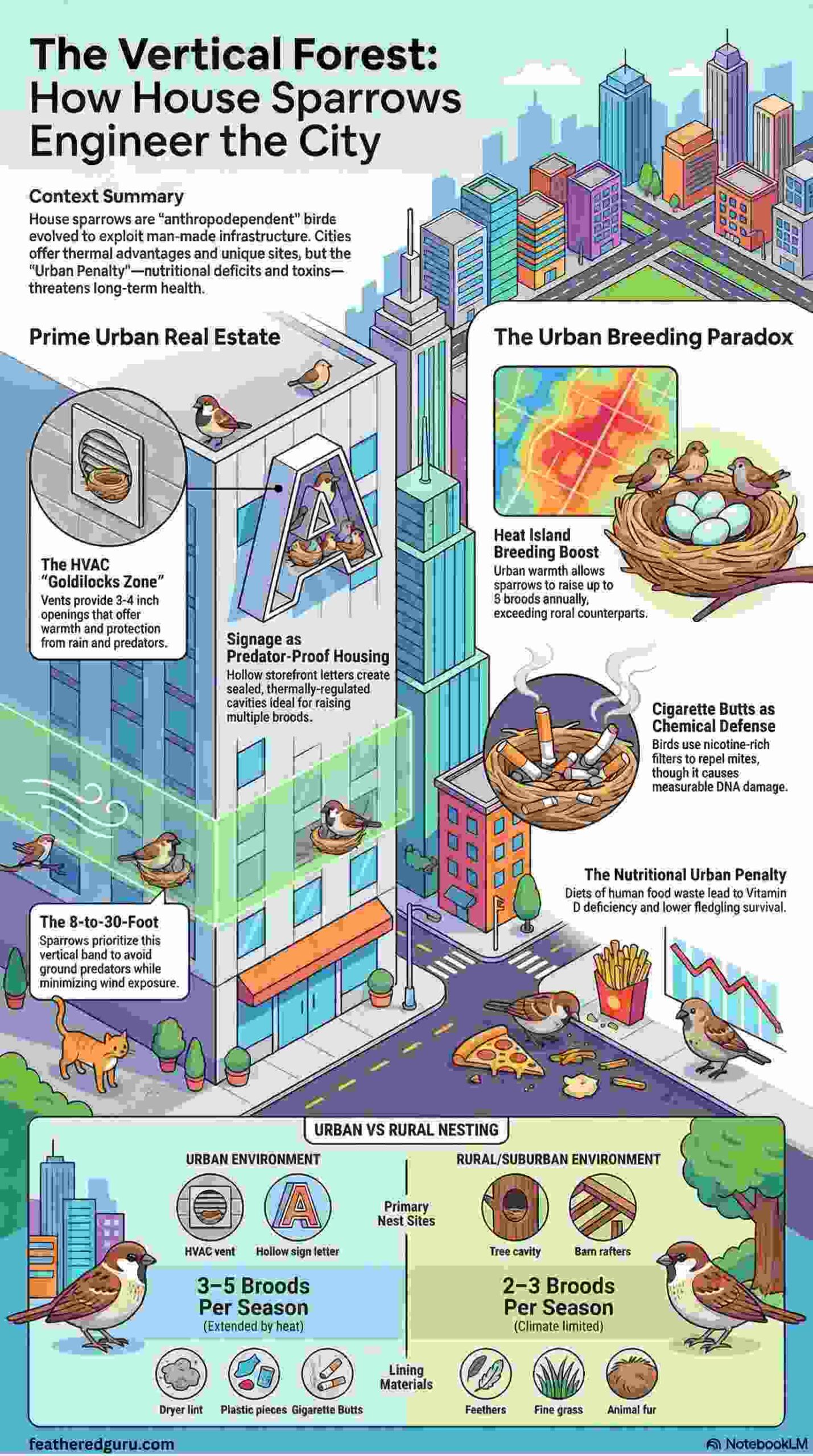
The Urban Blueprint: A Seasonal Nesting & Foraging Roadmap
The House Sparrow’s ability to thrive in a concrete jungle depends on a synchronized cycle of architectural exploitation and opportunistic foraging. To help you visualize the intersection of the Urban Heat Island effect, Gap Metrics, and the Urban Penalty discussed in this guide, I have prepared a technical roadmap. This infographic audits the seasonal shifts that allow city-dwelling pairs to outproduce their rural counterparts while navigating the constraints of urban infrastructure.
Conclusion: Mastering the Urban Nesting Blueprint
House sparrow nesting habits in urban areas are not a random adaptation but a highly evolved biological blueprint. By exploiting the Urban Heat Island for a “thermal subsidy” and navigating the Urban Penalty of city resource scarcity, these birds have anchored their reproductive success directly to our infrastructure.
For the modern building manager or homeowner, successful coexistence is built on three forensic pillars:
- Precision Exclusion: Maintaining a strict 1.25-inch gap-sealing standard before the February site selection window.
- Infrastructure Audit: Prioritizing high-risk zones like HVAC vents and storefront signage for proactive screening.
- Adaptive Tolerance: Using purpose-built nest boxes to redirect activity away from critical utility systems without removing the species from the urban ecosystem.
Understanding these architectural loopholes is the key to managing the city’s most resilient resident while preserving the structural integrity of the built environment.