
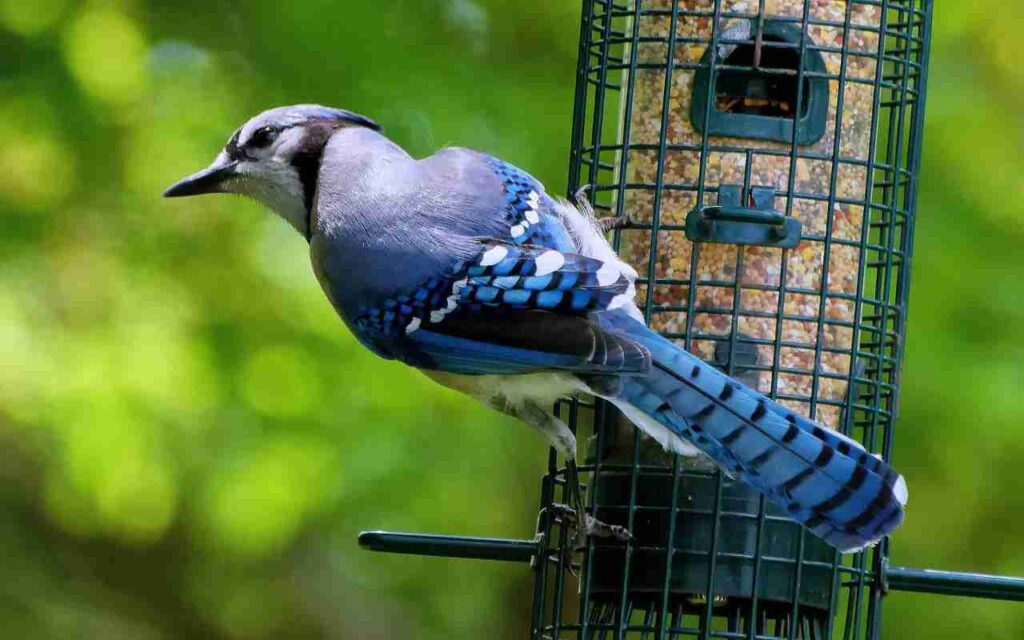
Blue jays are beautiful birds, but let’s be honest, they’re the bullies of the backyard. If you’ve ever wondered how to keep blue jays away from bird feeders, you know the struggle. These loud, pushy birds can clear your feeders in minutes, leaving smaller songbirds like cardinals and finches no chance to eat. I spent a whole spring watching them take over and finally decided it was time to do something about it, without harming them.
The good news? You don’t have to pick between enjoying your backyard and keeping peace at the feeders 😌. With a few simple tweaks, smarter placement, better seed choices, and the right feeder styles, you can discourage blue jays while still creating a safe, welcoming space for smaller birds. Let me walk you through exactly how I solved this problem.
- Swap black oil sunflower for safflower seed — blue jays dislike it.
- Use cage-style or weight-activated feeders to block larger birds.
- Mount feeders 5–6 feet high and space them 10–15 feet apart.
- Set up a separate feeder 30+ feet away for blue jays with peanuts or sunflower.
- Keep main feeders spotless — smaller birds prefer clean feeding spots.
- Limit tree cover near feeders to prevent blue jays from ambushing.
- Feed at different heights to separate bird species naturally.
- Don’t try to eliminate blue jays — redirect them instead for a balanced yard.
Understanding Blue Jay Behavior and Feeding Habits
Show Transcript
All right, let’s talk about a classic backyard birding headache: the blue jay.
You know, they’re bold, they’re beautiful, but man, they can be a little overbearing. If you’re someone who loves feeding birds but gets frustrated by these super smart corvids—that’s the bird family with crows and ravens—this is for you. We’re going to figure out how to manage your feeders so everybody gets a fair shake.
I mean, does this sound familiar? You put out all this fresh seed, step back to enjoy the little finches and chickadees, and bam—a flash of blue descends, scattering everyone. It happens all the time. But today, we’re going to get it sorted out.
First things first, before we can fix the problem, we’ve got to understand what’s actually going on. Why do blue jays act like this? It’s not just them being mean. It’s a very specific strategy, driven by just how smart they are.
We tend to see them as backyard bullies, but ornithologists see them as intelligent competitors. Experts at the Cornell Lab of Ornithology always remind us they’re not malicious—they’re simply outcompeting everyone for a food source they’ve cleverly found.
The goal here is not to banish blue jays. They are a native species and belong here. The real goal is smart management—redirecting all that energy so all your birds can coexist peacefully.
Okay, let’s get down to business. First, we’re putting together what I like to call the anti-J feeder kit. This focuses on two things: the menu and the hardware.
Rule number one: if your feeders are overflowing with peanuts and black oil sunflower seeds, you’ve basically rolled out the red carpet for every blue jay in the neighborhood. Step one is to become a more selective restaurant owner. Swap out what jays love and put in what they don’t.
The game changer here is safflower seed. Smaller birds like cardinals and finches are fine with it, but blue jays find it bitter and usually leave it alone. Tiny niger seed works the same way—perfect for finches, too much hassle for a big blue jay.
Once you’ve changed the menu, remodel the dining room. The type of feeder you use can either welcome jays or show them the door. Open platform feeders are an open invitation. Cage-style feeders keep them out while allowing chickadees and nuthatches in. Weight-activated feeders snap shut when a heavy bird like a blue jay lands.
Next, look at the layout of your backyard. Where you place feeders matters. Twelve feet of open space around feeders is the minimum. Blue jays are smart predators and will ambush smaller birds if you don’t create this buffer.
Height and spacing are your best friends. Five to six feet high is ideal, and spacing feeders 10 to 15 feet apart prevents one territorial jay from guarding them all. This gives the smaller birds openings to feed safely.
Now, for the single most effective move—diplomacy. Instead of keeping jays out, invite them to a designated spot. Set up a feeder just for them, away from your other feeders. Fill it with peanuts, corn, sunflower seeds. Jays are territorial—they will claim this feeder as their own, spending energy defending it instead of raiding your main stations.
Place this dedicated jay feeder about 30 feet from your main feeding area. This creates two distinct zones: one for jays, one for everyone else. Backyard diplomacy—giving jays what they want, on your terms, creates balance for your entire backyard community.
Finally, a few fine-tuning tricks. Use cleanliness strategically: smaller birds prefer a spotless feeder, while jays are less picky. When cleaning, follow Audubon recommendations: scrub with soap and water, then soak in a vinegar solution. Vinegar is a natural, bird-safe disinfectant.
Other tips: add a lower feeder 3-4 feet off the ground for ground-feeding birds, vary refill times to prevent predictable schedules, and consider bringing feeders in at dusk to stop early morning raids.
At the core, blue jays are vibrant, intelligent, and part of the natural backyard world. The goal is understanding them and working with their nature to create a backyard everyone can enjoy. By redirecting jays and protecting songbirds, you get the best of both worlds.
So, are you ready to become a backyard diplomat and bring peace and balance back to your feeders?
Before you can manage blue jays, you need to understand what drives them. Blue jay behavior is fascinating but frustrating, these birds are intelligent, aggressive, and incredibly food-motivated. According to the Cornell Lab of Ornithology, blue jays are known for their intelligence and complex social systems, and they remember every feeder location.
They remember every feeder location, they scout out new food sources constantly, and they don’t hesitate to chase away smaller birds. Here’s the thing: blue jays aren’t being mean just for fun. They’re following their natural instincts. In the wild, they compete fiercely for resources, and your feeder represents an easy, reliable food source. Feeding habits vary slightly by season, but year-round, blue jays prefer high-energy foods like black oil sunflower seeds and peanuts. They’ll also take suet cakes and sunflower hearts without hesitation.
Ever wondered why blue jays seem to have a sixth sense about when you fill your feeders? They do. These birds create mental maps of feeding locations and time patterns. If you fill feeders at 7 a.m. every morning, blue jays learn this schedule. Understanding this behavior is your first tactical advantage.
The Role of Inter-Species Competition at Your Feeders
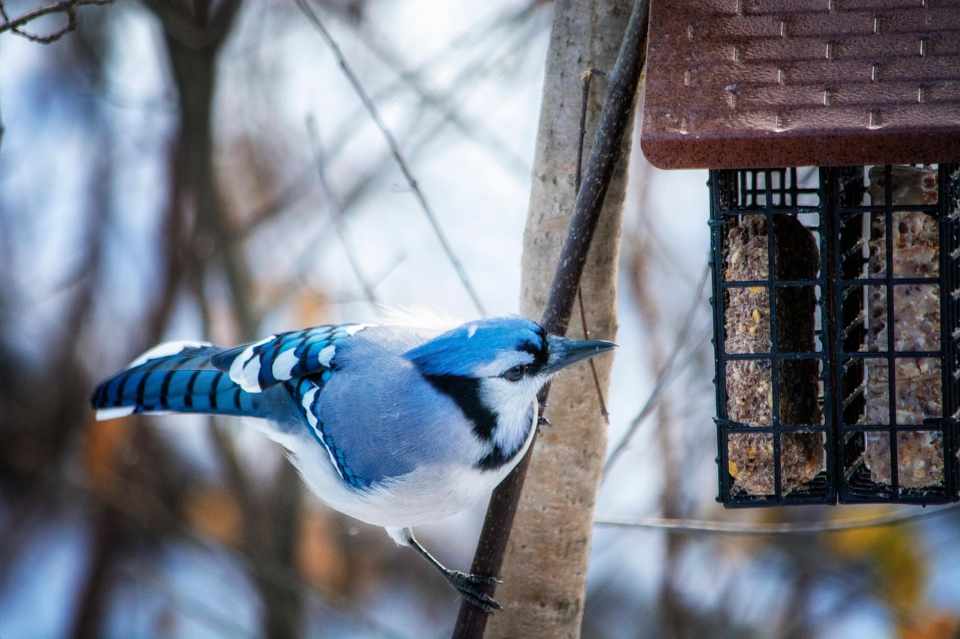
Inter-Species competition at feeders isn’t subtle. When blue jays arrive, smaller birds scatter. Chickadees vanish. Finches disappear. Nuthatches retreat to nearby trees. This isn’t accidental, blue jays actively chase competitors away, and their size advantage makes them incredibly effective bullies.
Eliot Miller at the Cornell Lab of Ornithology analyzed thousands of observations from Project FeederWatch and found that bird feeders often act as arenas where birds compete for access, leading to a noticeable increase in aggressive interactions among certain species.
The tension you’re experiencing is real. Blue jays can consume food faster than smaller species, and they’re bold enough to chase birds mid-peck. I watched a blue jay drive away three cardinals in a single visit, which was both impressive and annoying.
The challenge is that you don’t want to eliminate blue jays entirely (they’re part of your local ecosystem), but you want to reduce their dominance so other species feel safe visiting. This balance is achievable with the right strategy.
Choosing the Right Seed Types to Deter Blue Jays
Your seed selection directly influences which birds visit your feeders. Black oil sunflower seeds are blue jay magnets, they love them. If you’re trying to prevent blue jays at feeders, this seems counterintuitive, but here’s the strategy: by eliminating their preferred foods, you make your feeders less attractive while maintaining quality options for other species.
Safflower seed is your secret weapon. Safflower seed is your secret weapon. According to Birdseed & Binoculars, blue jays don’t seem to prefer it, while many smaller songbirds will still eat it, making it a way to feed desirable backyard visitors without attracting larger birds. The slightly bitter taste deters blue jays specifically while still attracting desirable backyard visitors. I switched my main feeders to safflower, and within two weeks, blue jay visits dropped by about 60%.
Suet cakes deserve special consideration. Blue jays will eat suet, but they struggle with cage-style feeders designed to allow smaller birds access. This is where cage-style bird feeders become your tactical advantage. The cage openings are sized for chickadees and nuthatches but too small for blue jays to fit through comfortably. Want detailed guidance? Our article on how to choose the right bird feeder walks through all your options.
Nyjer seed (thistle) presents another strong option. Blue jays rarely bother with it because the seed is too small and requires specialized feeding technique. Finches thrive on nyjer feeders, and you’ll notice blue jays flying right past them in search of easier meals.
Feeder Design: Cage-Style and Weight-Activated Options
Your feeder design matters enormously. Squirrel-proof feeders and cage-style bird feeders aren’t just about rodent control, they’re essential for blue jay deterrent strategies. These designs physically prevent larger birds from accessing food while welcoming smaller species.
A cage-style bird feeder works through a simple principle: the cage bars allow chickadees and nuthatches to perch and feed, but blue jays can’t fit. I invested in three cage feeders, positioning them strategically around my yard. The transformation was immediate. Smaller birds finally felt safe enough to visit multiple times daily.
Weight-activated feeders offer another layer of protection. When a blue jay lands (they’re heavy birds), the feeder automatically closes access to the seed chamber. Chickadees, being lighter, trigger the feeder to remain open. FYI, some weight-activated models are more reliable than others, so check customer reviews before purchasing.
According to Cornell Lab of Ornithology research, “In one Florida study, Red-bellied Woodpeckers, Red-headed Woodpeckers, Florida Scrub-Jays, Common Grackles, and gray squirrels strongly dominate Blue Jays at feeders, often preventing them from obtaining food,” revealing that blue jays aren’t always the feeders’ dominant species.
Tray feeder placement needs careful consideration if you want to discourage blue jays. Tray feeders sitting on platforms or hanging low are too accessible to aggressive birds. Instead, pair tray feeders exclusively with safflower seed and position them away from your primary feeding area.
Optimizing Feeder Height and Spacing
Where you place feeders influences which birds feel comfortable visiting. Feeder height and spacing isn’t just about aesthetics, it’s strategic bird management.
Mount your primary feeders (the ones you want small birds to use) at 5-6 feet high on sturdy poles. This height makes it harder for blue jays to approach from certain angles, especially if you eliminate perches nearby. Additionally, keep feeders spaced at least 10-15 feet apart. This separation forces birds to commit to individual feeding stations rather than allowing blue jays to patrol an entire cluster of feeders from a single perch.
Consider vertical spacing too. By creating feeders at different heights (some at 4 feet, others at 7 feet), you accommodate different bird species’ preferences. Blue jays tend to dominate mid-height feeders (around 5-6 feet), so positioning your premium feeders lower (around 3-4 feet) with protective cages works surprisingly well.
I installed one feeder at 8 feet high specifically to test this theory. It’s far enough up that blue jays seem to lose interest, probably because they find the access inconvenient. Meanwhile, smaller birds (especially nuthatches and higher-perching species) visit regularly. For more specific placement strategies, check out our guide on how to attract birds during winter.
Tree Proximity and Escape Routes
Here’s a tactical consideration most people overlook: tree proximity matters enormously for bird comfort. Smaller birds need escape routes, but if trees are too close to feeders, blue jays use them as ambush points.
I originally had my feeder hanging from a tree branch (convenient, right?). Blue jays would perch in the tree and wait for smaller birds to approach, then dive-bomb them. When I relocated feeders to be more than 12 feet away from dense tree cover, smaller birds’ confidence improved noticeably.
This doesn’t mean removing all nearby trees. Birds need somewhere to retreat to. Instead, create a buffer zone. Leave trees in the distance, but keep the immediate area around feeders relatively open. This forces approaching blue jays to commit to landing (and you’ll spot them coming).
Creating Separate Feeding Stations for Blue Jays
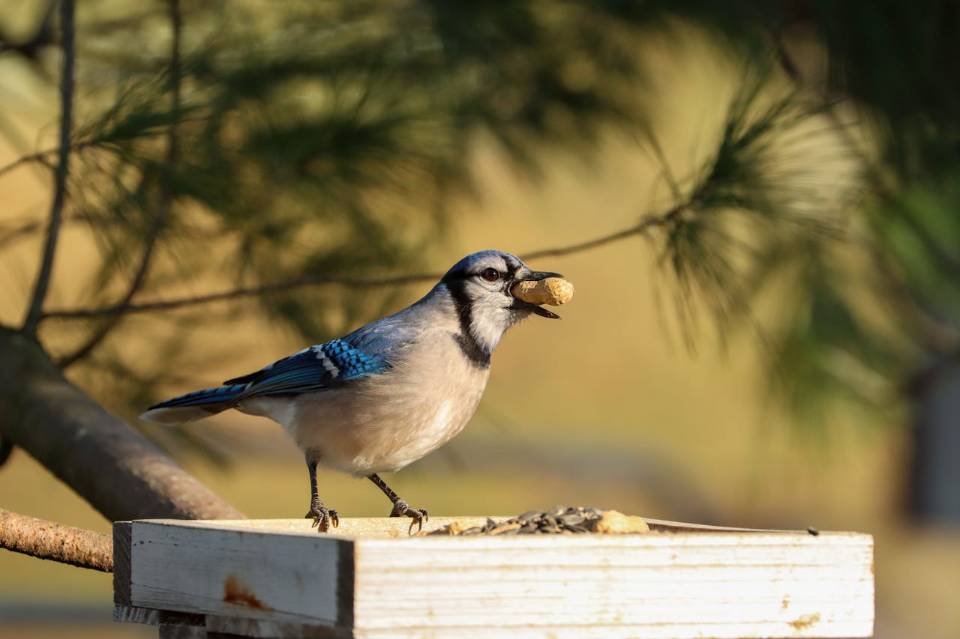
Here’s a counterintuitive strategy: separate feeding stations specifically for blue jays can actually reduce their dominance at your main feeders. This sounds backward, but it works.
I set up a secondary feeder about 30 feet away, filled exclusively with black oil sunflower seeds and peanuts. Blue jays discovered it, and honestly? Many of them preferred that location. By offering an alternative feeding station with their favorite foods, I reduced competition at my primary feeders where I’m trying to attract diverse species.
The trick is making the secondary station attractive and consistently stocked. If you let it run empty, blue jays will simply return to your main feeders. Think of it as strategic appeasement, you’re acknowledging that blue jays belong in your yard while redirecting their energy away from your primary bird-feeding goals.
Implementing Blue Jay-Specific Feeder Strategies
Blue jay-specific feeders exist, though they’re somewhat uncommon. These feeders feature large perches designed specifically for bigger birds, allowing you to dedicate a feeding station exclusively to blue jays (and other larger species like cardinals).
By creating a blue jay-specific feeder setup separate from your finch and chickadee stations, you essentially create parallel feeding ecosystems. Blue jays visit their designated feeder, smaller birds visit theirs, and inter-species competition drops dramatically.
Position your dedicated blue jay feeder in a prominent, visible location away from your primary feeders. Stock it with black oil sunflower seeds, peanuts in the shell, and suet cakes. If you want to explore more feeder strategies, our article on how to prevent bird seed waste covers efficient feeding approaches that reduce waste and manage bird populations effectively.
Blue jays will recognize it as their territory and defend it from other blue jays rather than chasing across your yard terrorizing smaller birds.
Tips to Prevent Blue Jays from Raiding Feeders
To successfully keep blue jays from dominating your feeders, it helps to combine multiple strategies. Here’s a step-by-step approach:
- Remove their preferred foods
Replace black oil sunflower seeds on your main feeders with safflower seed. This simple change can eliminate roughly 60% of blue jay interest immediately. - Use cage-style feeders
Invest in feeders with cages or weight-sensitive mechanisms that block larger birds while still allowing smaller songbirds access. - Optimize feeder placement
Mount feeders 5–6 feet off the ground and at least 10–15 feet away from trees, fences, or other structures that blue jays could use as launching points. - Control feeding times
Remove feeders by dusk each day. This prevents blue jays from learning a predictable routine and stops them from taking over during early morning hours when smaller birds are hungriest. - Set up a secondary feeding station
Place a separate feeder at least 30 feet away, stocked with foods blue jays love, such as black oil sunflower seeds, peanuts, or suet. This redirects their raiding behavior away from your primary feeders. - Maintain cleanliness strategically
Keep your primary feeders spotless, while letting the secondary feeder be slightly messier. Birds naturally prefer clean feeding surfaces, which subtly encourages blue jays to use their designated station instead.
Combine all six strategies, and you’ll turn blue jays from raiders into redirected visitors, protecting your primary feeders for smaller, more vulnerable songbirds.
Regular Feeder Cleaning and Maintenance
Regular feeder cleaning doesn’t just prevent disease, it influences bird behavior. According to Audubon’s guide to safe bird feeding, clean feeders should be scrubbed with soap and water, followed by a 15-minute soak in a vinegar-and-water solution. Clean feeders feel “fresh” to birds, and when you maintain multiple stations at different quality levels, birds gravitate toward the cleanest one first.
I clean my primary feeders (the ones with safflower seed designated for smaller birds) twice weekly. My secondary feeder (for blue jays) I clean weekly. This difference seems minor, but it matters. Birds somehow sense which feeders receive better care.
Dirty feeders also accumulate hulls and debris that blue jays actively avoid. They prefer clean feeding surfaces where they can eat efficiently. By maintaining rigorous cleanliness standards on your main feeders and slightly lower standards on secondary feeders, you unconsciously guide blue jays toward the secondary station. For step-by-step cleaning guidance, head over to our comprehensive resource on how to clean a bird feeder.
FAQ’s: About Managing Blue Jays
Why shouldn’t I just remove blue jays entirely?
Blue jays are protected under the Migratory Bird Treaty Act, so removing them isn’t legal. Beyond that, they’re valuable ecosystem members, they disperse acorns, they eat insects, and they have complex social structures worth appreciating. The goal isn’t elimination; it’s management.
Do blue jays actually chase away other birds, or am I imagining this?
You’re not imagining it. Blue jays actively chase competitors away from feeders. Research confirms their aggressive feeding habits and territorial behavior. However, smaller birds typically return once the blue jay leaves, so don’t assume they’re permanently driven away.
Is safflower seed really that effective at deterring blue jays?
Yes, IMO it’s one of the most effective single changes you can make. Safflower seed is well known as cardinals’ favorite food and an excellent source of protein, fat, and fiber, while squirrels and grackles are typically not fond of this nutritious seed. I’ve tested this repeatedly, and safflower consistently reduces blue jay visits while maintaining strong interest from cardinals and chickadees.
Can I use motion-activated sprinklers to deter blue jays?
Motion-activated devices can help, but blue jays are adaptable birds. They’ll learn that sprinklers operate on a schedule. These tools work best as part of a broader strategy rather than standalone solutions.
What’s the difference between a cage feeder and a weight-activated feeder?
Cage feeders physically restrict access through bar spacing, blue jays simply can’t fit. Weight-activated feeders allow blue jays to land but close access when they put weight on the mechanism. Both work, but cage feeders are more consistently effective against aggressive birds.
How do I know if I’m successfully managing blue jay dominance?
Watch for increased visits from smaller bird species. If cardinals, finches, and chickadees visit multiple times daily without fleeing, you’re succeeding. You should still see blue jays occasionally, that’s normal, but they shouldn’t monopolize your feeders.
Should I feed blue jays at all if I’m trying to deter them?
Yes, actually. By offering them a dedicated feeding station with their preferred foods, you reduce their motivation to harass smaller birds at your primary feeders. It’s an investment that pays dividends in terms of overall feeding station peace.
Final Thoughts: Coexisting With Blue Jays
Managing blue jays doesn’t mean hating them or wishing them gone. It means acknowledging that these intelligent, bold birds have different dietary preferences and behavioral patterns than smaller songbirds. By understanding blue jay behavior, selecting appropriate seed types like safflower, investing in cage-style bird feeders, and optimizing feeder height and spacing, you create an environment where multiple species thrive.
The real strategy here is abundance with separation. You’re not eliminating blue jays; you’re redirecting their activity. By providing dedicated separate feeding stations and using strategic feeder placement, you satisfy blue jays’ needs while protecting the dining experience for chickadees, cardinals, and finches.
I’ve gone from watching smaller birds flee in panic to enjoying a truly diverse backyard ecosystem. Cardinals visit regularly. Finches spend hours at nyjer feeders. Chickadees perch confidently at cage feeders. And yes, blue jays still visit, but they’ve got their own station now, and everyone’s happier.
Start with seed selection, add cage feeders to your setup, and watch the transformation happen. Your patience today pays off in a vibrant, peaceful feeding station tomorrow 🙂