
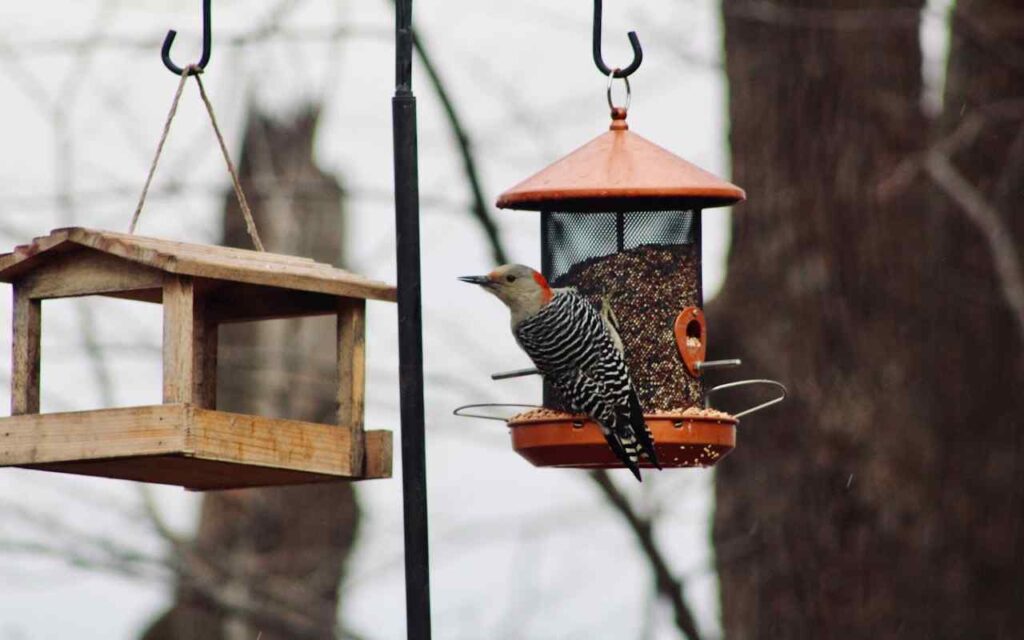
Winter birdwatching delivers unforgettable moments, from bright cardinals on snowy branches to chickadees braving freezing winds. But winter also brings serious risks. Following practical winter backyard birdwatching safety tips helps reduce window collisions caused by snow glare, limits predator activity around feeders, and supports birds facing extreme cold and food scarcity.
Most winter bird hazards are easy to prevent once you know what to watch for. Simple steps like safer feeder placement, visible window deterrents, and mindful observation protect birds while letting you enjoy seasonal birdwatching with confidence. 🙂
- Winter increases risks like window collisions, predation, and disease at feeders.
- Snow glare and bare trees make windows especially dangerous for birds.
- Use exterior window markers spaced correctly to prevent fatal strikes.
- Place feeders 10–12 feet from hiding spots and add baffles to deter predators.
- Keep water just above freezing and block access during ice storms.
- Clean feeders every 1–2 weeks to reduce disease spread in winter.
- Adjust feeding setups based on regional winter conditions and weather severity.
- Dress properly, limit exposure, and watch footing when birdwatching in cold weather.
Explainer Video: Winter Backyard Birdwatching Safety Tips
Watch the video below to see these safety tips in action and learn how to protect your backyard birds during harsh winter conditions.
Show Transcript:
0:00
Feeding birds in the winter is one of those simple things that brings a lot of joy. But it also comes with some serious responsibilities. Today, we’re going to cover how to turn your backyard into a true safe haven for birds, not an accidental trap.
0:21
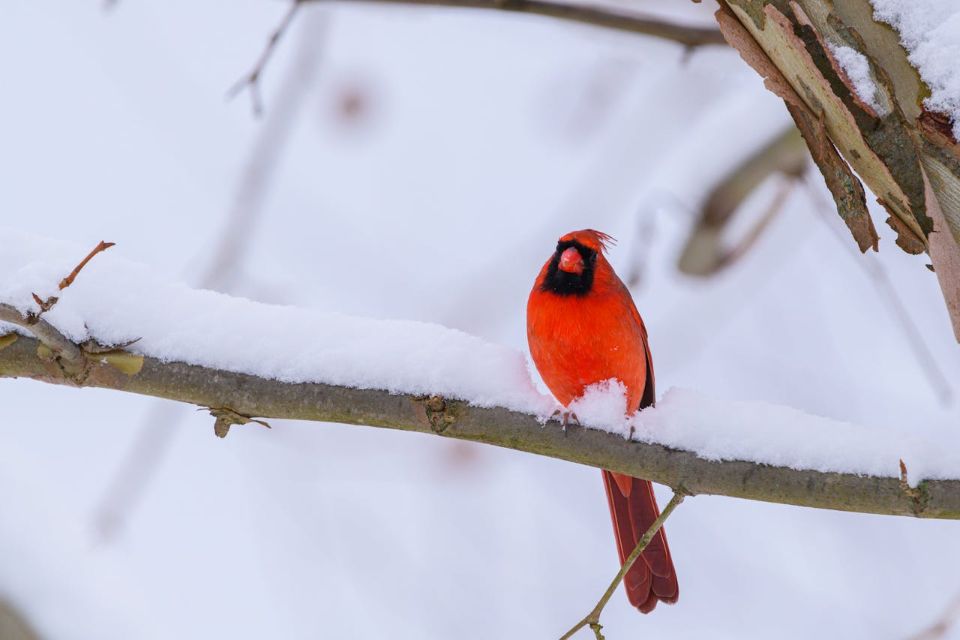
We’ve all seen that brilliant flash of red from a cardinal against the snow. It’s beautiful, and it’s what inspires many of us to put out a feeder in the first place. It feels like helping our feathered friends survive the toughest time of the year.
0:38
But here’s a tough question: could our good intentions actually be creating more danger than safety for the birds we want to help? Let’s break it down.
0:51
What do you think is the biggest threat to birds in our neighborhoods? Predators or the cold? Actually, it’s something we see every day: windows. Over one billion birds die every year in the US and Canada just from flying into glass. It’s a staggering number and shows a massive-scale problem.
1:20
You might assume that’s mainly skyscrapers in big cities, but nearly half of all these collisions happen at homes, just like yours and mine. That means the solution is literally in our hands.
1:43
Winter makes this worse. Bright snow acts like a mirror, reflecting intense images on our windows. With bare trees, the visual cues birds rely on are gone. The world becomes a confusing, deadly hall of mirrors.
2:04
Fixing this is simpler than it seems. Birds see reflections of the sky and trees and think it’s a clear path. That’s where the 2×2 rule comes in: markers spaced 2 inches by 2 inches on the outside of the glass break up the reflection and signal the barrier to the bird.
2:32
You can use commercial dots, washable tempera paint, or even hang strings. Anything inside the window won’t work. The goal is to make the invisible threat visible to the birds.
2:52
Next, let’s talk about the feeder itself. It’s meant to be a lifeline, but clustering birds in one spot can attract predators. This is the predator paradox. The number one threat? Free-ranging cats.
3:15
Studies estimate cats kill between 1.3 and 4 billion birds each year in the US. Cat predation is possibly the single greatest human-caused source of bird deaths. By putting out feeders, we can inadvertently create a buffet for predators.
3:50
The solution is smart placement. Keep feeders 10 to 12 feet away from dense bushes where cats could hide. Provide a nearby safe shrub, 5 to 8 feet away, for birds to dart to. Mount feeders on poles with wide baffles to block climbing predators.
4:17
Winter weather itself is another threat. Ice storms can coat feathers, destroying insulation and flying ability. Cover or drain bird baths before storms. Deep snow buries natural food, so low platform feeders and cleared patches beneath them help ground-feeding birds.
4:58
Clean feeders regularly. Think of it like a busy restaurant—you wouldn’t eat at one that never cleans its tables. Scrubbing with a diluted bleach solution every couple of weeks prevents disease. If you see sick birds, take the feeder down for 2–3 weeks to stop the spread.
5:23
Here’s a simple checklist to keep your backyard safe. Keep feeders clean, check heated baths so water stays just above freezing (35–40°), inspect feeders after snow or ice, and watch for unwell birds.
5:55
Take care of yourself too. Bundle up with layers, keep paths clear, and for any plugged-in gear like heated baths, use GFCI outlets and check cords regularly. Safety is simple but essential.
6:32
The big takeaway is straightforward. Being a responsible feeder means more than tossing seed—it’s about creating a safe, healthy environment for birds. Following these steps turns your backyard into a genuine sanctuary.
6:53
This winter, when birds visit your yard, will it be a refuge or a risk? Now you have the knowledge and tools to make sure it’s a safe haven. The birds are counting on you.
Understanding Winter-Specific Bird Hazards
Winter creates distinct safety challenges beyond those birds face during other seasons, requiring targeted interventions.
Window Collisions: A Year-Round Threat Intensified by Winter
According to Cornell Chronicle research on bird-window strikes, citizen science has enabled much of the progress in understanding the scope of bird deaths from building and window collisions. Window collisions are a leading cause of bird mortality, killing more than 1 billion birds annually in the United States and Canada.
Research from Cornell Lab examining bird collision prevention found that nearly half of fatal bird collisions in the U.S., and 90% of those in Canada, occur at residences of three stories or less. The study surveyed nearly 5,000 people to understand what types of messaging motivates people to prevent bird collisions at their homes.
Winter conditions intensify collision risks in several ways. Snow cover increases landscape brightness, creating more intense reflections in windows. Bare trees eliminate natural visual breaks that help birds perceive glass as barrier rather than flyable space. Desperate winter birds focused on reaching feeders or water sources pay less attention to hazards, increasing collision likelihood.
A study published in PMC on bird-window collisions found different fall and winter risk and protective factors. The research provided the first peer-reviewed evidence for the efficacy of bird-friendly fritted windows and ORNILUX UV windows in buildings. These risks were especially dangerous to Cedar Waxwings, who constituted 62.2% of the identifiable window collision victims during winter.
Effective Window Collision Prevention
Research published in PeerJ examining bird-window collision mitigation found that adding Feather Friendly treatment in high-collision areas showed significant reduction of bird collisions, supporting its efficacy. The study confirmed mitigation efficacy on transparent glass under real-world winter conditions, when changing seasons, lighting, and weather conditions impact collision rates.
Cornell Lab research demonstrates that effective mitigation requires placing markers on the outside surface of glass in a 2-inch by 2-inch pattern using window film, paint, or hanging paracords spaced 4 inches apart. This spacing proves critical, larger gaps allow birds to attempt passage.
Commercial products showing proven efficacy include Feather Friendly adhesive dots, ORNILUX UV-patterned glass, and fritted glass with permanent patterns baked into the surface. DIY solutions using tempera paint and stencils, paracord curtains, or window film all work if properly spaced and applied to exterior surfaces.
Interior treatments prove largely ineffective because reflections occur on the outside glass surface. Even the most visible interior markers remain invisible when exterior reflections dominate the glass surface.
For comprehensive guidance on preventing window strikes year-round, consult resources on how to prevent birds hitting windows.
Predation Risks Around Winter Feeding Stations
Concentrated winter feeding creates unnatural bird aggregations that attract predators, with free-roaming cats representing the most significant threat.
The Cat Predation Challenge
Research published in Nature Communications examining the impact of free-ranging domestic cats on wildlife estimated that free-ranging domestic cats kill 1.3-4.0 billion birds and 6.3-22.3 billion mammals annually in the United States, with un-owned cats causing the majority of this mortality.
This mortality magnitude far exceeds previous estimates and may represent the single greatest source of anthropogenic mortality for US birds and mammals. The systematic review combined predation rate distributions with cat population estimates, accounting for the proportion of owned cats allowed outdoor access.
According to Cornell Lab’s FAQ on outdoor cats, in the United States alone, there are 60 million to 100 million free-ranging, unowned cats. Even using conservative estimates, these non-native predators kill 1.3-4 billion birds and 6.3-22.3 billion mammals each year in the U.S. alone.
Winter feeding stations concentrate birds in predictable locations, making them vulnerable to cat predation. Cats learn these patterns, staking out feeders and waiting for opportunities. The combination of hungry winter birds focused on feeding and patient predators creates deadly scenarios.
Strategic Feeder Placement for Predator Protection
Position feeders at least 10-12 feet from dense shrubs or ground cover where cats hide. This distance allows birds to spot approaching predators before cats reach striking distance. However, feeders also need nearby escape cover, creating a placement paradox.
The solution involves positioning feeders in semi-open areas with escape cover 5-8 feet away, distant enough that cats cannot hide within but close enough that birds can reach safety quickly. Evergreen trees or dense shrub clusters work well as escape cover, provided they’re positioned properly.
Elevated feeders on poles 5-6 feet high with predator baffles below feeding areas prevent cats from climbing to feeding zones. Baffles should be smooth metal or plastic cones at least 18 inches in diameter, impossible for cats to climb over or around.
For additional strategies on protecting birds from predators, explore resources on how to protect baby birds from predators and keeping raccoons away from bird feeders.
Winter Weather Hazards for Birds
Extreme winter weather creates specific risks requiring proactive management.
Ice Storm Dangers
Ice storms coat everything in frozen glaze, including birds’ feathers. When birds bathe during ice storms or immediately before freezing rain, wet feathers can freeze, compromising flight and insulation.
Monitor weather forecasts and cover or drain bird baths when ice storms approach. The temptation for birds to bathe remains strong even during dangerous conditions, requiring human intervention to prevent access during these events.
Ice accumulation on feeders blocks seed ports and creates slippery surfaces birds cannot grip. Clear ice from feeders promptly after storms, ensuring birds can access food when they most need it.
Deep Snow Challenges
Deep snow buries ground-feeding opportunities, forcing normally ground-foraging species to elevated feeders where they feel vulnerable. Provide low platform feeders with roofs keeping snow off seed, allowing ground-feeding species like juncos and sparrows to feed comfortably.
Shovel areas beneath feeders creating snow-free zones where spilled seed remains accessible. These cleared patches become critical feeding areas for species uncomfortable using elevated feeders.
Human Safety Considerations
Birders pursuing winter observation face their own hazards requiring appropriate precautions.
Cold Weather Safety
Hypothermia and frostbite threaten birders spending extended periods outdoors during winter observation. Dress in layers using moisture-wicking base layers, insulating middle layers, and windproof outer shells. Avoid cotton, which loses insulating properties when damp.
Protect extremities carefully. Fingers, toes, ears, and nose suffer frostbite first, sometimes in minutes during extreme cold. Insulated waterproof boots, thermal gloves, and face protection prevent cold injuries during extended observation sessions.
Set time limits for outdoor sessions. Even properly dressed, prolonged cold exposure eventually overwhelms insulation. Schedule 20-30 minute observation periods followed by warm-up breaks indoors.
Slip and Fall Hazards
Ice-covered walkways and decks create serious fall risks when checking feeders or refilling stations. Apply sand or pet-safe ice melt on walking surfaces. Avoid salt-based products that harm birds’ feet and vegetation.
Wear footwear with aggressive tread patterns providing traction on ice and packed snow. Cleated overshoes like Yaktrax add traction to regular boots, dramatically reducing slip risks.
Keep one hand free when carrying seed or water to feeders. Falls while carrying heavy loads cause more serious injuries than falls with empty hands capable of breaking the fall.
Equipment Safety and Maintenance
Winter conditions stress bird feeding equipment, creating potential hazards.
Heated Water Source Safety
Heated bird baths prevent freezing but create electrical and thermal hazards if improperly installed or maintained. Always use GFCI-protected outlets preventing shock hazards in wet outdoor environments. Test GFCI function monthly using the test button.
Inspect electrical cords weekly for damage. Cold temperatures make insulation brittle, and rodents often chew cords seeking nest materials. Replace damaged cords immediately, never attempt field repairs.
Position cords where they won’t create tripping hazards or collect standing water. Use outdoor-rated extension cords with intact weather-resistant connectors.
Monitor water temperature ensuring it remains just above freezing (35-40°F) rather than warm. Excessively warm water during extreme cold creates dangerous bathing conditions where wet feathers freeze before birds can preen.
For detailed guidance on winter water provision, see resources on how to keep bird baths from freezing in winter.
Feeder Structural Integrity
Snow and ice loads can collapse poorly constructed feeders. Inspect feeders for structural damage before winter, replacing worn supports or cracked components. Heavy wet snow weighs substantially more than summer rain, stressing mounting hardware and feeder structures.
Empty and clean feeders showing structural weakness rather than risking mid-winter collapse potentially injuring birds feeding below. Better to temporarily reduce feeding capacity than risk catastrophic failure during extreme weather.
Disease Prevention at Winter Feeding Stations
Concentrated winter feeding increases disease transmission risks requiring enhanced hygiene protocols.
Cleaning Frequency
Winter feeders require cleaning as frequently as summer feeders despite cold temperatures slowing some bacterial growth. Bird density at limited winter food sources actually increases contamination rates compared to summer when numerous natural food sources exist.
Clean feeders every 2 weeks minimum using 10% bleach solution (1 part bleach to 9 parts water). During disease outbreaks or heavy use, increase cleaning to weekly. Scrub all surfaces removing visible waste, rinse thoroughly, and allow complete drying before refilling.
Recognizing Disease Symptoms
Monitor birds for disease symptoms indicating the need for immediate intervention. Lethargic birds sitting motionless with fluffed feathers, birds with swollen eyes or conjunctivitis, and birds showing difficulty flying all suggest illness.
If sick birds appear at feeders, immediately take feeders down, clean them thoroughly, and leave them inactive for 2-3 weeks interrupting disease transmission. This temporary feeding suspension prevents disease spread through bird populations.
For comprehensive feeder hygiene guidance, explore how to clean a bird feeder and preventing mold in bird feeders.
Regional Winter Safety Considerations
Winter hazards vary by climate zone, requiring regionally appropriate safety strategies.
Northern Regions: Extreme Cold Challenges
Northern regions face the most severe winter conditions, creating maximum risk for both birds and birders. Extreme cold below 0°F makes heated water sources essential but also increases electrical safety concerns as equipment operates continuously.
Deep persistent snow requires elevated feeding stations remaining accessible above snow depth. Plan feeder heights accounting for typical snow accumulation, ensuring feeders don’t become buried or inaccessible.
Moderate Regions: Ice Storm Frequency
Moderate winter zones experience more frequent ice storms than extreme northern or mild southern regions. The freeze-thaw cycling creates hazardous ice accumulation requiring constant monitoring and intervention.
Window collision risks peak in moderate zones where partially frozen precipitation creates maximum reflection intensity without the snow cover that sometimes reduces collision rates through landscape brightness.
Mild Regions: Unexpected Cold Snaps
Southern regions face different challenges, primarily unpreparedness for occasional hard freezes. Birds in mild climates lack the physiological adaptations northern species employ, making them more vulnerable during the brief cold periods that do occur.
Emergency feeding during cold snaps provides maximum benefit in mild regions where birds haven’t developed extensive food caching behaviors. Ensure feeders remain stocked and water sources accessible during the brief freezing periods.
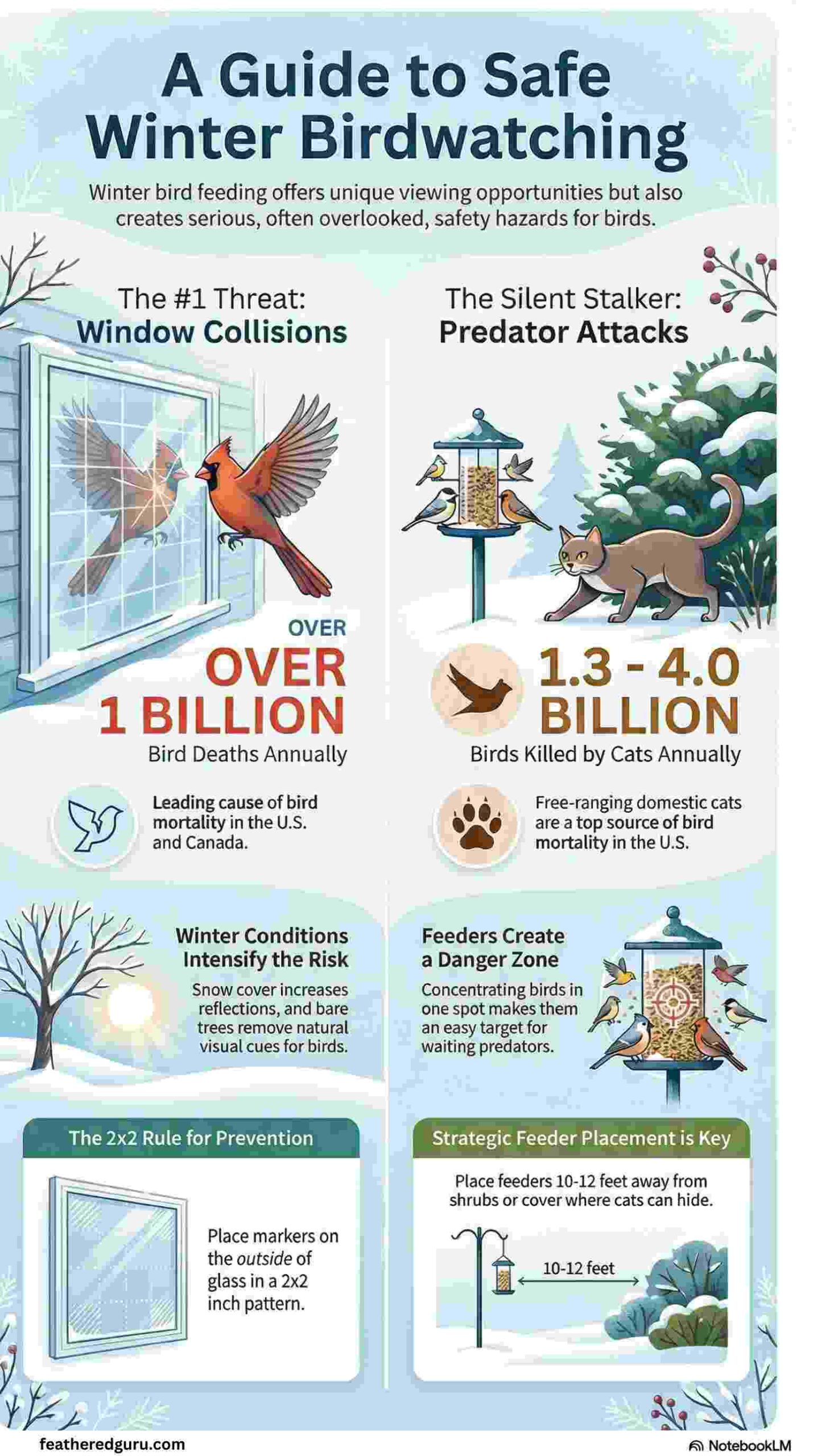
Visual Guide: Staying Safe While Birdwatching This Winter
This infographic highlights essential safety tips and quick precautions to protect your backyard birds during the cold season.
Conclusion: Balancing Bird Support With Safety
Winter birdwatching safety requires balancing the desire to help birds with awareness of risks that good intentions can create. Window collisions, predation around feeders, ice storm hazards, and disease transmission all increase when winter feeding concentrates birds in small areas.
The research clearly demonstrates that simple, evidence-based interventions dramatically reduce these risks. Properly spaced window treatments prevent billions of collisions annually. Strategic feeder placement minimizes predation while maintaining feeding access. Appropriate water temperature prevents freezing injuries. Regular cleaning interrupts disease transmission.
Begin winter bird support by assessing your current setup for safety hazards. Are windows near feeders treated to prevent collisions? Does feeder placement protect birds from cat predation? Are electrical connections for heated water sources properly protected? Does your cleaning schedule match increased winter disease risks?
Implementing these research-based safety measures transforms winter bird feeding from potentially harmful activity into genuine conservation action. Birds benefit from reliable food and water access without suffering elevated mortality from preventable hazards. Birders enjoy winter observation knowing their support helps rather than harms their feathered visitors.
For additional guidance on creating safe, comprehensive winter bird habitat, explore resources on winter bird identification and attracting birds during winter.