
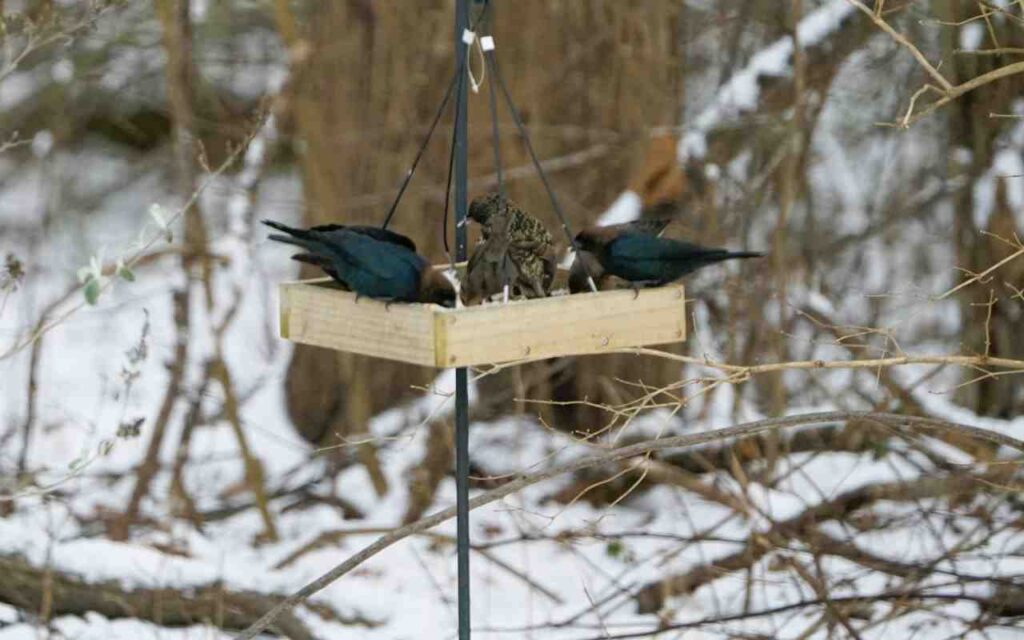
Learning how to create a winter bird feeding station requires a practical approach that accounts for driving snow, short daylight feeding windows, and sub-zero temperatures. Backyard hobbyists quickly discover that hardware designed for mild spring conditions often fails once ice locks up feeding ports and freezing rain cakes the seed trays.
Ground-level snow accumulation, biting winds, and extended nights place severe metabolic stress on non-migratory songbirds. Building a functional cold-weather station ensures that local species like chickadees, nuthatches, and woodpeckers spend less energy searching for food and more time maintaining their core body heat.
Quick-Glance Field Summary
A reliable winter feeding setup combines high-lipid foods, elevated predator guards, and open water shielded from prevailing freezing winds. Proper maintenance rests on keeping seed protected from moisture and regularly sanitizing equipment to stop cold-weather pathogens from spreading through visiting flocks.
- Hardware Placement: Mount feeders within 3 feet of windows or beyond 30 feet to eliminate fatal glass collisions.
- Nectar Freezing Points: Standard 4:1 water-to-sugar nectar begins to slush at 27°F, while a dense 3:1 winter mix resists freezing down to 22°F.
- Baffle Height: Mount post baffles 4.5 to 5 feet high, adjusting upward for expected local snowdrift depths.
- Sanitization Standard: Submerge feeders in a 1:9 bleach-to-water solution; avoid pouring boiling water onto polycarbonate tubes to prevent structural warping.
- High-Value Winter Feeds: Black oil sunflower seeds, shelled peanuts, and rendered beef suet provide the highest caloric returns.
Choosing the Best Foods for Cold Weather Energy
Winter survival comes down to calories consumed versus calories burned. Small songbirds can lose up to ten percent of their total body weight overnight just trying to stay warm through sub-zero weather. High-lipid options like black oil sunflower, shelled peanuts, and pure beef suet should form the foundation of your winter offerings.
On forums like r/backyardbirds, keepers frequently debate whether to buy cheap mixed seed bags or pure seed. Inexpensive filler grains like red milo and cracked wheat are routinely kicked out by finches and juncos, where they rot beneath snowbanks. Focus your budget on high-meat sunflower hearts and high-fat suet cakes to minimize waste and keep birds actively feeding.
In regions where wintering Anna’s hummingbirds remain active, gardeners often struggle with frozen feeders. Standard 4:1 sugar-water solutions begin slushing at approximately 27°F, while a richer 3:1 mix stays liquid down to roughly 22°F. Hummingbirds rely on elastic groove trapping in their specialized tongue tips to pull fluid quickly, meaning even partially slushy sugar-water can damage their delicate mouthparts.
- Black Oil Sunflower: Contains thin shells that small birds open easily while delivering high fat and protein levels.
- Rendered Suet: Offers dense animal fats that stay firm in cold temperatures without going rancid.
- Nyjer Seed: Delivers high oil density for finches, though it requires specialized, narrow-port tube feeders to avoid moisture loss.
- Shelled Peanuts: Eliminates shell-opening effort for woodpeckers, titmice, and juncos during bitter cold snaps.
| Seed / Feed Type | Calories per Gram | Target Winter Avian Species | Ideal Feeder Placement Type |
|---|---|---|---|
| Pure Beef Suet | ~8.9 kcal/g | Downy Woodpeckers, Nuthatches, Creepers | Tree-mounted Cage |
| Black-Oil Sunflower | ~5.8 kcal/g | Chickadees, Cardinals, Titmice | Tube, Hopper, or Tray |
| Shelled Peanuts | ~5.6 kcal/g | Blue Jays, Woodpeckers, Towhees | Mesh Tube or Platform |
| Nyjer (Thistle) | ~4.2 kcal/g | American Goldfinches, Pine Siskins | Fine-mesh Mesh or Thistle Tube |
| White Proso Millet | ~3.6 kcal/g | Dark-eyed Juncos, Towhees, Native Sparrows | Ground Tray or Scattered |
Positioning Feeders to Stop Squirrels, Snow, and Window Strikes
Where you place your pole setup matters just as much as what you put inside the feeders. To prevent fatal bird collisions, always follow the standard window safety rule established by field ornithologists. Feeders should sit within 3 feet of glass so birds cannot build up fatal flight speed if startled, or safely out past 30 feet away from the house.
Community members on regional birding boards frequently note a classic winter trap: mounting baffles at standard summer heights. A stovepipe baffle installed at four feet works well in July, but a two-foot snowdrift effectively reduces that clearance, allowing squirrels to leap straight onto the trays. Clear the snow around your mounting pole base after major blizzards to maintain the jump barrier.
Winter winds strip body heat rapidly, forcing birds to burn unnecessary calories as they eat. Position your main feeding array on the south or southeast side of your home, using fences, evergreens, or outbuildings as natural windbreaks against prevailing northern gusts. This shelter calms the microclimate around your perches, encouraging smaller birds to feed longer without getting chilled.
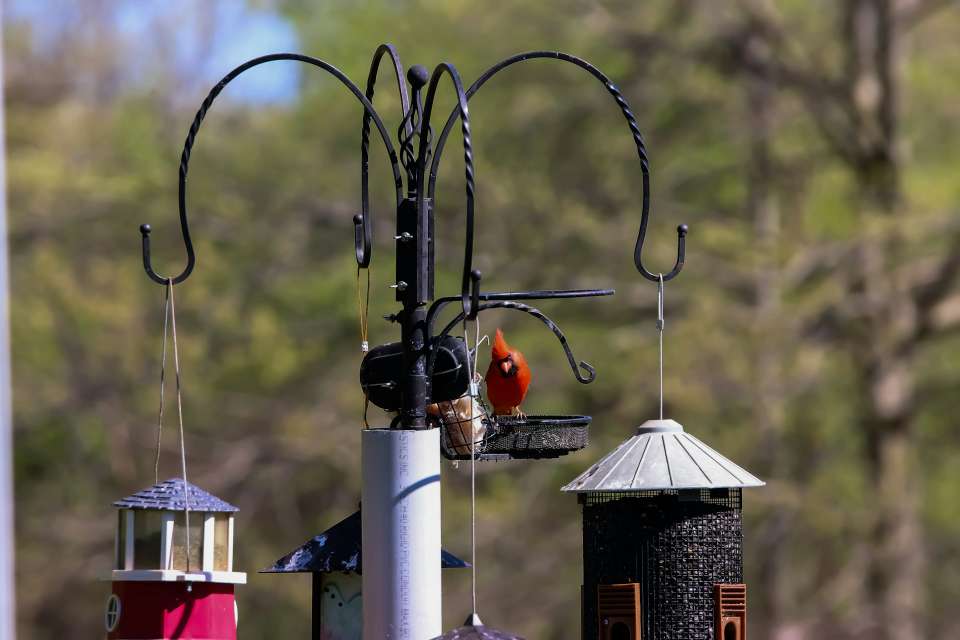
Keeping Water Liquid Without Freezing or Harming Feathers
Access to liquid water in sub-freezing weather is often harder for birds to find than food. Songbirds need water daily to drink and to keep their flight feathers clean, which maintains the loft and insulating properties of their down. Without clean feathers, their natural thermal barrier collapses, leading to fatal nighttime hypothermia.
Never add anti-freeze agents, salts, or glycerin to an outdoor bird bath. Well-meaning backyard hobbyists sometimes ask on forums if glycerin will keep water liquid, but avian rehabilitators consistently warn against this practice. Glycerin coats and mats contour feathers, destroying their waterproofing and causing rapid, fatal heat loss in freezing air.
A thermostatically controlled bird bath de-icer is the safest solution for sustained cold snaps. Select a shallow basin with a maximum depth of 1.5 to 2 inches, or place several rough, flat river stones inside deeper baths so visitors have secure footing. The added rocks keep smaller birds like goldfinches from accidentally submerging themselves in freezing weather.
- Basin Depth Limit: Keep liquid depth under two inches to prevent birds from fully soaking their winter feathers.
- Built-In Thermostats: Choose units that power on automatically at 35°F and turn off above 45°F to conserve power.
- Traction Stones: Arrange rough slate or river rocks along the edge to give wet talons reliable purchase over icy rims.
Protecting Seed from Sleet, Rain, and Mold Growth
Wet seed spoils quickly, even in cold climates where freezing and thawing cycles occur. When damp seed cakes together inside feeder ports, it traps moisture and creates an ideal breeding ground for the fungus Aspergillus flavus. This pathogen produces aflatoxins that cause fatal respiratory and systemic infections in common flock birds.
Backyard mechanics on r/birdwatching often report that standard 12-inch feeder domes fail during blowing snow. Upgrading to an 18-inch wide polycarbonate weather dome provides the physical overhang needed to keep horizontal sleet off open perches. For tube feeders, wrapping the bottom four inches in 0.25-inch galvanized hardware cloth can also prevent squirrels from chewing out ports brittle from the frost.
If you notice seed starting to cake into solid lumps at the bottom of a hopper or tube, discard the entire contents immediately. Do not attempt to break the frozen mass up for reuse, as the internal fungal spores will spread into freshly added grain. Fill your feeders with smaller amounts more frequently during storms rather than topping off deep hoppers with weeks worth of supply.
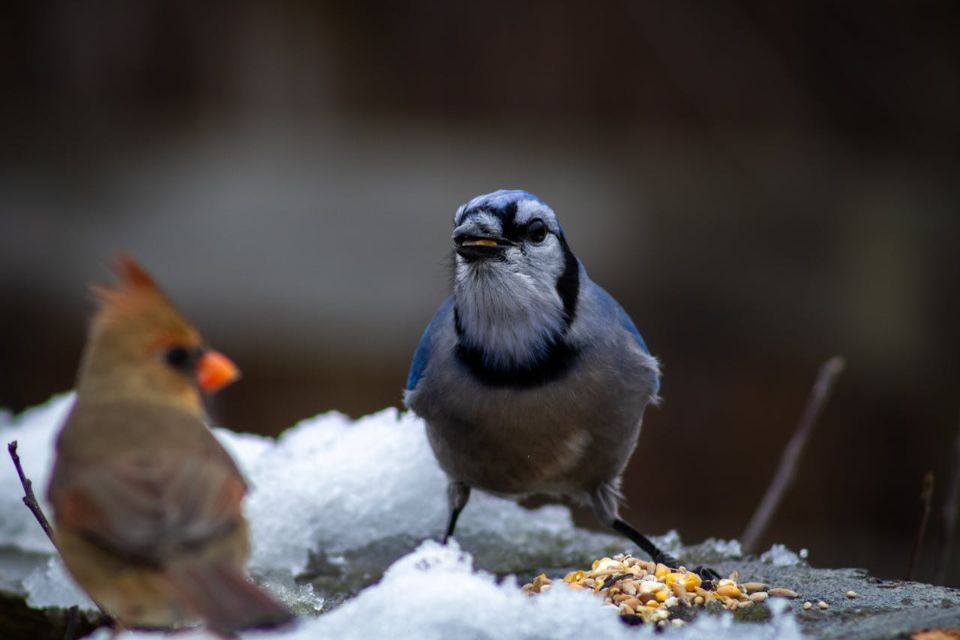
Cleaning Feeders Safely During Sub-Zero Temperatures
Maintaining clean feeders is just as necessary in January as it is in July, because winter flocks crowd closely together at limited resources. Disease transmission, including Avian Pox and Salmonellosis, spreads quickly through shared surfaces encrusted with frozen droppings. Set a strict schedule to wash and sanitize your entire pole assembly every two weeks.
Cold plastics become brittle, which creates hardware maintenance issues during winter washouts. Never pour boiling water directly over cold polycarbonate tube feeders, as the extreme temperature shock can crack the plastic or warp the thread joints permanently. Instead, bring equipment indoors to warm up slowly to room temperature before washing.
Submerge the disassembled parts in a 1:9 unscented household bleach-to-water dilution for ten minutes to neutralize lingering pathogens. Rinse every component with fresh lukewarm water until all traces of chlorine smell disappear, and ensure the gear is bone dry before refilling it with seed. Introducing dry seed into a damp feeder creates instant mold pockets once the assembly is placed back outside into the cold.
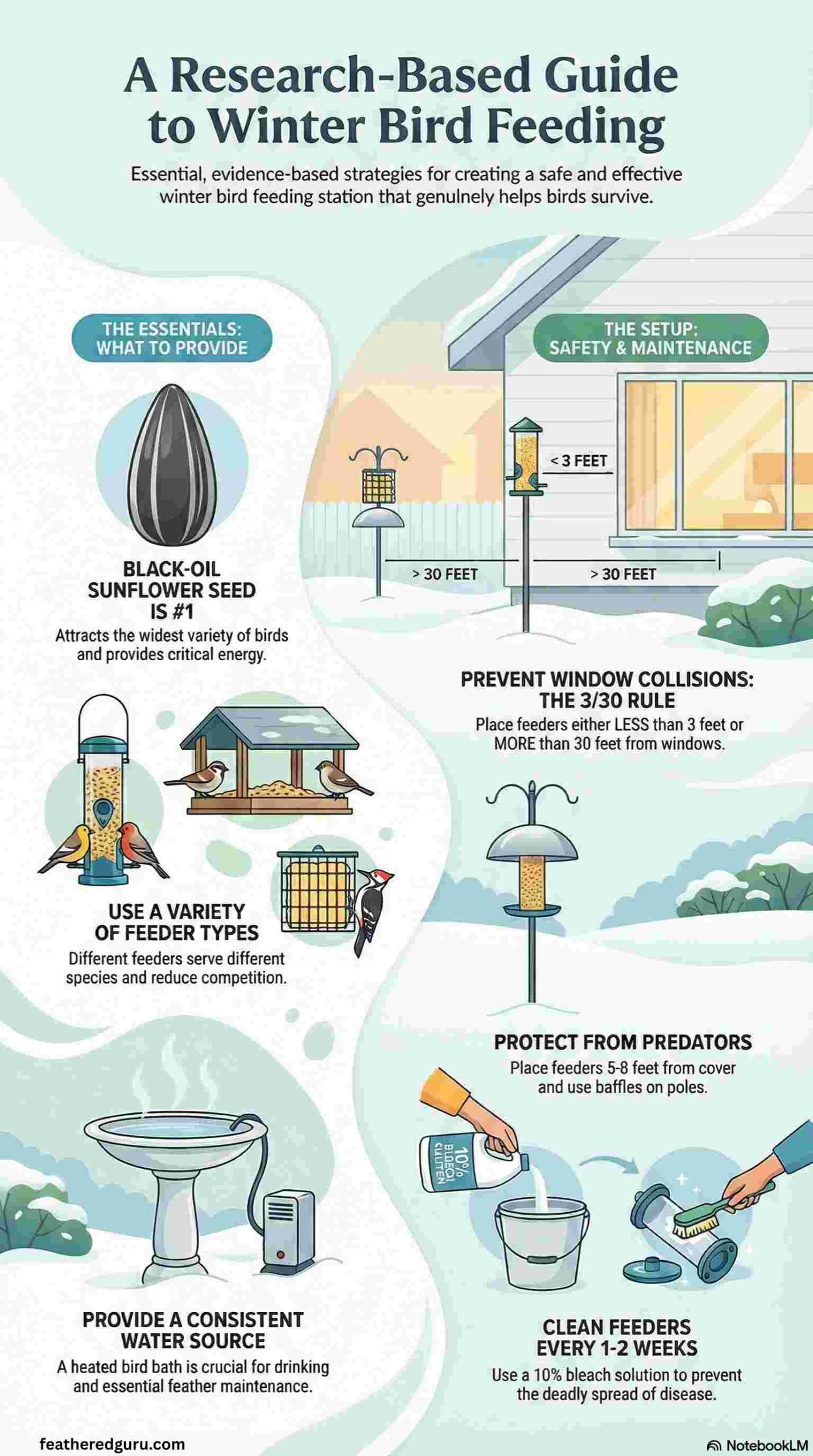
Infographic: Winter Bird Feeding Station Essentials
Here’s a quick visual summary of the key tips and strategies for setting up an effective winter bird feeding station. Use this infographic to make sure you don’t miss any critical steps before winter arrives.
Your Winter Station Launch Checklist
- Check the glass clearance: Ensure all feeding hardware sits strictly within 3 feet of windows or safely beyond 30 feet.
- Elevate the baffles: Adjust post-mounted predator guards to 5 feet high to account for oncoming regional snowdrifts.
- Mix a richer winter nectar: Switch to a dense 3:1 winter mix if you reside in regions with active wintering hummingbirds.
- Pre-stage traction rocks: Arrange rough flat stones inside your heated bird bath basin before the first hard freeze hits.
- Establish a bi-weekly schedule: Set a calendar reminder to bring feeders indoors to warm up slowly before sanitizing them in a 1:9 bleach solution.
For additional guidance on creating comprehensive winter bird habitat, explore feeding birds in winter and attracting birds during winter.
Winter Bird Feeding FAQ
At what temperature does hummingbird nectar freeze in the winter?
A standard 4:1 water-to-sugar nectar solution begins to slush at 27°F. A denser 3:1 winter mixture lowers the freezing point further, resisting ice formation down to approximately 22°F.
How far should a winter bird feeder be from a window?
To eliminate fatal glass collisions, winter bird feeders should be positioned either within 3 feet of windows or safely beyond 30 feet away from the structure.
Can you use glycerin or anti-freeze in a winter bird bath?
No, you should never add glycerin, salt, or anti-freeze agents to an outdoor bird bath. Glycerin coats and mats contour feathers, destroying their natural waterproofing and insulation properties, which causes rapid hypothermia.
How high should a squirrel baffle be installed in the winter?
While a standard summer height is 4 feet, a winter stovepipe or cone baffle should be mounted between 4.5 to 5 feet high on the pole to maintain an effective jump barrier against squirrels clearing local snowdrifts.
Can you pour boiling water on a frozen plastic bird feeder to clean it?
No, pouring boiling water directly over cold polycarbonate tube feeders causes intense thermal shock that can permanently warp or crack the brittle plastic. Always bring hardware indoors to warm to room temperature before washing.