
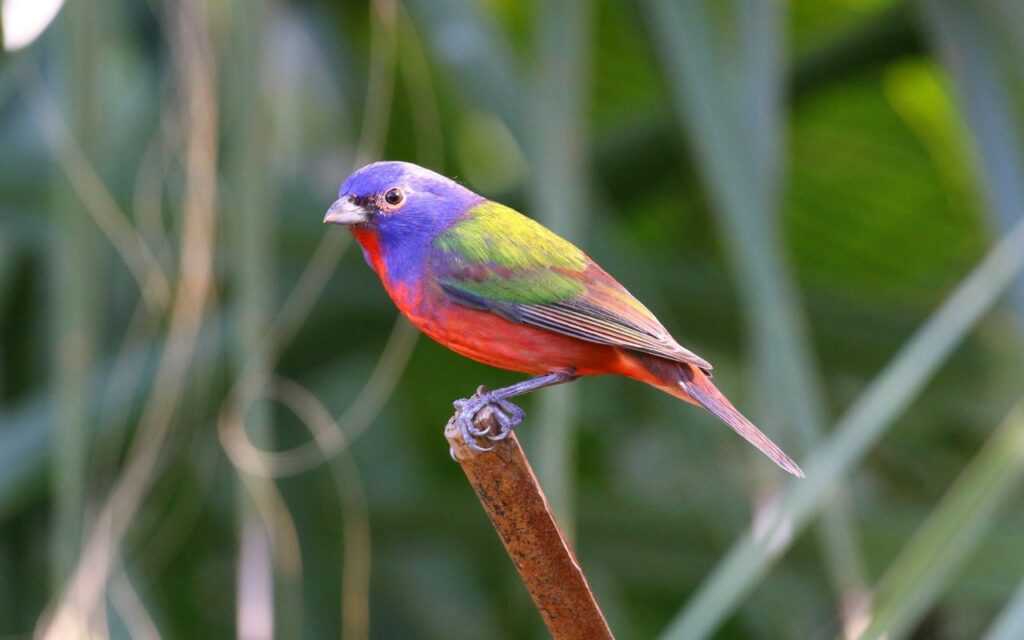
Learning how to identify birds by color requires looking far beyond the tidy, static portraits found in traditional field guides. Backyard observers frequently encounter shifting light, battered seasonal feathers, and unexpected dietary anomalies that make vibrant species look completely unfamiliar.
Understanding the biological and physical mechanisms behind avian hues transforms confusing sightings into precise, confident identifications. By learning how light interacts with feather microstructures and pigments, you can sidestep the most common field misidentifications documented across regional ornithological circles.
Quick Answer: How do you identify birds by color?
You identify birds by color by scanning for localized plumage boundaries situated on fixed anatomical zones, specifically facial micro-zones and wing bar lines, rather than assessing overall body color. This topography filter isolates structural landmarks that remain in the exact same physical location regardless of outdoor lighting shifts.
Structural Color Versus Pigmentary Refraction
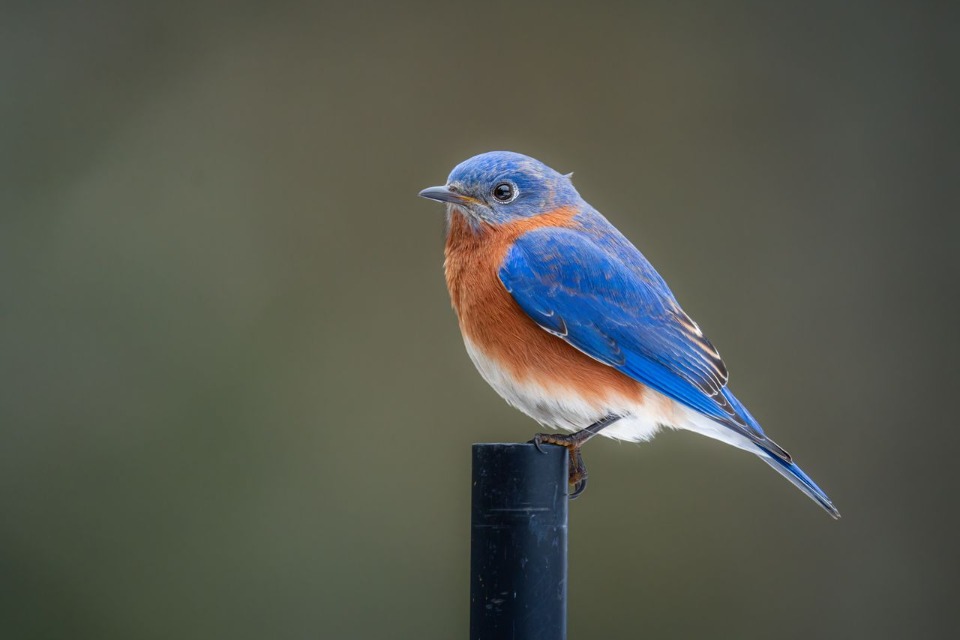
True blue pigment does not exist in the plumage of North American birds. Hues seen on Eastern Bluebirds, Blue Grosbeaks, and Indigo Buntings stem from structural coloration, where microscopic keratin and air cavities in the feather barbs scatter light through coherent scattering. When a bird sits in deep foliage or directly between you and the sun, the incoming light fails to reflect toward your eyes, making an Indigo Bunting appear dull slate gray or soot black.
Pigmentary colors, by contrast, rely on chemical compounds absorbed into the developing feather structure. Melanins produce solid blacks, grays, russet browns, and brick reds, serving double duty by structurally reinforcing feather tips against mechanical abrasion. Carotenoids create bright yellows, oranges, and true reds, resting directly inside the feather matrix without relying on structural air pockets to show their tint.
- Structural colors vanish entirely in heavy shade or backlighting, shifting brilliant blues to flat gray.
- Melanin pigments remain colorfast across all angles, providing consistent field identification cues.
- Carotenoid pigments maintain chromatic saturation in overcast weather but degrade over time under heavy solar ultraviolet exposure.
When assessing an unfamiliar blue or glossy bird, change your physical viewing angle relative to the sun before consulting a guide. Stepping five feet to the left can instantly illuminate microscopic barbs, transforming a seemingly dark sparrow-sized bird into a radiant bunting.
Lighting Angles and Optical Aberration Pitfalls
Refractive iridescence presents another major hurdle when viewing hummingbirds, grackles, and ducks. The gorget feathers of an Anna’s Hummingbird or the crown of a Common Grackle function like optical prisms, utilizing stacked layers of melanin granules called melanosomes. Wavelengths cancel or amplify each other, producing radiant flash coloration exclusively when the incident light strikes at an exact angle toward your binoculars.
Budget roof-prism binoculars frequently generate chromatic aberration, an optical defect where glass lenses fail to focus all color wavelengths onto the same focal plane. This creates artificial purple, cyan, or yellow fringing along high-contrast margins, such as a dark crow silhouetted against a white sky. Observers regularly mistake these lens flares for rare wing bars, pale eye-rings, or partial albinism.
- Incident light angles above 45 degrees maximize iridescence on hummingbird gorgets and glossy waterbirds.
- Direct backlight compresses three-dimensional color profiles into flat silhouettes, obscuring breast streaking and facial striping.
- Chromatic aberration manifests as uniform halos along outer edges of dark feathers rather than irregular feather patches.
To confirm true feather markings, wait until the subject changes perches or reorients its body toward ambient light. Relying on color observed against an open, overcast sky will consistently misinform your field notes.
Seasonal Molt Transitions and Feather Wear
Avian plumage is not permanent; feathers continually degrade through physical friction against branches, airborne dust, and high solar UV indices. As feather margins erode, bird coloration can shift radically across just a few weeks without the bird ever growing new feathers. Observers tracking birds throughout late winter often fail to recognize familiar species undergoing this mechanical transformation.
The European Starling provides a classic example of wear-induced transformation. In autumn, fresh winter plumage exhibits heavy, cream-colored chevron tips across the breast and mantle. Over the winter, these brittle pale tips abrade against vegetation, revealing the glossy, iridescent purples and greens beneath by early spring.
- European Starlings lose their spotted winter camouflage entirely through mechanical feather wear.
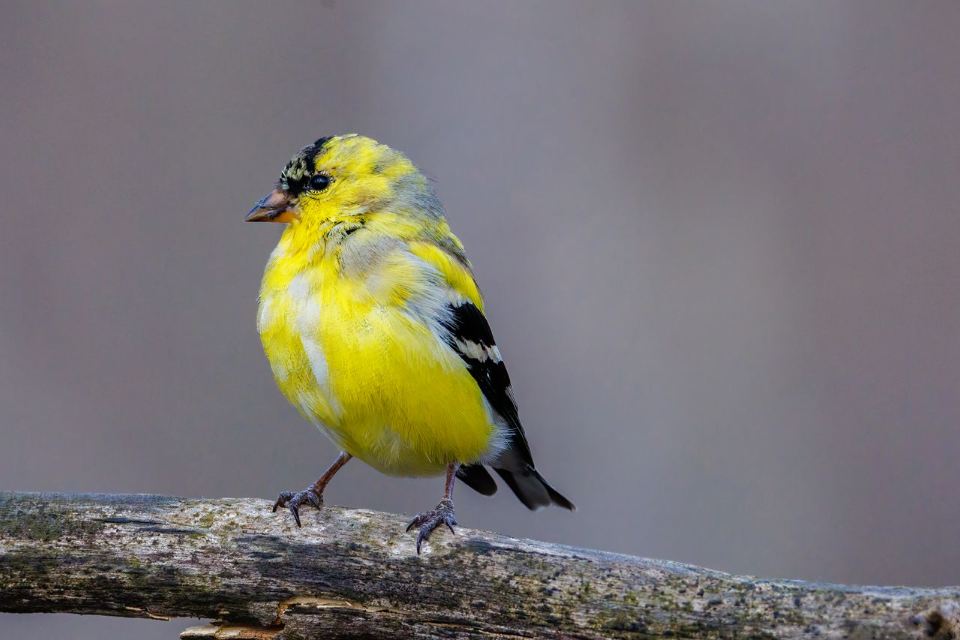
- American Goldfinches undergo a complete prealternate molt, ditching drab winter olive for vivid lutein-rich yellow feathers.
- Wintering passerines scale up pectoralis muscle mass and shivering metabolic capacity by 20 to 30 percent, altering body profiles alongside seasonal color shifts.
Watch closely for patchy, asymmetrical mottling around the throat, crown, and flank margins. These uneven blotches usually indicate an active seasonal molt cycle rather than a hybrid or rare vagrant species.
Dietary Carotenoid Fluctuations and Regional Shifts
Birds cannot synthesize carotenoid pigments internally; they must acquire them through lipids found in seeds, berries, and specific insects. Consequently, localized dietary imbalances directly alter the red and yellow saturation of wild birds. In community forums, birders regularly post photos of bizarre, yellow-crowned House Finches, suspecting an exotic escapee.
If a male House Finch consumes a diet rich in lutein and beta-cryptoxanthin but deficient in rhodoxanthin or astaxanthin during feather growth, his breast and rump feathers emerge bright yellow or muted orange instead of red. Similarly, invasive plant species can permanently alter established plumage markers in native populations across entire geographic regions.
- House Finches frequently swap red crowns for yellow or bronze caps due to localized nutritional variations during molt.
- Cedar Waxwings exhibit orange tail bands instead of pale yellow when fledglings ingest non-native Morrow’s honeysuckle berries.
- Captive or stressed songbirds consistently fade in carotenoid richness unless supplied with specific dietary fatty acids.
Always cross-reference plumage patterns with structural metrics, bill shapes, and call notes. When a bird presents an off-tone wash across its breast or tail, its anatomical proportions will still guide you to the correct genus.
Genetic Pigment Mutations and Field Misidentifications
Backyard forums are perpetually flooded with photographs of ghostly, patchy birds labeled as mystery hybrids. These anomalous visitors almost always exhibit genetic mutations that disrupt standard melanin production. Leucism, the most widespread condition, prevents melanin from depositing into some or all feathers while leaving the soft tissues, bill, and retinas normally pigmented.
Albinism, by contrast, is a total congenital absence of the enzyme tyrosinase, resulting in pure white plumage, pink eyes, and pale yellowish legs. Melanism acts in reverse, depositing excessive amounts of eumelanin throughout the barbs to produce an almost uniform dark chocolate or charcoal appearance. Incomplete genetic variations can also cause dilute plumage, making birds look washed out or faded like a sun-bleached photograph.
- Leucistic birds feature irregular white patches or entirely pale plumage paired with normal dark irises and dark bills.
- Albino individuals suffer from defective depth perception and poor feather durability due to a complete lack of protective melanin.
- Melanistic variants obscure standard field marks by overlaying deep brown or black pigmentation across the flanks, breast, and mantle.
Document the precise distribution of white or dark feathers alongside structural diagnostic traits. Focusing on bill depth, tarsus length, and foraging behavior ensures an accurate identification, no matter how unusual the feather pigmentation appears.
Plumage Reference Guide: Comparative Color Grid
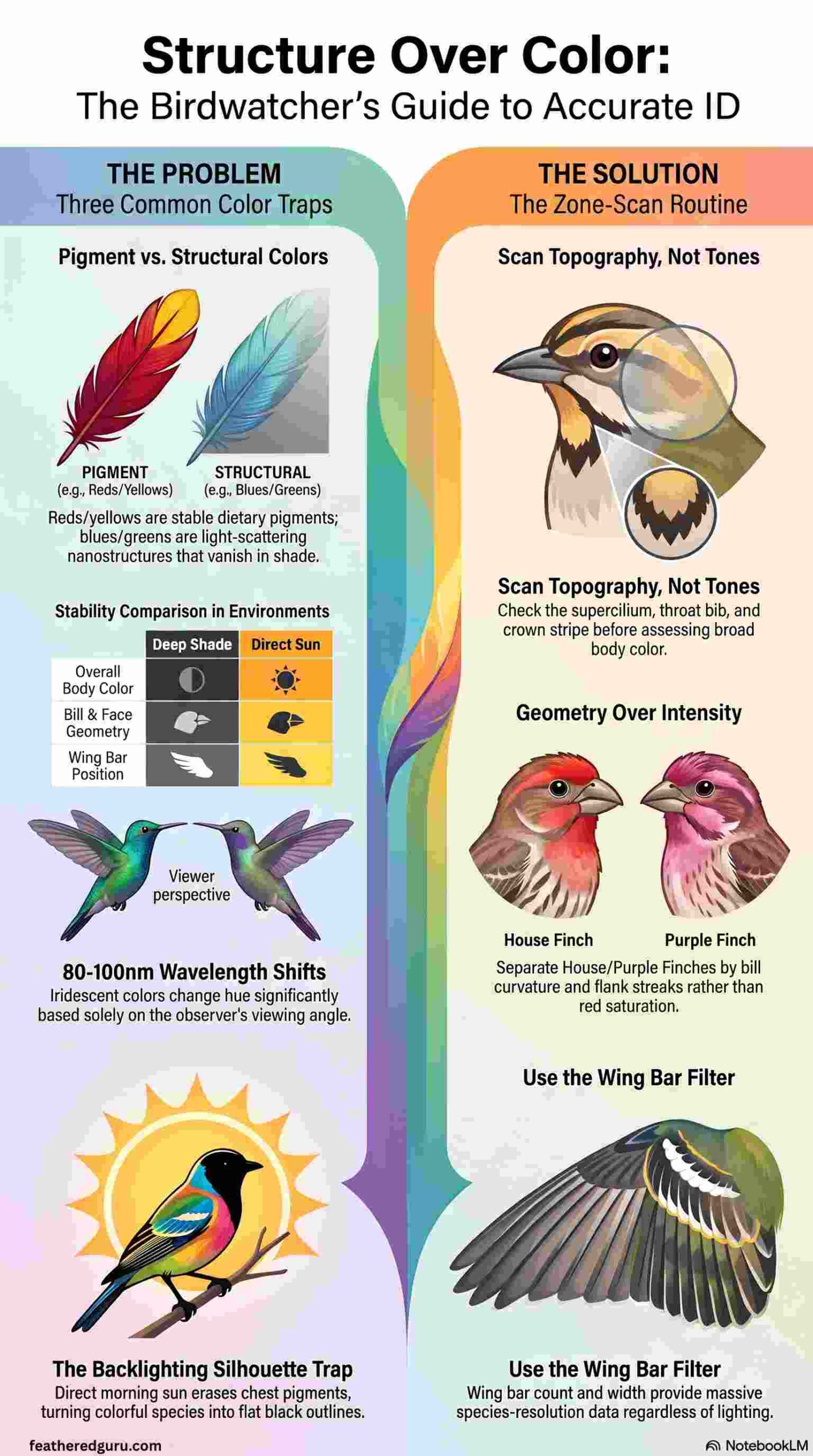
This comparative color grid condenses our full structural guide into a single scannable canvas to help you instantly adjust for ambient lighting variations and filter backyard bird species by their true plumage zones rather than their apparent overall color impression.
Conclusion: Mastering Your Plumage Routine
Integrating a structure-first routine permanently eliminates the primary cause of inaccurate field logs. While shifting sunlight, canopy shadows, and seasonal molts will always distort raw colors, a bird’s structural boundaries remain fixed. By training your eyes to prioritize physical contours—like bill shapes, flank boundaries, and wing bar geometry—before filtering for broad color fields, you can confidently decode any confusing backyard sighting.
Frequently Asked Questions: Bird Identification by Color
What is the most common mistake when identifying birds by color?
The most common mistake is assuming that a bird’s plumage colors look identical across all types of outdoor environments and weather conditions. Beginning observers routinely fail to realize that shifting sunlight and deep canopy shade can turn a vibrant blue, purple, or red species into a completely flat brown or black silhouette during quick passing glances.
How do you accurately tell apart birds that have similar colors?
You can tell them apart with complete accuracy by focusing on localized plumage boundaries inside fixed anatomical zones instead of looking at the overall body color. Scanning head topography for micro-patches like supercilium eye stripes, throat bibs, or precise wing bar layouts allows you to confidently split look-alike species within three seconds.
Why do bird colors look completely different in the winter compared to summer?
Avian plumage colors change dramatically due to seasonal molting cycles that replace bright breeding-season feathers with dull, well-camouflaged winter coats. Additionally, birds voluntarily fluff up their contour feathers to trap warm air against their skin on freezing mornings, creating an optical illusion that inflates their perceived size by up to 50 percent.
Can you identify a bird if the bright sun completely erases its chest colors?
Yes, you can confidently identify a backlit bird by ignoring color fields completely and tracking its fixed silhouette proportions instead. Measuring structural anchors like its bill depth relative to its head width or its tail-to-torso ratio allows you to pin down the correct taxonomic family before the bird ever flies into better lighting.