
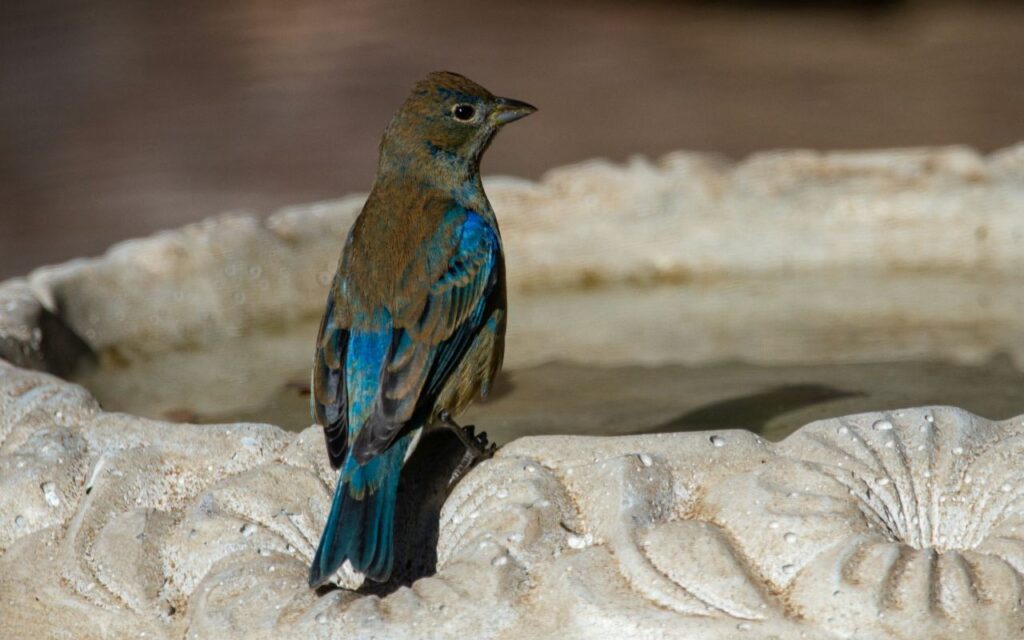
Understanding why water is more important than food for backyard birds in freezing winter can fundamentally alter how you manage your backyard habitat during severe cold snaps. While high-fat seeds provide critical calories, wild songbirds often face a far more immediate physiological threat from dehydration than from outright starvation.
When sub-zero conditions lock up local waterways, wild birds spend hours searching for open water instead of resting or sheltering from biting winds. Prioritizing fluid hydration over seeds protects winter bird survival by preserving valuable energy reserves that birds would otherwise squander melting ice crystals inside their digestive tracts.
Metabolic Thermoregulation and the Hidden Caloric Cost of Ingesting Snow
Wintering passerines, such as the American Goldfinch and Black-capped Chickadee, must generate enormous amounts of internal heat to survive long, freezing nights. Research shows that these species scale up their pectoralis muscle mass and shivering metabolic capacity by 20 to 30 percent to withstand severe drops in ambient temperature.
Shivering requires an immense amount of cellular fuel, which rapidly depletes stored body fat before dawn arrives. When birds resort to eating snow or scraping frost off tree branches, the physiological penalty is immediate and dangerous.
Ingesting frozen water forces a bird to expend core metabolic heat simply to convert ice into liquid inside its crop. This localized drop in core temperature demands immediate compensatory shivering, which burns through lipid reserves that are vital for surviving nocturnal sub-freezing lows.
A reliable liquid water source eliminates this internal thermal drain and supports normal digestion. Backyard birds require hydration to metabolize high-protein suet and lipid-rich seeds efficiently. Without moisture, their digestive systems slow down, reducing the rate at which fuel can be converted into life-saving warmth.
- Pectoralis shivering burns through overnight fat reserves within hours.
- Ingesting frozen snow drains internal core body temperature rapidly.
- Hydration is chemically necessary for the cellular metabolism of high-fat winter seeds.
Plumage Integrity and the Physics of Interlocking Feather Barbs
Observing a songbird deliberately splashing in water during a snowstorm strikes many observers as counterproductive. In reality, regular bathing is a vital survival mechanism rather than simple grooming. Plumage acts as a high-performance thermal parka only when it remains free of dirt, food grease, and external debris.
Bird feathers work by trapping an insulating layer of still air directly against the skin. Microscopic barbs and barbules hook together like miniature zippers to create a windproof, heat-retaining barrier. When feathers become soiled, the barbules separate, allowing freezing ambient air to penetrate the plumage and reach delicate skin.
Bathing loosens dried dirt and facilitates the distribution of protective waxy secretions from the uropygial gland during subsequent preening. However, backyard hobbyists must avoid harmful water additives at all costs. Well-meaning individuals occasionally add glycerin, salt, or automotive antifreeze to water basins to stop freezing.
- Glycerin destroys feather structure, causing plumage to mat and leading to fatal hypothermia.
- Salt solutions can quickly induce sodium toxicosis in dehydrated songbirds.
- Antifreeze solutions contain sweet-tasting compounds that are lethal to wild wildlife.
Plumage that is coated with foreign chemical additives cannot lock together properly. Once feather integrity fails in freezing weather, a bird quickly succumbs to rapid heat loss.
Basin Evaporation and Submersible De-Icer Wattage Selection
Maintaining liquid water during sustained sub-zero temperatures presents unique mechanical challenges. A frequent complaint among backyard bird enthusiasts is rapid basin water loss despite cold weather. Dry winter air combines with the thermal gradient created by a heated water basin to accelerate evaporation rates, often draining shallow pans within twenty-four hours.
Selecting the appropriate equipment prevents equipment dry-firing and keeps the water accessible throughout freezing cycles. Standard plastic bird baths with built-in heating elements generally operate between 44 watts and 75 watts, which is sufficient for mild freezing conditions.
In regions facing persistent sub-zero spells, an external, thermostatically controlled cast aluminum de-icer rated between 150 watts and 250 watts delivers more reliable performance.
- Built-in elements rated at 44 to 75 watts suit regions with mild frost.
- Cast aluminum de-icers rated at 150 to 250 watts handle severe sub-zero temperatures.
- Integrated thermostats shut heating off above 35 to 40 degrees Fahrenheit to conserve power.
Electrical safety demands careful planning in outdoor winter conditions. Moisture from blowing snow frequently enters electrical connections, tripping ground fault circuit interrupter outlets. Homeowners should always place outdoor connections inside water-resistant cord gasket boxes and elevate plugs off the wet ground.
Regular inspection of heating cords is essential because small rodents like mice and squirrels often chew on exposed wiring during lean winter months. Using an inline GFCI adapter provides essential protection against system shorts.
Depth Regulation and Anti-Drowning Perch Placement Strategies
While access to water is vital, accidental dousing poses a life-threatening risk to songbirds in freezing weather. In summer, deep water allows for energetic bathing; in winter, a thoroughly soaked bird can freeze to death before it manages to preen dry. Water depth in winter bird baths must be strictly regulated to protect small visitors.
Keep the total water depth between 1.0 and 1.5 inches at its deepest point. You can easily achieve this in deep, sloping basins by placing clean, coarse river stones or large slate slabs inside the container. These stones break up deep sections, absorb thermal energy from sunlight, and offer dry footing above the waterline.
- Maintain water depth between 1.0 and 1.5 inches to prevent accidental submersion.
- Place coarse river stones in deep spots to create safe perching surfaces.
- Avoid smooth ceramic perches that offer zero grip to wet avian feet.
Placement within your yard dictates both visitor safety and survival rates. Cold birds are less agile, making them vulnerable to stalking domestic cats and ambush predators like Sharp-shinned Hawks. Place the basin roughly ten to twelve feet away from low, dense shrubbery so birds have quick escape cover without providing predators a concealed staging zone.
You must also adhere to standard window strike prevention parameters. Position your heated water station either within 3 feet of exterior windows or more than 30 feet away. The three-foot window keeps flushed birds from achieving collision-level speed, while the thirty-foot buffer gives them ample flight space to bypass reflective glass surfaces entirely.
Winter Sanitation Protocols and Biofilm Eradication
Freezing temperatures do not eliminate pathogenic microorganisms. In fact, because open water is scarce in winter, dozens of birds from different flocks converge on a single heated basin. This high density creates an ideal environment for spreading pathogens, including Salmonella enterica and avian pox virus.
Cold water slows the visible decomposition of organic matter, but oily biofilms and droppings still accumulate quickly on submerged surfaces. Pouring boiling water directly into a frozen bird bath should always be avoided. The extreme thermal shock will crack ceramic, resin, and heavy stone basins, and will permanently warp polycarbonate plastics.
- Avoid boiling water to prevent thermal shock fractures in resin, stone, or plastic.
- Scrub the basin thoroughly twice weekly using a stiff-bristled brush.
- Disinfect surfaces using a mild 1:9 household bleach-to-water dilution soak.
After applying a diluted bleach solution, rinse the basin thoroughly with fresh water until the chlorine smell dissipates completely. If cold weather makes hose rinsing difficult, wipe down the empty basin with pure distilled white vinegar instead. Vinegar cuts through mineral scale and bacterial biofilms effectively while remaining far safer to handle in freezing conditions.
Consistent maintenance takes only a few minutes each week, but it safeguards the entire avian community. Providing a clean, shallow, chemical-free liquid water source helps backyard birds conserve energy, maintain feather insulation, and survive the harshest winter storms.