
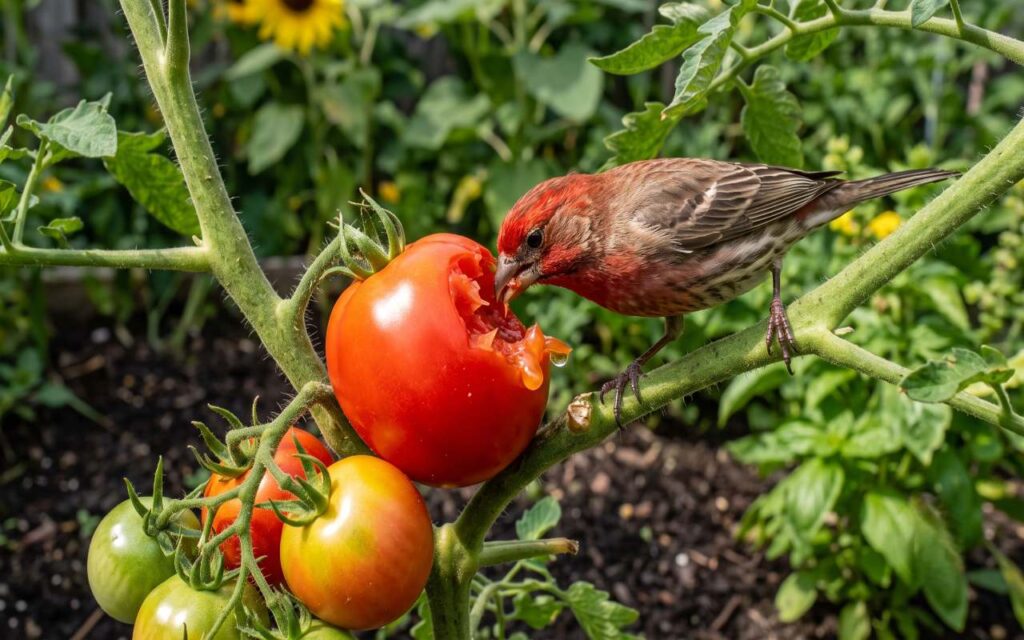
Discovering effective ways on how to protect tomatoes from birds is the secret to saving your backyard harvest from destructive pecks. Birds love juicy fruit just as much as gardeners do, often ruining your best tomatoes right before they are ready to pick. Fortunately, you do not have to share your hard work with local wildlife.
By implementing strategic physical barriers, fruit isolation, and alternative water sources, you can successfully safeguard your crop. Here is how to use three highly effective methods to keep your garden safe until harvest day.
Quick Answer: What are the most effective ways to protect backyard tomatoes?
The three best methods are constructing rigid white PVC conduit hoop structures over garden beds, wrapping individual bunches in fine organza mesh bags, and assembling high-volume perimeter ground hydration stations.
Combining structural physical barriers, direct fruit isolation, and alternative water sources successfully keeps pests and environmental stressors from damaging your crop.
Why Standard Bird Control Netting Fails on Vining Tomatoes
Draping standard flexible plastic bird netting loosely directly over indeterminate vining tomato cages creates a severe architectural failure. Sharp, woody tomato leaf stems and sprawling suckers easily poke straight through standard 1-inch or 3/4-inch netting squares as the vines expand vertically.
This twisting growth strings the foliage tightly into the mesh grids, making it impossible to pull back the fabric for pruning or daily harvesting without snapping your main fruiting branches.
Furthermore, clever songbirds and starlings will land directly on top of the loose fabric sheets, using their physical weight to sag the mesh against the vines so they can peck your ripening clusters right through the holes.
Isolating your heavily laden nightshade vines beneath elevated arches is only the first step in locking down a diverse home plot. I treat each vegetable variety with a tailored structural defense plan to maximize my overall harvest.
To see how these tall PVC conduit frameworks connect into a complete backyard protection footprint, explore my comprehensive How to Keep Birds Out of the Garden master hub guide.
Matching Defensive Frameworks to Your Tomato Patch Layout
Use this quick management index to align your physical protective structures with the exact growing habit of the nightshades across your garden:
| Tomato Variety Growth Habit | Dominant Avian Threats | Optimized Bed Shield | Critical Setup Timeline |
|---|---|---|---|
| Bush Determinate Varieties | House Sparrows, American Robins | Low-profile drop-on wooden frames with 1/4-inch mesh | Onset of first yellow blossom clusters dropping |
| Tall Indeterminate Vines | Northern Cardinals, House Finches | Tall rigid white PVC conduit hoop netting structures | The exact week green fruit reaches full physical size |
| Massive Row Plantings | American Crows, European Starlings | High suspended wire-cable overhead net houses | Onset of mid-summer row canopy expansion phases |
Three Tomato Defense Methods That Actually Work
1. Constructing Rigid White PVC Conduit Hoop Structures
How cleanly you separate your outer netting screen from your expanding leaves completely dictates whether you harvest flawless slicing fruit or split, rotten clusters.
- The Puncture Diagnosis: If bird holes are cleanly pecked into fruit touching the outer mesh, your structure lacks enough clearance envelope and violates the 4-inch clearance rule. If low-hanging clusters are hollowed out from the dirt up, your bottom boundary seals are loose.
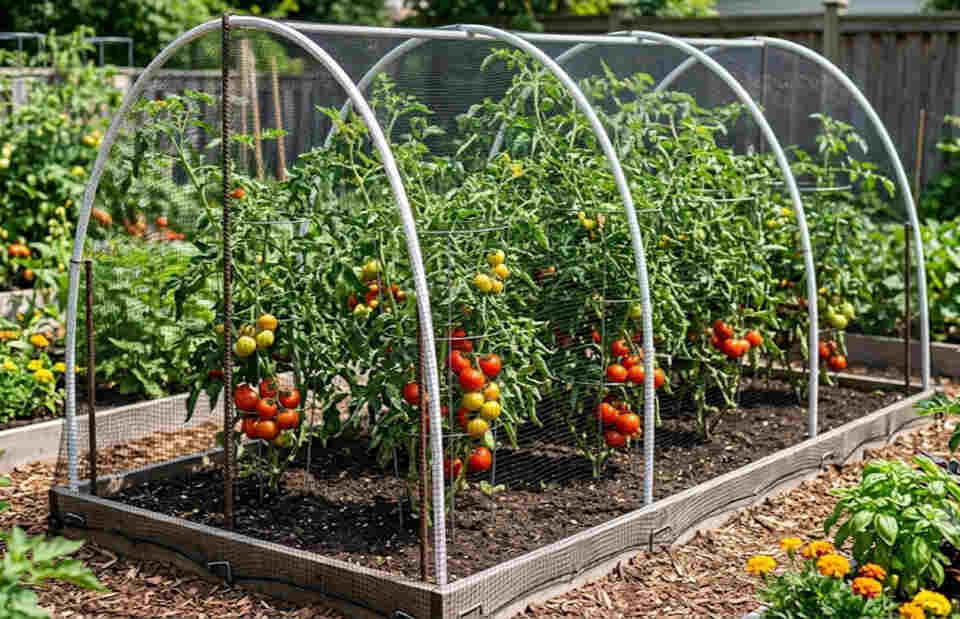
- Building Elevated Hoop Overlays: Driving 2-foot rebar stakes firmly into the soil along the outside corners of your raised beds provides a solid foundation. Slipping flexible white PVC conduit over these pins creates high, perfectly arched hoops over your tall vining cages. Stretching an ultra-fine 1/4-inch mesh smoothly over this independent skeleton keeps the screening suspended firmly in the air.
- Securing the Ground Boundary: You must anchor the bottom edges of your netting frame flush against your raised bed timbers or pin them into the topsoil using heavy-duty metal landscape staples. Foraging birds will land on your mulch pathways and actively scan for loose gaps to creep under, meaning an absolute perimeter seal is mandatory.
2. Wrapping Individual Bunches in Fine Organza Mesh Bags
Using small individual protective covers directly around your prize cluster loops provides an absolute backup mechanical wall that isolates high-value fruit without affecting vine growth.
- Timing the Individual Wrap: Organza bags must be deployed the exact week your green tomatoes reach their full size but before they display their first yellow or pink color change. Wrapping too early traps old blossom debris against tiny green skins, while waiting until the color changes allows scout birds to puncture it first.
- Shielding Individual Fruit Bunches: Slipping a 10×14-inch fine organza mesh bag over an entire cluster of large slicing tomatoes blocks bird beaks completely. The ultra-tight weave prevents birds from piercing the skin while allowing essential sunlight, air currents, and rain to pass through naturally. Pulling the integrated double-drawstrings tight around the thick branch keeps the bag suspended securely.
3. Assembling High-Volume Perimeter Ground Hydration Stations
Providing easily accessible, clean water paths on the far side of your lawn lowers seasonal pecking pressure across your primary production beds.
- Satisfying Avian Summer Thirst: Local bird flocks target ripening mid-summer tomatoes primarily to secure vital fluids when seasonal heatwaves dry up natural puddles. Placing a wide, shallow ground hydration tray or stone birdbath 40 feet away from your garden beds fulfills this survival drive.
- Refreshing the Perimeter Water: You must rinse and refill your alternative hydration stations with fresh, cold water every single morning. Keeping the water source clean ensures local flocks depend on that specific location for hydration, leaving your rows untouched.
Three Major Mistakes Beginners Make With Vining Tomatoes
Failing to calibrate your layout for bird adaptation speeds and vine physics will ruin your harvest. Watch out for these three original nightshade blindspots to keep your tomatoes safe:
Picking Only When Fruits Are Deep Red: Leaving fully colored tomatoes hanging on the vine to maximize sugar retention creates an open invitation for passing flocks. Ripening fruit skin softens rapidly as sugars peak, making it incredibly easy for small beaks to puncture the skin and ruin the fruit.
The FIX: Harvest your tomatoes at the “breaker stage,” the exact afternoon the skin displays its first 10% to 30% pink or yellow color blush. Nightshades ripen perfectly from the inside out on a kitchen counter with zero loss in flavor or sugar profile, allowing you to save your yield from birds completely.
Hanging Stationary Reflective Pie Pans: Tying shiny pie pans or old compact discs to your tomato cages triggers a temporary flight-scare reaction that lasts only 24 to 48 hours. Birds are highly intelligent animals that will watch the objects from nearby fences; once they realize the shiny targets never move or chase them, they will completely ignore the reflections.
The FIX: Throw away static reflective items. If you utilize visual flash elements, you must physically relocate the supporting stakes or hanging lines to completely different corners of your nightshade plot every 48 hours to prevent the local flock from mapping the objects as a harmless anomaly.
Leaving Pecked and Rotten Fruit on the Ground: Allowing punctured, leaking, or half-eaten tomatoes to sit exposed on your garden mulch creates an immediate visual beacon. Scout birds flying overhead spot the open red flesh, drop down to investigate the free meal, and quickly locate the rest of your ripening crop hanging above.
The FIX: Clean your garden rows daily. Immediately pluck any bird-damaged tomatoes off the vine, scoop up fallen fruit from the soil, and bury the waste deep inside a closed compost bin to eliminate open visual and scent attractants.
The Science and Research Behind Protecting Nightshade Crops
Successful tomato defense relies on matching your protective steps to the distinct feeding habits, pressure thresholds, and agricultural limits of foraging pests:
The Michigan State University Extension Service covers the physical setup mechanics. Their data proves that merely draping nets loosely over plants fails because birds land on the fabric and peck fruit through the openings. They demonstrate that anchoring UV-treated netting to a rigid, independent frame skeleton is mandatory to create a secure exclusion barrier.
The University of California Agriculture and Natural Resources Directory (UC ANR) explicitly documents that birds like mockingbirds and finches are voracious tomato pests. They track how these pests aggressively raid vegetable beds to devour ripening fruit, confirming that utilizing a physical structure like an independent mesh cage or netting canopy is the only reliable way to keep the harvest entirely out of beak reach.
Frequently Asked Questions About Keeping Birds Off Tomatoes
Will Fake Plastic Owls Keep Birds Away From Tomatoes?
No. Local backyard bird flocks possess advanced cognitive environmental mapping speeds and will completely ignore a static decoy within 48 hours once they track that the object never moves or poses an active physical threat.
Do Red Christmas Tree Baubles Trick Birds?
No. While hanging red ornaments on empty spring cages is a popular legend intended to make birds peck hard plastic and give up, real-world trials prove birds easily distinguish real, juicy ripening fruit from plastic ornaments later in summer.
Can I Use Yellow Tomato Varieties to Fool Birds?
Yes, cultivating golden, yellow, or green-when-ripe heirloom tomato varieties (like Sun Gold or Green Zebra) lowers bird damage significantly because birds associate a red color blush with peak sugar content.
Summary Checklist for a Bird-Free Tomato Harvest
Setting up your tomato protection in layers creates a reliable shield that handles changing bird habits easily. Your rigid PVC conduit frames, tight ground-stapled borders, and perimeter hydration trays stay useful through intense summer sun, sudden afternoon storms, and active migrations.
Stay consistent with your setup order each season. Monitor your vine growth daily, deploy your rigid PVC conduit netting structures the exact week your green fruit reaches full physical size, and harvest at the early breaker stage. Maintaining that critical physical leaf clearance ensures your thin-skinned nightshades can safely ripen to a rich crimson color without ever facing beak strikes.