
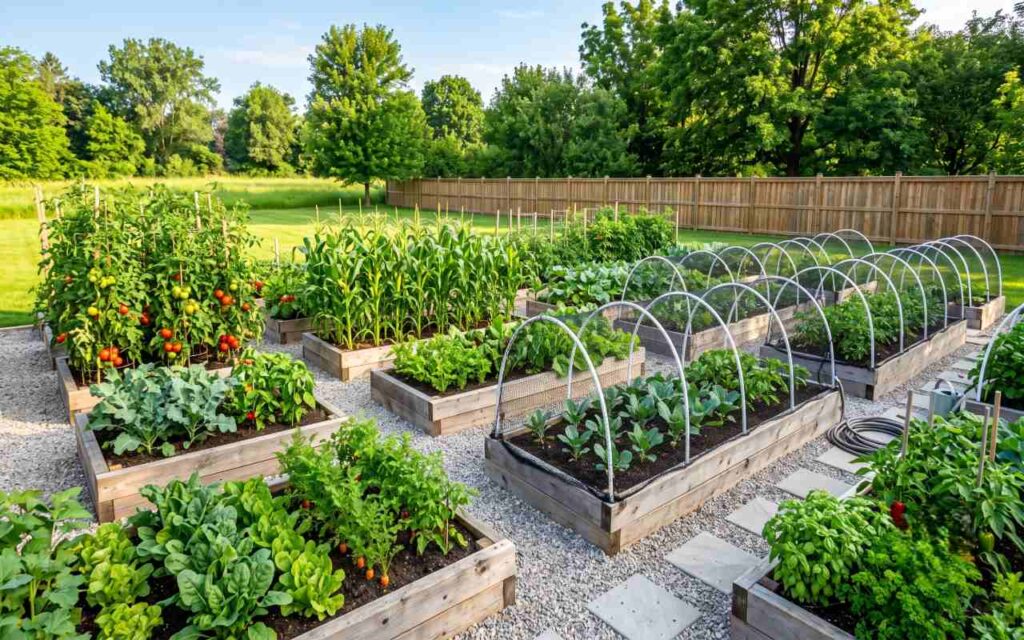
You can spend months caring for your vegetable rows, only to lose your entire harvest surprisingly fast when local flocks find an easy food source. If you’ve been wondering how to keep birds out of the garden, you know the exact frustration of watching your hard work disappear in a matter of hours.
Relying on a fake owl or simple scare tactics always fails because birds quickly adapt to visual deterrents that never move. Real, long-term crop protection requires shifting away from generic backyard gadgets and deploying structural boundaries that target how different bird species behave.
Quick Answer: What is the most effective way to keep birds out of the garden?
The single best strategy is deploying a self-supporting PVC netting framework over tall crops, pinning the mesh edges completely flush to the soil line using metal landscape pins to block ground-foraging pests.
To protect a full layout, layer this physical shield by placing ultra-lightweight floating agricultural fabrics over early seed beds and setting up a solar water fountain pump 30 feet away to divert thirsty flocks.
Why Standard Bird Controls Fail in Home Vegetable Gardens
Most commercial backyard visual and acoustic deterrents fail because they do not account for natural avian habituation or distinct feeding motives. To build a successful strategy, you must understand exactly why traditional methods leave your crops vulnerable:
Rapid Visual Novelty Decay: Static plastic owls, fake rubber snakes, and hanging pie pans trigger an immediate flight response for only 24 to 48 hours. Once local flocks notice these objects remain completely motionless or move predictably in the breeze, they map them out as harmless anomalies and fly right past them to feed.
The Crucial Fluid Deprivation Factor: A massive percentage of mid-summer bird damage is driven by pure dehydration rather than hunger. During dry summer heatwaves, birds peck holes in juicy crops like tomatoes purely to siphon out internal fluids, meaning scare tactics cannot override their basic survival drive.
Draped Netting Structural Failures: Draping flexible plastic garden netting loosely right on top of your vegetable foliage creates an easy landing platform. Lightweight finches and sparrows will land directly on the mesh web, using their body weight to compress the leaves down while pecking stems or fruitlet clusters cleanly through the square holes.
Understanding these behavioral flaws allows you to transition your property away from temporary gimmicks toward permanent structural isolation.
Your Backyard Vegetable Protection Directory
This crop defense summary chart consolidates our complete vegetable protection network into a single scannable blueprint. Use it to instantly match your specific vegetable varieties against their primary avian threats and optimized physical controls:
| Target Vegetable Variety | Dominant Avian Threats | Specialized Exclusion Tool | Critical Installation Window |
|---|---|---|---|
| 🍅 Tomatoes | Northern Cardinals, American Robins | Suspended PVC hoop net structures | Onset of first translucent white fruit color shift |
| 🌽 Sweet Corn | American Crows, European Starlings | Individual ear bagging or husk ties | The exact moment silk tassels turn brown and dry |
| 🫛 Garden Peas | Rock Pigeons, Song Sparrows | Rigid hardware cloth low row covers | From direct seed sowing until vines reach six inches |
| 🥬 Lettuce & Greens | House Sparrows, House Finches | Lightweight floating row covers | Continuous protection from seedling to harvest |
| 🥦 Broccoli & Cabbage | Wood Pigeons, European Starlings | Rigid drop-on wooden mesh screens | The moment early transplants hit the open soil |
Step-by-Step Deep Spoke Integration Manuals
If you are dealing with aggressive high-density attacks on your tomato harvest during summer heatwaves, you can use our dedicated checklist on How to Protect Tomatoes From Birds to install rigid, suspended PVC hoop frames that keep fruit clusters safe.
For growers trying to prevent large blackbird flocks from tearing open maturing husks in your corn rows, use our field manual on How to Keep Birds Out of Sweet Corn to lock down individual cobs securely.
If your early spring garden beds suffer from constant seedling destruction where sprouts are yanked straight out of the dirt, implement our low-profile screen layouts detailed in How to Protect Pea Plants From Birds to shield emerging growth.
For urban growers trying to keep aggressive finches from completely shredding your crisp salad greens, follow our structural layout instructions in How to Keep Birds From Eating Lettuce to deploy floating covers natively over your rows.
Finally, if local pigeons are actively decapitating your young brassica transplants or chewing massive holes in your main leaves, study our mechanical barrier designs in How To Keep Birds From Eating Broccoli to protect your cabbage crops.
Three Universal Garden Defense Frameworks That Work
1. Erecting Self-Supporting Exclusion Frameworks
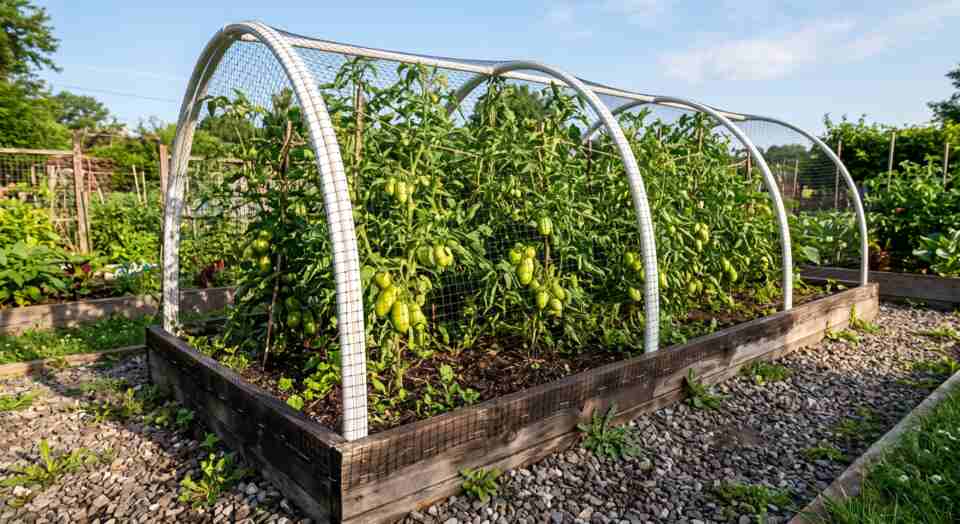
The most reliable way to utilize mesh netting is to treat it as a rigid structural wall rather than a loose wrapper.
The Walk-In Risk: Ground-foraging sparrows, robins, and towhees will land in open grass and walk beneath loose netting lines. Unpinned hems leave your floor perimeters wide open to silent walk-in raids.
The PVC Hoop Setup: Bending half-inch flexible PVC conduit pipes over rebar ground stakes creates a sturdy frame directly above your garden beds.
The 4-Inch Clearance Rule: Stretching a tight 1/4-inch or 1/2-inch polymer mesh smoothly over this frame keeps the barrier suspended at least 4 inches away from all internal leaves and fruit.
Sealing the Perimeter: You must secure the bottom hem flat against the soil or raised bed timbers using heavy metal landscape pins spaced exactly 12 inches apart.
2. Utilizing Ultra-Lightweight Floating Fabrics
For delicate, fast-growing leafy greens, substituting plastic netting with lightweight agricultural fabrics protects young plants perfectly.
The Flat Edge Technique: Always anchor the perimeter edges of your floating row covers with smooth bricks, long boards, or buried soil layers. This total perimeter seal blocks ground-hopping pests and keeps out destructive insects like cabbage moths.
Direct Plant Layering: Materials like agricultural fleece or nylon voile can be laid directly over crops like lettuce, spinach, and emerging brassica rows without a supporting framework.
Natural Growth Expansion: The lightweight fabric expands upward naturally as your plants grow, blocking birds from shredding tender foliage while letting natural sunlight and rainfall pass through.
3. Diverting Pressure via Strategic Hydration Stations
You can drastically lower the feeding pressure on your primary vegetable rows by actively satisfying bird survival motives on the opposite side of your yard.
High-Volume Feeding Footprint: Pair this water source with a separate feeding station stocked with high-protein black oil sunflower seeds or peanuts. Providing an easy, high-calorie food source satisfies local flocks early in the morning, making them significantly less likely to target your maturing crops.
Solar Fountain Setup: Installing a clean bird bath equipped with a moving solar fountain pump at least 30 feet away from your garden draws thirsty birds to an effortless water source.
Visual Redirection: The flash and trickling sound of moving water naturally redirects flight paths toward the designated rest station.
The Science of Avian Field Deterrence
Successful backyard crop defense relies on matching your protective steps to the distinct feeding habits, pressure thresholds, and agricultural limits of foraging pests:
Vegetable Garden Damage Profiles: Real-world wildlife tracking updates published by the University of Missouri Extension Service confirm that foraging backyard wildlife will naturally treat an open home garden patch like an unrestricted buffet.
Because static visual devices like predatory bird figures or reflective pans lose their novelty flight-scare effectiveness remarkably fast, building tight wire cages or physical netting frameworks over your beds is the only way to safeguard vulnerable plants long-term.
Exclusion Framework Dynamics: Urban wildlife management updates archived through the official Iowa State University Extension and Outreach Division confirm that deploying tight physical barriers is the single most reliable way to preserve backyard vegetable yields against foraging pests.
Because local residential animal populations quickly learn to outsmart basic area deterrents when a concentrated food source is readily available, creating an absolute mechanical wall is mandatory to safeguard your rows.
Surrounding your high-value production rows with self-supporting cages or tight wire hardware cloth fences keeps your foliage perfectly separated from any exterior harvesting attempts.
Fluid Deprivation Flight Triggers: Urban wildlife resource directories archived through the University of Nebraska-Lincoln Extension Publications Directory prove that local animal populations are heavily drawn to residential properties by accessible food and open standing water.
When intense summer heatwaves dry out natural environmental puddles, local birds actively target juicy ripening vegetable crops as alternative moisture sources.
Implementing strategic alternative hydration stations across your yard is a critical step to reducing these seasonal feeding pressures on your main garden plots.
Frequently Asked Questions About Garden Bird Control
Should I Use Motion-Activated Sprinklers in My Vegetable Garden?
Yes, this method works exceptionally well for large, heavy-bodied birds like crows and pigeons. The sudden high-pressure water blast combines a startling physical impact with a sharp acoustic hiss, preventing pests from establishing regular feeding habits along your open rows.
Will Reflective Mylar Tape Keep Birds Away Permanently?
No. Reflective ribbon strips provide excellent short-term protection when early seeds are germinating, but local flocks will habituate to the flashing light patterns within a few days. You must physically move your support stakes around your crop beds every 48 hours to keep the visual anomaly effective.
Can Individual Fruit Protection Bags Replace Full Bed Netting?
Yes. For small-scale backyard patches growing heavy, individual fruit clusters like heirloom tomatoes, wrapping ripening fruit inside breathable nylon organza bags provides complete isolation from pecking birds and boring insects without the expense of a full bed enclosure.
Summary Checklist for a Bird-Free Vegetable Harvest
Setting up your vegetable garden protection in layers creates a reliable shield that handles changing bird habits easily. Your hoop frames, floating row fabrics, and solar hydration stations stay useful through intense summer sun, sudden morning dew, and active migrations.
Stay consistent with your setup order each season. Build your self-supporting PVC frame structures first, deploy your lightweight floating fabrics over early greens second, and maintain your alternative water source across the yard third. Adhering to these layered layout adjustments permanently alters the risk-versus-reward equation that neighborhood flocks use when evaluating your property.