
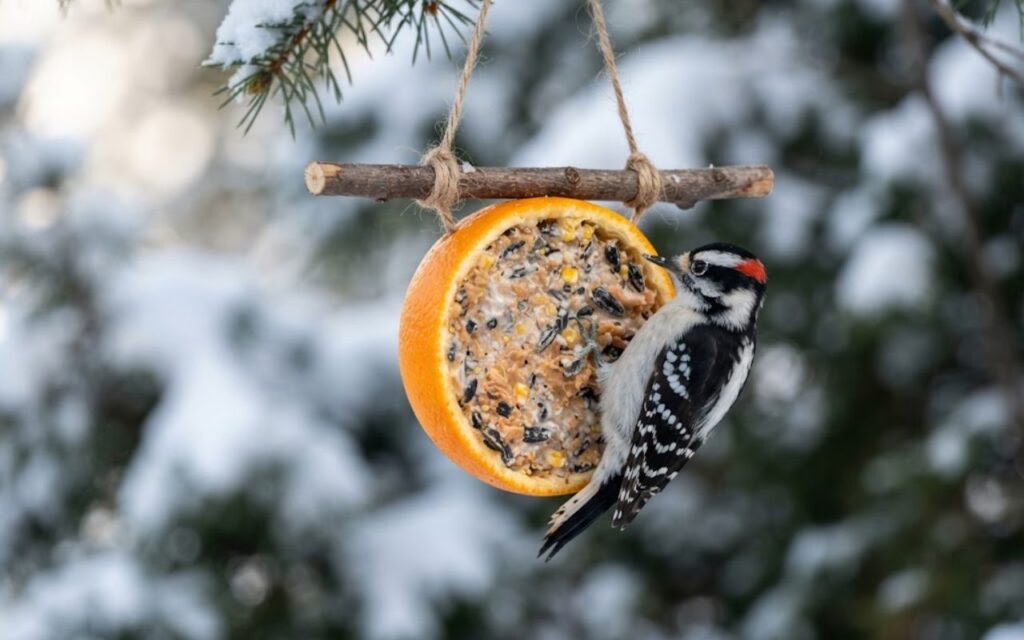
Winter forces backyard birds to expend massive amounts of energy just to survive the night. As natural food sources vanish beneath the frost, local wildlife relies heavily on the supplemental calories provided by human caretakers.
If you are looking to support your local wildlife, mastering safe homemade suet recipes for birds and understanding the correct safe homemade suet ratios for backyard woodpeckers is the absolute best way to ensure birds get clean, high-density energy.
By using a precise, melt-resistant fat mix packed inside an upcycled orange peel cup, you can easily create high-energy winter treats hung with twine. This project creates a striking contrast against winter snow, making it a favorite for both bird photographers and hungry songbirds.
Below is the definitive, field-tested guide to creating safe, structurally sound citrus suet cups that protect your local birds while providing them with premium winter fuel.
Why Wild Birds Need High-Density Fats in the Winter
To survive a single freezing night, a small bird like a chickadee or a downy woodpecker can lose up to 10 percent of its total body weight just maintaining its core temperature. Because their metabolic rates are so high, these birds cannot survive on low-calorie filler seeds during extreme cold snaps. They require dense, easily digestible lipids.
While standard black oil sunflower seeds are excellent, offering an optimized fat blend provides immediate, concentrated energy that birds can process rapidly.
According to the Audubon Guide to Winter Bird Feeding, providing high-fat food sources like suet alongside traditional seeds is highly effective for attracting specialized foraging species like woodpeckers, nuthatches, and chickadees to your yard.
By utilizing an organic orange peel as your feeding vessel, you are upcycling kitchen waste into a fully functional, biodegradable winter feeding station.
The Ultimate Melt-Resistant Suet Formula
Many online recipes call for straight lard or random ratios of kitchen scraps. This is a mistake. Incorrect fat balances crumble easily in cold winds or melt directly into a bird’s feathers, which destroys their natural insulation. To attract clinging birds like woodpeckers, you need a firm, texturized blend.
Essential Ingredients and Ratios:
- 1 part high-quality fat: Rendered beef suet, lard, or unflavored vegetable shortening.
- 1 part unsalted peanut butter: Use strictly pure varieties free from added sugars, salt, or deadly artificial sweeteners like xylitol.
- 2 parts texturizers: A clean mix of cornmeal and competitive wild birdseed (black oil sunflower seeds, white millet, and cracked corn).
- High-protein additives: A handful of dried mealworms, chopped unsalted walnuts, or dried cranberries to mimic natural winter foraging options.
If you prefer a more traditional layout for standard cage feeders, you can read our complete recipe for making classic homemade suet cakes for birds in bulk.
| Suet Formulation Component | Avian Nutritional Safety Standard | Winter Temperature Threshold | Mandatory Feeder Setup Rule |
|---|---|---|---|
| Pure Rendered Beef Tallow Base | Elite; hard fat provides massive, clean calories without clogging feathers. Never use raw bacon grease. | Stays rock-solid below 70°F (21°C); completely safe against melting running lines. | Pack tightly inside a completely hollowed-out, dry orange skin cup; pierce with natural twine strings. |
| Unsalted Peanut Butter Dough | High lipid content; confirm zero salt, zero added sugars, and absolute zero xylitol traces on label. | Feed strictly below 50°F (10°C) to prevent the soft rind skin from molding or souring. | Hang under a wide covered baffle hood to block rain moisture from hitting the porous fruit wall. |
Step-by-Step Production Guide
Creating these high-energy cups takes less than 30 minutes of active prep time.
Step 1: Prep and Dry the Citrus Shells
Slice your fresh oranges directly in half. Carefully scoop out the internal fruit pulp without puncturing the structural rind. Save the fruit for your own breakfast! Take a clean paper towel and thoroughly wipe down the entire interior of the empty orange bowl. Removing the residual moisture prevents the warm fat mix from separating from the shell during the pouring process.
Step 2: Threading the Anchor Lines
Using a wooden skewer or a small screwdriver, punch four clean holes through the rind. Position them directly opposite one another, precisely half an inch below the upper rim. Cut two lengths of natural jute twine, roughly 14 inches each. Thread the twine through the holes so that the strings cross in a clear “X” pattern along the interior floor of the cup. Tie small, firm knots on the outside of the rind to lock the alignment in place.
Step 3: Melting the Base
In a saucepan over very low heat, gently melt your chosen fat and peanut butter together. Stir the liquids constantly to avoid scorching. Once the mixture is completely smooth, remove the pan from the heat source entirely.
Step 4: Incorporating Dry Goods
Slowly stir in your cornmeal, wild birdseed, and optional mealworms. Mix the batch thoroughly until every single seed is fully coated by the liquid fat binder. Let the mixture sit for roughly 5 to 10 minutes to cool and thicken to a scoopable, paste-like consistency.
Step 5: Filling and Setting
Stabilize your hollow orange cups by nesting them inside the cups of an old muffin tin. Spoon the thick suet paste into each orange half, pressing down firmly with the back of your spoon to eliminate any hidden air pockets. Fill them level with the rim. Place the muffin tin into your freezer for two hours until the suet cores are completely solid.
Overcoming Structural Vulnerabilities: The Anti-Flip Modification
A common issue with standard online DIY guides is that an orange peel suspended loosely by four points of string will instantly tilt, spin, or flip upside down. When heavier birds like blue jays, starlings, or red-bellied woodpeckers attempt to land on the edge, the feeder dumps its contents directly into the snow.
To solve this structural flaw, implement the Twig Anchor Modification:
🌲 The Twig Anchor Modification
Before tying the top ends of your twine into a final hanging loop, thread the strings around a sturdy, 6-inch fallen twig gathered from your yard. Push the twig down until it rests flat across the top rim of the orange cup, and tie it securely to the twine on both sides.
This creates a rigid, horizontal overhead crossbar. It completely prevents the soft orange rind from collapsing inward under a bird’s weight and provides an immediate landing perch for species that prefer to sit rather than cling while they feed.
Critical Health and Safety Protocol: Preventing Aspergillosis
Organic citrus rinds exposed to freezing winter moisture, heavy snow, and internal fat sugars create a prime breeding ground for toxic mold spores. When organic material dampens, dangerous mycotoxins can develop rapidly.
If birds consume or inhale these spores, they can contract aspergillosis, a highly fatal respiratory tract infection that spreads quickly through backyard populations.
To keep your backyard sanctuary safe, strictly adhere to these safety timelines:
- The Immediate Removal Rule: Inspect your orange peel cups every 48 hours. At the very first sign of a green, white, or black fuzzy mold spore forming anywhere on the rind or the suet surface, remove the feeder and discard it directly into an outdoor compost bin.
- The Two-Week Limit: Even if the feeder looks completely pristine, remove and replace the orange cup after 14 days outdoors. Winter rain and damp morning frost will degrade the cell walls of the rind over time.
- Temperature Tracking: Only hang these rich homemade suet treats when consistent outdoor temperatures sit safely below 10°C (50°F). Warm weather turns the suet rancid and compromises its structural stability.
Which Winter Birds You Will Attract
By using a targeted, high-fat recipe rather than a basic seed mix, you will notice a distinct shift in the types of visitors entering your yard.
- Downy and Hairy Woodpeckers: These specialized forest birds will easily lock their claws onto the twig modification to systematically drill into the energy-dense core.
- White-Breasted Nuthatches: Known for their acrobatic foraging style, these birds will happily hang completely upside down from the underside of the cup to extract premium sunflower pieces.
- Black-Capped Chickadees: These tiny, high-metabolism songbirds will dart in to grab quick, calorie-dense mouthfuls before retreating to nearby evergreens to store their food.
By shifting away from fragile, generic designs and adopting a structurally reinforced, safety-first approach, you can provide an invaluable, life-saving energy source for your neighborhood birds all winter long.