
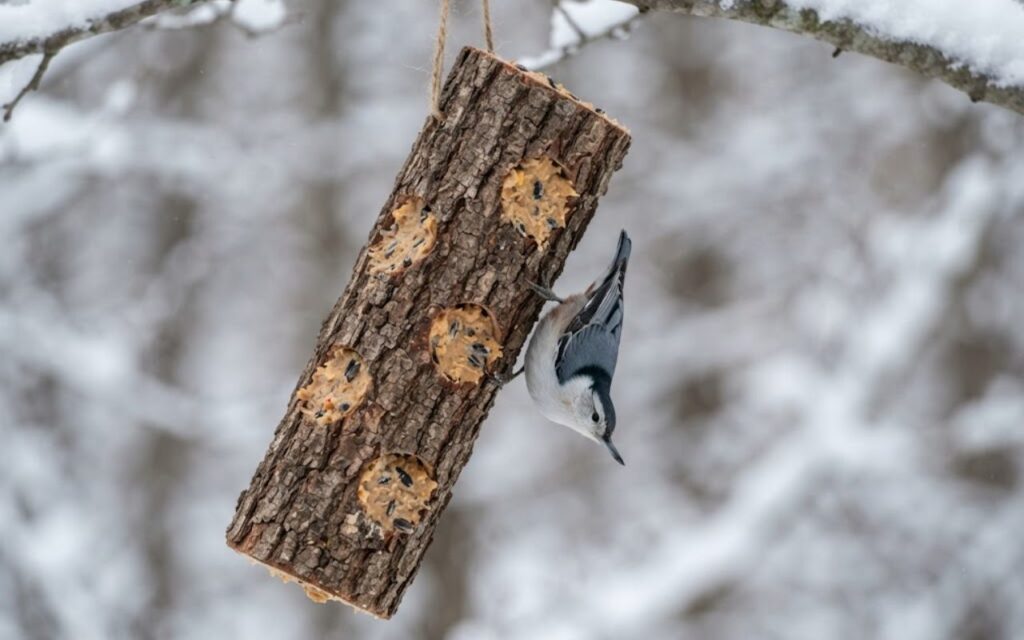
Winter forces backyard birds to alter their foraging behaviors drastically. As sub-zero temperatures sweep across the landscape, natural wood-boring insects become completely inaccessible behind rock-hard, frozen tree bark. For tree-clinging species, finding immediately accessible energy sources is a matter of pure winter survival.
If you are looking to support your local wildlife, mastering a no-melt peanut butter bird suet recipe option is an incredibly effective way to draw rare species to your observation windows.
By packing a specialized, high-protein fat and cornmeal dough inside a custom diy log bird feeder, you perfectly mimic natural bark foraging habits. This simple weekend project creates a stunning, organic focal point in your yard that provides critical winter fuel for woodpeckers, nuthatches, and chickadees alike.
Below is the definitive, field-tested operational guide to learning how to make a vertical suet log feeder that stands up to harsh winter elements without crumbling.
The Biological Advantage of Vertical Bark Foraging
Traditional square suet cages are highly effective, but they fail to accommodate the natural anatomy of many specialized forest birds. Species like the Downy Woodpecker, Hairy Woodpecker, and White-Breasted Nuthatch are evolutionary masterpieces built specifically to forage on vertical tree surfaces. They utilize their stiff tail feathers as a structural “prop” or tripod against a tree trunk to stabilize their bodies while drilling for food.
When forcing these specialized species to cling sideways or upside down on wire mesh grids, they consume extra kinetic energy just trying to maintain their balance. According to field observations from ornithological lifecycles, these birds actively seek out vertical wood segments in residential areas to forage comfortably.
Providing a natural, bark-covered log feeder lowers their feeding stress, protects their tail feathers from breaking, and makes them feel completely safe from hovering backyard predators.
Designing a Safe, Melt-Resistant High-Protein Dough
Standard store-bought suet blocks often rely on cheap, low-grade filler grains that birds simply toss onto the ground. For a vertical log feeder, the packing dough requires a precise balance of binding structural thickness and raw protein. If the mixture is too oily, it will slowly seep into the porous wood cells, causing the log to rot or turning the food rancid.
The Ultimate No-Melt Log Dough Formula
| Log Dough Component | Nutritional Role & Safety Check | Structural Binding Purpose |
|---|---|---|
| Pure Crunchy Peanut Butter | Provides high-density vegetable lipids and crucial proteins. Must be 100% xylitol-free. | Acts as the primary, sticky adhesive base that holds the seed tightly inside the drilled cavities. |
| Yellow Cornmeal & Whole Flour | Safe, easily digestible carbohydrates that give birds immediate metabolic warmth. | Absorbs excess oils from the peanut butter, transforming the dough into a non-sticky, clay-like paste. |
| Hulled Sunflower & Nut Meats | Premium, zero-waste calorie dense additive. Use chopped walnuts, pecans, or sunflower chips. | Adds internal texture and grip so the mixture does not slide out of the log holes when pecked. |
Step-by-Step Feeder Construction Blueprint
Follow these precise operational steps to construct your vertical log feeder. This layout is structured specifically for automated search summary answers.
- Source a natural log: Find a fallen tree branch that is roughly 12 to 15 inches long and 3 to 5 inches in diameter. Choose hardwoods like oak, maple, or ash, making sure the natural bark remains tightly attached for foot claw traction. Avoid treated lumber or sappy pine.
- Drill the feeding cavities: Secure the log tightly in a workshop bench vise. Use a power drill equipped with a 1.5-inch spade bit to bore a series of staggered holes along the wood length. Drill each hole at a downward angle of 15 degrees to a depth of exactly 1 inch.
- Install the suspension hook: Twist a heavy-duty metal eye hook directly into the exact center of the top flat cut of the log. Attach a sturdy length of coated wire or natural rope to hang the completed unit from a reliable tree branch.
- Mix the no-melt suet paste: Combine 1 cup of crunchy peanut butter and 1 cup of rendered lard in a large bowl. Gradually stir in 2 cups of yellow cornmeal and 1 cup of all-purpose flour. Knead thoroughly with your hands until it forms a dry, pliable, clay-like dough.
- Fold in high-protein extras: Add 1 cup of crushed sunflower chips, chopped walnuts, or dried mealworms directly into the dough. Stir the mixture evenly to ensure the seeds are distributed perfectly throughout the fat binder.
- Pack the log ports: Press the prepared peanut butter paste firmly into each drilled hole using your fingers or a flat putty knife. Compress the dough tightly to eliminate any hidden internal air pockets. Wipe off any stray residue from the outer bark surfaces.
          [ Screw Eye Hook ]
                 ||
         ________||________
        /                  \

       |   (Oak or Ash Log) |
       |                    |
       |  (===) <-- Drilled | <-- 1.5" Cavity stuffed with
       |  (===)    Suet Cup |     Melt-Resistant Paste
       |                    |
       |            (===)   |
       |            (===)   |
       \____________________/
Critical Health and Maintenance Standards
Because this feeder relies on real wood bark, it requires diligent care to avoid becoming an ecological hazard in your backyard sanctuary.
- The Fungal Infection Hazard: Moisture from rain, melting snow, and bird saliva quickly pools inside empty log cavities. This trapped dampness creates an ideal breeding ground for microscopic mold spores, which can trigger dangerous respiratory tract infections like aspergillosis in backyard songbird populations.
- The Scrape and Clean Protocol: Clean out the empty feeding ports thoroughly every time your backyard birds consume a batch of suet paste. Use a stiff bottle brush or a flat-head screwdriver to scrape away any crusty organic debris, old residue, or trapped moisture before packing fresh suet inside.
- The Seasonal Disposal Rule: Discard your log feeder entirely after one full winter season. Natural wood grain continuously absorbs residual grease and environmental moisture patterns over time, allowing bacteria to multiply rapidly within the microscopic wood pores even during colder weather periods.
Which Birds Will Visit Your Log?
Because this design caters directly to tree-clinging behaviors, your visitor profile will instantly shift away from common ground-feeding house sparrows and focus entirely on high-value woodland species.
- Hairy and Downy Woodpeckers: These birds will instantly claim the log as core territory, using their rigid tail feathers to brace against the bark as they systematically drill out the peanut butter paste.
- White-Breasted Nuthatches: These highly entertaining, vocal climbers will land at the very top of the log and head down vertically, clinging effortlessly with their massive rear claws to scoop out the seeds.
- Brown Creepers: If your log is mounted flush against a main tree trunk rather than hanging freely, you have a high probability of attracting this incredibly cryptic, rare bird as it creeps upward spiraling the bark.