
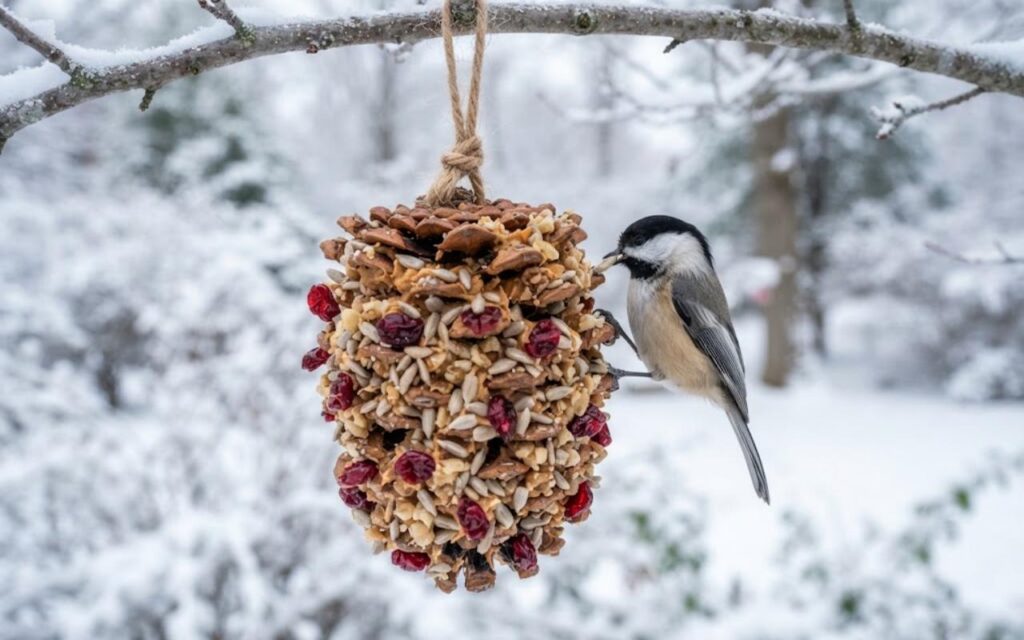
Providing high-energy food sources is critical to helping songbirds survive freezing weather. Creating a no-melt pinecone bird feeder recipe is the best way to bring festive color to your winter yard while supporting local wildlife.
By rolling large pinecones in premium hulled sunflower chips and bright red dried cranberries, you transform a basic craft into a high-performance winter bluebird pinecone feeder that provides essential fats and proteins.
Below is the field-tested guide to making pinecone bird feeders that will not fall apart or shed their ingredients in harsh winter winds.
The Upgraded Ingredient Strategy: Bypassing Cheap Fillers
The reason standard pinecone crafts fail to attract rare birds is that they typically use cheap, low-grade supermarket birdseed. These commercial mixes are full of filler seeds like milo, wheat, and empty hulls that birds simply scratch away and toss onto the ground. This wastes bird energy and attracts unwanted nocturnal pests.
To turn your pinecone feeder into a high-traffic destination for beautiful songbirds, you must upgrade your ingredients:
Step-by-Step Production Guide
Follow these sequential steps to ensure your pinecone feeder is structurally reinforced and packed perfectly. Each step uses short, punchy formatting optimized for mobile viewports and Featured Snippet indexing.
- Source large, open pinecones: Gather massive pinecones that are roughly 4 to 6 inches in length. Choose varieties like Sugar Pine or Ponderosa Pine from your yard.
- Open closed scales completely: Bake damp or closed pinecones on a baking sheet at 200°F (93°C) for 30 minutes to two hours. This duration kills hidden pests, dries moisture, and forces the woody scales to burst wide open.
- Anchor the hanging lines: Tie a secure, heavy-duty knot of natural jute twine deep around the top row of the pinecone scales. Leave a long 12-inch tail at the top for hanging. This prevents the feeder from slipping off its string.
- Blend the high-tack paste: Combine exactly 1 cup of pure, xylitol-free peanut butter with 1/2 cup of organic yellow cornmeal in a medium mixing bowl. Stir until the mixture forms a thick, non-sticky clay paste.
- Pack the core cavities: Use a flat butter knife to press the thickened peanut butter mixture deep into the open gaps between the pinecone scales. Work from the bottom up, packing the core tightly. Leave the outer scale edges exposed as perches.
- Roll in the premium seed mix: Pour 1.5 cups of hulled sunflower chips and 1/2 cup of chopped unsalted walnuts onto a flat tray. Press and roll the sticky pinecone firmly into the seed tray until it is heavily coated.
- Hand-press the dried fruit: Push 1/2 cup of bright red dried cranberries individually into the seed layers around the pinecone. Space them out evenly to create a highly balanced, festive holiday look.
- Freeze to set hard: Place the completed pinecone feeders onto a wax-paper-lined tray. Freeze them for at least 1 hour. This hardens the paste entirely so ingredients do not fall off during deployment.
Critical Health and Safety Protocol
Because pinecones are highly porous and sit exposed to open weather, they require strict management to keep your backyard birds safe from disease.
- The Spore and Moisture Risk: Pinecone crevices easily trap morning dew, melting snow, and bird saliva. This damp environment creates a breeding ground for toxic mold spores. If birds inhale or ingest these spores, they can contract aspergillosis, a fatal respiratory disease that can easily sweep through local bird populations.
- The Strict Disposal Rule: Inspect your pinecone feeders daily. At the very first sign of any white, green, or black fuzz appearing on the seeds or the wooden scales, remove the feeder immediately and discard it in your outdoor trash bin. Do not leave them out for more than 7 days, even if they look clean.
- Temperature Maintenance: Only hang these rich peanut butter crafts when outdoor temperatures are consistently below 10°C (50°F). Warm winter sun can soften the peanut butter base, turning the fats rancid and causing them to transfer onto a bird’s feathers, which ruins their natural insulation.
Which Winter Birds You Will Attract
This upgraded, premium ingredient mix will attract an array of vibrant winter songbirds that normally ignore standard backyard seed blends.
- Black-Capped Chickadees: These small, energetic birds will land directly on the exposed pinecone scales, grabbing a quick sunflower chip before darting back to cover.
- Eastern and Western Bluebirds: Bluebirds normally ignore standard bird feeders, but they are intensely drawn to bright red berries in the winter. The dried cranberries will draw them directly to your hanging cones.
- Tufted Titmice: These acrobatic flyers will hang sideways from the twine loops, systematically picking out the walnut pieces and high-fat peanut butter paste.
By upgrading your ingredients and focusing heavily on clean, high-contrast visual design, you can provide an invaluable winter lifeline for local songbirds while creating gorgeous, viral-ready content for your website.