
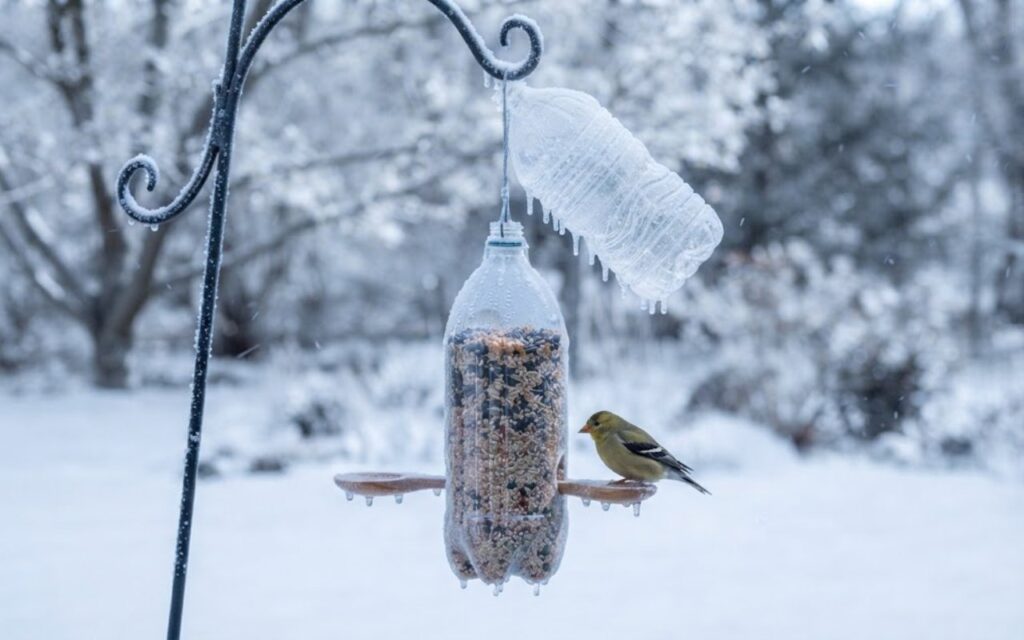
Testing a simple plastic bottle bird feeder hack to keep squirrels away saves your birdseed budget without requiring expensive metal hardware. Backyard birders frequently watch gray squirrels raid hanging feeders, bypass commercial domes, and dump pounds of expensive seed onto the lawn.
Instead of buying costly specialty guards, you can repurpose ordinary two-liter soda bottles into spinning mechanical barriers. This low-cost setup exploits a squirrel’s reliance on stationary footing, rolling them harmlessly off the line before they reach the seed ports.
Quick-Glance Field Summary
The spinning bottle baffle works by threading smooth two-liter plastic bottles freely over hanging feeder wires so approaching squirrels lose their footing and slide away. Pairing this rolling mechanism with adequate ground and tree clearance prevents rodents from simply leaping past the barrier.
- Minimum ground clearance: five feet from the turf to the bottom of the feeder
- Horizontal jumping clearance: ten feet of open space from trees, decks, and rooflines
- Container material: smooth two-liter polyethylene terephthalate soda bottles
- Suspension line: one-sixteenth-inch galvanized steel cable
- Spacing stops: two-inch steel fender washers locked with cable crimps
- Window strike safety zone: placed within three feet or beyond thirty feet of glass
Why Standard Feeders Fail and How Squirrels Beat Them
Commercial squirrel domes made of rigid plastic often fail because rodents use their claws to grip the outer rim. On community forums like r/backyardbirds, members frequently share photos of squirrels hanging upside down by a single back paw to scoop seeds from underneath static plastic shells.
Another widespread complaint on r/birdwatching involves squirrels chewing directly through the soft, thin plastic of repurposed milk jugs in a single afternoon.
Eastern gray squirrels possess flexible ankle joints that rotate nearly 180 degrees, allowing them to climb down vertical surfaces headfirst with complete control.
When an animal encounters a fixed surface, it uses its sharp claws to anchor into microscopic grooves in wood, metal, or rough plastic. A rigid baffle simply acts as another resting platform unless it rotates freely under the animal’s shifting weight.
A lightweight, round soda bottle eliminates that physical grip. Polyethylene terephthalate offers zero traction for rodent claws, and an unanchored bottle spins instantly when loaded from above. The squirrel cannot distribute its center of gravity, causing it to slip off the cable before it can reach down to the feeder lid.
| Feeder Modification Component | Kinetic Defense Mechanics | Rodent Grip Resistance Rating | Mandatory Assembly Setup Rule |
|---|---|---|---|
| The Inline Bottle Spinner Baffle | Rotates instantly on a central line when weighted, throwing off heavy climbing paws. | Elite; smooth cylindrical plastic curves allow zero paw purchase or claw anchoring points. | Thread a wide, empty 2-liter soda bottle horizontally over your main wire strand directly above the seed housing. |
| Smooth Perch Port Arrays | Utilizes short wooden spoons or dowels pushed straight through the bottle walls to provide avian seating. | Moderate; stable perches can assist rodents if the upper bottle body isn’t fully slick. | Trim dowel perches short to allow lightweight finch landings while tipping over bulky, top-heavy pests. |
How to Build the Spinning Bottle Baffle Step by Step
Building this rolling baffle requires clean two-liter soda bottles, a drill, and basic hanging hardware. Smooth-sided carbonated beverage bottles work significantly better than ribbed water bottles, which provide tiny ridges for rodent claws. Wash each bottle thoroughly to remove any sweet syrup residue that might attract yellowjackets or ants.
Drill a centered hole through both the plastic screw cap and the bottom base of two or three empty soda bottles. The hole diameter should slightly exceed the thickness of your suspension cable so the plastic spins without binding. Slide a metal fender washer and a cable crimp onto your wire, then thread the bottles end to end directly above the feeder.
- Two or three clean, smooth two-liter soda bottles
- One-sixteenth-inch flexible galvanized steel aircraft cable
- Two-inch zinc-plated steel fender washers
- Aluminum cable crimps or small screw clamps
- High-speed hand drill with a five-sixteenths-inch drill bit
Position the bottom washer about three inches above the top loop of your bird feeder to create an internal support shelf. When the squirrel climbs down the suspension line, its front paws contact the top bottle, forcing the bottle to spin on its horizontal axis.
Stringing multiple bottles end to end creates a slippery rolling column roughly twenty-four inches long, which exceeds the body length of an adult squirrel.
Placing Your Feeder to Stop Long Distance Jumps
Even the best mechanical baffle will fail if you hang the feeder too close to a launching point. Squirrels can jump five feet vertically from flat ground and leap across horizontal gaps measuring eight to ten feet with ease. If an overhanging branch sits directly above your feeder, animals will drop straight onto the perches, bypassing your plastic rollers entirely.
Measure your yard space to maintain the standard ten-foot perimeter around your hanging station. Suspend the main cable between two distant trees, stringing a series of horizontal spinning bottles along the lead wire if squirrels attempt to tightrope walk across. Keep the base of the bird feeder at least five feet above the ground to defeat vertical jumping attempts from the lawn.
Backyard birders must also account for avian safety regarding window collisions when picking a spot. Field guidelines established by the Audubon Society recommend placing feeding stations within three feet of windows or farther than thirty feet away.
Feeders placed within three feet prevent birds from building fatal flight speeds if startled, while the thirty-foot buffer gives flocks ample room to bank away from glass reflections.
Dangerous Squirrel Hacks You Must Always Avoid
Frustrated homeowners often turn to online advice that involves spreading petroleum jelly, cooking grease, or motor oil on feeder poles. Wildlife rehabilitators regularly warn that coating equipment with grease is dangerous and often fatal to wild birds.
Feathers that touch grease become matted, destroying the bird’s natural waterproofing and thermal insulation, which quickly leads to death from hypothermia.
Capsaicin-treated seeds and spicy pepper coatings are commonly marketed as harmless mammal repellents, and while birds lack the TRPV1 receptors required to register the burning sensation of chili peppers, concentrated additives still present systemic risks.
Heavy dust from fine pepper powders can be inhaled during feeding, causing mechanical respiratory irritation in smaller backyard songbirds like goldfinches and chickadees.
Furthermore, aviary feeding studies suggest that high-dose capsaicin can alter avian metabolic pathways and reduce fat absorption efficiencies, which compromises a bird’s ability to maintain core body temperatures during critical sub-freezing winter nights.
Avoid wrapping feeder poles in sticky glue traps, double-sided tapes, or exposed chicken wire with sharp cut edges. Small songbirds often perch on the support poles before approaching the feeding trays, risking leg fractures and feather loss.
Smooth mechanical spinning devices made from household bottles resolve the rodent problem without introducing chemical hazards or physical trauma to the yard.
Keeping Your Feeding Station Clean and Safe for Wild Birds
Using plastic bottles outdoors requires basic seasonal upkeep to prevent environmental contamination and disease. Ultraviolet radiation breaks down cheap polyethylene over time, causing the plastic to turn brittle and crack after several months of harsh summer sun. Inspect your bottle baffles monthly and replace cracked containers promptly so microplastic fragments do not fall into the surrounding soil.
Damp conditions under feeders encourage the growth of pathogenic fungi like Aspergillus flavus, which thrives on wet, neglected seed piles. This fungus produces aflatoxins that cause severe liver damage and respiratory illness in wild songbirds. Clear away fallen seed hulls weekly from the ground beneath your feeders to keep the foraging area dry and sanitary.
- Rake and discard seed waste beneath feeders every seven days
- Soak feeder parts in a one-part bleach to nine-parts water cleaning bath
- Rinse all equipment with fresh water and dry completely before refilling
- Replace brittle soda bottles every four to six months to prevent cracking
- Discard any clumped, wet seed immediately to prevent mold formation
Clean your feeders every two weeks with a standard sanitizing soak to halt the transmission of avian pox and salmonellosis. Never use boiling water on thin plastic reservoirs, as excessive heat warps the threading and distorts the hanging geometry. Maintaining clean seed and sturdy mechanical baffles keeps your backyard birds healthy while permanently shutting down the squirrel buffet.