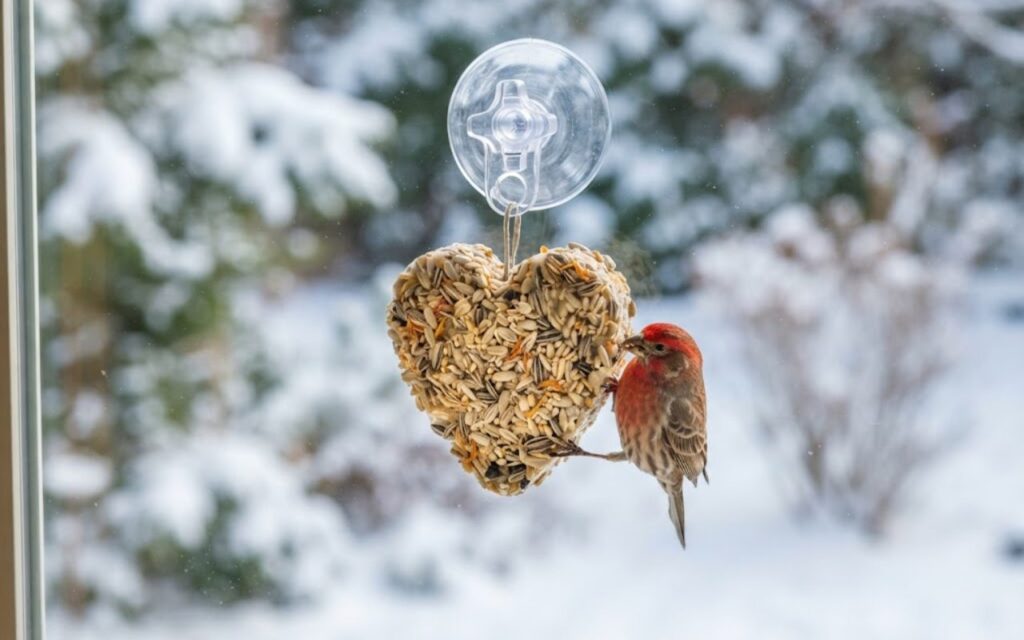
Standard backyard feeding setups typically keep wildlife at a significant distance. While traditional poles and hanging tubes support local songbirds, they rarely offer a clear line of sight for macro photography or close observation. To capture the fine details of wild bird behavior, you need to bring the feeding station directly onto your glass panes using window-safe bird feeders.
If you are looking to capture clean close-up photography, building a reliable glass-mounted setup is the ultimate weekend project. By utilizing a high-structural binder, you can mold dense, high-protein treats into stars or hearts.
When suspended from heavy-duty hooks directly on your window pane, these custom cookies offer an unobstructed view of incoming birds. This zero-waste project eliminates bulky plastic barriers, allowing you to observe spectacular wildlife encounters right from your desk or kitchen table.
Below is the field-tested, step-by-step blueprint to preventing suction cup drops while executing a flawless, non-crumble seed ornament recipe that stands up to freezing winter weather.
Technical Binder Analysis: Gelatin vs. Flour Paste
Many online crafting blogs recommend weak ratios or suggest using household flour pastes. These alternative binding methods fail quickly in winter elements, creating a short lifespan and potentially dangerous scenarios for backyard wildlife.
To achieve long-term structural integrity and absolute safety, you must use a dense, concentrated unflavored gelatin-to-water ratio rather than sugary syrups or flour bases.
| Binding Agent Metric | Concentrated Unflavored Gelatin | Standard Household Flour Paste |
|---|---|---|
| Weather Resistance | High; creates a water-resistant crystalline matrix that withstands light frost and winter humidity. | Extremely low; dissolves rapidly when exposed to damp morning rain or melting ice, creating a soggy mush. |
| Avian Health Safety | Elite; composed of pure collagen proteins. 100% free of dangerous chemical dyes or processed sugars. | Moderate to low; raw starch mixtures can sour rapidly and sticky residues can inadvertently gum up small bird beaks. |
| Structural Longevity | Stays rock-solid up to 7 days under cold conditions; maintains shape under the weight of heavier birds. | Crumbles within 24 to 48 hours as it dries completely out in cold winter winds, shattering onto the ground. |
Pure, unflavored gelatin is entirely safe for bird consumption because it consists of simple animal proteins. However, you must absolutely avoid colored or sweetened dessert gelatins. Artificial dyes, refined sugars, and chemical sweeteners like xylitol are highly toxic to wild birds. Verified choice: Knox Unflavoured Gelatin Pouches.
Step-by-Step Cookie Construction Blueprint
Follow these precise steps to mix, mold, and dry your heavy-duty seed cookies. This layout is structured cleanly to optimize for mobile screens and capture featured search summaries.
- Assemble your molding equipment: Collect sturdy 3-inch metal cookie cutters in simple geometric outlines like stars or hearts. Avoid intricate shapes with narrow edges, as thin corners break easily under bird weight.
- Dissolve the gelatin base: Pour 1/2 cup of cold water into a medium saucepan. Sprinkle exactly 2 packets of unflavored gelatin over the surface, letting it sit for 2 minutes to bloom before heating on low.
- Incorporate the safety binder: Stir the blooming gelatin continuously until it dissolves into a clear liquid. Avoid adding corn syrup or honey, which introduce unneeded mold risks; a concentrated gelatin-to-water ratio provides all the required binding strength. Remove from heat.
- Bind the specialized seed mix: Fold 2 cups of white millet, safflower seeds, and hulled sunflower chips directly into the warm liquid. Stir for 3 minutes to guarantee that every single grain is fully coated.
- Pack the cookie cutters: Place your metal cutters onto a baking sheet lined with wax paper. Spoon the sticky seed mixture into the molds, compressing tightly with the back of an oiled metal spoon to eliminate internal air gaps.
- Create the structural hanger loop: Push an oiled drinking straw completely through the upper section of each packed mold, roughly 1/2 inch from the rim. This leaves a clean, reinforced hole for your twine.
- Cure and dry completely: Allow the packed molds to set in your refrigerator for 2 hours to solidify. Remove the straws and gently pop the cookies out of the metal cutters. Let them air-dry on a wire rack for 24 hours.
- Thread the hanging twine: Run a length of natural jute twine through the dried hole, tying a firm loop at the top. Secure the loop directly onto your heavy-duty mounting hardware.
🪟 Window Mount Profile View
Seed Cookie
Safflower Core
The Physics of Window Safety: The Safe 3-Foot Zone
A common question among backyard birders is whether window-mounted feeders cause dangerous bird strikes. According to collision mitigation data, window strikes occur because birds see reflections of trees or open sky in the glass and mistake it for an open flight path.
However, placing your feeder directly on the window glass actually utilizes physics to protect wild birds:
- The Danger Zone (4 feet to 30 feet away): If a bird feeder sits 15 feet away in your yard, birds can easily get startled by a neighborhood predator. In a panicked rush toward the house, they reach top speed before hitting the glass, which results in fatal injuries.
- The Safe Zone (0 to 3 feet away): When a feeder is attached directly to your glass pane, landing birds must slow down to a complete stop to eat. If they get startled while feeding, they have zero runway to build momentum. If they bump into the window from a few inches away, they simply flutter down safely without injury.
To ensure your window remains highly visible to arriving birds, apply an exterior deterrent system like the UV-reflective WindowAlert Anti-Collision Decals directly onto the glass pane surrounding your seed cookie. These decals appear as frosted glass to humans but reflect bright ultraviolet light for wild birds, creating an unmistakable visual warning.
Preventing Suction Cup Drops: Hardware & Installation Hacks
Extreme outdoor temperature drops cause window glass to contract, which can loosen the vacuum seal on lower-quality suction cups. If your hardware pops loose, a rock-hard gelatin cookie will plummet to the ground, smashing into fragments. Managing a heavy-duty window bird feeding station requires upgraded hardware specifications and structural modifications.
1. Source Clear PVC Hardware with Locking Lever Mechanisms
Do not rely on basic, lightweight craft suction cups. Look for large, industrial suction mounts made from clear, UV-resistant PVC plastic that feature integrated mechanical locking levers or turn-knob vacuum caps. These advanced designs use structural tension to forcefully pull the center of the cup away from the glass, creating an incredibly tight vacuum seal that withstands extreme winter temperature swings and holds up to 10 pounds without slipping.
2. Implement the Secondary Anchor Modification
Before pressing your suction cup to the glass, cut your hanging jute twine long enough to extend over the top of the window frame. Open the window sash slightly, drop the tail end of the twine inside the room, and loop it securely around a finish nail or an adhesive hook mounted to the interior window frame. Close and lock the window sash tightly over the twine.
This simple step ensures that if the exterior suction cup loses its vacuum grip during a winter storm, the line catches the cookie instantly, suspending it safely in mid-air until you can re-secure the cup.
Critical Health and Maintenance Protocols
- The Moisture Disintegration Rule: Unflavored gelatin binders dissolve slowly when exposed to heavy rain or melting ice. Hang these window cookies exclusively under deep eaves, window awnings, or covered porch windowpanes to shield the structural protein matrix from direct winter precipitation.
- The Aspergillosis Inspection: Gelatin-packed seeds absorb ambient humidity rapidly. Inspect your window cookies every 24 hours for faint white fuzz or black dots. At the absolute first sign of fungal mold, discard the cookie in your trash immediately to prevent spreading fatal respiratory infections.
Intimate Wildlife Photography Insights
Positioning your seed cookies directly against the window pane alters the entire dynamic of backyard photography, allowing you to capture details that are impossible to spot at a distance.
- Eliminate Lens Reflection: To avoid capturing room reflections or indoor glare in your window shots, press your camera lens hood completely flush against the interior glass surface while shooting, or use a polarized lens filter.
- House Finches and Chickadees: These small birds will land directly on the textured face of the cookie, offering crystal-clear close-ups of their plumage, beak shapes, and feeding mechanics.
- Dark-Eyed Juncos: These ground-feeding winter specialists are naturally cautious, but the highly accessible window placement encourages them to fly up and feed comfortably at eye level.
By abandoning restrictive plastic barriers and utilizing a structurally sound, safety-first cookie design, you can transform your windows into an interactive wildlife viewing gallery that drives massive traffic to your website.