
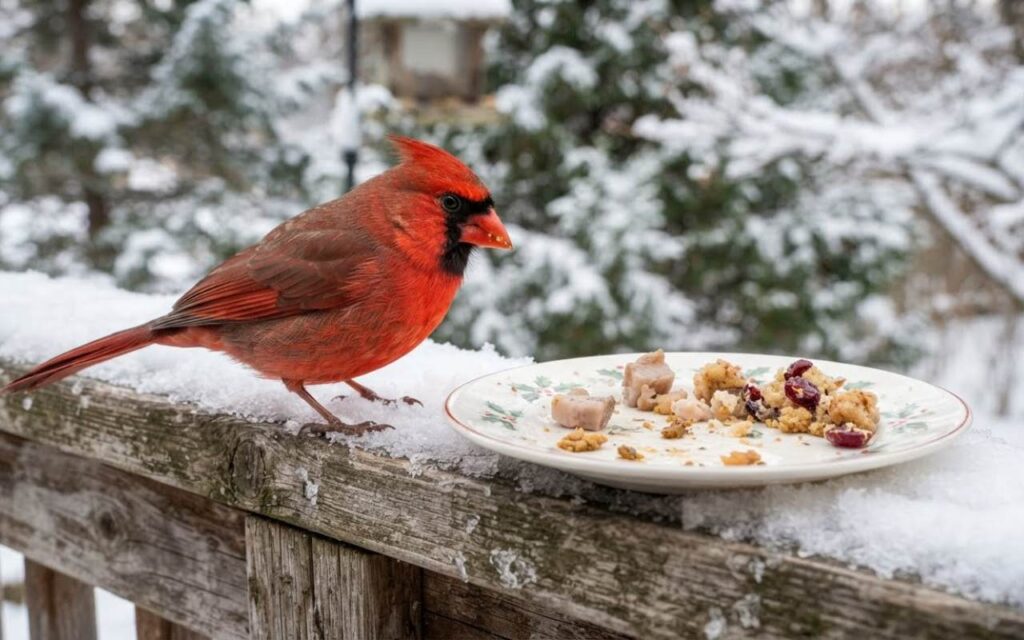
Avoiding dangerous Christmas food for birds mistakes requires examining how holiday leftovers alter avian fluid balance and digestion during freezing conditions. Discarded holiday roasts, seasoned stuffings, and table fats quickly compromise small songbirds facing harsh sub-zero nights.
High sodium levels pull water from vital tissues in small passerines, while low-melting-point cooking fats coat plumage and destroy natural insulation. Replacing seasoned kitchen scraps with species-appropriate unseasoned lipids protects wild birds from preventable winter losses.
Quick-Glance Field Summary
Safe winter feeding requires excluding all salted meats, spiced kitchen dressings, and soft pan drippings that impair avian kidney function or feather water-repellency. Offering raw beef suet, plain unsalted seeds, and controlled portions preserves cold-weather energy balance without introducing toxic foodborne pathogens.
- Zero sodium tolerance with maximum salt thresholds under 0.05 percent for all offerings
- Rendered cooking grease and pan drippings banned to prevent plumage feather matting
- Minimum seventy percent raw saturated fat content for winter metabolic stability
- Feeding station clearance set ten feet away from dense ground cover to deter pests
- Unconsumed moist table scraps removed within four hours of outdoor exposure
How to Prevent Salty Meat Scraps From Causing Illness in Winter Birds
Cured holiday meats like glazed ham, pigs in blankets, and seasoned turkey skins carry sodium concentrations that overwhelm avian kidneys. Small backyard species like chickadees and goldfinches process electrolytes through micro-sized renal systems that cannot filter dense salt loads without extreme water intake.
Recent troubleshooting threads on the BirdForum feeding section document wild finches collapsing near feeding platforms after homeowners set out leftover holiday ham bones and cured meats.
When freezing temperatures lock up open water sources, birds cannot drink the massive volumes required to dilute incoming sodium. This biochemical deficit leads to rapid salt toxicosis, causing cellular dehydration, motor ataxia, and severe muscle tremors.
Death frequently occurs before the bird can metabolize the meal, especially during overnight roosting periods when metabolic demands peak.
Preventing this condition requires a zero-tolerance policy for processed or seasoned holiday proteins. Leftover meats offered to birds must consist solely of boiled, unseasoned poultry scraps devoid of glazes, dry rubs, or curing salts. If an unseasoned meat scrap cannot be verified, keep it entirely off the winter feeding tray.
Where to Place Ground Feeding Trays to Stop Holiday Pest Problems
Spilling holiday baked items, mince pies, and table scraps onto open lawns attracts nocturnal scavengers rather than songbirds. Discussions on Reddit’s r/birding highlight severe rat infestations and raccoon activity after well-meaning residents scattered holiday pastry crusts and rich fruitcakes across yard turf.
Rodents consume these dense carbohydrates quickly, establishing nesting burrows directly underneath primary feeding zones.
Avian salt toxicosis in winter occurs when wild birds ingest high-sodium food scraps while natural water sources are frozen, preventing the renal system from diluting electrolytes and causing rapid dehydration or neurological failure.
Homeowners can prevent this condition by enforcing a zero-tolerance policy for processed or seasoned holiday proteins. Leftover meats offered to birds must consist solely of boiled, unseasoned poultry scraps devoid of glazes, dry rubs, or curing salts. If an unseasoned meat scrap cannot be verified, keep it entirely off the winter feeding tray.
Ground trays must sit at least ten feet away from low-hanging shrubbery, woodpiles, and deck foundations. Placing trays in open sightlines forces ground-dwelling pests to expose themselves to natural predators, which significantly reduces daytime rodent traffic.
Elevating these trays eighteen inches above the snowpack stops damp soil moisture from turning spilled grain into spoiled, fermenting sludge.
- Elevated ground trays require perforated wire mesh floors with openings under two millimeters
- Mechanical baffle guards on support posts must measure at least twenty-four inches in diameter
- Structural tray borders must maintain a clearance of five feet from low tree branches
- Install smooth metal pole sleeves beneath any raised platform station to block climbing rodents.
- Rake up fallen food matter beneath platforms daily at dusk before nocturnal foragers emerge.
- Clean collection surfaces ensure holiday treats do not establish permanent neighborhood rodent colonies.
Best Raw Animal Fat Options for Cold Weather Metabolic Health
Wintering songbirds rely on energy-dense fats to sustain high core body temperatures throughout freezing nights. Small birds like kinglets and titmice can burn up to ten percent of their total body weight overnight to maintain a baseline internal temperature of 105 degrees Fahrenheit.
Providing raw saturated fats with caloric densities near nine calories per gram delivers the fuel necessary to sustain continuous shivering thermogenesis.
The benefit of raw beef kidney suet for winter bird feeding is its high melting point (between 113°F and 122°F) and firm cell structure, which prevents fat from melting or matting avian feathers while delivering dense caloric energy for shivering thermogenesis.
In contrast, soft holiday fats like melted turkey drippings or lard turn sticky at room temperature, easily matting down the contour feathers birds need to trap warm air against their skin.
- Raw beef kidney fat with lipid content above eighty5 percent
- Commercially rendered plain suet cakes lacking added chemical preservatives
- Unsalted sunflower seed kernels providing natural polyunsaturated plant oils
- Crushed raw peanuts delivering complementary proteins alongside dense vegetable fats
- Commercial suet mixtures blended with black oil sunflower seeds or raw peanut meal provide ideal ratios of fat and protein.
- Avoid products containing hydrogenated oils, artificial colorants, or high-fructose corn syrups.
- High-grade raw lipids fuel flight muscles and organ maintenance without forcing birds to expend excess energy processing synthetic additives.
How to Modify Cooked Vegetable Scraps to Prevent Digestive Spoilage
Leftover cooked holiday side dishes spoil rapidly once exposed to winter moisture cycles. Starches like mashed potatoes, buttered carrots, and creamed vegetables harbor high concentrations of water, creating an ideal breeding ground for microscopic molds.
The primary biological threat stems from Aspergillus flavus, a ubiquitous mold that proliferates on moist starches and produces toxic aflatoxins that destroy avian liver function.
Seasonings added to holiday vegetables introduce direct biological hazards to backyard flocks. Onions, shallots, and garlic contain toxic compounds that cause oxidative damage and severe localized organ stress across avian species.
Dairy products like butter, cream, and cheese also trigger acute digestive upsets because adult birds lack the lactase enzyme required to digest dairy sugars.
To make vegetable leftovers safe for wild birds, offer only plain roasted or boiled roots that were cooked without butter, salt, or allium seasonings. Dice raw carrots, plain squash, or unseasoned sweet potatoes into uniform cubes no larger than five millimeters to eliminate choking risks for small songbirds.
Discard all damp scraps after four hours of daylight exposure to stop bacterial and fungal proliferation before it begins.
Clear Step-by-Step Instructions to Safely Prepare the Holiday Menu Layout
Safe preparation transforms simple kitchen trimmings into secure winter bird food without introducing pathogens or physical hazards. Follow these quantitative preparation steps before distributing any kitchen scraps to outdoor feeding stations.
- Inspect all scrap materials to ensure zero salt, garlic, onion, or dairy contact.
- Discard any cooked meat showing traces of cured marinades, glazes, or surface rubs.
- Dice plain boiled root vegetables into four-millimeter cubes.
- Chop raw beef kidney suet into ten-millimeter squares for easy mesh cage loading.
- Blend seventy percent raw suet cubes with thirty percent black oil sunflower seeds.
- Measure scrap portions to match what birds consume within three daylight hours.
- Scrape platform feeding surfaces using a five percent white vinegar solution between batches.
- Monitor bird activity across the feeding stations throughout the afternoon hours.
- Remove unconsumed vegetable and meat portions immediately as dusk approaches to prevent freezing spoilage and nighttime scavenger attraction.