
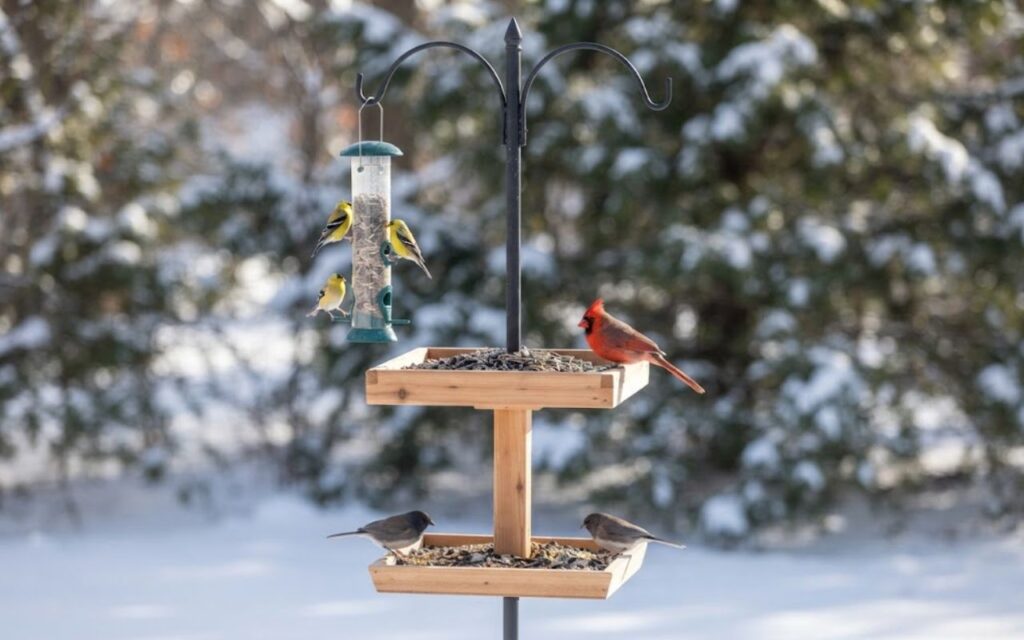
Deploying balanced multi-tier winter bird feeding stations requires calculating dynamic wind loads, balancing feeder branch clearances, and isolating food stores from driving precipitation. Freezing rain and sub-zero temperatures quickly snap brittle plastic components and turn exposed seed blends into useless frozen blocks.
Mainstream backyard setups frequently collapse during blizzard conditions because thin retail poles buckle or cross-arms rotate wildly under heavy snow crusts. By treating the layout as an engineered multi-level system, backyard operators can support ground foragers, clinging woodpeckers, and tree gleaners simultaneously throughout extreme weather events.
Quick-Glance Field Summary
A resilient multi-tier station uses vertical separation zones anchored to a rigid steel core to prevent aggressive birds from monopolizing food supplies. Staggering feed types by tier and shielding each bracket with wide weather domes preserves seed dry flow during severe blizzards.
- Main mounting mast: Minimum 14-gauge or 16-gauge powder-coated structural steel pole with a 1-inch outer diameter.
- Plumb stability depth: Sunk 24 to 36 inches into the earth inside a heavy-duty sleeve to sit below regional frost heave lines.
- Vertical tier spacing: Spaced 14 to 18 inches between hanging brackets to prevent flight path collisions.
- Lower tier clearance: Positioned 5 feet above the maximum anticipated snow pack line to neutralize rodent launch vectors.
- Weather baffle diameter: Spanned 18 to 22 inches over each hanging hub assembly.
- Feeding port freeze prevention: Lubricated with 100 percent food-grade silicone dry spray on all moving metal latches.
How to Prevent Nectar Ports and Metal Perches From Freezing in Ice Storms
Hummingbird nectar freezes rapidly during seasonal cold snaps, locking access ports behind solid ice. A standard 4:1 water-to-sugar solution freezes at 27°F (-2.8°C), while a concentrated 3:1 winter mix depresses the slush point down to 22°F.
However, avian veterinarians warn that a 3:1 concentration introduces severe renal stress risks for small birds, making external heating mechanisms the mandatory primary defense.
In a recent r/birding forum discussion on winter nectar maintenance, hobbyists reported that passive insulation hacks and hand warmers fail within two hours of sub-freezing exposure. The proven solution requires attaching a UL-listed, 7-watt incandescent heating shroud directly beneath the feeder basin.
All heating shrouds and electrical winter accessories must connect to a GFCI outlet via an outdoor-rated extension cord to eliminate electrical fire and short-circuit hazards from melting ice.
A persistent myth suggests that wild birds freeze their foot tissue or lose skin to bare metal perches during extreme cold. Avian feet utilize a counter-current circulatory heat exchange system known as the rete mirabile, which constricts blood vessels to drop foot temperature near freezing and prevent wholesale body heat loss.
Metal perches should still be modified by wrapping them with 20-mil self-fusing silicone tape; this creates mechanical grip, improves friction during high winds, and avoids sticky adhesives that could transfer to feathers.
Where to Place Structural Mounting Poles to Stop Winter Wind Damage
High winds generate severe horizontal torque on multi-feeder systems once wet snow clings to roofs and perches. A central mast must be constructed from 14-gauge or 16-gauge powder-coated structural steel with a minimum outer diameter of 1 inch to withstand sustained 45-mph gusts. Standard garden-center thin-wall poles bend at the joint swages once cross-arms accumulate uneven ice loads.
To maintain vertical alignment throughout the winter, the foundation sleeve must be driven 24 to 36 inches into the earth to sit securely below regional frost heave lines. Sinking the ground sleeve below the frost depth prevents seasonal soil expansion from tilting the mast off its vertical axis. Keeping the post plumb ensures that baffle edges remain centered, preventing rodents from jumping past tilted clearance boundaries.
On the BirdForum equipment discussion boards, users regularly report that standard cross-arm assemblies held by single thumbscrews strip their threads and spin freely under heavy snow crusts. This spinning action causes hanging feeders to collide, fracturing hanger brackets and emptying seed reserves onto the snow.
Installing dual stainless steel split-collars above and below each cross-arm bracket locks the hardware in place, stopping all rotational movement during freezing rain events.
Position the entire station within 10 to 15 feet of dense evergreen trees or structural windbreaks to the north and northwest. This proximity provides shelter from prevailing winter winds while forcing approaching raptors to navigate visible obstacles. The open space between the feeding tiers and the windbreak also gives small songbirds a clear flight line to immediate cover.
Best Structural Steel and Polycarbonate Options for Cold Weather Durability
Material degradation accelerates rapidly when sub-zero temperatures combine with intense ultraviolet exposure. Traditional acrylic hoppers develop micro-fissures and shatter if knocked to frozen ground during servicing. Heavy-duty feeding stations require UV-stabilized polycarbonate plastics measuring at least 0.125 inches thick, which resist shattering down to -30°F.
High-density polyethylene lumber, derived from recycled plastics, provides superior thermal stability for hopper framing and platform feeders compared to soft cedar. Cedar absorbs ambient moisture, expands during morning freezes, and splits along grain lines where screws are seated.
Recycled structural plastic lumber does not absorb water, cleans easily, and remains chemically inert across decades of freeze-thaw cycles.
Fasteners and suspension points must consist solely of 304 or 316 stainless steel to prevent galvanic corrosion and seized threads. Plated zinc screws corrode quickly when exposed to wet organic seed hulls, binding components permanently.
Never apply petroleum-based lubricants or automotive oils to poles, baffles, or feeder hangers; petroleum residues ruin bird feather insulation barbules, causing rapid and fatal hypothermia.
How to Modify Platform Trays and Feeders to Prevent Seed and Nectar Spoilage
Moisture accumulation inside feeder bases creates an immediate vector for lethal biological pathogens. Damp, compacted seed facilitates the growth of Aspergillus flavus, a fungus that produces aflatoxins lethal to cardueline finches and sparrows. Prolonged dampness also fosters Candida albicans, an opportunistic yeast that induces sour crop and severe tongue swelling in foraging birds.
Standard platform trays require modification to ensure complete liquid drainage during sleet and driving winter rains. Drill a series of 0.1875-inch drainage ports spaced every two inches along the outer perimeter of the tray base.
You must pair these drainage holes directly with an internal non-absorbent plastic mesh liner; the liner openings must be smaller than 0.10 inches to prevent small specialty seeds like millet or Nyjer from flushing through the holes.
Hanging tube feeders require oversized weather domes measuring 18 to 20 inches in diameter positioned 2 to 3 inches above the feeding ports. This spacing deflects downward snow drifts while allowing clear visual approaches for tree gleaners like nuthatches and chickadees.
Hopper reservoirs should be filled with high-lipid, low-waste grains such as black oil sunflower seed, shelled peanuts, and clean suet blocks to maximize caloric intake per feeding visit.
How to Build a Weatherproof Multi-Tier Winter Bird Feeding Station
Assemble the multi-tier feeding station methodically to balance weight distribution and protect birds across varying feeding heights. Follow these specific assembly instructions to construct a stable, multi-tier layout:
- Drive a 36-inch galvanized steel ground sleeve vertically into the soil below the regional frost line.
- Slide the primary 14-gauge powder-coated steel mast into the sleeve and tighten all locking hex bolts tightly.
- Mount a heavy-duty torpedo baffle on the lower mast section at least 5 feet above the maximum winter snow line.
- Lock dual stainless steel split-collars directly beneath each cross-arm bracket to prevent spinning from asymmetric ice loads.
- Attach the top-tier double-arm hanger at an elevation of 7 feet using 316-grade stainless steel fasteners to resist corrosion.
- Install the middle-tier offset brackets at an elevation of 5.5 feet, hanging polycarbonate tube feeders with 18-inch weather domes.
- Clamp the lowest tier tray feeder at 4.5 feet on the leeward side of prevailing winter winds.
- Connect all thermal accessories to a functional GFCI outlet using an outdoor-rated extension cord to eliminate fire risks.
- Fasten all hanging hardware loops securely using closed steel carabiners or threaded quick-links instead of open hooks.
Distributing feeder styles vertically matches natural avian feeding habits and minimizes conflict between large and small birds. Top tiers support larger perching species like woodpeckers, cardinals, and jays, while intermediate tiers shelter chickadees, titmice, and finches under protective weather domes.
Lower platform trays capture falling seed debris, providing safe foraging surfaces for juncos, native sparrows, and doves above cold snowbanks.