
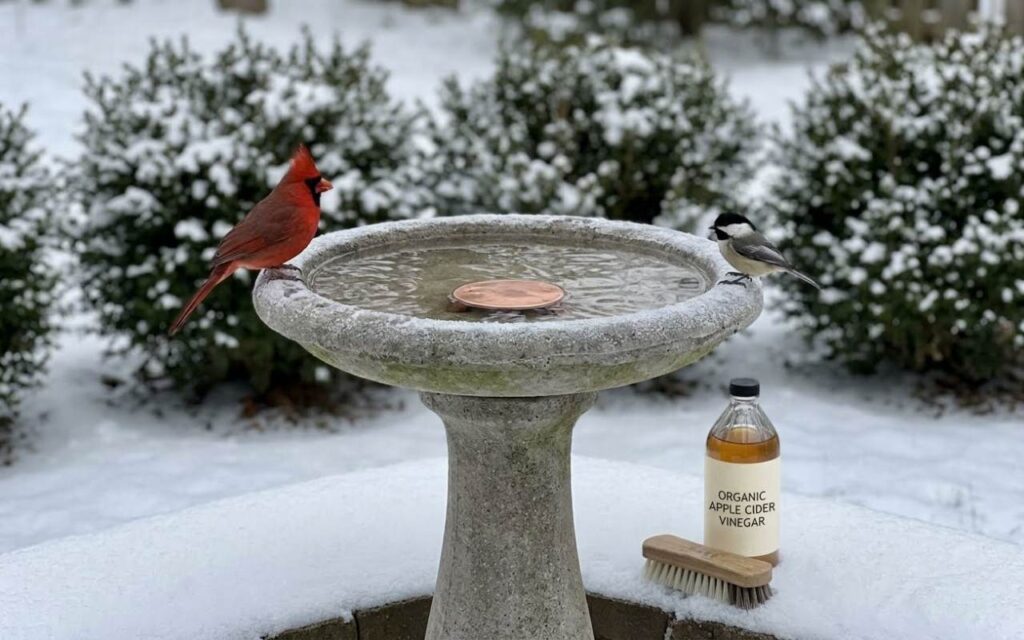
Learning how to prevent bird bath algae starts with separating viral backyard shortcuts from proven ornithological maintenance. While many social media posts claim that pouring apple cider vinegar directly into drinking water stops green slime, wildlife experts warn that leaving vinegar in standing bathwater can irritate birds and strip essential waterproofing oils from their feathers.
Instead, the safe apple cider vinegar method uses a 1:9 vinegar-to-water scrubbing rinse on an empty basin—followed by a thorough fresh-water flush—to break down stubborn algal biofilms without toxic chemicals. Pairing this rinse-away cleaning routine with material-specific flushing, water circulation, and smart placement keeps your heated birdbath crystal clear all winter.
Quick-Glance Birdbath Care Summary
Algae thrives whenever sunlight, organic debris, and stagnant water combine—even inside a heated winter basin sitting in bright snow glare. Using vinegar strictly as a rinse-away cleaner protects feather insulation while eliminating slippery green buildup.
- Safe Vinegar Method: Scrub an empty basin with 1 part distilled white vinegar or apple cider vinegar to 9 parts water, then rinse completely before refilling.
- White vs. Apple Cider Vinegar: Distilled white vinegar is preferred in winter because it leaves zero organic sugar residue behind, whereas raw apple cider vinegar requires extra rinsing to prevent sticky film.
- Critical Safety Rule: Never leave vinegar, soaps, or commercial pool algaecides in water that birds drink or bathe in.
- Refill Schedule: Dump, wipe, and refill birdbath water every 2 to 3 days to starve algae of nutrient buildup from droppings and seed hulls.
- Best Chemical-Free Upgrades: Add a raised-foot pure copper disk, a moving water dripper, or partial afternoon shade to slow algal spores naturally.
Does Adding Apple Cider Vinegar to Birdbath Water Actually Work?
No, leaving apple cider vinegar in birdbath water does not reliably stop algae growth and risks harming visiting songbirds. Although diluted apple cider vinegar temporarily lowers water pH, sunlight and bird droppings quickly neutralize weak acidity while leaving behind trace sugars and organic compounds from raw vinegar that can actually feed bacteria and mold.
According to birdbath maintenance guidance from the National Audubon Society, scrubbing and rinsing with nine parts water to one part vinegar removes buildup safely without relying on synthetic soaps that strip essential oils off bird feathers.
Wildlife specialists emphasize using vinegar strictly on an empty basin during routine maintenance, followed by a complete fresh-water rinse before refilling.
Birdbath Algae Prevention Methods Compared
| Algae Control Method | How to Use Safely | Effectiveness | Avian Safety Rating |
|---|---|---|---|
| 1:9 Vinegar Cleaning Scrub | Scrub empty basin & flush thoroughly | High (removes existing biofilm) | 100% Safe when rinsed clean |
| Vinegar Left in Bathwater | Do not use in standing drinking water | Low & short-lived | Avoid (strips feather oils) |
| 2–3 Day Fresh Water Flush | Dump, wipe & refill every 48–72 hours | Very High (starves algae spores) | 100% Safe (Gold standard) |
| Raised-Foot Copper Disk | Place raised-foot disk on basin floor | Moderate to High (slows regrowth) | Safe (Non-toxic trace ions) |
| Pool Algaecides / Dish Soap | Never use in backyard birdbaths | High | Toxic / Fatal to songbirds |
How to Clean Birdbath Algae with Vinegar Step by Step
To remove winter algae safely using vinegar, unplug any heating element, empty the basin completely, scrub with a diluted 1:9 vinegar rinse, flush thoroughly based on your basin material, and refill with fresh water.
If you use raw apple cider vinegar instead of distilled white vinegar, double-rinse the bowl so zero organic residue remains to freeze or feed bacteria.
- Step 1: Unplug and Drain your heated birdbath first so electrical components stay safe and cold water does not thermally shock warm ceramic or stone basins.
- Step 2: Mix a 1:9 Solution by combining 1 cup of distilled white vinegar or apple cider vinegar with 9 cups of warm water directly in the empty basin.
- Step 3: Let Soak and Scrub for 5 to 10 minutes, using a dedicated stiff-bristle nylon brush (never used for kitchen dishes) to scour away green film, mineral scale, and bird droppings.
- Step 4: Flush Based on Basin Material by rinsing smooth plastic or glazed ceramic bowls with two full fresh-water flushes, while giving porous concrete or unglazed stone basins a longer 2-to-3-minute hose rinse so absorbed vinegar cannot leach back into fresh drinking water.
- Step 5: Air-Dry and Refill once zero vinegar scent remains, pouring used wash water onto gravel or a driveway rather than directly onto sensitive garden perennials.
Why Winter Birdbaths Still Grow Algae
Heated winter birdbaths often grow green algae faster than expected because thermostatic heaters keep water in a comfortable 40°F to 50°F (4°C to 10°C) range while winter sunlight reflects brightly off surrounding snow. Without leaves on overhead trees to cast shade, direct UV light penetrates the shallow basin all afternoon.
Guidance from the Cornell Lab of Ornithology recommends scrubbing birdbaths immediately when algae appears and changing the water at least every three days to eliminate fecal material, feathers, and dirt that fertilize algal blooms.
4 Proven Ways to Prevent Birdbath Algae Without Chemicals
Once your basin is clean, combining physical shade, water movement, and safe copper ions keeps winter water clear without adding chemicals to the bowl.
- Move the Basin into Partial Shade: Position your birdbath where evergreen trees or a north-facing fence block intense afternoon sun while staying 6 to 10 feet from dense escape cover.
- Keep Water Moving: Add a heated birdbath bubbler, wigglers, or a slow dripper—moving water disrupts stagnant surface film where algae spores settle and helps keep ice from forming.
- Place a Raised-Foot Pure Copper Disk in the Basin: Setting a 99.9% pure copper purification disk with triple-point support feet on the basin floor lets water circulate underneath while releasing trace copper ions that naturally inhibit algal cell division without harming birds (avoid loose modern coins, which can be swallowed or leach toxic zinc—see our complete guide on how to keep a bird bath clean with copper pennies for full coin-safety rules).
- Keep Feeders 6 to 10 Feet Away: Never mount a birdbath directly beneath seed or suet feeders, as falling seed hulls, peanut fragments, and concentrated bird droppings rapidly turn bathwater into nutrient-rich algae soup.
Keeping Winter Water Safe for Backyard Birds
Fresh, unfrozen water is just as vital to overwintering songbirds as high-fat seed and suet, especially when natural ponds and puddles freeze solid.
Stick to using vinegar strictly as a rinse-away cleaning scrub on an empty basin, flush porous concrete thoroughly, and refresh the bowl every two to three days so your feathered visitors stay hydrated with clean, waterproof plumage all winter long.