
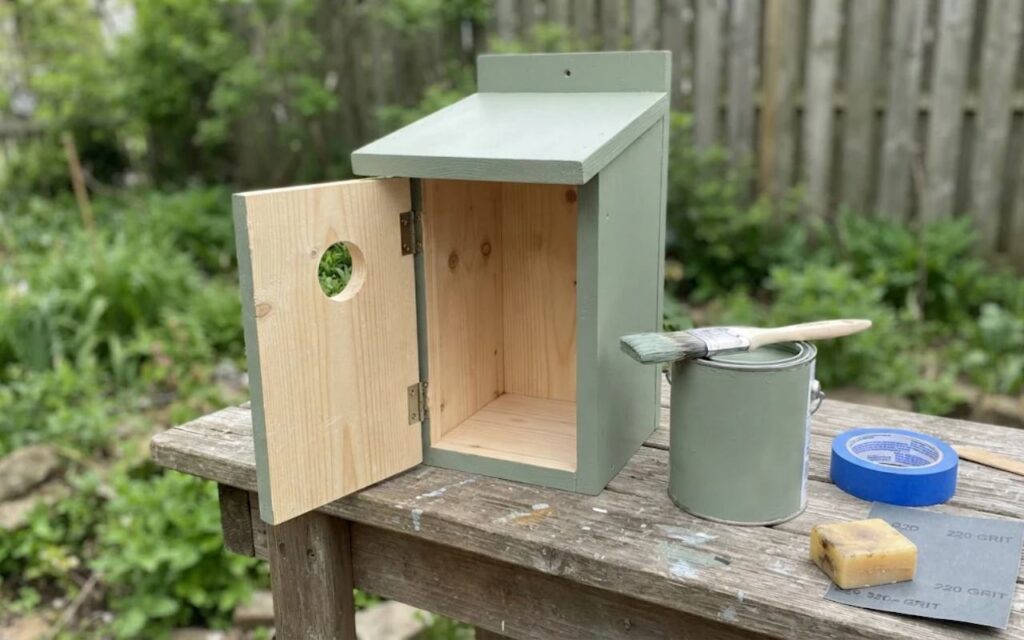
Yes, it is okay to paint a birdhouse, provided you apply zero- or low-VOC, 100% water-based exterior acrylic or latex paint strictly to the exterior surfaces in light, muted earth tones and leave the entire interior raw wood. While wildlife biologists recommend untreated, unpainted cedar or pine by default, a breathable exterior coat on soft pine boxes prevents rain rot, warping, and UV splitting while keeping summer nest cavities cooler than weathered or dark-stained boards.
Choosing the wrong finish, painting inside the cavity, or using dark heat-trapping colors can turn a backyard nest box into a summer overheating hazard or attract nest predators like crows, raccoons, and snakes. Below, we break down the exact Cornell Lab NestWatch guidelines, how exterior color affects internal box temperatures, species-specific color exceptions, and four real-world painting mistakes experienced nest-box builders warn against.
Quick-Glance Birdhouse Painting Summary
Painting the outside of a wooden nest box extends its outdoor lifespan on softwoods like eastern white pine, provided all interior walls, the floor, and the inner rim of the entrance hole remain completely unfinished.
- Default Ornithological Rule: Untreated, unpainted wood is always the safest baseline; paint the exterior only when you want extra weather protection on pine or solar heat reflection in sunny, open fields.
- Where to Paint: Exterior walls and outer roof only. Never paint the inside of the box, the floor, or the inner edge of the entrance hole.
- Safest Exterior Paint & Finishes: Zero- or low-VOC, 100% water-based exterior acrylic house paint (such as Benjamin Moore Element Guard or Aura Exterior applied strictly outside, since manufacturers do not test exterior coatings for animal ingestion), or natural 100% pure raw linseed oil and beeswax on the exterior.
- Best Songbird Colors: Muted, light-to-medium natural shades like light tan, soft grey, weathered taupe, or pale sage green (with flat white reserved specifically for multi-unit Purple Martin houses).
- When to Paint: Paint and cure nest boxes during the off-season (autumn or winter) so any residual odor dissipates completely for at least 7 to 14 days before spring nesting begins.
What the Cornell Lab of Ornithology Actually Recommends
Before opening a paint can, it helps to separate internet myths from actual nest-box research. According to nest box construction guidelines from the Cornell Lab of Ornithology’s NestWatch, untreated, unpainted wood (such as eastern red cedar, redwood, white pine, or non-pressure-treated CDX exterior plywood for larger owl boxes) is the recommended default for backyard birdhouses.
NestWatch notes that while there are no conclusive scientific studies proving cured exterior paint fumes harm nestlings, painting or modifying boxes strictly when they are unoccupied (ideally in the off-season) eliminates any risk of residual odor during egg-laying.
Equally important, never build nest boxes from pressure-treated lumber imbued with copper azole or older chromated copper arsenate (CCA) pesticides, never use salvaged pallets stamped MB (methyl bromide), and never apply creosote or toxic wood preservatives.
What Ornithological Research Shows About Nest Box Color and Heat
Peer-reviewed ornithological field studies examining nest box microclimates confirm that exterior paint color directly changes internal cavity temperatures during sunny weather.
Peer-reviewed research published in journals such as PLOS ONE and the Georgia Journal of Science demonstrates that dark-painted or low-reflectance nest boxes absorb substantially more solar radiation than light-colored or unpainted wooden boxes, producing significantly warmer internal microclimates. For further reading on this research, visit PLOS ONE.
While slightly warmer dark boxes can occasionally offer an early-season advantage during cold northern springs, dark exteriors create a serious overheating hazard during late-spring and summer heatwaves, when internal box temperatures can exceed ambient air temperatures by several degrees and trigger chick dehydration or heat stress.
Choosing light, muted earth tones like pale tan, soft grey, or sage green strikes the ideal thermal balance by reflecting harsh midday sun while still camouflaging the box from predators.
Why You Must Never Paint the Inside of a Birdhouse
Leave every square inch of the interior cavity, including the floor, inner walls, underside of the roof, and the inside rim of the entrance hole, completely raw wood. Inside a tight, sun-warmed wooden box, trapped paint fumes can irritate newly hatched chicks whose rapid respiration makes them far more sensitive to airborne chemicals than adult birds.
In addition, cavity-nesting species such as Black-capped Chickadees, Eastern Bluebirds, and House Wrens routinely peck at interior walls to excavate wood shavings, meaning peeling paint inside a box can be swallowed by parents or chicks. Fledglings also rely on rough, unfinished wood grain (or horizontal kerf cuts below the entrance hole) to grip with their claws and climb out when leaving the nest.
4 Real-World Birdhouse Painting Mistakes Experienced Builders Warn Against
Even when you buy bird-safe exterior paint, small application mistakes can ruin a nest box’s functionality once spring arrives. Seasoned bluebird trail monitors and backyard woodworkers consistently flag four practical pitfalls to avoid:
- Welding the Cleanout Door Shut with Latex Paint: Thick coats of water-based latex paint applied along the edges of a hinged side or front cleanout door will dry like rubber glue and stick shut in summer humidity. Always prop the cleanout door open while painting, keep paint off the inner door edges, and rub a thin swipe of beeswax or candle wax along the mating wood seam once dry so the door opens smoothly for fall cleanouts.
- Painting the Entire Box When You Only Need to Paint the Roof: Many experienced bluebird landlords leave the cedar or pine walls completely bare and paint only the top surface of the roof in light tan or pale grey. Because the roof absorbs the brunt of overhead midday sun and driving rain, painting just the roof top reflects solar heat and prevents roof boards from warping while keeping the vertical walls naturally camouflaged.
- Ignoring Raised Wood Grain Around the Entrance Hole: Water-based acrylic paint causes raw pine fibers around the entrance hole to swell and feel fuzzy after the first coat. Always lightly smooth the outer entrance rim with 220-grit sandpaper between coats so rough fibers do not fray adult birds’ wing and tail feathers during hundreds of daily feeding trips.
- Skipping Stain-Blocking Primer on Cedar or Redwood: Cedar and redwood contain natural water-soluble tannins that bleed through standard latex paint as reddish-brown stains. While leaving cedar unpainted is always preferred, if you do paint it, apply a stain-blocking exterior primer over knots first so tannins do not bleed through your light topcoat.
Best Bird-Safe Paint Colors (Plus the Purple Martin Exception)
Selecting the right exterior color balances solar heat reflection against predator camouflage. Light-colored exteriors reflect midday sun rays and keep internal box temperatures measurably cooler than dark wood, while muted earth tones prevent hawks, jays, and raccoons from spotting the box easily.
- Muted Light Earth Tones (Best for Bluebirds, Chickadees & Wrens): Light tan, soft grey, pale sage green, and weathered beige blend naturally into tree bark and meadow fence posts while reflecting harsh afternoon sun.
- Flat White (The Purple Martin Exception): While bright white is generally avoided on small woodland songbird boxes because it stands out to predators, NestWatch’s Purple Martin management guidelines specifically recommend painting Purple Martin housing white on the exterior (leaving the interior unpainted) to reflect intense solar heat in wide-open fields where martins nest.
- Dark Charcoal, Black, or Navy (Avoid): Dark shades absorb solar radiation rapidly and push internal box temperatures above safe thresholds during summer heatwaves.
- Glossy Finishes & Bright Neon Reds/Yellows (Avoid): High-gloss paint creates unnatural sun glare that attracts visual predators like crows, grackles, and raccoons.
Birdhouse Paint Colors & Natural Finishes Compared
| Exterior Finish or Color | Heat Control | Predator Camouflage | Ornithological Verdict |
|---|---|---|---|
| Unpainted Cedar or Redwood | Natural wood insulation | Excellent (natural grain) | NestWatch default gold standard |
| Light Tan, Soft Grey, or Sage Green (Exterior Acrylic) | Good (reflects midday sun) | Excellent (blends with foliage) | Best painted choice for songbirds |
| Flat White (Exterior Acrylic) | Highest solar reflection | Low (highly visible in woods) | Recommended for Purple Martin houses |
| Pure Raw Linseed Oil or Beeswax | Natural wood insulation | Excellent (darkens grain slightly) | Safe natural exterior weatherproofer |
| Black, Charcoal, Neon, or Gloss Paint | Poor (traps lethal heat) | Poor (glare attracts predators) | Avoid on all nest boxes |
Why Wall Thickness and Ventilation Matter More Than Paint Color
Even the best light-colored exterior paint cannot prevent a poorly built birdhouse from overheating in July. NestWatch emphasizes three structural features that regulate internal box temperatures far more effectively than paint alone:
- Thick Lumber Walls (At Least 3/4-Inch Actual Thickness): Standard 1-inch nominal cedar or pine boards (which measure 3/4-inch actual thickness) act as natural thermal insulation, slowing heat transfer through the walls during afternoon sun.
- Generous Roof Overhang (2 to 4 Inches Front, 2 Inches Sides): Extending the sloped roof 2 to 4 inches over the front entrance (and 2 inches over the sides) shades the front wall from high midday sun and keeps driving rain from soaking the nest cup.
- Proper Ventilation & Floor Drainage Holes: Drilling two 5/8-inch ventilation holes near the top of each side wall under the roof overhang allows rising hot air to escape, while at least four 3/8-inch to 1/2-inch drainage holes in the recessed floor corners let blown-in moisture drain out without clogging from nesting debris.
How to Paint or Oil a Birdhouse Safely Step by Step
If you are finishing an untreated pine nest box for extra weather durability, follow this off-season workflow to keep the interior 100% bird-safe:
- Confirm Untreated Lumber: Verify your birdhouse is built from untreated white pine, eastern red cedar, or non-treated CDX plywood, avoiding pressure-treated boards or salvaged pallet wood stamped MB (methyl bromide).
- Tape Off the Entrance Hole and Prop Open the Cleanout Door: Press painter’s tape over the entrance hole and top 5/8-inch ventilation holes from the inside so wet paint cannot drip onto the inner rim, and prop the cleanout door open so paint never seals the seam shut.
- Apply Two Thin Coats of Exterior Acrylic Paint (or Natural Oil): Brush two thin coats of flat or satin zero- or low-VOC, 100% water-based exterior acrylic paint (such as Benjamin Moore Element Guard or Aura Exterior) onto the outer walls and roof only, sanding the outer entrance lip lightly with 220-grit sandpaper between coats. If you prefer a clear natural finish on cedar, rub a light coat of 100% pure raw linseed oil or melted beeswax onto the exterior grain instead (avoid commercial “boiled” linseed oil, which contains toxic metallic chemical driers like cobalt or manganese).
- Cure Outdoors for 7 to 14 Days: Let the finished box air-dry in a breezy, shaded porch or open garage for one to two full weeks during the off-season until zero paint odor remains.
- Mount in Morning Sun and Afternoon Shade: Face the entrance hole away from prevailing winds and intense afternoon sun using the mounting heights and predator guard rules in our birdhouse guide for beginners.
Frequently Asked Questions About Painting a Birdhouse
Will birds use a painted birdhouse?
Yes. Bluebirds, chickadees, wrens, tree swallows, and nuthatches readily nest inside painted birdhouses as long as the exterior is finished in a muted natural color like light tan, soft grey, or sage green, the interior cavity is completely raw wood, and the paint has cured during the off-season with zero lingering odor.
Can you use acrylic craft paint on a birdhouse?
Standard indoor acrylic craft paint is non-toxic once dry, but it blisters, peels, and flakes off rapidly outdoors under rain and UV exposure, creating loose paint chips that birds may accidentally ingest. For lasting weather protection, use zero- or low-VOC, 100% water-based exterior acrylic house paint, or apply small decorative craft-acrylic accents over an exterior primer and seal only the outside with a zero-VOC waterborne exterior clear coat.
What is the best color to paint a bluebird house?
The best colors for an Eastern or Western Bluebird house are light tan, soft grey, pale sage green, or weathered beige. These light, muted earth tones reflect harsh afternoon sunlight to prevent chick heat stress in open meadows while blending naturally with wooden fence posts and surrounding grass.