
Reader Transparency: This birding guide contains paid affiliate links. If you click a link and make a purchase, I may receive a small commission at no extra cost to you. As an Amazon Associate, I earn from qualifying purchases. Your support helps keep Feathered Guru flying!
Safe winter bird seed storage protects your backyard flock from hidden fungal toxins that thrive inside damp, unsealed paper and woven poly bags. When cold garage air meets warm afternoon sun or humid freeze-thaw cycles, microscopic condensation builds up inside bulk seed sacks—triggering Aspergillus mold and fatal aflatoxins long before you spot fuzzy white clumps.
Transferring bulk black oil sunflower seeds, suet nuggets, and peanuts into airtight, rodent-resistant containers keeps winter bird food crisp, dry, and safe from mice until spring. Pairing proper moisture barriers with cool off-floor storage ensures every scoop you pour into your feeders remains nutrient-dense and toxin-free.
Quick-Glance Winter Storage Summary
Even sub-zero outdoor temperatures will not kill dormant mold spores if fluctuating shed or garage humidity allows condensation to form inside a half-empty bag. Blocking moisture and chewing rodents requires rigid, sealed containers kept off cold concrete floors.
- Primary Mold Threat: Aspergillus fungi produce toxic aflatoxins in damp sunflower seeds, corn, and peanuts, which can cause fatal liver damage in wild birds.
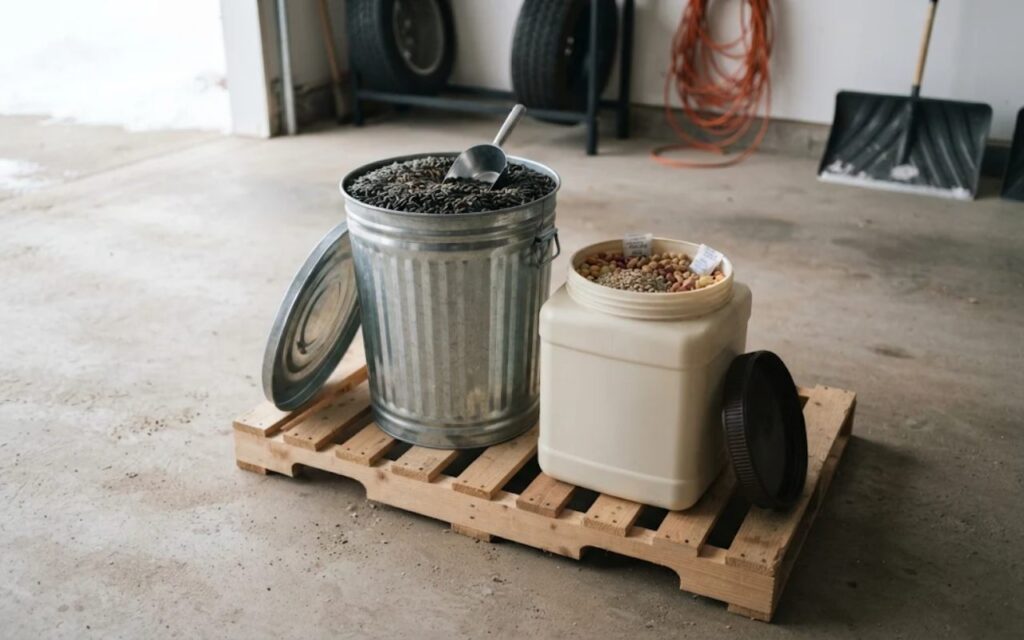
- Best Storage Containers: A 20-gallon galvanized steel trash can (chew-proof for bulk bags, paired with silica desiccant packs) or food-grade HDPE plastic bins with rubber gasket seals (Vittles Vaults or 5-gallon Gamma Seal buckets).
- Critical Placement Rule: Elevate bins at least 2 to 4 inches off bare concrete floors on wooden pallets or shelving to stop moisture wicking and thermal condensation.
- Ideal Storage Temperature: Cool, dry spaces between 35°F and 65°F (2°C to 18°C) away from furnace vents, sunny windows, and damp basement walls.
- Maximum Winter Shelf Life: 6 to 12 months for properly dried whole sunflower and safflower seeds; 2 to 3 months at room or garage temperature for shelled peanuts, suet pellets, and hulled sunflower hearts (or up to 12 months frozen).
Why Bulk Bird Seed Grows Toxic Mold in Winter
Bulk bird seed grows mold during winter because freeze-thaw temperature swings create invisible condensation inside closed bags. When an unheated garage or shed warms up during a sunny winter afternoon and drops back below freezing overnight, moisture trapped in the air condenses directly onto cold seed hulls.
According to bird-feeding disease guidance from the Cornell Lab of Ornithology’s Project FeederWatch, damp bird seed—especially peanuts, cracked corn, and black oil sunflower seeds—can harbor Aspergillus mold that produces deadly aflatoxins.
Woven polypropylene bulk sacks are designed to breathe slightly during shipping, which means they readily pull ambient winter humidity straight into the outer layer of seeds whenever temperatures fluctuate.
Woven polypropylene bulk sacks are designed to breathe slightly during shipping, which means they readily pull ambient winter humidity straight into the outer layer of seeds whenever temperatures fluctuate.
Once contaminated bulk seed is poured outdoors, those fungal spores quickly colonize feeding trays—so combining dry indoor storage with our step-by-step guide on how to prevent mold in bird feeders keeps your entire feeding routine safe from bag to perch.
The Hidden Health Risks of Aflatoxins and Buying Tested Seed
Unlike spoiled milk or sour bread, contaminated bird seed rarely looks or smells dangerous in its early stages. Birds cannot taste microscopic fungal toxins, meaning a single contaminated 40-pound bag can quietly sicken dozens of backyard visitors over several weeks.
As documented in the Field Manual of Wildlife Diseases published by the U.S. Geological Survey (USGS) National Wildlife Health Center, aflatoxicosis and fusariotoxicosis are the two primary mycotoxin poisonings documented in free-ranging birds, often causing delayed liver failure, lethargy, and sudden mortality events away from the feeder.
Because peanuts and cracked corn are far more susceptible to Aspergillus growth before harvest than black oil sunflower seeds, look for reputable wildlife brands that test their peanut and corn lots to meet the stricter 20 parts per billion (ppb) action level for wildlife set in the U.S. Food and Drug Administration (FDA) Compliance Policy Guide on Aflatoxins in Animal Food.
Before loading a 40-pound sack into your cart at the store, feel the bottom seam for dampness, hard clumps, or water stains from wet warehouse pallets.
Winter Bird Seed Storage Containers Compared
| Storage Container | Moisture & Mold Protection | Rodent Protection | Realistic Seed Capacity |
|---|---|---|---|
| 20-Gallon Galvanized Steel Can | Good (pair with silica packs & shade) | Chew-proof against mice & rats | Full 40 lb bag black oil sunflower |
| Gamma Seal 5-Gallon HDPE Bucket | Excellent (airtight rubber gasket) | Rodent-resistant (thick HDPE) | 20–25 lb peanuts, hearts & nyjer |
| Airtight HDPE Pet Food Vault | Excellent (threaded spin-off lid) | Rodent-resistant (molded HDPE) | 25–40 lb indoor/mudroom storage |
| Original Paper or Poly Sack | Poor (absorbs floor & air humidity) | None (mice chew through in hours) | Short-term transport only |
Best Chew-Proof and Airtight Storage Containers
To block both winter humidity and hungry winter mice, transfer bulk seed into rigid, thick-walled containers with tight-fitting lids rather than leaving seed in original manufacturer bags.
Deer mice and house mice easily chew through woven polypropylene sacks and thin plastic totes within hours of scenting sunflower oil, and once rodents find an easy indoor food stash, they quickly establish nests nearby, much like the outdoor cleanup strategies covered in our guide on how to feed wild birds without attracting rats.
- 20-Gallon Galvanized Steel Cans (Chew-Proof Against Mice & Rats): Because black oil sunflower seeds are lightweight and bulky, a smaller 10-gallon can only holds 25 to 30 pounds—step up to a 20-gallon galvanized steel trash can to fit a full 40-pound bag comfortably with room for a scoop. Keep in mind that standard metal trash cans do not have airtight rubber gaskets, so humid garage air can still slip under a loose metal lid unless you pair the can with food-grade silica desiccant packs (or nest a sealed liner inside) and keep the metal out of direct winter sun where rapid heating causes interior “sweating.”
- Gamma Seal 5-Gallon Food-Grade Buckets (Airtight & Rodent-Resistant): Pairing a heavy-duty 90-mil HDPE bucket with a screw-on rubber-gasket Gamma Seal lid creates a genuinely airtight moisture barrier ideal for 20 to 25 pounds of high-fat hulled sunflower chips, nyjer seed, and shelled peanuts. While thick HDPE resists mice, determined rats can chew through plastic if left unattended in high-pest sheds.
- Airtight HDPE Pet Food Vaults (Airtight & Rodent-Resistant): Thick-walled, BPA-free HDPE vaults (such as the Gamma2 Vittles Vault Outback) with threaded double-gasket spin-off lids block humid air effectively and stack neatly in tight mudrooms or utility closets. Keep in mind that pet vault capacities are rated for dense dog kibble—so a 40-pound vault holds roughly 25 to 30 pounds of bulky black oil sunflower seeds, or a full 40 pounds of denser peanuts, cracked corn, or mixed millet.
- Avoid Thin Snap-Lid Storage Totes: Standard lightweight storage totes warp in freezing weather, lack airtight rubber gaskets, and are easily chewed open by rodents at the bottom corners.
Garage vs. Shed vs. Basement: Choosing the Best Storage Spot
Where you place your sealed containers matters just as much as the bin itself, since each household storage area carries distinct moisture and temperature risks during winter:
An unheated attached garage is usually your best overall option because it stays cool enough to preserve seed oils without extreme outdoor temperature swings—just elevate bins on wooden slats away from wet snow-melt puddles left by parked cars.
An outdoor garden shed works well for gasket-sealed Gamma Seal buckets and shaded steel cans, though you should keep metal cans away from sunny south-facing windows where solar heating triggers interior condensation.
If you store seed in an unfinished basement, keep bins off concrete foundation walls and floors that harbor hidden dampness, using gasket-sealed HDPE vaults raised on metal shelving alongside a dehumidifier.
Finally, reserve a heated mudroom or laundry room strictly for a small 1-week refill pitcher, as warm indoor air above 70°F accelerates oil rancidity and encourages dormant pantry moth larvae to hatch.
5 Rules for Safe Winter Bird Seed Storage
Follow these five storage habits to prevent condensation, clumping, and pest infestations across your bulk winter seed supply:
- Never Rest Bins Directly on Concrete: Concrete garage and basement slabs draw ground moisture upward and stay colder than the surrounding air, causing condensation to sweat inside the bottom of your bin—always set containers on a wooden pallet, 2×4 slats, or metal wire shelving.
- Never Bring a Freezing Bin Inside a Warm House to Refill Feeders: Carrying a sub-freezing seed bin into a warm 70°F kitchen or mudroom causes immediate dew-point condensation to form on the cold interior walls and top layer of seeds the moment you open the lid. Always scoop seed outdoors or inside your unheated garage.
- Practice First-In, First-Out Rotation: Never dump a fresh 40-pound bag of seed on top of old seed at the bottom of your bin; empty the remaining old seed into a scoop first, wipe the interior dry, pour in the fresh bag, and put the older seed back on top to use first.
- Drop in Food-Grade Silica Gel Packs: Tuck two or three rechargeable food-grade silica gel desiccant packets inside your sealed bin to absorb stray humidity (avoid using uncooked white rice, which can harbor its own mold spores and attract pantry pests). Starting with bone-dry grain from your storage bin also prevents icy clumps from jamming your outdoor hopper ports, pairing well with our tips on how to keep bird seed from freezing.
- Sanitize Your Bin Whenever You Spot Moisture: Separate high-oil foods like shelled peanuts and hulled sunflower hearts into smaller airtight jars rather than mixing them into giant bulk bins, and if you ever find damp clumps or musty odors, discard the affected seed in a sealed garbage bag, scrub the empty container with 1 part household bleach to 9 parts water, rinse thoroughly, and let it air-dry completely before refilling.
Frequently Asked Questions About Winter Bird Seed Storage
Can you freeze bulk bird seed to keep it fresh?
Yes—freezing bulk bird seed (especially high-oil hulled sunflower hearts, nyjer seed, and shelled peanuts) in airtight freezer bags or sealed buckets keeps oils completely fresh for 12 months or longer and kills any dormant insect eggs. Allow frozen seed to warm up inside a closed container before opening so room humidity does not condense on the cold kernels.
How can I tell if my stored bird seed has gone bad?
Spoiled or moldy bird seed clumps together instead of pouring freely, smells musty, sour, or paint-like (a sign of rancid oils), or shows fuzzy white, green, or black spots on cracked hulls and peanut meats. Always discard suspect seed in a sealed garbage bin rather than scattering it on the ground for squirrels or juncos.
Are galvanized metal cans safe for storing bird seed?
Yes—galvanized steel cans are completely safe for storing dry whole seeds like black oil sunflower, safflower, and millet. Just avoid pouring wet or damp seed directly into galvanized metal, pair the un-gasketed lid with silica gel desiccant packs, keep the can shaded from direct winter sun so it does not sweat inside, and elevate it off damp concrete floors.