
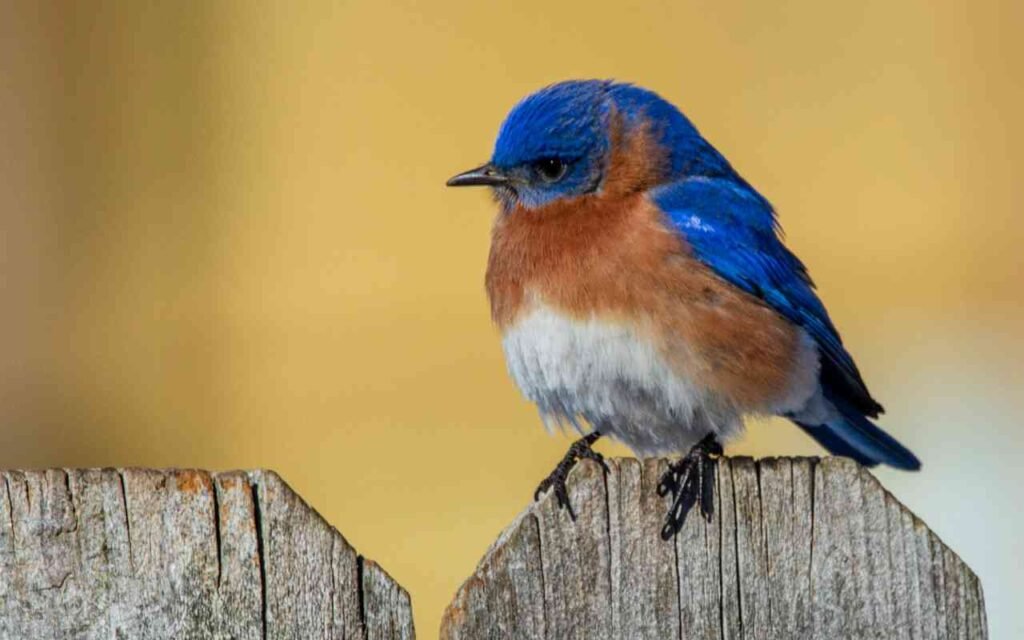
That flash of brilliant blue you just spotted perched on your fence post? Yeah, that’s probably an Eastern Bluebird, and if you’re looking for some Eastern Bluebird fun facts, you’ve just witnessed one of nature’s most fascinating comeback stories in action. I remember the first time I saw one in my backyard after installing a nest box – it was like spotting a tiny piece of sky that had decided to take up residence in my oak tree.
These gorgeous birds are way more interesting than their simple beauty suggests. From their remarkable recovery from near-extinction to their quirky behavioral habits, Eastern Bluebirds pack more personality and fascinating traits into their small frames than you’d ever imagine. Get ready for some seriously cool facts that’ll make you appreciate these feathered gems even more 🙂.
- Males show bright blue feathers; females are more subdued blue-gray.
- Juveniles have spotted breasts and grayish-brown coloring.
- Populations dropped over 90% mid-1900s due to habitat loss and competition.
- Recovery achieved through nest boxes and dedicated volunteers.
- Males have orange throats and breasts; females show softer tones.
- Hunt insects by perching and swooping down to catch prey.
- In winter, diet shifts to berries, fruits, and seeds.
- Cavity nesters; entrance holes must be 1.5 inches and spaced properly.
- Typically raise 2–3 broods per season; clutch size 3–5 eggs.
- Some migrate south, others stay; navigate via stars, landmarks, and magnetic fields.
- Songs are soft and melodious; alarm calls are harsh to warn of danger.
- Population now healthy but ongoing habitat care remains crucial.
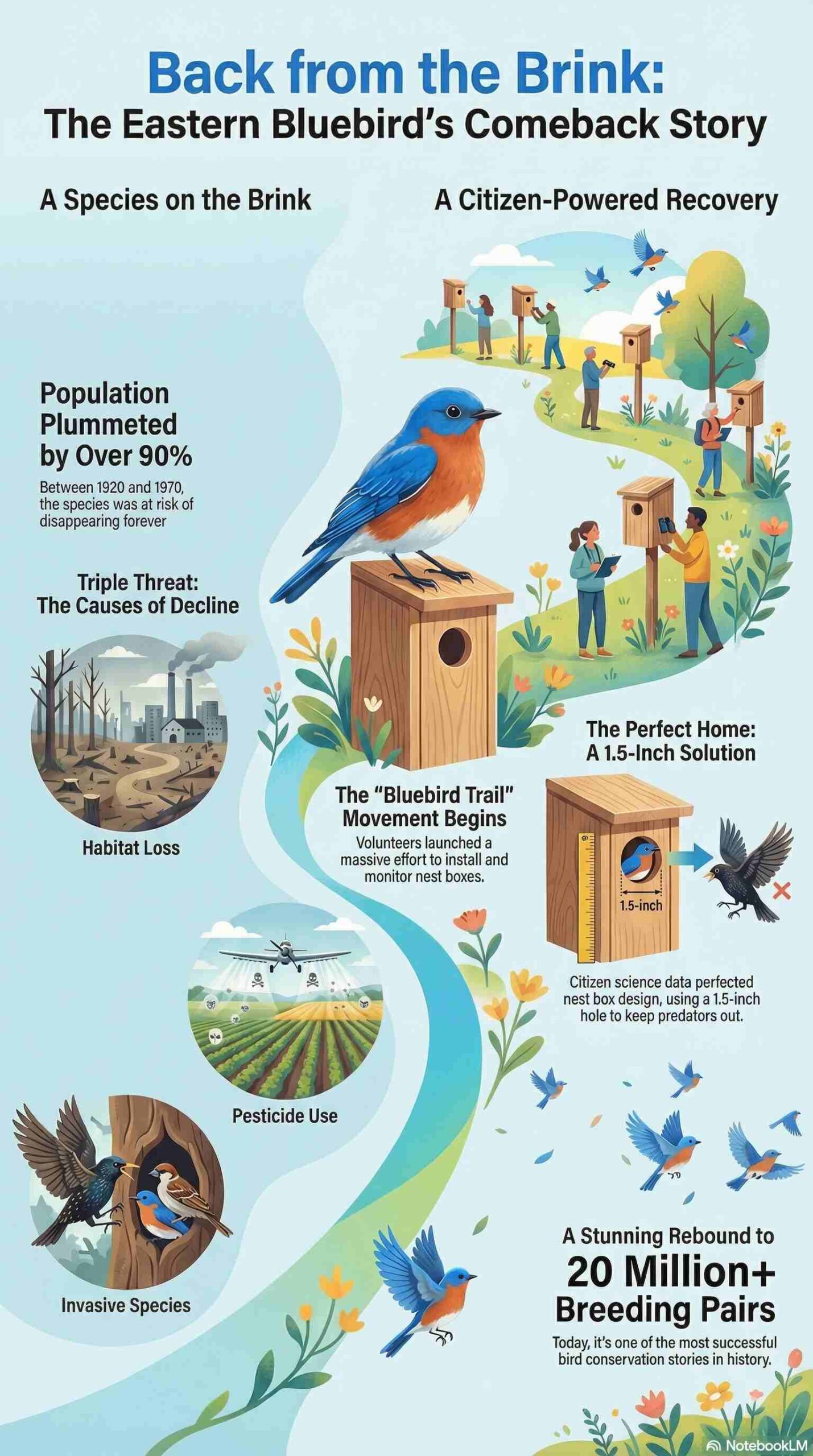
For a quick visual recap, check out our infographic at the bottom of this guide.
Watch: Eastern Bluebirds Explained
Learn all about Eastern Bluebirds in this short video! From their bright colors and feeding habits to nesting behavior, this clip breaks down everything you need to know.
Show Transcript
0:00
Have you ever been outside and caught a flash of brilliant blue out of the corner of your eye? Maybe perched on a fence post?
0:07
If you have, you’ve seen something special—more than just a beautiful bird. You’ve witnessed one of nature’s most incredible comeback stories.
0:16
Today, let’s dive into the amazing journey of the eastern bluebird. This quote perfectly captures that magic you feel when you see one. It’s almost poetic.
0:29
What makes that moment truly special is knowing that this little piece of sky almost blinked out of existence forever.
0:35
To understand why seeing a bluebird today is such a big deal, we have to go back in time, to when its future was anything but certain.
0:44
We’re talking about a species pushed to the very edge. Try to picture this: for every 10 bluebirds that existed, nine vanished.
0:57
This wasn’t a minor dip in population. It was catastrophic. Ornithologists feared the species might be lost for good.
1:08
And it didn’t happen overnight. This was a slow-motion disaster, creeping up over half a century—from the 1920s to the 1970s, life became tougher for bluebirds.
1:22
What caused it? A devastating triple threat.
1:26
First, homes were disappearing. Open fields and old trees with nesting holes were cleared out.
1:34
Second, pesticides wiped out the insects they needed to survive.
1:38
Third, new aggressive competitors, like house sparrows, stole their nests.
1:47
But when things looked bleakest, something amazing happened.
1:51
The solution didn’t come from a government program or lab. It came from ordinary people who decided to act.
2:01
The engine behind this recovery? Citizen science.
2:09
This wasn’t about professional biologists. Retirees, families, and weekend volunteers proved you don’t need a PhD to save a species.
2:25
How did they do it? They created bluebird trails. They built nest boxes, placed them in perfect spots, and most importantly—they watched and collected data on what worked.
2:48
The result? An absolute triumph. The Bluebird Trail movement became a shining example of how a dedicated community can turn the tide.
2:59
The takeaway: every time you see a bluebird now, you are seeing the living legacy of this grassroots effort. It’s proof that a group of people can make a huge difference.
Getting to Know the Bird
3:12
Now that we know their survival story, let’s get to know the bird itself. Bluebirds have fascinating biology and behaviors beyond their beautiful color.
3:26
The first thing anyone notices is that stunning blue. But have you wondered where it comes from?
3:38
Bluebirds don’t actually have blue pigment in their feathers. Instead, microscopic feather structures scatter sunlight and reflect only blue wavelengths.
3:57
They are literally a little piece of the sky.
4:02
Male bluebirds are vibrant rock stars. Females are muted dusky blue-gray—perfect camouflage on a nest. Juveniles are grayish with spotted breasts to blend in.
Bluebirds as Pest Controllers
4:20
Besides being beautiful, bluebirds are amazing pest controllers. A single pair feeding their nestlings can eat up to 2,000 insects in one day.
4:40
They hunt using a technique called hawking. They perch high, spot insects below, and swoop down with precision—like tiny fighter jets.
Nesting and Citizen Science Results
5:02
Citizen scientists learned bluebirds are picky renters. Nest boxes need exact specifications, like a 1½ inch entrance hole—big enough for bluebirds, small enough to keep starlings out.
5:28
Today, the comeback is a massive success. From a 90% decline, the population has roared back to an estimated 20 million breeding pairs.
6:01
But challenges remain. Climate change affects insect availability and breeding. Urban sprawl reduces open habitats. And volunteers are always needed to maintain bluebird trails.
The Bigger Picture
6:23
The bluebird story is about hope. It’s proof that everyday people can bring a species back from the brink.
6:36
If a group of ordinary people could achieve this for one bird, imagine the other conservation stories waiting for us to write them.
The Great Bluebird Recovery Story
From Near Extinction to Neighborhood Favorite
Here’s a fact that’ll blow your mind: Eastern Bluebirds almost disappeared completely during the mid-1900s. Their population plummeted by over 90% between 1920 and 1970, and ornithologists seriously worried we might lose them forever.
According to the North American Breeding Bird Survey, populations continued to decline through the 1970s but have since rebounded to levels similar to those seen in 1966. The main culprits? Habitat loss, pesticide use, and competition from introduced species like House Sparrows and European Starlings.
But here’s where the story gets amazing – dedicated conservationists refused to give up. They launched massive nest box programs across North America, essentially creating artificial real estate for displaced bluebirds. I’ve been part of local bluebird trails myself, and watching these programs work is honestly one of the most rewarding conservation experiences you can have.
The bluebird trail movement became one of the most successful grassroots conservation efforts in history. Volunteers installed thousands of properly spaced nest boxes along “trails” that provided safe breeding sites for recovering populations. Today, Eastern Bluebird numbers have rebounded so successfully that they’re actually expanding their range in some areas, according to the North American Bluebird Society.
Citizen Science Success
Ordinary people made this recovery happen, not just professional biologists. Weekend warriors, retirees, and bird enthusiasts created and maintained bluebird trails that stretched across entire states. This collaborative approach proved that conservation works best when everyone gets involved.
Monitoring protocols developed for bluebird trails provided valuable data about breeding success, habitat preferences, and population trends. Citizen scientists collected information that helped refine nest box designs and placement strategies. Ever wonder why modern bluebird boxes have specific entrance hole sizes? That’s decades of citizen science data at work.
The North American Bluebird Society coordinates much of this ongoing effort, maintaining standards for nest box construction and trail management. Their work continues today because bluebird populations still need active management to maintain healthy numbers.
Unique Physical Characteristics and Adaptations
That Brilliant Blue Color Secret
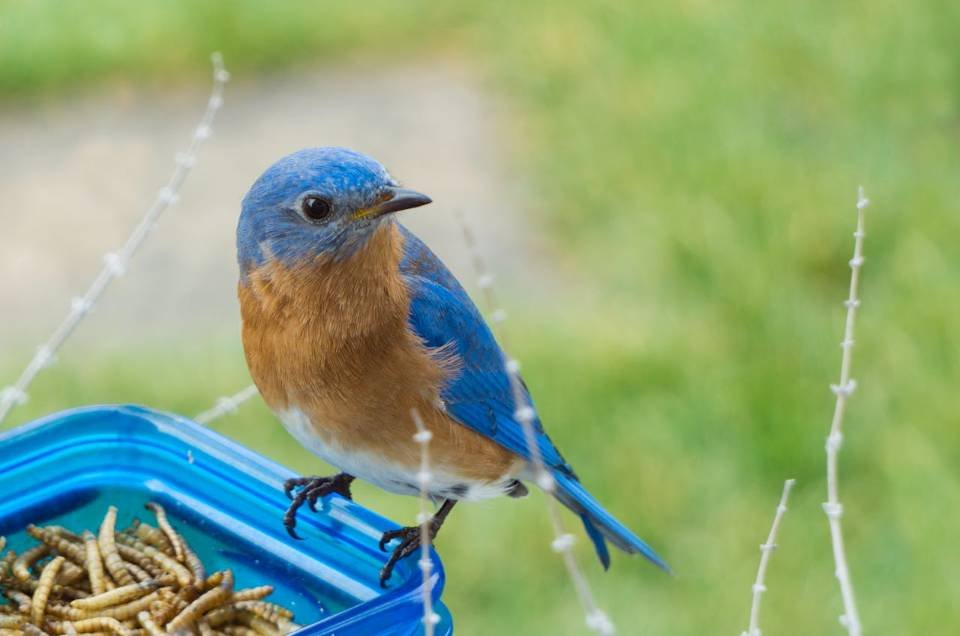
Eastern Bluebirds don’t actually produce blue pigment in their feathers, which sounds crazy until you understand the science. Their blue coloration comes from the microscopic structure of their feathers, which scatter light to create that gorgeous blue appearance. It’s basically the same principle that makes the sky look blue, according to Smithsonian.
Males display more vibrant colors than females, especially during breeding season. Their bright blue backs and wings combined with rusty orange throats and breasts make them unmistakable. Females sport more subdued blue-gray coloring with subtle orange hints, perfect for staying camouflaged while nesting.
Juvenile bluebirds look completely different from adults, sporting spotted breasts and grayish-brown coloring. I’ve watched confused birdwatchers trying to identify these youngsters, not realizing they’re looking at baby bluebirds. The adult coloration develops gradually over their first year.
Size and Build Adaptations
Eastern Bluebirds measure about 6.5-8 inches in length with wingspans reaching 9-12 inches. They’re perfectly sized for their ecological niche – small enough to navigate dense vegetation but large enough to compete effectively for territory and resources.
Their compact, muscular build makes them excellent fliers and agile hunters. Unlike many songbirds that hop along the ground, bluebirds prefer perching on elevated spots and swooping down to catch prey. Their body structure supports this hunting style perfectly.
Wing shape and flight patterns reflect their insectivorous lifestyle. Bluebirds have relatively broad wings for their size, allowing for precise aerial maneuvers when chasing flying insects. Their flight looks almost effortless, with smooth gliding alternating with quick wingbeats.
Fascinating Dietary Habits and Hunting Behaviors
Insect-Catching Specialists
Eastern Bluebirds are voracious insect eaters, consuming thousands of bugs during breeding season. A single pair can eat over 2,000 insects per day while feeding nestlings, according to Perky Pet, making them incredibly valuable for natural pest control. Your garden benefits way more from bluebird presence than you probably realize.
Their hunting technique involves perching on elevated spots like fence posts, power lines, or dead tree branches, then swooping down to snatch insects from the ground. This behavior, known as “hawking,” requires excellent eyesight and precise timing. I love watching them work – it’s like having tiny aerial acrobats performing in your yard.
Preferred prey species include grasshoppers, crickets, beetles, caterpillars, and flying insects. They’re particularly fond of beetle larvae and will spend considerable time picking through grass to find these protein-rich morsels. During peak breeding season, adult bluebirds focus almost exclusively on insect prey.
Seasonal Diet Variations
Winter feeding habits shift dramatically when insects become scarce. Bluebirds switch to eating berries, fruits, and seeds to survive cold months. Their digestive systems actually adapt to process these different food types, which is pretty remarkable for such small birds.
Favorite winter foods include sumac berries, elderberries, and the fruits of dogwood trees. They’ll also visit bird feeders offering mealworms, though they typically prefer fresh or dried versions over live ones. Setting up winter feeding stations can help support local populations during harsh weather.
Spring feeding frenzy begins as soon as insects start emerging. Bluebirds seem to know exactly when bug populations peak and time their breeding activities accordingly. This synchronization between food availability and reproductive cycles shows incredible evolutionary adaptation.
Remarkable Nesting and Family Behaviors
Nest Box Preferences and Requirements
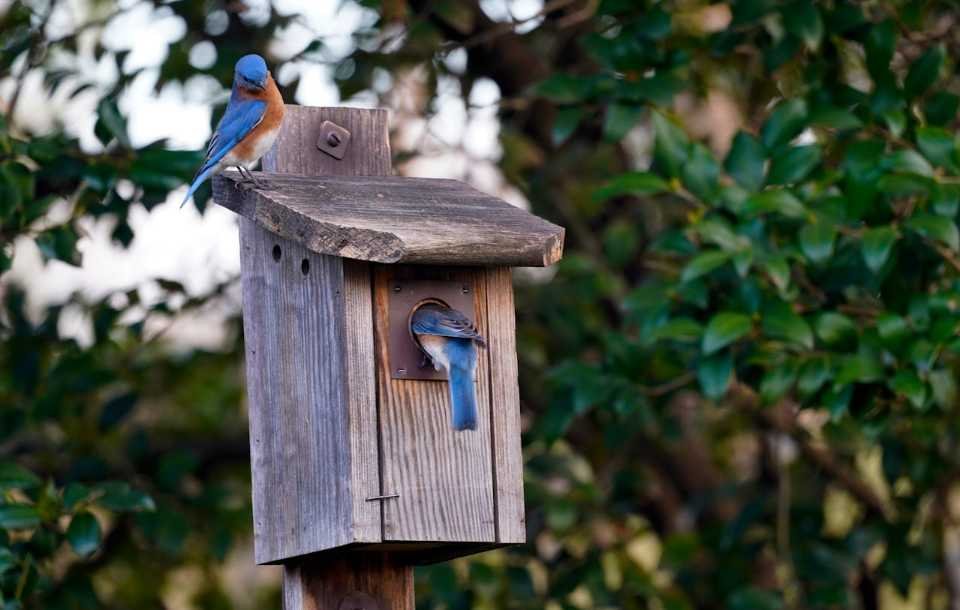
Eastern Bluebirds are cavity nesters that originally used natural tree holes created by woodpeckers or decay. Modern bluebirds have adapted to use artificial nest boxes, but they’re surprisingly picky about specifications. The entrance hole must be exactly 1.5 inches in diameter – too small excludes bluebirds, too large allows larger competitors inside.
Proper nest box placement requires specific spacing and habitat conditions. Boxes should sit 5-6 feet high in open areas with short grass, spaced at least 100 yards apart to prevent territorial conflicts. I learned this spacing rule the hard way after watching bluebirds fight over boxes I’d placed too close together :/
Female bluebirds do most of the actual nest construction, weaving together grasses, pine needles, and feathers to create cozy cups. They’re meticulous architects, often spending several days perfecting their nests. Males help by bringing materials and defending the territory.
Multi-Brooded Breeding Success
Eastern Bluebirds typically raise 2–3 broods per breeding season, which runs from March through August in most areas. This reproductive strategy helps maximize their genetic contribution while taking advantage of abundant food resources during warmer months.
Clutch sizes usually range from 3-5 pale blue eggs, though occasionally you’ll find nests with 6-7 eggs. The female incubates eggs for 12-14 days while the male stands guard and brings her food. Both parents work tirelessly once chicks hatch, making hundreds of feeding trips daily.
Fledgling care continues even after young birds leave the nest. Parents teach their offspring essential survival skills like hunting techniques and predator recognition. Family groups often remain together through the first winter, creating temporary flocks that help young birds survive.
Cooperative Breeding Behaviors
Helper birds sometimes assist breeding pairs with nest duties, particularly during second and third broods. These helpers are usually offspring from earlier broods that haven’t yet established their own territories. This cooperative behavior increases overall breeding success for the family group.
Territory defense becomes intense during breeding season, with males aggressively chasing away competitors. They’ll attack their own reflection in windows or car mirrors, mistaking it for an intruding male. I’ve watched bluebirds exhaust themselves fighting mirror images – it’s both fascinating and slightly concerning.
Mate selection involves elaborate courtship displays where males show off their brightest plumage and bring food offerings to potential mates. Successful pairs often return to the same nesting area year after year, though they don’t necessarily mate for life.
Migration Patterns and Seasonal Movements
Partial Migration Mysteries
Not all Eastern Bluebirds migrate, which creates interesting population dynamics throughout their range. Northern populations typically head south for winter, while southern birds often remain year-round residents, according to Avian Report data. This partial migration strategy helps the species adapt to varying climate conditions.
Migration timing varies by location and individual birds. Some bluebirds start moving south as early as September, while others wait until November or even December. Spring return migration usually begins in February, with peak activity occurring in March and April.
Wintering grounds extend from the southern United States through Central America. Many eastern populations spend winter in Florida, Texas, and Mexico, where insect availability remains higher than northern regions. Climate change has started affecting these traditional patterns in interesting ways.
Navigation and Route Selection
Eastern Bluebirds use multiple cues for navigation during migration, including magnetic fields, star patterns, and geographic landmarks. Young birds learn migration routes by following experienced adults, creating family traditions that pass down through generations.
Stopover sites along migration routes provide crucial rest and refueling opportunities. Bluebirds prefer areas with abundant insect populations and suitable roosting spots. Conservation of these habitat corridors becomes essential for maintaining healthy migratory populations.
Weather influences can dramatically affect migration timing and success rates. Severe storms, temperature extremes, and unusual weather patterns force bluebirds to adjust their travel schedules. Climate change continues to create new challenges for migratory timing.
Social Behaviors and Communication
Vocal Repertoire and Meanings
Eastern Bluebird songs consist of soft, melodious warbles that sound almost liquid in quality. Their primary song is a gentle “chur-lee, chur-lee” that carries surprising distances across open fields, used to establish territory and attract mates, according to Cornell Lab of Ornithology.
Alarm calls sound completely different from their musical songs, consisting of harsh chattering notes that warn of danger. I’ve learned to recognize these calls as signals that a hawk or cat is nearby. The entire bluebird community responds to these warnings with immediate defensive actions.
Communication between mates involves subtle vocalizations and body language cues. Partners coordinate nest duties, territory defense, and chick feeding through a complex system of calls and gestures. Their teamwork during breeding season is honestly impressive to watch.
Flock Dynamics and Hierarchies
Winter flocking behavior brings together multiple family groups and unrelated individuals. These temporary flocks provide safety in numbers and information sharing about food sources. Flock composition changes regularly as birds move between feeding areas and roosting sites.
Dominance hierarchies within flocks determine access to prime feeding spots and roosting locations. Older, more experienced birds typically rank higher than juveniles, while males often dominate females outside of breeding contexts. These social structures help reduce conflicts within mixed groups.
Roosting communities form during cold nights when multiple bluebirds crowd together for warmth. They’ll use nest boxes, tree cavities, or dense vegetation as communal shelters. I’ve found as many as 15 bluebirds sharing a single nest box during particularly harsh weather.
Conservation Status and Ongoing Challenges
Current Population Trends
Eastern Bluebird populations have stabilized at healthy levels thanks to decades of conservation effort. Current estimates suggest over 20 million breeding pairs across North America, according to Partners in Flight’s 2024 population assessment, making this one of the most successful bird conservation stories in history.
However, maintaining these numbers requires ongoing habitat management and nest box programs.
Climate change impacts create new challenges for bluebird populations, with shifting insect emergence patterns, altered precipitation, and changing vegetation communities affecting food availability and nesting success, according to a study on these effects published in Ecosphere. Researchers actively monitor these changes to develop adaptive management strategies.
Urbanization pressures continue to reduce suitable habitat in many regions. Suburban development eliminates the open grasslands and scattered trees that bluebirds prefer. Creating bluebird-friendly landscapes in developed areas becomes increasingly important for population maintenance. You can support them by setting up spaces that attract and sustain local bird populations.
Future Conservation Needs
Habitat restoration remains the most critical long-term need for Eastern Bluebird conservation. Maintaining grassland ecosystems, preserving edge habitats, and managing agricultural lands for wildlife benefit supports not just bluebirds but entire ecosystem communities.
Nest box programs require ongoing maintenance and volunteer engagement to remain effective. Boxes need regular cleaning, repair, and monitoring to provide safe breeding sites. The aging volunteer base in many areas creates challenges for program continuity.
Research priorities include understanding climate change adaptations, refining habitat management techniques, and developing new conservation strategies. Citizen science programs continue providing valuable data for these research efforts.
Eastern Bluebird Facts at a Glance
A quick visual breakdown of Eastern Bluebird identification, behavior, and nesting habits.
Conclusion
Eastern Bluebirds prove that dedicated conservation efforts can achieve remarkable results when people work together toward common goals. From near-extinction to thriving populations, these gorgeous birds represent hope for wildlife conservation everywhere. Their incredible recovery story shows what’s possible when we refuse to give up on species in trouble.
Whether you’re planning to install your first nest box or you’ve been maintaining bluebird trails for years, these fascinating birds reward our efforts with their beauty, ecological benefits, and inspiring resilience. FYI, every bluebird you see represents the success of countless volunteers who believed these birds deserved a second chance.
Next time you spot that flash of blue in your yard, take a moment to appreciate not just the bird’s natural beauty, but the amazing human effort that brought Eastern Bluebirds back from the brink. IMO, it’s one of the best reminders that conservation really works when we all pitch in 🙂