
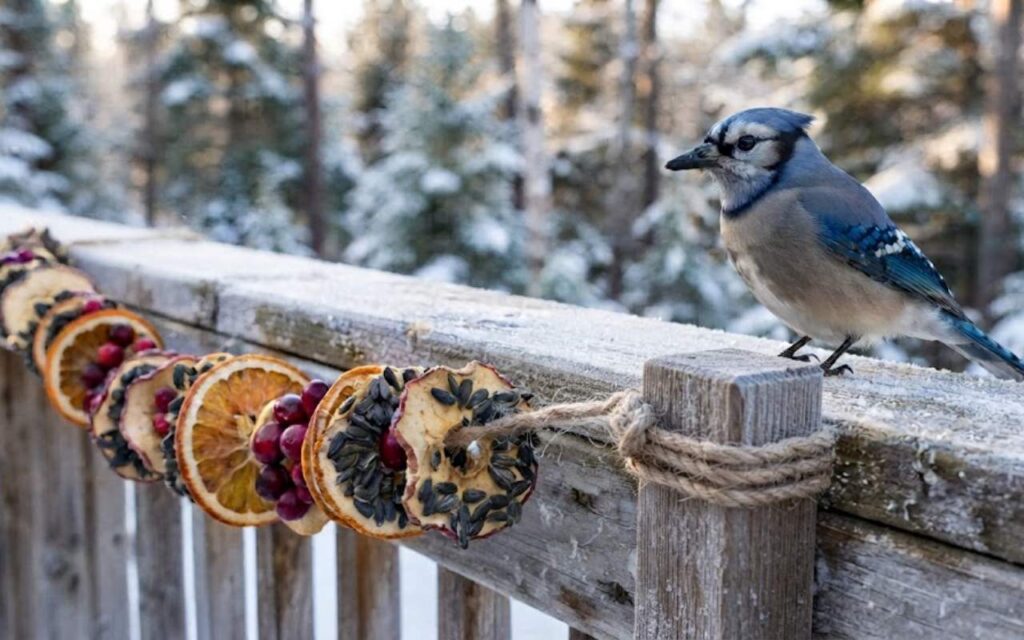
Crafting an edible Christmas garland for birds combines festive holiday design with strict winter wildlife care. However, if you scroll through backyard birding forums or talk to seasoned wildlife rehabilitators, you will quickly discover a major disconnect between what looks beautiful on social media and what is actually safe and functional for wild birds during freezing weather.
Many classic holiday crafting tutorials advocate for materials that can endanger wildlife, present fatal choking risks, or rot before the birds can enjoy them. This comprehensive, forum-tested guide filters out the generic lifestyle advice to help you build a high-performance garland that keeps your neighborhood songbirds safe, warm, and well-fed during harsh freezing snaps.
Quick-Reference Garland Ingredient Guide
Before diving into the assembly steps, use this quick-reference chart to plan your supplies based on your target backyard birds and safety parameters.
| Ingredient | Best For (Target Species) | Main Benefit | Pro-Tip for Assembly |
|---|---|---|---|
| Whole Peanuts | Blue Jays, Woodpeckers, Titmice | High-protein & healthy lipids | Thread through the soft middle seam |
| Fresh Cranberries | Visual attractant for all species | Vitamin C & natural color signal | Use firm berries only to prevent freezing juice |
| Black Oil Sunflower Seeds | Northern Cardinals, Finches, Chickadees | The absolute gold standard winter fuel | Press into slightly tacky, dried apple rings |
| Dehydrated Citrus | Mockingbirds, Robins, Waxwings | Essential moisture & sugar variety | Thread through the tough outer rind |
| Plain Round Oat Cereal | House Finches, Sparrows | Neutral structural filler | Great for kid-friendly plastic needles |
The Anatomy of a Safe Garland Base
Before selecting your avian treats, you must build a safe foundation. Popular lifestyle blogs often recommend using standard sewing thread, fishing line, or plastic-coated wire. Birding enthusiasts and wildlife rehabilitators strongly warn against these options.
What strings are safe for bird garlands?
The safest strings for an edible bird garland are 100% natural, un-dyed jute twine, hemp cord, or thick cotton kitchen string. Unlike monofilament fishing line or standard sewing thread—which present severe foot and wing entanglement hazards to frantic birds—natural fibers provide landing grip and break down safely in the environment.
To thread your ingredients efficiently without splitting fragile dried goods, use a blunt-ended tapestry needle or a heavy-duty upholstery needle. If you are crafting this project with children, a plastic yarn needle works exceptionally well for softer ingredients like berries and cereal.
Ingredient Breakdown: What to Include
Safe ingredients for a winter bird garland include:
- Fresh, firm cranberries (acts as a visual attractant)
- Whole peanuts in the shell (high-fat food for jays and woodpeckers)
- Dehydrated citrus slices (moisture source for mockingbirds and robins)
- Dehydrated apple rings coated in black oil sunflower seeds
- Plain, unsweetened round oat cereal (used strictly as a structural filler)
1. Fresh Cranberries (The Visual Anchor)
Cranberries act as the bright crimson visual anchor of your garland. In the wild, birds rely heavily on visual cues; the deep red color mimicking native winter berries acts as an immediate food signal. Choose firm, unbruised cranberries. Soft or overripe berries will split during the threading process and leak sticky sugars, which can freeze onto birds’ feathers and ruin their natural downy insulation.
2. Whole Peanuts in the Shell (High-Calorie Lipids)
Peanuts are an elite winter food source because they are packed with high-quality fats and proteins. Stringing whole peanuts will instantly attract larger, charismatic backyard visitors like Blue Jays, Tufted Titmice, and various woodpecker species. Push your needle directly through the soft middle seam of the peanut shell where the two halves fuse to hold the nut securely without cracking the outer casing.
3. Dehydrated Citrus Slices (Oranges and Grapefruit)
Bright orange slices add a beautiful stained-glass appearance when illuminated by winter sunlight. While frugivorous birds love citrus, remember that these simple sugars provide quick energy spikes rather than long-term warmth; the high-fat lipids from your peanuts and seeds are what will do the heavy lifting for overnight thermoregulation.
Slice oranges to roughly 1/4-inch thickness and bake on a parchment-lined sheet at 200°F (93°C) for 3 to 4 hours until completely dry. Thread the twine directly through the tough rind rather than the pulp so it doesn’t tear away.
4. Apple Rings with Black Oil Sunflower Seeds
Core a fresh apple, slice it into thin rings, and dehydrate it slightly until it is pliable but no longer wet. Press the slightly tacky rings into a bowl of black oil sunflower seeds before stringing them. This introduces the single best winter fuel source for Northern Cardinals, finches, and chickadees.
5. Plain Round Oat Cereal (Fortified Filler)
Plain, unsweetened round oat cereals (like original Cheerios) are widely accepted on forums as an easy, kid-friendly craft item. Purist wildlife rehabilitators note that commercial cereals are not a premier wild health food due to processed preservation and fortified iron levels, so use them primarily as neutral spacers between your heavy-density fats and fruits.
Dangerous Ingredients to Avoid When Making a Bird Garland
When building your holiday supply list, cross-reference it against this list of common crafting items that forum users and wildlife biologists explicitly warn against:
- Raisins, Sultanas, and Currants: While popular in crafts, raisins pose a severe toxicity threat to ground-foraging pets (dogs and cats) if the garland falls or snaps. Additionally, un-chopped whole raisins can present a mechanical choking hazard for very small passerines when frozen solid.
- Popcorn: Standard holiday decorations rely on popcorn, but air-popped corn absorbs ambient humidity rapidly outdoors. It turns tough, leathery, and incredibly difficult for small birds to break down or swallow safely.
- Commercial Cereal with Artificial Dyes: Never use brightly colored, frosted, or sugary cereals. Artificial dyes, high refined sugars, and elevated sodium levels will easily disrupt a tiny bird’s delicate fluid balance during freezing conditions.
- Fake Decorative Berries: Never intersperse plastic or foam craft berries into your edible sections. Birds cannot always differentiate them from real food and will consume the microplastics, causing fatal intestinal impactions.
Step-by-Step Garland Assembly
Follow this sequential layout to assemble a durable, balanced garland that won’t tear apart in winter winds.
- Measure and Cut: Cut a length of heavy-duty organic jute twine between 4 to 6 feet. Avoid lengths over 6 feet; they become unwieldy, tangle in heavy branches, and snap under the weight of multiple birds.
- Anchor the Ends: Tie a thick, multi-layered knot at one end of the twine, leaving a 6-inch loop for hanging. Secure a firm peanut or a thick citrus rind just above the knot to serve as a physical stopper.
- Establish a Pattern: Work in repeating clusters. A balanced pattern like 3 cranberries + 1 cereal spacer + 1 seed-dipped apple ring + 1 cereal spacer + 3 cranberries + 1 peanut distributes the physical weight evenly across the string.
- Maintain Structural Spacing: Do not pack the items tightly against each other. Leave a tiny fraction of an inch of breathing room between items so the garland can flex, bend, and sway naturally in winter storms without snapping the twine line.
- Final Termination: Finish the garland with another strong stopper knot and a matching 6-inch hanging loop.
Strategic Placement: Defeating Pests & Scavengers
Where you hang your garland completely dictates how much traffic your site receives and how safe the visiting birds remain from predators and nighttime pests.
The Ideal Hanging Location
Hang your edible garland close to natural cover. Position it roughly 4 to 10 feet away from dense evergreen trees, cedar bushes, or brush piles. This proximity provides small foraging birds with an immediate escape route if a predator (like a Cooper’s Hawk or a neighborhood cat) approaches, while preventing ground predators from easily leaping directly onto the line.
Managing Squirrels and Nocturnal Scavengers
Because this garland features highly desirable items like peanuts, it will inevitably attract attention from unwanted visitors. Squirrels will attempt to steal or chew through the string during the day, while raccoons and opossums will try to pull down the entire layout under the cover of night.
- The Clothesline Rig: Instead of draping the garland loosely over a low tree branch, suspend it like a clothesline between two high poles or trees using wide physical cylinder baffles on either side.
- The Nighttime Pull-Down: If you live in an area with high raccoon density, use secure carabiners or easy-release clips on your hanging loops. Bring the garland indoors to a garage or porch container at dusk and re-hang it at dawn to protect both the garland and the local wildlife.
Avian Disease Prevention & Maintenance
Edible decorations require active monitoring to prevent your backyard paradise from becoming a hub for disease transmission among wild bird populations.
- Mitigating Severe Avian Pathogens: Concentrating multiple birds onto a single feeding string increases the risk of spreading devastating diseases like Salmonella (salmonellosis), Trichomoniasis, and avian pox. If you notice any birds looking lethargic, puffed up, or having difficulty swallowing, remove the garland immediately.
- The Weather Check: Inspect the garland after heavy winter rain or unexpected mid-winter thaws. If the fruit or grains begin to look slimy or moldy, take the string down. Damp conditions foster Aspergillus fungus, which causes fatal respiratory infections (aspergillosis) in songbirds.
- The One-Week Rule: If the birds haven’t stripped the garland completely clean within 7 to 10 days, remove it anyway. Exposed internal pulps from fruits will sour and ferment over time, rendering them completely unsafe for avian consumption.