
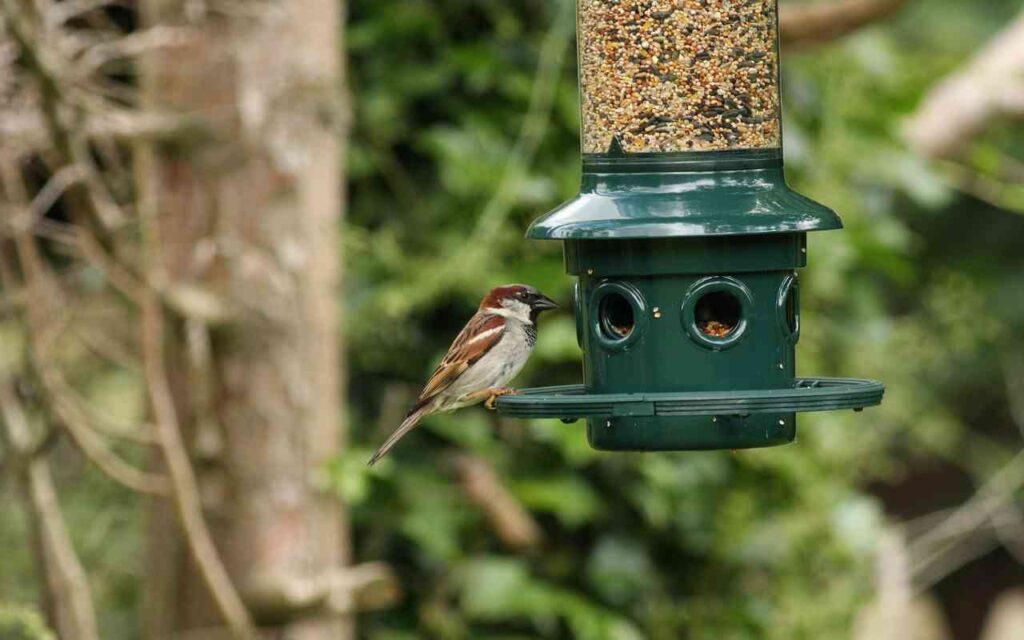
I’ve got a confession: I actually like house sparrows. Yeah, I know, they’re not native, and sure, they can be a little bossy at feeders, but there’s something about these tiny, scrappy birds that just makes me smile. They’re social, tough, and somehow thrive in yards where other birds barely make it. Honestly, if you want them in your garden, it’s almost effortless, they figure it out on their own.
When I was a kid, I’d watch them take over the neighborhood trees. My grandfather would toss breadcrumbs on the patio, and in minutes, dozens of sparrows would show up out of nowhere, like magic 🙂. Now I get it, they’re just insanely adaptable. If you can appreciate a little cleverness and grit in wildlife, house sparrows deserve a nod of respect.
- Scatter millet, sunflower hearts, or cracked corn on the ground or low trays.
- Use wide, open feeders—sparrows feed best in flocks, not alone.
- Place feeders near shrubs or trees for quick cover from predators.
- Offer nesting boxes or sheltered cavities near buildings or eaves.
- Plant dense shrubs, evergreens, or native grasses for year-round shelter.
- Provide shallow, clean water; heated baths help in winter.
- Keep feeders full, sparrows are loyal once they trust your yard.
- Don’t stress about big flocks, they bring life and energy to your garden.
Watch: How to Attract House Sparrows to Your Garden
Watch this step-by-step video explainer to see how to attract house sparrows, including their favorite seeds, feeders, and garden setup.
Show Transcript
0:00
So, let’s talk about how we can turn your garden into this bustling, energetic little world for one of the most common—but honestly, one of the most fascinating—backyard birds out there, the house sparrow.
0:12
Okay, I’ve got to make a confession right up front: I actually really like house sparrows. I know, I know, they can be a little bossy, and they’re not native to North America, but there’s just something about these scrappy little birds. They bring so much life and personality to a garden. I mean, they’re the absolute definition of small, scrappy, and social.
0:29
Just think about it. They’re tough, incredibly adaptable, and they somehow manage to thrive in places where a lot of other birds just can’t make it. It reminds me of my grandfather—he used to toss breadcrumbs onto his patio, and within minutes, this whole flock would appear out of nowhere. They’re clever, persistent, and here’s the key: once they figure out your garden is a reliable spot for a meal, you’ve got some seriously loyal visitors for life.
0:56
Alright, so you want to jump right in and get started? Perfect. Here’s your quick-start guide—a super simple plan to get sparrows checking out your garden right away.
1:07
The game plan has five steps:
1:09
- Offer the right food – Seeds they absolutely love.
- Use open feeders – This lets them all eat together as a flock, which makes them feel way more secure.
- Provide cover nearby – Like shrubs, so they have a quick escape route.
- Add potential nesting spots – To encourage them to stick around.
- Stay consistent – Reliability turns casual flybys into permanent visitors.
1:36
Now, let’s dig into why these tips work so you can create a habitat that’s ideal for these birds in the long run. House sparrows have evolved right alongside humans for thousands of years, learning that wherever we are, there’s a steady food supply. That’s why they don’t migrate—they see our world as the perfect habitat, making them ideal year-round garden residents.
2:09
Understanding their behavior is key. They are super social, feeding in big groups out in the open, but they’re always on high alert. They need cover like a bush or tree within 10–15 feet. They huddle together to stay warm and are always scouting for cavities to build nests.
2:31
What should you feed them? It’s simple: millet is a superstar. They also love sunflower hearts and cracked corn. They prefer flat surfaces, so ground feeders or low platforms are perfect for their flock-feeding style.
2:52
If you want to go the extra mile and offer a home, remember this: a 1 ¼ inch entrance hole is perfect for house sparrows. It allows them in but keeps larger, more aggressive birds out. Place birdhouses in protected spots, like under eaves, and add dense shrubs and a nearby birdbath for safety. A clean, reliable water source is critical, especially in winter when puddles and ponds freeze.
3:47
Now, let’s talk numbers. House sparrows are prolific breeders. A few visitors can quickly turn into a bustling flock. But instead of seeing a big group as a noisy pest, think of it as a lively, energetic feature of your garden. That chatter and activity? It’s the sound of a healthy ecosystem you helped create.
4:31
So how do you make sure these scrappy little survivors stick around permanently? Lay out the perfect welcome mat: reliable food, clean water, protective cover, and secure nesting sites. Nail these four things, and you’re all set.
4:57
Watching their social lives unfold right in your backyard is endlessly rewarding. So, put out some millet, fill up a birdbath, and get ready. Your garden’s liveliest residents are just waiting for an invitation. The only question left is: are you ready for the show?
All
From Feathered Guru
Why House Sparrows Excel in Urban Gardens
House sparrows are small birds in urban areas by design. Unlike native sparrow species that prefer grasslands or forest edges, house sparrows evolved alongside humans in the Middle East thousands of years ago. They followed grain cultivation and human settlements because those places meant reliable food and shelter. They never looked back.
According to the Cornell Lab of Ornithology, house sparrows have colonized nearly every continent where humans live, making them one of the most successful bird species globally. Their abundance, comfort around humans, and ability to exploit urban environments make them phenomenal garden visitors. Learn more about common backyard birds to understand where house sparrows fit in the local ecosystem.
What makes house sparrows so remarkably adaptable? They’re generalist feeders, casual breeders, and they need surprisingly little space to establish themselves. They don’t migrate seasonally in most regions, so you get year-round residents. They thrive where native birds struggle—in open lawns, urban courtyards, and gardens surrounded by concrete and asphalt.
House sparrows are also highly social. They gather in flocks, communicate constantly, and establish loose community relationships. Once a few sparrows discover your garden, they’ll spread the word quickly through the local population. Within weeks, you could have dozens visiting regularly. This flock behavior creates lively, active gardens with constant bird activity and entertainment.
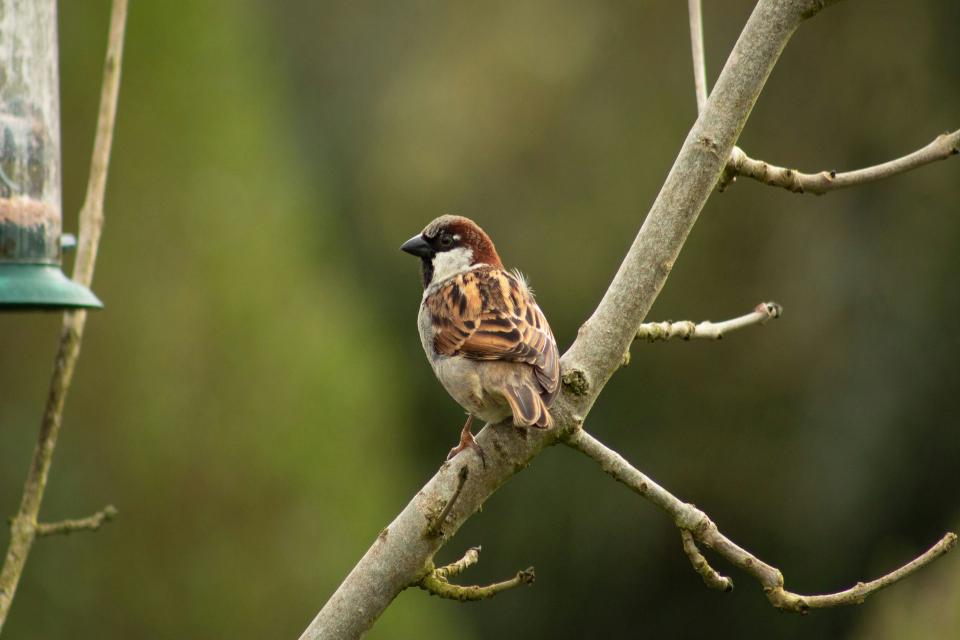
Understanding House Sparrow Behavior and Habitat Requirements
To attract house sparrows, you need to understand what they actually want from a garden bird habitat. House sparrows have surprisingly simple requirements compared to most bird species.
Social spaces matter more to house sparrows than anything else. They want open areas where they can gather, feed communally, and keep watch for predators. According to Wikipedia, house sparrows readily eat birdseed at feeding stations and prefer ground-feeding areas where they can work together while maintaining group vigilance.
Shelter nearby is essential. House sparrows don’t want to feed in completely exposed areas; they need quick access to protective cover where they can flee if danger appears. Trees, shrubs, or dense vegetation within 10-15 feet of feeding areas gives them confidence. They’re prey birds, after all, and that constant awareness of vulnerability shapes their behavior.
Roosting sites become critical for survival, especially during winter. House sparrows roost communally in dense evergreen trees, building cavities, or thick shrubs where multiple birds cluster together for warmth and safety. According to research from Audubon, house sparrows defend only small territories immediately around their nests, chasing away intruders fiercely. They don’t need large territories; they just need secure nesting and roosting spots.
Nesting cavities are where house sparrows really show their urban specialization. They prefer enclosed niches—cavities in trees, holes in buildings, rain gutters, birdhouses, or even nests abandoned by other birds. According to information from the Cornell Lab, house sparrows nest in holes of buildings and other structures such as streetlights, gas-station roofs, signs, and overhanging fixtures holding traffic lights. They’ve basically carved out a lifestyle where human infrastructure becomes their habitat.
Seed Types for Sparrows: What They Actually Prefer
Seed types for sparrows matter significantly for attracting them consistently. House sparrows have clear preferences, and offering the right seeds creates magnetic feeders that sparrows visit constantly.
To attract more desirable native sparrows, you need only offer sunflower seed, safflower seed, white proso millet, thistle seeds or cracked corn, with whichever seed you choose positioned on the ground, where sparrows prefer to dine.
Millet is the absolute champion. According to research from Ivel Valley Wild Bird Food, house sparrows primarily feed on seeds with a preference for small, easily accessible seeds such as sunflower hearts and millet. Millet is small, easy to swallow, and sparrows go absolutely nuts for it. I’ve watched entire flocks descend on millet-stocked feeders within minutes. They devour it like it’s caviar, completely ignoring other seed types nearby.
Sunflower seeds are excellent, particularly black oil sunflower and sunflower hearts. House Sparrows readily eat birdseed including millet, milo, and sunflower seeds. The larger sunflower seeds require some effort to crack, but sparrows manage effortlessly. Sunflower hearts (pre-shelled) work perfectly for sparrows and cost less than whole seeds when you factor in waste.
Cracked corn attracts sparrows reliably, particularly when mixed with millet. They enjoy the variety, and corn provides substantial calories for energy and heat production. According to Celebrate Urban Birds, wild foods include ragweed, crabgrass and other grasses, and buckwheat, with house sparrows readily eating birdseed including millet, milo, and sunflower seeds.
Suet and peanuts work well for house sparrows too. Suet bird food is also a favourite for house sparrows, and will be attracted to any feeder holding suet balls, suet pellets and suet blocks. If you’re interested in creating custom feeding options, check out our guide on how to make suet cakes for birds. Summer offers insects naturally; in summer, house sparrows eat insects and feed them to their young.
FYI, avoid seed blends with excessive filler like milo, wheat, or chaff. Sparrows ignore these cheap fillers, leaving piles of waste. Stick to high-quality seeds sparrows actually eat, and you’ll have fewer empty husks under feeders and happier sparrows overhead.
House Sparrow Feeder Tips: Creating Perfect Feeding Stations
Good House sparrow feeder tips make the difference between occasional visits and regular flocks establishing daily habits in your garden.
Ground feeders are ideal. House sparrows naturally forage on the ground, so platform feeders positioned at ground level, or even just seed scattered directly on clean soil, work perfectly. They feel more comfortable working horizontally than clinging to vertical feeders designed for other species. I use simple ground trays and refill them twice daily during winter when sparrows need maximum calories. Learn more about attracting birds during winter.
Wide, open feeders accommodate sparrow flock feeding. Unlike finches or chickadees that perch individually, sparrows want space to land, move around, and feed together while maintaining group awareness. Large platform feeders work better than tube feeders with limited perches. According to Perkypet.com, largely a ground forager, the house sparrow will land in farmers’ fields in search of food.
Feeder height should be low to ground level. Sparrows prefer feeding where they can quickly drop to earth and escape on foot if needed. Elevated feeders make them nervous. Position feeders within 10-15 feet of protective vegetation so sparrows can dash to safety if they spot predators. For strategies on keeping other wildlife away, learn how to manage feeder placement for multiple species safely.
Multiple feeders spread across the garden create redundancy that keeps sparrows coming back. If one feeder empties or becomes crowded with competitors, they have alternatives. This distributes feeding pressure and reduces aggressive squabbling. I’ve noticed sparrow populations remain stable longer when they have multiple feeding stations with distinct territories around each one.
Consistent refilling keeps sparrows visiting. Empty feeders for more than a few days, and sparrows will find alternative food sources and shift their routines. During winter, consistent feeding becomes critical for sparrow survival. Keep feeders stocked from October through March at minimum, and year-round if you want to maintain permanent resident flocks.
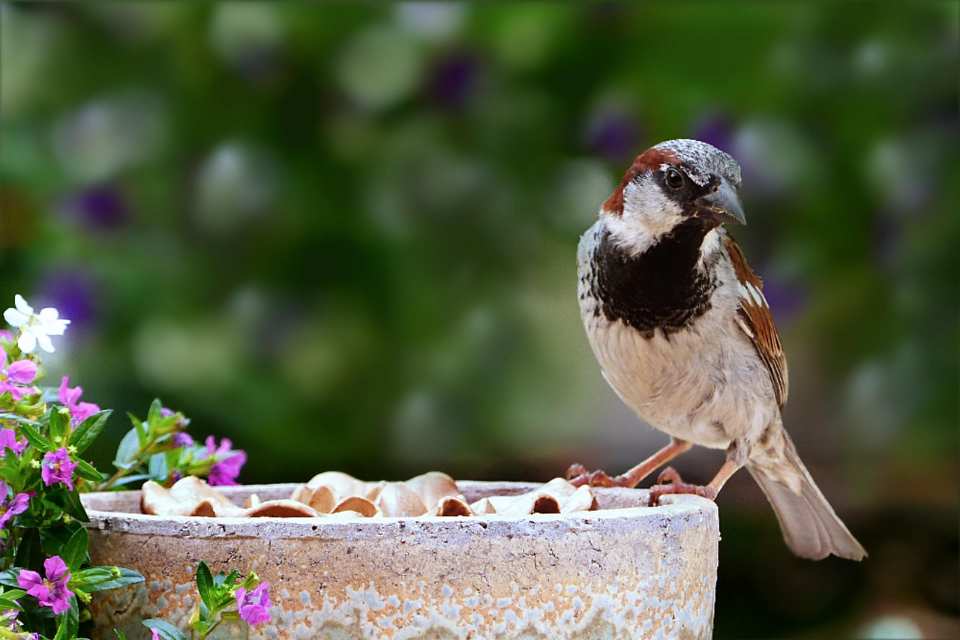
Bird Nesting Boxes: Providing Cavity Housing for Sparrows
House sparrows are bird nesting boxes specialists. According to Avian Report, they prefer cavities or any enclosure for nesting, and when these aren’t available, they can build nests in trees with dense and intertwined branches, in vines, on ledges of houses or buildings, spaces under awnings, traffic lights, large pipes, and in the letters of large signs.
Traditional birdhouse designs work well for sparrows. An entrance diameter of 1.25 inches accommodates most sparrow species while excluding larger competitors, with floor dimensions of 4×4 inches providing adequate space for nesting and movement, cavity volume of 6-8 inches deep allowing comfortable roosting without excess space.
Mount nest boxes in protected locations—under eaves, on building sides, or in sturdy trees where they’re sheltered from rain and wind. House sparrows typically raise multiple broods per season, so having multiple boxes available keeps pairs from competing and allows for larger population growth.
According to the Cornell Lab, the house sparrow prefers to nest in manmade structures such as eaves or walls of buildings, street lights, and nest boxes instead of in natural nest sites such as holes in trees. This preference makes attracting nesting sparrows straightforward: just provide accessible cavities on or near buildings.
Note that house sparrows can fit through entrance holes as small as 1 1/4″; therefore, most cavity-nesting songbirds using nest boxes are vulnerable to house sparrow competition. This is important if you want native species like bluebirds or tree swallows. However, if your goal is specifically attracting house sparrows, standard birdhouse designs work perfectly.
Bird-Friendly Garden Plants: Natural Food and Shelter
Bird-friendly garden plants provide year-round sustenance and protective cover that house sparrows need for long-term residence.
Seed-producing plants create natural food sources sparrows readily exploit. Native grasses, ragweed, crabgrass, buckwheat, and other weedy plants produce seeds sparrows love. Rather than aggressively removing all “weeds,” leaving designated wild areas where these plants grow creates self-sustaining food sources. I’ve created a corner of my garden specifically for “weeds,” and sparrows visit it constantly throughout fall and winter.
Dense shrubs and trees provide protective roosting and shelter. Evergreens like arborvitae, juniper, and spruce offer year-round coverage. Deciduous shrubs like privet and honeysuckle provide dense branching where sparrows cluster for warmth during cold nights. According to Audubon, house sparrows roost communally, so having substantial cover available dramatically improves their winter survival.
Berry-producing plants offer supplemental nutrition. Dogwood, elderberry, and serviceberry produce berries sparrows eat, particularly when natural seeds become scarce. While sparrows aren’t primarily frugivorous, berries add dietary variety and provide nutrition during food shortages.
Keep plantings dense and thick rather than open and airy. Sparrows want shelter, not ornamental beauty. Plants arranged in layers—ground cover, mid-story shrubs, and canopy trees—create multi-level habitat that sparrows exploit for feeding, roosting, and nesting.
Water Sources: Essential for Sparrow Survival
Bird baths provide critical drinking and bathing opportunities that house sparrows use religiously. Backyard birds need consistent water access, particularly during summer heat and winter freezes.
Position bird baths near protective cover so sparrows can flee quickly if predators approach. Open, exposed bird baths make them nervous. According to the Cornell Lab, house sparrows are comfortable around humans but remain wary of predators and unfamiliar situations. Baths under tree branches or within 10 feet of dense shrubs encourage more frequent visits.
Change water daily, especially during warm weather. House sparrows gather in flocks around water sources, and dirty water spreads disease rapidly through populations. Fresh water is critical for flock health. Learn how to clean a bird bath without chemicals to keep your birds safe and healthy.
During winter, heated bird baths become essential. When natural water freezes solid, birds face genuine dehydration risk. Sparrows will visit heated baths in subzero temperatures, making them literally life-saving during extreme cold. I consider my heated bath one of my most important winter contributions to local sparrow survival.
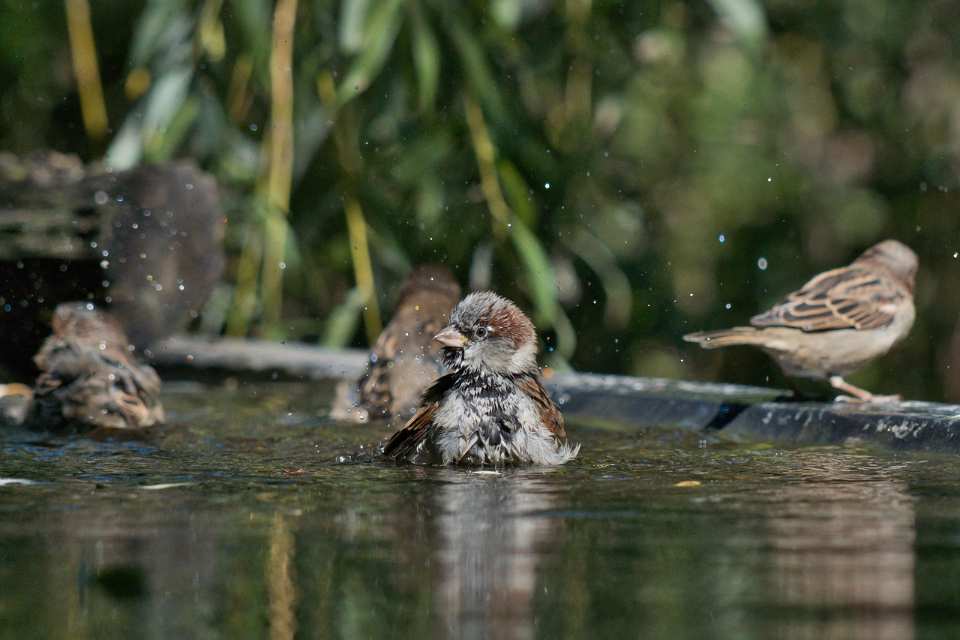
Managing Large Sparrow Populations
Once you attract house sparrows, populations can grow rapidly. Their social nature and breeding success mean flocks can expand from a handful of birds to dozens within a season. IMO, this isn’t necessarily bad—the activity, noise, and entertainment value is substantial. However, some people find large sparrow populations problematic.
If sparrow populations become overwhelming, you have options. Rotating feeder locations prevents established territories and keeps populations distributed. Removing feeders periodically causes sparrows to seek alternative food sources elsewhere. Installing specific feeder designs that only smaller native sparrows can access reduces house sparrow traffic while supporting other species.
However, I’d encourage embracing sparrow populations rather than fighting them. These birds don’t harm other species directly; they’re just remarkably successful at exploiting the resources humans provide. Their presence, energy, and social complexity add genuine value to backyard observation.
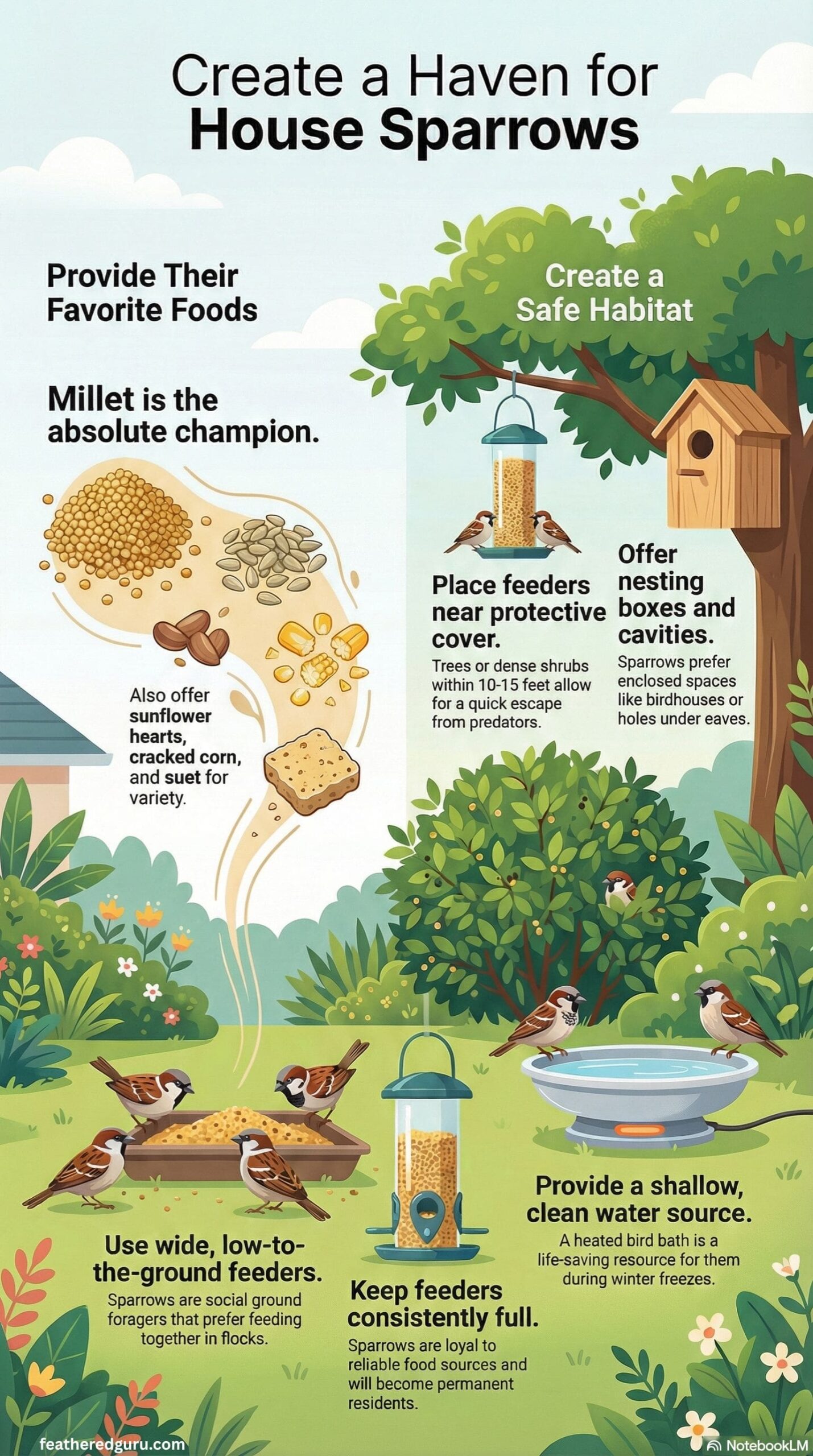
Infographic: House Sparrow Attraction Tips at a Glance
Check out this infographic summary of the best seeds, feeders, and garden setup to attract house sparrows quickly and safely.
Conclusion
Attracting house sparrows is one of the easiest bird projects you can undertake. Stock your feeders with millet and other preferred seeds, provide nesting boxes, maintain reliable water sources, and create protective cover through strategic plantings. House sparrows will find your garden and establish themselves as permanent residents faster than almost any other species.
Whether you view house sparrows as beloved backyard companions or as somewhat invasive competitors, you can’t deny their resilience and adaptability. They’ve conquered the globe by understanding how to live successfully alongside humans. Attracting them means embracing the urban and suburban world we’ve created and celebrating the wildlife that thrives there.
My neighborhood sparrow flock brings life and constant activity to my garden. Their flocking behavior creates dynamic scenes, their chatter fills mornings with sound, and their nesting success represents thriving wildlife populations in urban spaces. I wouldn’t trade them for anything, and once you start watching them seriously, I suspect you won’t either.