
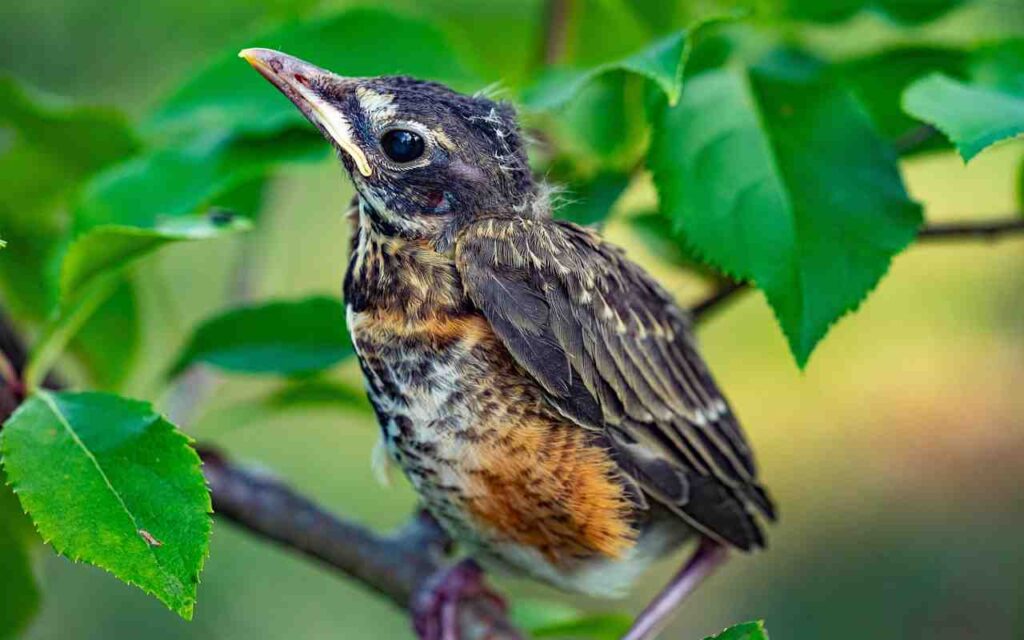
Every summer, thousands of well-meaning people remove healthy baby birds from yards, sidewalks, and driveways, separating them from parents who are actively caring for them. Seeing a fluffy bird hopping on the ground feels like an emergency, but in most cases it’s a normal stage of development called fledging. Knowing how to care for a fledgling starts with understanding that this ground time under parental supervision is essential, and stepping in usually does more harm than good.
This guide shows you how to quickly decide when a baby bird needs help or should be left alone. You’ll learn the 10-second assessment, why cat contact causes hidden medical emergencies, how the poop test proves parental care, and the five-foot relocation rule to keep birds safe without separating families. You’ll also clearly spot the difference between a nestling that needs immediate intervention and a fledgling that needs you to step back 🙂.
- Most baby birds on the ground in summer are healthy fledglings learning to fly.
- Fully feathered, hopping, and vocal birds should almost always be left alone.
- Pink, featherless nestlings must be returned to the nest or taken to a rehabilitator.
- Any cat contact is an emergency due to deadly bacterial infection risk.
- Use the 10-second assessment to spot true emergencies fast.
- Fresh droppings nearby confirm parents are actively feeding the bird.
- Hot pavement birds can be moved 5–10 feet to shade or grass safely.
- Never give water or food — aspiration can be fatal.
- Handling does NOT cause parents to abandon fledglings.
- Wild birds are federally protected — only licensed rehabilitators should provide care.
Video: How to Care for a Fledgling (Rescue or Leave Alone?)
Watch this short video to quickly learn how to determine if a baby bird needs human intervention or should be left alone using our decision-making framework.
Show Transcript:
0:00
Summer is here, and with it comes that moment every backyard birdwatcher dreads: you step outside and spot a tiny, fluffy bird on the ground, looking completely helpless. Your heart sinks, and you instinctively want to help. But what you do in the next few seconds can mean the difference between life and death for that fledgling.
0:21
So, you find a baby bird—what’s the first step? Feeling the urge to scoop it up is natural, but pause and take a deep breath. Often, the very instinct to “rescue” can be the wrong move. Thousands of healthy baby birds are needlessly taken from their parents each summer.
0:39
Most birds found on the ground are in the fledgling stage. Fledglings have left the nest but can’t yet fly confidently—they’re essentially in “flight school,” with their parents nearby observing from a safe distance. The key question is: are you witnessing a normal fledgling or a true emergency?
1:24
Here’s a quick 10-second checklist to make the right call:
1:35
Step 1: Look for signs of trauma. Is the bird bleeding, cold to the touch, or recently in a cat’s mouth? If yes, that’s an immediate wildlife emergency. Contact a licensed rehabilitator.
1:50
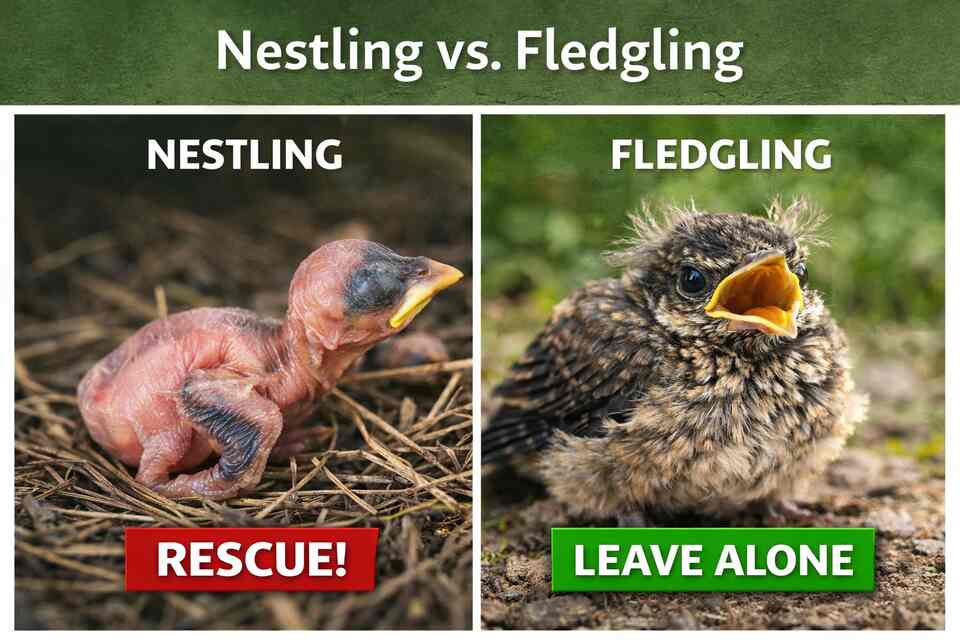
Step 2: Is the bird mostly pink, wrinkly, featherless, with closed eyes? That’s a nestling. Return it to its nest if possible.
1:57
Step 3: Is it mostly feathered, hopping around, and alert? Congratulations—you’ve found a fledgling. The correct action is usually to leave it alone.
2:05
Think of it this way: a nestling is a helpless baby needing rescue, while a fledgling is like a teenager learning independence. It doesn’t need a human hero, just careful observation.
2:23
Critical Rule: The Cat Factor
Over 90% of domestic cats carry the bacteria Pasteurella multocida, which is lethal to birds. A cat bite may leave a tiny puncture wound you can’t see, but it can cause fatal septicemia in 24–48 hours. Any contact with a cat, even if the bird looks healthy, is a medical emergency requiring specialized antibiotics from a licensed wildlife rehabilitator.
3:26
What if the fledgling is in danger but uninjured?
Yes, you can help—but safely. Myth busting first: human scent will not make parents abandon the bird. Birds identify their young by sight and sound, not smell.
3:59
Gently move the fledgling up to 5 feet to a safe location under cover like a bush or shrub. This keeps the bird within its parents’ territory so they can continue feeding and protecting it.
4:18
Most Important Warning: Food and Water
Never feed or give water to a fledgling. Birds have an anatomical feature called the glottis, a direct pipe to their lungs. Water or food can easily enter the lungs, causing fatal aspiration pneumonia. Fledglings receive all hydration and nutrition from parents via insects, berries, and regurgitated food.
5:17
Summary:
Unless facing an obvious emergency—severe injury, a nestling out of the nest, or cat contact—your role is observer, not rescuer. Protect the area, leave fledglings where they are, and trust the natural process.
5:35
Recognizing the difference between a normal fledgling and a nestling in distress makes you a powerful ally for wildlife. By understanding these key survival strategies, you can be a guardian for the birds in your backyard.
The 10-Second “Should I Step In?” Decision Tree
The Quick-Action Checklist
Is the bird bleeding, cold to the touch, or was it in a cat’s mouth?
EMERGENCY. Call a wildlife rehabilitator immediately. These conditions indicate trauma, shock, or bacterial infection that requires professional intervention within hours. Skip all other assessments and locate your nearest licensed rehabilitator.
Is the bird pink, featherless, eyes closed, or unable to grip?
NESTLING. It needs to be returned to its nest. This bird fell or was displaced prematurely and cannot survive on the ground. According to the U.S. Fish and Wildlife Service, if you can locate the nest nearby, the best thing to do is simply place the nestling back in it. If the nest is destroyed or unreachable, contact a rehabilitator for guidance on creating a substitute nest.
Is the bird fully or mostly feathered, alert, hopping, and vocalizing?
FLEDGLING. It’s in “Flight School.” Leave it alone. This is normal developmental behavior. According to Tufts Wildlife Clinic, birds with fully feathered bodies but short or non-existent tail feathers are fledglings who have left the nest. They might remain on the ground for a few days or even a week, supervised and fed by their parents a few times each hour before they master flying.
The Hot Surface Exception
Summer asphalt, concrete, and metal surfaces can reach temperatures exceeding 140 degrees Fahrenheit, creating genuine danger for fledglings that land on these surfaces. A bird sitting on pavement that’s too hot to touch with your bare hand needs immediate relocation to prevent thermal injury.
The safe move: Use both hands to gently scoop the bird from beneath, supporting its body. Move it no more than 5-10 feet to the nearest grass, mulch, or shaded area under a bush. This minimal distance keeps the bird within its parents’ visual and auditory range while removing the immediate danger. The bird is not being kidnapped. You’re simply moving it from a death trap to a safe waiting area where parents can continue care.
Watch from a distance for 30-60 minutes. Parent birds will resume feeding once you leave the area. If the bird returns to the hot surface repeatedly (some species are remarkably persistent), create a temporary barrier using stones, sticks, or cardboard to block access to the dangerous area while leaving clear paths to safer zones.
Species-Specific Identification & Behavior
Different species follow dramatically different fledging timelines and display unique behaviors that can help you identify whether intervention is needed. Understanding these species-specific patterns prevents unnecessary “rescues” while helping you recognize genuine problems.
| Species | Typical Ground Time | Parent Behavior | Specific Identification Markers |
|---|---|---|---|
| American Robin | 3-5 Days | Loud, aggressive chirping nearby | Speckled breast (different from solid red adults) |
| Blue Jay | 3-5 Days | Very protective; may dive-bomb | Short, stubby tail; blue feathers visible on wings |
| Sparrow | 2-4 Days | Secretive; parents feed quickly and leave | Stubby beak; often huddling in low bushes |
| Mourning Dove | 2-3 Days | Minimal noise; parents stay at a distance | Looks like mini adult; buff-colored feathers |
| Crow / Magpie | Up to 10 Days | Extremely vocal; will sentinel from a tree | Large blue/gray eyes; awkward hopping |
| Mockingbird | 3-5 Days | High-energy; bold defense of the bird | White wing patches visible when hopping |
| Starling | 2-4 Days | Noisy; often found in groups | Uniformly brown/gray; chattery begging calls |
| Cardinal | 3-5 Days | Parents very attentive but shy | Noticeable crest beginning to form on head |
| Pigeon | 2-4 Days | Parents feed crop milk intermittently | Squat body; often found on ledges or flat ground |
| Finch | 2-3 Days | Frequent feeding visits | Tiny; often seen vibrating wings to beg |
Why Crows Stay Grounded Longer
Crow fledglings remain on the ground for up to 10 days because corvids (crows, ravens, magpies, jays) undergo an extended learning period where parents teach complex foraging skills, social behaviors, and predator recognition. The extended ground time allows fledglings to develop the cognitive abilities corvids are known for while still under parental protection.
In contrast, finches spend only 2-3 days on the ground because they’re smaller, mature faster, and face higher predation pressure that selects for rapid flight development. The biological strategy differs based on species size, cognitive complexity, and ecological niche.
The Poop Test: How to Confirm Parents Are Nearby
The Silent Confirmation
You don’t need to witness feeding to confirm that parents are actively caring for a fledgling. Birds leave evidence through their waste products, and recognizing this evidence prevents unnecessary interventions based on the mistaken belief that a bird has been abandoned.
According to research from Tufts Wildlife Clinic, you can tell if fledglings are being fed by watching from a distance to see whether a parent bird flies over to them. However, you can also look for white-gray feces near the fledgling. Birds defecate after being fed, so the presence of fecal material means that the birds are being cared for.
What to Look For
Fresh bird droppings appear as white or dark green splotches with a moist, glossy surface. The white portion consists of uric acid (the bird equivalent of urine), while the dark green or brown center contains fecal matter. Fresh droppings indicate feeding within the past 30-60 minutes.
Check the ground or leaves within a two-foot radius of the fledgling. If you find 3-5 fresh droppings during a 2-hour observation period, parents are actively feeding. The frequency matters because baby birds have extremely fast metabolisms and require feeding every 15-30 minutes during daylight hours.
Old, dried droppings (crusty, faded white, hard to the touch) don’t provide useful information. Only fresh, moist droppings confirm current parental care. If you see no fresh droppings after 2 hours of observation and the bird appears lethargic rather than alert and hopping, contact a wildlife rehabilitator.
This poop test prevents one of the most common mistakes in baby bird “rescue.” People see a fledgling alone, assume it’s been abandoned, and remove it from its territory before parents have a chance to demonstrate their presence through feeding behavior.
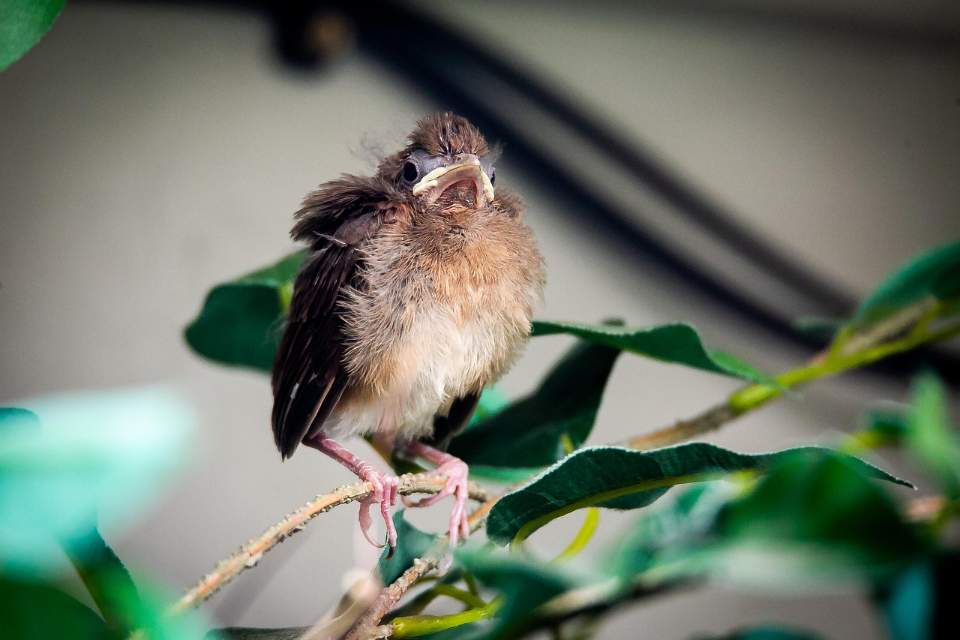
The Cat Factor: The Invisible Emergency
The Pasteurella Rule
Any bird that has been in a cat’s mouth, scratched by a cat’s claws, or even touched by a cat’s teeth requires immediate transport to a licensed wildlife rehabilitator within 24 hours. This is not optional or cautious advice. It’s a medical necessity based on bacterial reality.
Research published in PubMed found that of birds rescued alive from cat mouths, approximately 40% died from direct bite trauma, while approximately 60% died from Pasteurella multocida infection. The overall mortality rates in bird shelters for cat-caught birds ranged from 30% to 100% across different facilities, with most experiencing mortality above 90%.
The Bacterial Reality
Over 90% of cats carry Pasteurella multocida bacteria in their saliva and on their claws. According to Cornell Wildlife Health Lab, this bacterium causes fowl cholera in birds, a disease that affects domestic and wild birds worldwide. Even a microscopic puncture from a cat tooth or scratch from a claw introduces these bacteria into bird tissue.
The infection progresses rapidly. According to Wildlife Welfare, Pasteurella bacteria will cause septicemia (blood infection) in a very short period if left untreated. Birds lack the immune capacity to fight this specific bacterial infection without specialized antibiotics that only licensed rehabilitators can provide.
Visible wounds are not required for fatal infection. Cats have needle-sharp teeth designed to pierce between vertebrae and sever spinal cords. These teeth create puncture wounds so small they’re invisible through feathers but deep enough to deliver bacteria directly into muscle tissue and bloodstream. The bird may appear uninjured while carrying a death sentence.
Why This Isn’t About Keeping Cats Away
Most websites advise keeping cats indoors or away from fledglings. That’s good prevention advice, but it misses the critical point. Once a cat has touched a bird, the damage is done. The bird needs medical intervention, not just removal from the cat. Without antibiotic treatment administered by a professional, the bird will die within 24-48 hours from bacterial septicemia regardless of how well-meaning people try to care for it at home.
If you witness a cat catch a bird, recover the bird if possible and immediately contact your nearest wildlife rehabilitator. Time matters. The faster the bird receives antibiotics, the better its survival chances. This is a true emergency that overrides the normal “leave fledglings alone” rule.
Why Giving Water Kills: Anatomy 101
The Aspiration Risk
Birds possess a fundamentally different oral anatomy than mammals. At the base of their tongue sits an opening called the glottis, which leads directly to the trachea and lungs. When birds breathe, this glottis remains open. When they swallow, a complex series of muscle movements closes the glottis while food passes down the esophagus located behind it.
According to Bedford Audubon Society, the physiology of a bird’s mouth is very detailed, and if water goes into the wrong opening, the bird will aspirate and die. The problem intensifies with baby birds that have not fully developed swallowing coordination or that are stressed, weak, or frightened.
Why Force-Feeding Fails
When you attempt to give water to a baby bird (whether by dropper, syringe, or dipping its beak), several things go wrong simultaneously. The stress of being handled by a perceived predator causes rapid breathing, which keeps the glottis open. The bird cannot coordinate the complex swallowing reflex while terrified. Liquid enters the open glottis and flows directly into the lungs.
Aspiration pneumonia develops within hours. Water in the lungs triggers inflammatory responses, fluid accumulation, and bacterial growth. The bird drowns from the inside or develops pneumonia that proves fatal even with professional treatment. This well-intentioned act of giving water causes more fledgling deaths than any other home care mistake.
The alternative that wildlife rehabilitators use involves specialized tube-feeding techniques that bypass the mouth entirely, delivering fluids directly to the crop (a storage organ in the bird’s throat). This requires training, proper equipment, and knowledge of exact fluid volumes based on species and weight. It’s not something the general public can safely perform.
The Summer Thirst Myth
Baby birds don’t drink water. They receive 100% of their hydration from the food parents provide. Insects, berries, and regurgitated food all contain sufficient moisture to meet avian hydration needs. A fledgling sitting in 95-degree heat isn’t suffering from thirst; it’s waiting for its next feeding, which will provide both calories and water.
If a fledgling appears dehydrated (sunken eyes, skin that doesn’t snap back when gently pinched, extreme lethargy), that’s a sign of abandonment or illness requiring professional care, not a signal that you should provide water. Dehydration in baby birds indicates hours without feeding, which means parents aren’t returning. Call a rehabilitator rather than attempting home hydration.
Safe Handling & The Five-Foot Relocation Rule
Myth Busting: The Human Scent Problem
Birds have extremely limited olfactory capabilities. They rely overwhelmingly on vision and hearing to navigate their world. The widespread belief that touching a baby bird causes parents to reject it due to human scent is completely false.
According to Wildlife Center of Virginia, contrary to popular belief, birds will continue to care for their young even after being handled by humans. Parent birds identify their offspring through vocalizations, location, and visual recognition, not through smell. Your scent on a fledgling creates zero risk of parental rejection.
This myth likely originated from advice about mammals (deer fawns, rabbits), where scent does matter. But birds operate on entirely different sensory systems. You can safely handle a fledgling to move it from danger without worrying that parents will abandon it.
The Safe Zone Move
When a fledgling faces genuine immediate danger (hot pavement, busy road, or dog-accessible area), you can safely relocate it without separating it from parents. The key is staying within the parents’ visual and auditory range, which extends roughly five feet in dense vegetation and up to 20-30 feet in open areas.
Use the five-foot rule as your conservative guideline. Move the bird to the nearest safe location (bush, shrub, tree base, shaded grass) within five feet of where you found it. This minimal distance ensures parents can still hear the fledgling’s begging calls and see its location.
Proper handling technique: Approach slowly and quietly. Use both hands to scoop the bird from underneath, supporting its body and feet. Keep handling time under 60 seconds. Move deliberately to your chosen safe spot and gently place the bird on the ground or in a low bush (never high in a tree, as fledglings can’t climb well and may fall).
After placement, retreat at least 50 feet and observe. Parents typically resume feeding within 30-60 minutes once human presence is gone. If you need to leave before parents return, that’s fine. The bird knows how to vocalize for attention, and parents are searching for those calls.
Temporary Housing for True Emergencies
If a bird genuinely requires transport to a rehabilitator (injured, cat-caught, or confirmed orphan), proper temporary housing prevents additional stress and injury. Use a cardboard box slightly larger than a shoebox, with air holes punched in the top for ventilation.
Line the bottom with paper towels or a soft cloth (avoid anything with loose threads that could entangle toes). Place the bird inside gently, close the lid, and keep the box in a dark, quiet room away from children, pets, and temperature extremes. The darkness reduces stress by simulating the nighttime rest period birds instinctively seek when injured.
Never add water dishes or food to the box. The bird won’t eat from stress, water creates drowning hazards, and the right food varies dramatically by species and age. The box serves only as safe transport to professional care, not as temporary habitat.
Keep handling to absolute minimum. Check the bird only if necessary, as each peek into the box triggers a stress response. Transport to the rehabilitator as quickly as possible, keeping the box level and stable during the drive.

Legal Authority & Federal Protection
The Migratory Bird Treaty Act
Every songbird, raptor, shorebird, and waterfowl native to North America receives federal protection under the Migratory Bird Treaty Act. This law makes it illegal to possess, keep, or attempt to rehabilitate wild birds without proper federal and state permits.
The penalties are serious. Violations can result in fines up to $15,000 or six months in jail per bird. The law contains no exception for “rescuing” injured birds or “temporarily” caring for orphans. The moment you take a wild bird into your home without permits, you’re violating federal law.
This isn’t bureaucratic overreach. The law exists because well-meaning but untrained people consistently fail at wildlife rehabilitation despite their best intentions. According to Best Friends Animal Society, the chances of a bird surviving and being successfully released into the wild when rehabilitated by unlicensed individuals are very low. Only licensed wildlife rehabilitators have the equipment, skills, and knowledge to provide proper care.
Finding Licensed Professionals
Every state maintains lists of licensed wildlife rehabilitators. The fastest way to locate help is searching “wildlife rehabilitator near me” along with your state name. The U.S. Fish and Wildlife Service recommends checking state conservation agency websites, which typically maintain current rehabilitator lists organized by county and species specialty.
Always call ahead before transporting a bird. Rehabilitators have limited capacity and specific species they’re licensed to handle. Some accept only raptors; others specialize in songbirds or waterfowl. Confirming they can accept your bird prevents wasted time and additional stress on an already compromised animal.
If the first rehabilitator you contact is at capacity, ask for referrals to others in your area. Most rehabilitators network with colleagues and can direct you to available facilities. Don’t give up after one call. These professionals understand the urgency and will help you find placement even if they can’t personally accept the bird.
FAQ: Common Summer Panic Questions
It’s night time. Will a predator get the fledgling?
Fledglings instinctively seek cover at dusk. Birds have excellent low-light vision and will hide in dense shrubs, tall grass, or under decks when darkness approaches. Most nocturnal predators (owls, raccoons, opossums) hunt by sound and movement. A motionless, silent fledgling tucked into vegetation presents low predation risk.
If you find a fledgling on open ground after dark, you can move it to nearby dense cover (within five feet) using the relocation technique described above. Place it in the thickest bush available and retreat. The bird will remain still until dawn when parents resume feeding.
Don’t bring the bird inside overnight. The stress of indoor containment, household sounds, and temperature changes often proves more harmful than predation risk. Birds are wild animals adapted to outdoor survival, not indoor captivity.
It’s raining or storming. Should I bring the fledgling inside?
No. Birds are waterproof. Their feather structure creates overlapping layers that shed water away from skin. Rain, even heavy rain, doesn’t harm fledglings any more than it harms adult birds. The bird may look bedraggled and miserable, but it’s not suffering from dangerous exposure.
Parent birds continue feeding during rain. They’re more experienced at finding covered areas and may move the fledgling to better shelter, but they don’t abandon chicks because of weather. A healthy fledgling will survive a summer thunderstorm without human intervention.
The exception is sustained heavy rain lasting 6+ hours combined with temperatures below 60 degrees Fahrenheit. This combination (rare in summer) can cause hypothermia. If you encounter this specific situation and the bird feels cold to the touch, contact a rehabilitator immediately.
I found a fledgling in my garage. How do I get it out?
Open the largest door or opening (garage door, windows) to create a clear exit path. Turn off interior lights and close any doors leading into your house. The bird will naturally move toward the brightest light source, which should be the outdoor opening.
If the bird is on the ground and mobile, you can gently herd it toward the exit by walking slowly behind it, using a broom held horizontally (not jabbing) to guide direction. Most fledglings will hop toward the opening when given a clear path and gentle pressure from behind.
If the bird is high on a rafter or shelf, wait. It will eventually come down seeking food or responding to parental calls from outside. Leave the exit open and check back in 30-minute intervals. Avoid using nets or attempting to grab the bird from height, as this often results in panic flight into windows or walls causing injury.
Once the bird exits, close the garage to prevent re-entry. The brief time in the garage won’t cause permanent separation from parents. The bird’s vocalizations will help parents locate it once it’s back outside.
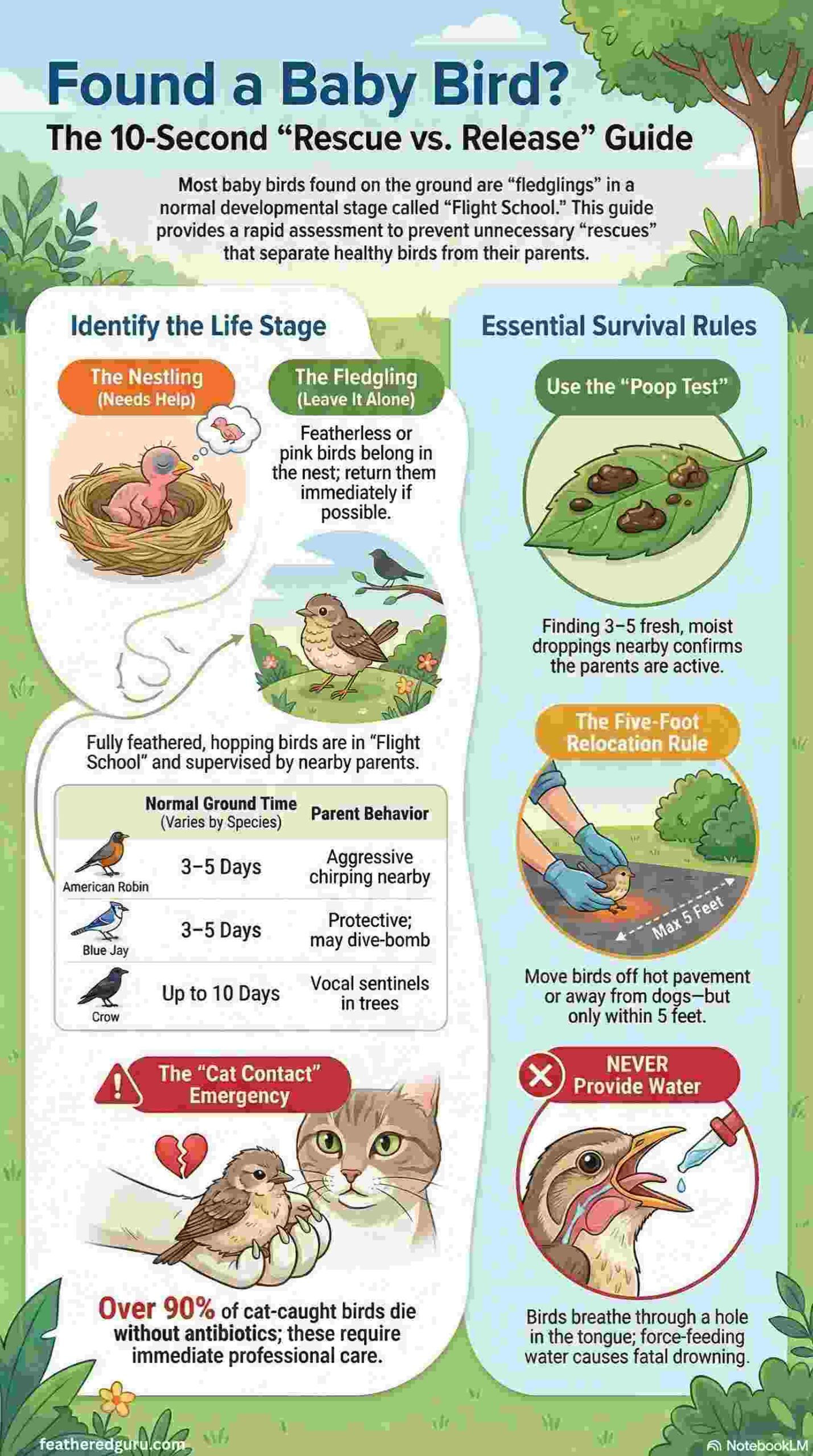
Summary: The 10-Second Fledgling Rescue Checklist
Before you go, here is a simple summary of the steps to take if you find a bird on the ground.
Conclusion: Trust the Process
The overwhelming majority of grounded baby birds found in summer are healthy fledglings undergoing normal development. They’re not abandoned, injured, or dying. They’re learning to fly under parental supervision in a process that requires days of ground time before flight mastery develops.
Your role is observation, not intervention. Check for the three true emergencies: visible injury/bleeding, cat contact, or completely featherless nestlings far from nests. If none of these conditions exist, the kindest action is walking away and allowing bird families to complete their natural behavioral cycle.
When genuine emergencies do occur, understanding the legal requirements, knowing how to safely handle birds, and recognizing why common home care attempts (giving water, providing food, keeping overnight) cause more harm than good will help you make better decisions in critical moments. The bird’s best chance for survival always comes from licensed wildlife rehabilitators, not home treatment.
Summer bird populations depend on successful fledging. Every fledgling that survives the ground learning period contributes to fall migration and next year’s breeding populations. By learning to distinguish normal behavior from genuine emergencies, you become part of the conservation solution rather than an accidental threat to wild bird success.
For more information on supporting bird populations in your yard, explore guides on attracting songbirds during summer, avoiding disturbance to nesting birds, and protecting baby birds from predators. Understanding bird nesting timelines and spring birdwatching basics provides additional context for supporting bird families throughout the breeding season.