
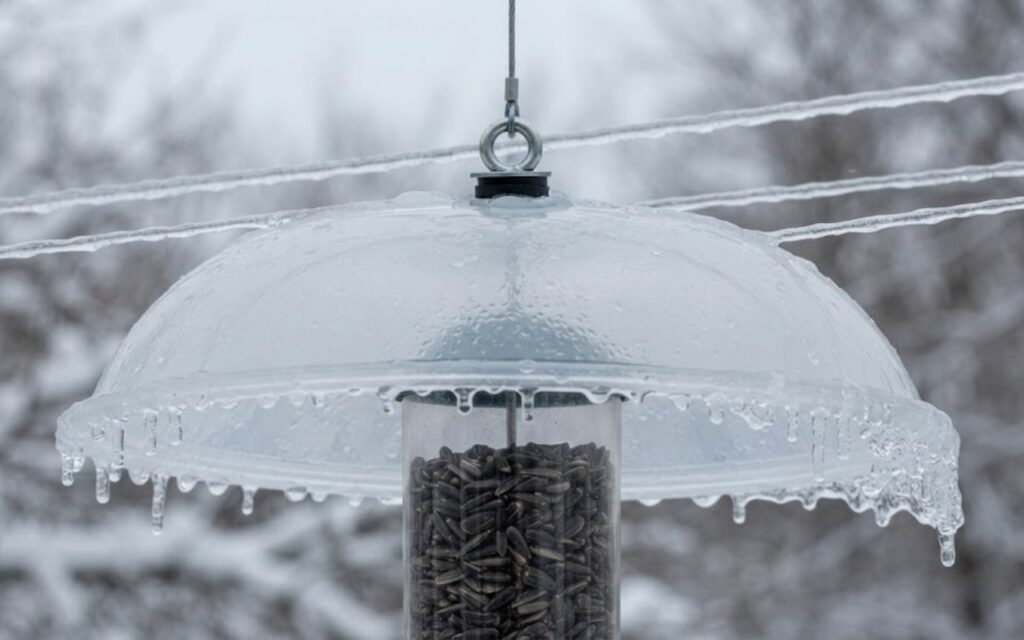
If you want to learn how to keep bird seed from freezing during harsh winter storms, building a custom canopy keeps food flowing when factory-made weather guards fail to stop driving sleet. Most commercial baffles sit too high or have shallow curves that let horizontal precipitation soak into the feeder ports. Inverting a wide, durable plastic food container directly over your hardware creates a high-performance DIY bird feeder weather guard for pennies.
Wet bird seed quickly spoils and freezes into solid chunks of inedible sludge that birds cannot break apart. Worse, stagnant moisture allows harmful molds to grow beneath the surface of the seed reservoir. Taking twenty minutes to build a customized, watertight shield eliminates capillary leaks and keeps high-energy feed flowing smoothly through the worst winter weather.
DIY Bird Feeder Rain Shield: Project Specifications
Inverting a flexible plastic storage tub above your feeder creates an extended rain baffle that blocks sideways freezing sleet from soaking seed ports. Drilling a tight center aperture sealed with a rubber grommet stops moisture from tracking down the suspension wire into the hopper.
- Recommended Shield Span: 12 to 14 inches minimum diameter
- Tub Wall Depth: 3 to 5 inches of vertical rim overhang
- Pilot Hole Diameter: 0.25 inch drilled with a brad-point bit
- Sealing Hardware: Neoprene rubber washer or 100 percent pure silicone caulk
- Safe Cleanout Ratio: 1 part household bleach to 9 parts cold water
- Lethal Risk Avoidance: Zero petroleum jelly, oils, or glycerin on suspension wires
The Hidden Dangers of Wet Bird Seed in Winter Feeders
Freezing rain poses a severe mechanical problem for backyard feeders. Sleet enters through feeding ports and drainage slots, filling the air pockets between seeds. As the temperature drops, this trapped moisture expands into a solid block of ice that completely locks up tube feeders and hopper troughs.
The biological risks are far more dangerous than simple mechanical jams. Damp grain creates an ideal breeding ground for Aspergillus flavus, a common environmental fungus that produces lethal aflatoxins. When songbirds ingest contaminated seeds, these toxins cause acute liver failure and immune suppression.
Backyard birders on Reddit’s r/birdwatching frequently describe this exact disaster during mid-winter cold snaps. Users report finding their tube feeders completely encased in a solid core of moldy, frozen sunflower seeds after a single night of sleet. Preventing water ingress at the top of the feeding station is the only reliable way to keep seed dry and safe.
Choosing Cold-Resistant Plastics for Your Homemade Baffle
Selecting the right plastic container determines whether your shield survives winter gusts or shatters in the first freeze. Rigid, clear polystyrene tubs like disposable bakery domes crack as soon as temperatures plunge below freezing. You need flexible polypropylene or high-density polyethylene containers, easily identified by the recycling triangle numbers 2 or 5 on the bottom.
Round, shallow food-storage bowls measuring between 12 and 14 inches across provide the ideal geometry. The downward-curving rim must extend at least 3 inches past the diameter of your feeder ports to deflect horizontal sleet. Rectangular containers work well for wide wooden hopper stations, while circular tubs excel on cylindrical tube feeders.
- Translucent 4-to-6 quart polypropylene mixing bowl or food storage tub
- Two wide stainless steel fender washers with 0.25-inch inner holes
- Two flexible neoprene washers matched to the diameter of your hanging hardware
- One standard 0.25-inch eyebolt with matching locking nuts
- A small tube of 100 percent pure exterior silicone sealant
Avoid dark, completely opaque plastics that block ambient light. Field observations show that songbirds often hesitate to enter deep, dark shadows beneath a solid lid because they cannot spot overhead predators like sharp-shinned hawks. Semi-clear, frosted plastic allows natural light to filter through while still shedding heavy freezing rain.
| Component / Material | Technical Specification | Functional Engineering Purpose |
|---|---|---|
| Plastic Storage Tub / Bowl | Polypropylene (RIC 5) or HDPE (RIC 2); 12–14″ span, 3–5″ depth | Provides flexible weather resistance down to sub-zero temperatures without cracking; creates an extended protective canopy to deflect horizontal sleet. |
| Brad-Point or Stepped Unibit | 0.25-inch diameter profile | Cuts clean, smooth center apertures in flexible polymers at low speeds without generating structural stress fractures or edge splits. |
| Stainless Steel Fender Washers | Two units; 0.25-inch inner diameter, wide outer rim | Distributes physical tension and mechanical load evenly across the plastic dome surface to prevent cracking or structural warping. |
| Neoprene Rubber Washers | Two units; sized to match mounting hardware threads | Compresses tightly against the plastic housing to form a flexible, watertight barrier that stops tracking moisture. |
| Exterior Silicone Sealant | 100 percent pure exterior formulation | Fills structural gaps inside the central drill hole to eliminate capillary water travel down the suspension wire. |
| Eyebolt Assembly | 0.25-inch standard shaft with matching locking nuts | Establishes a solid, corrosion-resistant anchor point capable of bearing heavy winter bird feeding loads. |
Step-by-Step Instructions: Assembling Your DIY Feeder Canopy
Building this weather guard requires only standard hand tools and a steady hand. Start by finding the exact geometric center of your inverted Tupperware container. Mark this central point with an ink marker on the outside of the base.
Plastics can split if drilled too aggressively with standard high-speed twist bits. Place a scrap piece of wood behind the marked center point to support the plastic while you work. Run your drill at low speed using a brad-point bit or a stepped unibit to produce a smooth, clean 0.25-inch hole without hairline stress fractures.
- Invert the clean plastic container on a stable, flat work surface
- Drill the 0.25-inch center hole using low drill speed and light pressure
- Smooth away any rough plastic burrs around the hole with fine sandpaper
- Slide a stainless steel fender washer followed by a neoprene washer onto the eyebolt
- Push the eyebolt through the top of the container from the outside
- Secure the underside using a second neoprene washer, metal washer, and locknut
Tighten the hardware until the rubber washers compress slightly against the plastic surface. Over-tightening will warp the plastic and create a shallow depression that collects water instead of shedding it. The completed assembly forms an instant protective umbrella ready for the hanging line.
How to Prevent Capillary Water Leaks on Feeder Suspension Wires
A frequent failure discussed across backyard bird feeding forums involves water tracking down the suspension wire. Freezing rain runs down the metal cable, bypasses the outer edges of commercial domes, and drips straight through the central attachment point into the feeder. Without a watertight seal, your Tupperware dome will funnel water directly into the seed hopper.
To eliminate capillary water travel, apply a bead of exterior silicone sealant directly around the drilled hole before seating the outer neoprene washer. Tighten the hardware firmly to squeeze the silicone into every microscopic gap. This creates an impenetrable gasket that forces all surface runoff out to the container perimeter.
Never apply petroleum jelly, motor grease, or commercial glycerin to the hanging wire to repel water or deter pests. Avian rehabilitation centers routinely treat songbirds with feathers matted by oily substances applied to backyard hardware.
Once coated in grease, feathers lose their microscopic interlocking structure and water-repellent properties, leading to rapid, fatal hypothermia in freezing weather.
⚠️ Critical Avian Safety Warning
Never apply petroleum jelly, motor grease, or commercial glycerin to the hanging wire to repel water or deter pests. Avian rehabilitation centers routinely treat songbirds with feathers matted by oily substances applied to backyard hardware. Once coated in grease, feathers lose their microscopic interlocking structure and water-repellent properties, leading to rapid, fatal hypothermia in freezing weather.
Best Moisture-Resistant Winter Bird Seeds and Sanitization Protocols
The type of seed you place beneath your weather shield significantly affects how your feeder handles residual winter humidity. Inexpensive commercial seed blends contain high proportions of red milo, cracked corn, and wheat.
These carbohydrate-heavy filler grains act like sponges, absorbing atmospheric moisture and rapidly turning into sticky, congealed paste. Many backyard birders mistakenly believe high-fat winter seeds naturally repel rain because of their high oil content.
In reality, the outer hulls of these seeds are porous and absorb water quickly, leading to rapid rot and freezing clumps. This structural vulnerability makes a physical overhead canopy mandatory for keeping winter feed dry.
- Black oil sunflower: High caloric oil is inside the kernel, but the thin outer hull absorbs moisture and requires dome protection.
- Safflower seed: Features a thick outer shell that deters squirrels, but it quickly becomes soggy and discolored if left exposed to freezing rain.
- Shelled sunflower chips: Offers elite energy for winter songbirds but spoils instantly without total shelter from rain and snow.
- Nyjer seed: Tiny sizes create aggressive capillary clumping when wet, freezing solid and entirely blocking narrow feeder ports.
Routine sanitization remains critical throughout the winter months, even when seeds stay dry under the canopy. Clean your feeder and plastic canopy every two weeks by scrubbing them in a solution of one part unscented household bleach to nine parts cold water.
Never pour boiling water over polycarbonate feeder tubes or plastic baffles, as thermal shock will crack or permanently warp the clear plastic. Allow all parts to dry completely before refilling with fresh seed.