
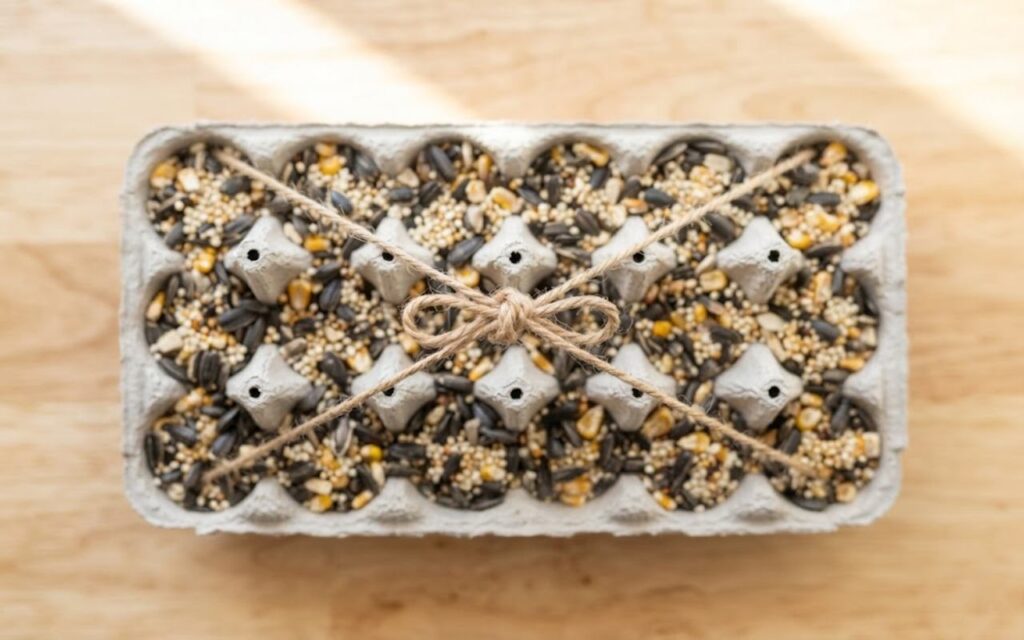
Building a functional DIY egg carton bird feeder provides an instant, zero-cost feeding station for agile backyard songbirds using everyday household recycling. Molded paper pulp cartons offer an ideal biodegradable platform that provides natural grip for tiny bird feet without requiring toxic adhesives or synthetic plastics.
When installed thoughtfully, this upcycled tray creates a safe feeding harbor for neighborhood visitors without generating landfill trash. Success depends on understanding avian mechanics, load limits, and moisture management so your temporary feeder remains clean, stable, and safe.
Quick-Glance Field Summary
This project repurposes an unbleached paper pulp egg carton into a balanced platform feeder stabilized with twig trusses and hung via natural twine. It offers an immediate, zero-waste supplemental station designed exclusively for lightweight clinging birds under 20 grams.
- Ideal Carton Material: Recycled, unbleached, non-glossy paper pulp (avoid polystyrene foam and clear PET plastic)
- Suspension Rigging: 4-ply natural jute twine or unbleached cotton string cut to 24-inch lengths
- Structural Crossbars: Two clean 8-inch fallen twigs or bamboo kitchen skewers to stop tray tipping
- Target Avian Visitors: Black-capped Chickadees, Tufted Titmice, Red-breasted Nuthatches, and American Goldfinches
- Drain Hole Aperture: 0.125-inch bottom perforations per individual egg cup
- Weather Protection: Natural canopy placement tucked deep inside dense spruce or cedar boughs
- Safety Clearance: Window placement either within 3 feet or beyond 30 feet to mitigate collision risks
Choosing the Right Materials for an Egg Carton Feeder
Build a safe egg carton feeder by gathering an unbleached molded pulp carton, biodegradable jute twine, a clean wooden skewer or yard twig, and non-toxic kitchen scissors while avoiding plastic, foam, staples, and chemical glues. This setup protects visiting songbirds from harsh synthetic chemicals.
Standard grey paper pulp cartons work best because their porous texture gives small songbirds reliable claw traction during landing. Never use expanded polystyrene foam cartons, as songbirds easily peck off toxic foam beads that can cause fatal crop impactions. Clear plastic cartons are equally problematic because smooth polyethylene does not provide adequate foot grip, causing small birds to slide and panic.
Gather clean materials from around your home to keep this project completely zero-cost. Inspect your carton to confirm it is free of dried egg yolk residue, which harbors harmful bacteria.
- One standard 12-egg molded paper pulp carton without printed exterior coatings
- Two 8-inch straight hardwood twigs gathered from your yard or two bamboo kitchen skewers
- Four 24-inch strands of untreated natural jute twine, sisal, or hemp string
- One pair of sharp scissors, an awl, or a nail to punch clean holes
Avoid using nylon monofilament fishing line or synthetic polyester threads for suspension. Reddit community members on r/backyardbirds frequently report that frayed synthetic fibers easily snag tiny avian toes, creating severe tangling hazards. Untreated jute or cotton breaks down naturally and poses zero environmental risk if dislodged by wind.
| Assembly Component | Tool-Free Engineering Specification | Moisture & Stability Benefit | Mandatory Setup Safety Rule |
|---|---|---|---|
| Pulp Cardboard Wells | Standard pressed-paper 12-cup egg carton with the lid trimmed off entirely. | Biodegradable textured cells provide natural foot traction for perching songbirds. | Never use styrofoam or glossy plastic cartons; birds will ingest chemical flakes if they pick at the borders. |
| 4-Point Suspension Cord | Thick jute twine or cotton string cut into two matching 24-inch strands. | Creates an evenly balanced horizontal plane that stops the tray from tipping when larger jays land. | Pierce corner holes at least 1/2-inch from the edges to prevent the weight of wet seeds from ripping out the cardboard. |
How to Punch Holes and Balance the Hanging Lines
Thread four equal lengths of natural twine through reinforced puncture holes at each corner of the carton base and knot them underneath a support stick to prevent the lightweight tray from tipping over in gusts. This balanced geometry ensures your feeder remains level when birds land.
Cut the lid and closure flap off the egg carton using your scissors, keeping only the twelve-cup base as your feeding tray. Punch one hole through the rim at each of the four outer corners, placing the opening roughly half an inch inside the edge to prevent tearing. Thread your twine strands downward through each hole from the top side.
In several r/birdwatching DIY discussions, backyard birders highlight a common design flaw where a single landing chickadee flips an unweighted paper tray, spilling all the food. You can easily solve this balance problem using two straight yard twigs threaded through the underside. Lay the twigs along the base from corner to corner, tying your hanging twine directly around the wood so the carton rests upon a rigid foundation.
- Trim off the carton lid and retention tabs along the factory hinge line.
- Pierce a single 0.125-inch hole half an inch inward from each of the four carton corners.
- Slide two yard twigs beneath the carton to form an external supporting cross-brace.
- Secure the corner strings around the twig ends beneath the base with firm square knots.
- Bring all four twine strands together twelve inches above the carton and tie them into an overhand knot.
Equalize the tension across all four strings before tightening the final suspension knot. An uneven suspension angle causes seed to spill quickly into the lowest corner. Suspending the feeder from a single centralized loop ensures that the tray swings smoothly in light winds without tilting abruptly.
Keeping Seed Dry and Preventing Mold Growth
Keep your seed dry by puncturing two drain holes per cup and hanging the paper pulp tray directly under a dense evergreen bough, which prevents toxic mold growth without requiring plastic weather domes. Adequate drainage stops paper pulp from disintegrating into mush after storms.
Molded paper pulp absorbs atmospheric moisture rapidly, which accelerates seed spoilage if left unmanaged. Punch two small pinholes directly into the bottom of every individual egg cup using a pushpin or finishing nail. These mechanical drainage holes allow incidental rainfall and morning condensation to escape downward before the seed grain swells.
Damp seed within unventilated containers promotes the rapid colonization of Aspergillus flavus, an environmental fungus that produces deadly aflatoxins. Ingesting aflatoxins damages avian livers and causes lethargy and severe immune suppression in songbirds. Never add petroleum jelly or vegetable oils to the carton rim to repel insects, as oils transfer to feathers and ruin natural insulation.
When to Retire Your Feeder
Critical Avian Safety Window: Because untreated paper pulp easily traps moisture, this feeder is strictly a temporary station. To protect small songbirds from deadly Aspergillus flavus mold and toxic aflatoxins, discard the entire tray directly into your backyard compost pile after 14 days of use or immediately following a heavy storm—whichever comes first.
- Poke two drainage perforations through the low point of every egg well.
- Hang the carton underneath dense conifer branches like pine, fir, or hemlock for rain deflection.
- Add only small amounts of seed that visiting birds can consume within two dry days.
- Throw out wet pulp trays after two or three continuous days of persistent storm exposure.
A field-tested alternative to buying expensive acrylic weather domes is positioning your tray deep inside an evergreen canopy. Dense needles from arborvitae or white pine create a natural umbrella that shields light paper feeders from heavy moisture. If your carton becomes waterlogged or shows black spots, immediately discard it into your home compost pile.
Choosing the Best Seed for Agile Clinging Birds
Fill the carton cups with high-oil black oil sunflower seeds, shelled sunflower chips, and nyjer seed, completely skipping millet and cracked corn to attract small, agile perching birds rather than heavy ground feeders. Dense, high-fat seeds supply vital calories without overloading the paper structure.
A standard paper pulp carton cannot support heavy birds like Northern Cardinals, Blue Jays, or Common Grackles. A 45-gram cardinal will flip or collapse an egg carton rim in seconds, spilling the contents to the ground. Design your food offerings specifically for lightweight specialists weighing under 15 grams, such as Black-capped Chickadees, Tufted Titmice, and American Goldfinches.
Avoid cheap commercial seed blends containing milo, red millet, wheat, and cracked corn. Forum contributors on localized wild bird boards note that clinging birds systematically fling cheap filler grains onto the soil while digging for sunflower kernels. This discarded seed accumulates underneath your feeder, where it attracts rodents and nocturnal scavengers.
- Black oil sunflower seeds provide high crude fat and thin shells easily cracked by chickadees.
- Shelled sunflower chips reduce waste and mess beneath the feeding station.
- Nyjer or thistle seeds offer concentrated lipids preferred by American Goldfinches and Pine Siskins.
- Halved unsalted raw peanuts attract nuthatches and titmice without weighing down the carton.
Scatter a single shallow layer of seed across the egg wells rather than mounding it over the dividers. Dividing the food keeps seed separated into clean, distinct compartments. This spacing lets multiple small birds snatch individual bites quickly without territorial squabbling.
Where to Hang the Feeder to Keep Birds Safe
Hang your feeder within three feet of a home window or tucked inside dense shrubbery at least five feet off the ground to eliminate fatal glass collisions and give feeding birds instant shelter from predators. Thoughtful placement keeps birds safe while maximizing feeding activity.
Window collision guidelines established by the Audubon Society confirm that bird feeders must sit either within three feet of exterior glass or beyond thirty feet away. Placing an egg carton feeder within two feet of a windowpane prevents birds from achieving top flight speed if startled, eliminating lethal impact forces. If placing the feeder farther out in the yard, choose a sheltered branch suspended five to six feet off the ground.
Keep the feeder roughly ten feet away from low ground cover where domestic cats could hide. Ten feet gives foraging chickadees and nuthatches enough reaction time to reach high branches when startled. Hanging the tray from a thin outer branch also deters heavy gray squirrels, as the flexible twig bends under their weight.
- Mount the carton within three feet of your window or greater than thirty feet out in your garden.
- Suspend the tray five to six feet above ground level to keep it out of reach of rodents.
- Position the feeder ten feet away from low brush piles used as ambush cover by cats.
- Ensure flight paths remain clear of hard brick walls or reflective window panes.
Because paper pulp feeders are lightweight and completely biodegradable, they serve as ideal seasonal observation stations. Watch your feeder across several days to confirm the suspension stays level through breezes. When the paper pulp finally begins to soften or wear out, simply discard it into your garden compost and build a fresh tray in minutes.