
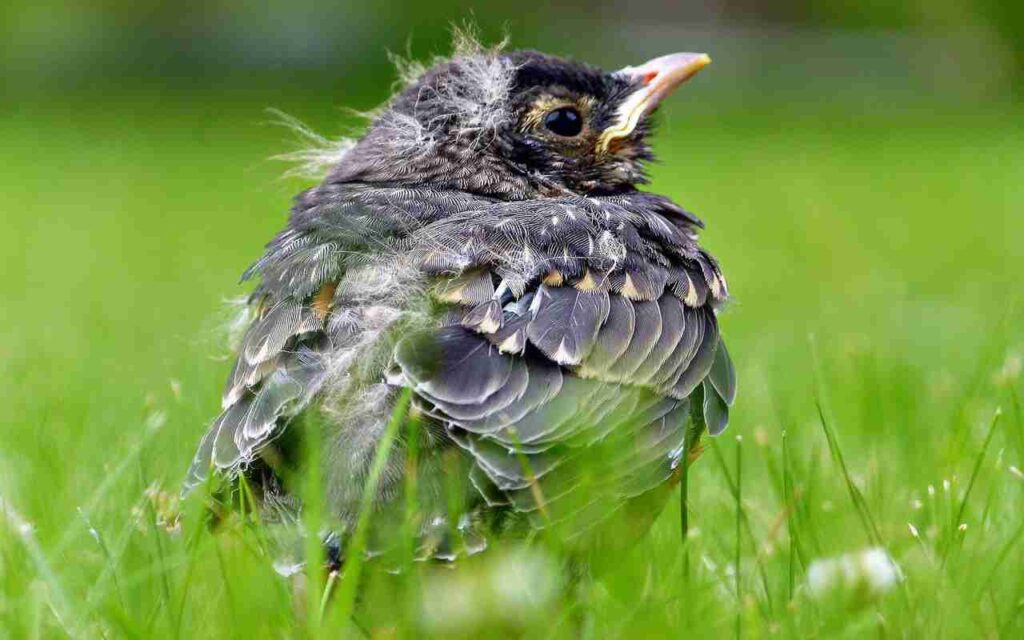
Learning how to protect young American robins in your garden starts by understanding the critical 3–5 day ground window that determines if a fledgling survives its first week outside the nest. Most young robins leave home at 13 days old before they can fly vertically. During this vulnerable ground-dwelling phase, they must hop awkwardly to strengthen their flight muscles through repetitive wing-flapping and short flutter-jumps. Rather than rescuing birds from this natural process, garden stewards should focus on neutralizing threats like predation, drowning, and mechanical injury.
Effective protection relies on habitat security rather than human interference. Parent robins stay nearby throughout this period, using acoustic contact calls and alarm signals to guide their young. While a robin’s spotted breast plumage and frozen behavior offer natural predator avoidance, these defenses often fail against domestic cats, deep water hazards, or lawn mowers. Strategic garden modifications dramatically increase survival probabilities during the 10–14 day window before flight independence. Your garden safety choices determine a fledgling’s fate 😯.
Quick Answer: Protect young American robins by keeping cats strictly indoors during June-July fledgling season, providing only shallow water (1-inch maximum depth), walking lawns before mowing to locate ground-dwelling fledglings, and planting dense low-growing native shrubs creating dash-and-hide cover from aerial predators.
Visual Guide: Protecting Young American Robins in Your Garden Step-by-Step
While understanding their habits is the first step, seeing the safety setup in action helps clarify exactly how to modify your landscape. Check out our whiteboard explainer video below for a deep dive into the habitat architecture and predator-proofing needed to protect young American robins during their critical fledgling phase.
Show Transcript:
0:00
Every spring, you might spot a clumsy baby robin hopping around on your lawn. Your first instinct is often to rush in and help, but sometimes that impulse can be wrong. In this guide, we’ll explore how to safely care for fledgling robins and give them the best chance of survival.
0:20
Here’s a startling fact: bird banding studies show only about 25% of young robins survive their first year. The most critical period is the first two weeks after leaving the nest. During this time, fledglings are highly vulnerable but mostly under parental supervision.
0:46
It’s crucial to distinguish between a fledgling and a nestling. Fledglings have feathers, can hop and flutter, and being on the ground is a normal part of development. Nestlings are mostly featherless and helpless. If a nestling is on the ground, immediate action is required.
1:32
Robins leave the nest around day 13, before they can fly properly. For the next week or two, they stay on the ground, hopping and fluttering while building strength. This is their natural “flight school” phase and not a sign of trouble.
1:52
If a fledgling is in immediate danger, like near a busy road or exposed to predators, it’s okay to intervene. Experts confirm that birds do not abandon their young because humans touch them. Parents recognize their chicks by sight and sound.
2:27
To check if a fledgling is not abandoned, listen for parent calls. Robins often communicate with soft “tuck” or “cook” sounds while delivering food. If you hear these calls, the fledgling is being monitored and fed by its parents.
2:46
For fledglings in danger zones, gently move them 10 to 20 feet under a dense bush for cover. Leave the area so parents can resume feeding. This simple action can prevent predation while keeping the chick in its natural environment.
3:09
Proactive habitat design is even more effective. The top threat to young robins is domestic cats. Even friendly, well-fed cats are instinctive hunters. During fledgling season in June and July, keep cats indoors or limit outdoor access to low-risk times like early morning or late evening.
3:58
Another hidden hazard is water. Any source deeper than 1 inch can be a drowning risk for young robins. Standard birdbaths with steep sides are unsafe. Use shallow plant saucers or add rocks to create shallow areas for safe drinking and bathing.
4:38
Lawnmowers also pose a danger. Fledglings instinctively freeze to avoid predators, making them vulnerable. Before mowing, take a few minutes to check your lawn for young birds. This habit prevents accidental fatalities.
5:01
Design your yard to provide cover. Dense shrubs, low-growing plants, or a brush pile of sticks and leaves offer safe hideouts. These spaces protect fledglings from predators like cats and hawks and give them room to grow. Avoid pesticides to ensure parents have access to insects for feeding.
5:42
Shift from reactive rescues to proactive stewardship. A simple plan saves more robins than frantic last-minute interventions. Here’s the action plan:
5:54
- Keep cats indoors during fledgling season.
- Make water sources safe, adhering to the 1-inch rule.
- Always check the lawn before mowing.
- Provide cover and safe hiding spots for fledglings.
6:20
By following these steps, you create a safe, supportive environment for robins in your yard. Even a small, simple change today—like adding cover or shallow water—can turn your garden into a true sanctuary for the next generation of robins.
Neutralizing the Number One Threat: The Cat-Free Garden
The Bacterial Reality: Pasteurella Infection Mortality
According to research published in PubMed on Pasteurella multocida infections following cat bites, approximately 60% of birds rescued alive from cat mouths died from Pasteurella multocida bacterial infection even when direct bite trauma appeared survivable. The bacteria colonizes cat oral cavities naturally, transferring to prey through bites, scratches, or even superficial contact with saliva-contaminated claws.
The infection progresses rapidly, typically proving fatal within 24-48 hours despite antibiotic treatment in many cases. Birds showing no visible wounds still face life-threatening infection risk if cat contact occurred. The bacterial transmission makes any cat encounter potentially lethal regardless of whether obvious injuries exist, fundamentally changing the risk calculation beyond simple predation mechanics.
This bacterial reality means protecting fledglings from cats requires absolute prevention rather than rescue-and-rehabilitate approaches. Once cat contact occurs, survival probability drops dramatically even with immediate professional veterinary intervention. The prevention-focused strategy proves far more effective than attempting post-exposure treatment.
The Ten-Day Rule: Peak Fledgling Window
Implement strict indoor-only restrictions for domestic cats during the 10-14 day peak fledgling period in your region, typically June through July in most North American areas. The restriction period corresponds with maximum fledgling ground-dwelling vulnerability before flight capability develops sufficiently for vertical escape to elevated perches beyond cat reach.
According to American Bird Conservancy research on cat predation, even well-fed pet cats hunt birds instinctively, with hunting behavior independent of hunger status. The predatory response triggers through movement and vocalization, making begging fledglings particularly vulnerable targets regardless of cat feeding schedules or nutritional status.
Mark calendar dates based on local robin nesting chronology. If robins begin nesting in your area in late April, eggs hatch approximately two weeks later (mid-May), nestlings fledge at 13-14 days (late May/early June), and ground-dwelling continues 10-14 days (through mid-June). Adjust cat restrictions to cover this calculated window plus safety margins accounting for multiple broods and individual variation.
Deterrent Strategies for Neighborhood Cats
Motion-activated sprinklers provide effective deterrence for free-roaming neighborhood cats entering your property. Position units covering likely approach routes including fence lines, gaps under gates, and connections to adjacent properties. The sudden water burst startles cats without harm, creating negative association with the protected area that discourages repeat intrusion attempts.
Scent barriers using citrus peels, coffee grounds, or commercial cat repellents create olfactory deterrence reinforcing physical exclusion. Refresh scent barriers every 3-4 days or after rain to maintain effectiveness. Concentrate applications around bird bath areas, brush piles, and dense groundcover where fledglings concentrate, creating protected sanctuary zones.
Communicate with neighbors about fledgling season timing, requesting voluntary cooperation keeping cats indoors during peak vulnerability periods. Many cat owners cooperate when understanding the specific timeframe and biological rationale, particularly when framed as temporary seasonal restriction rather than permanent confinement demand.
Hydration Safety: The 1-Inch Water Rule
Drowning Hazards: Deep Birdbath Death Traps
Standard birdbaths with 2-4 inch depth pose fatal drowning hazards for fledgling robins lacking coordination and strength to escape deep water after becoming waterlogged. Young robins attracted to water for drinking or bathing enter basins, become saturated, and drown when unable to climb steep smooth sides to exit. The combination of poor motor skills, incomplete feather waterproofing, and panic responses creates deadly outcomes even in seemingly shallow containers.
Fledgling wing-flapping actually accelerates water saturation rather than facilitating escape, with panicked movements forcing water deeper into plumage. The saturated feathers become too heavy for weak flight muscles to lift, trapping birds in water they initially entered safely. Death occurs through exhaustion and hypothermia within minutes once waterlogging prevents escape.
The Safe Setup: Maximum 1-Inch Depth
Replace deep birdbaths with shallow alternatives during fledgling season, using plant saucers, terracotta pot bases, or purpose-built shallow baths with maximum 1-inch depth. The graduated slope from 0.5-inch edges to 1-inch center provides safe access for drinking and bathing while preventing waterlogging and drowning risk.
Modify existing deep birdbaths by adding large flat rocks creating shallow zones and escape ramps throughout the basin. Position rocks to provide stable platforms at multiple depths, creating stair-step effect allowing birds to wade progressively deeper while maintaining easy exit routes. The rock platforms double as perches where fledglings can stand while drinking without entering water.
Inspect water features daily during fledgling season, removing debris and checking that rocks remain stable. Even brief drowning incidents prove fatal before intervention possible, making prevention through proper depth control essential rather than relying on observation and rescue.

Hydration Myth: Protection vs. Force-Feeding
Protection means providing safe environment, not force-feeding water to fledglings. Attempting to give water directly to birds causes aspiration pneumonia when liquid enters respiratory system rather than digestive tract. The well-intentioned intervention often proves more dangerous than the perceived dehydration it aimed to address.
Genuinely dehydrated fledglings require professional wildlife rehabilitation providing proper hydration under veterinary supervision using specialized techniques preventing aspiration. Untrained individuals attempting water administration frequently cause fatal complications, making the hands-off approach safer even when dehydration appears severe.
Understanding Fledgling Behavior: Sight vs. Rescue
The Hop-and-Flap Phase: Strengthening Flight Muscles While Flightless
According to Journey North robin fledgling documentation, baby robins jump from their nest when they are about 13 days old, and after leaving the nest it takes another 10-15 days for babies to become strong fliers and independent birds. The intervening period involves intensive muscle development through repetitive hopping, wing-flapping, and short flutter-jumps that gradually increase in distance and altitude.
Fledgling robins appear awkward and vulnerable during ground-dwelling phases, hopping erratically with frequent rests, producing begging calls that advertise their locations to predators and parents alike. The spotted breast plumage (lacking the red coloration of adults) provides camouflage when fledglings freeze in response to parental alarm calls. The tail appears stubby compared to adults, and wing feathers remain incompletely grown, creating overall disheveled appearance.
Normal fledgling behavior includes spending extended periods motionless in cover between feeding sessions, making short hopping movements along ground or through low vegetation, and responding to parental calls by moving toward feeding parents or away from detected threats. Fledglings that appear healthy (alert, responsive, moving when stimulated) should be left alone even when appearing vulnerable, as parental care continues throughout the ground-dwelling phase.
Decoding Parental Calls: Cluck and Alarm Signals
Parent robins maintain acoustic contact with fledglings through distinct vocalizations signaling feeding, danger, or location. According to Cornell Lab documentation on robin vocalizations, American robins often make a mumbled cuck or tuk to communicate with each other. These contact calls allow separated fledglings and parents to relocate each other after disturbances.
Alarm calls signal detected predators, with different vocalizations indicating ground threats versus aerial dangers. The sharp, repeated tuk or peek calls warn of terrestrial predators (cats, dogs, humans), while high-pitched seet calls indicate overhead raptors. Fledglings respond to alarm calls by freezing and seeking cover, demonstrating learned anti-predator behavior developing during the ground phase.
When observing a grounded fledgling, listen and watch for parent robins nearby. Adult robins typically remain within 50-100 feet of fledglings, perching in trees or on structures while monitoring and periodically feeding young birds. Hearing tuk calls or observing adult robins in the vicinity confirms ongoing parental care, indicating the fledgling does not require human intervention despite appearing abandoned.
Debunking the Human Scent Myth
According to Journey North research on robin parental recognition, robins identify their babies by sight and sound, not by smell. The persistent myth that human scent causes parental abandonment has no biological basis in songbird species including robins.
Birds possess limited olfactory capability compared to mammals, relying primarily on visual and acoustic cues for offspring recognition. Parent robins identify fledglings through appearance (spotted breast plumage, size, shape) and vocalizations (distinctive begging calls learned during nestling phase). Human handling leaves no detectable scent interfering with parental recognition or care.
The practical implication allows moving exposed fledglings to safer microhabitats without abandonment risk. If a fledgling sits in open lawn area vulnerable to cats or lawn equipment, gently move it 10-20 feet to nearby shrubs, dense groundcover, or under deck structures providing cover. The parents will locate the fledgling through its begging calls and continue feeding at the new location. Use minimal handling (10-15 seconds maximum), place the bird in secure cover, and withdraw to allow parents to resume care.
Landscape Architecture for Fledgling Safety
Strategic Ground Cover: Dense Low-Growing Natives
According to habitat research on fledgling refuge requirements, young robins need dense vegetation providing concealment from aerial predators while allowing ground-level movement for parents accessing fledglings during feeding. Native shrubs growing 2-4 feet tall with branching beginning near ground level create ideal dash-and-hide protection.
Serviceberry (Amelanchier species) provides multi-season value through spring flowers, June berry production coinciding with fledgling season, and dense branching structure creating protected microhabitats. The native shrub attracts insects fledglings and parents consume while simultaneously providing fruit for older fledglings transitioning toward independence.
Juniper species (Juniperus horizontalis, J. virginiana) create year-round evergreen cover with extremely dense branching impenetrable to hawks and crows attempting aerial strikes. Low-growing horizontal junipers (6-18 inches height) provide ground-level concealment while allowing fledgling movement underneath protective canopy without requiring vertical flight capability.
The Intentional Brush Pile: Superior Fortress Design
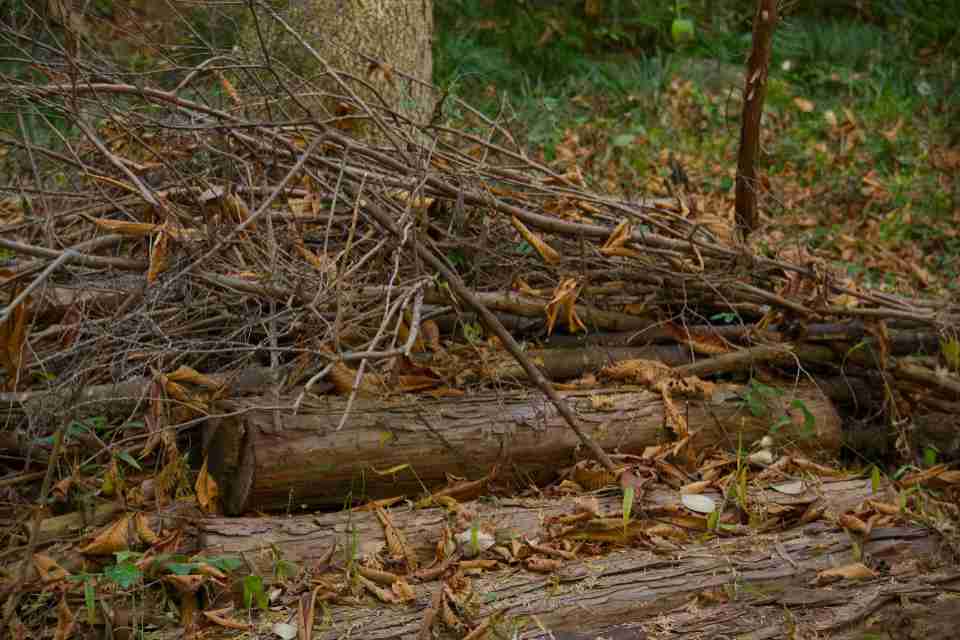
Intentional brush piles constructed from yard waste provide instant, cost-free fledgling fortresses superior to planted alternatives for immediate protection. A properly constructed pile creates complex three-dimensional structure impenetrable to cats and aerial predators while allowing fledgling access through small ground-level openings.
Construction begins with base layer of larger branches (2-4 inches diameter, 4-6 feet length) arranged in crisscross pattern creating air spaces and structural foundation preventing collapse. Add progressively smaller branches in subsequent layers, finishing with fine twigs and dead plant stems creating dense exterior while maintaining interior space for fledgling refuge.
Final dimensions of 4-6 feet diameter and 3-4 feet height provide adequate capacity for multiple fledglings simultaneously. Position piles in yard corners, along property lines, or under existing trees where they blend with landscape rather than dominating central lawn areas, maintaining aesthetic while providing strategic refuges distributed across property.
Mower Protocol: Walk Before You Mow
Lawn mowing during June-July fledgling season creates collision and injury risks for ground-dwelling young robins. Fledglings freeze when startled rather than fleeing, making them invisible in tall grass until mower blades strike them. The camouflage plumage evolved for predator avoidance becomes deadly when triggering freezing response to mechanical threats.
Walk entire lawn area before each mowing session, scanning carefully for motionless fledglings hidden in grass. Check areas near shrubs, under trees, and along fence lines where fledglings seek cover. Birds detected during pre-mowing inspection should be gently moved to dense groundcover well away from mowing path, allowing parents to relocate them through begging calls after mowing completes.
Consider delaying mowing 2-3 weeks during peak fledgling season, allowing grass to grow taller providing enhanced cover while eliminating machinery collision risks entirely. The temporary aesthetic compromise yields substantial survival benefits for vulnerable young robins navigating the critical ground-dwelling phase.
While habitat architecture like brush piles protects birds from hawks, sometimes a fledgling lands in immediate danger, such as a hot driveway or in the path of a mower. In these cases, use our Five-Foot Relocation Rule from our care guide to move them safely without separating the family.
Nest Defense: Protecting Pre-Fledglings
Ledge Stability: Securing At-Risk Nests
Robin nests built on building ledges, light fixtures, or in gutters sometimes suffer structural instability threatening eggs or nestlings with falls before fledging age. Intervention to stabilize at-risk nests must balance structural support with minimal disruption avoiding parental abandonment triggered by excessive human interference.
For nests showing signs of slipping or tipping, create support brackets using wire, string, or small wood pieces attached to building structure rather than nest materials themselves. Position supports underneath nest providing uplift without touching the mud-and-grass construction parents built. Brief disturbance under 5 minutes during stabilization rarely triggers abandonment if done before egg-laying completes or after incubation solidly establishes.
Avoid repositioning nests already containing eggs or young nestlings. Parent robins select nest locations based on specific site characteristics including weather protection, predator access difficulty, and foraging area proximity. Moving nests disrupts these carefully evaluated parameters, often resulting in abandonment despite well-intentioned rescue efforts.
Window Strike Prevention: UV Decals Near Nests
Newly fledged robins making first flights often strike windows, perceiving reflections of sky, trees, or vegetation as flight paths. The collisions cause fatal head trauma, broken necks, or concussions even when birds initially appear to recover. Preventing strikes during fledgling flight-learning protects young robins during this vulnerable developmental window.
Apply UV-reflective decals, tape, or markers to window exteriors in patterns covering glass surfaces with visual cues spaced 2-4 inches apart. According to research on window strike prevention, the decals break up reflective surface birds perceive as open flight paths, making glass visible as barrier requiring avoidance. External application proves more effective than internal decals birds may not detect through glass.
Temporary solutions like soap streaks, tempera paint patterns, or Post-it notes arranged in dense grid patterns provide immediate protection during peak fledgling flight-learning periods without permanent aesthetic impact. Remove temporary markers after fledgling season ends (typically late July) if preferred for appearance while maintaining permanent solutions near chronic strike locations.

Troubleshooting: Distinguishing Safety from Emergency
When Protection Succeeds: Normal Fledgling Behavior
Healthy fledglings appear alert, responsive to stimuli, and capable of hopping and wing-flapping even when flight remains incompetent. Birds showing these characteristics require protection from environmental threats but not rescue from parents who continue care throughout ground-dwelling phase.
Normal behavior includes spending extended periods motionless in cover between feeding sessions, making short hopping movements along ground or through low vegetation, and responding to parental calls by moving toward feeding adults or away from detected threats. The awkward, vulnerable appearance represents developmental stage rather than emergency requiring human intervention.
When Protection Fails: Genuine Distress Indicators
True distress requiring professional intervention includes inability to stand or right itself when placed upright, complete non-responsiveness to touch or sound, visible injuries including bleeding or broken limbs, eyes remaining closed when stimulated, and absence of any vocalizations including begging calls that indicate neurological function.
Dehydration manifests through sunken eyes, tacky or dry mouth membranes, lethargy, and skin remaining tented when gently pinched rather than returning to normal position. Severely dehydrated fledglings require immediate professional rehydration, as improper fluid administration by untrained individuals causes aspiration pneumonia proving more dangerous than original dehydration.
The Hand-Off Rule: Licensed Rehabilitators Required
Genuinely orphaned, injured, or sick fledglings require professional wildlife rehabilitation providing medical treatment, proper nutrition, and eventual release preparation that untrained individuals cannot safely provide. Federal and state laws prohibit possession of migratory birds including robins except by licensed rehabilitators, making professional transfer legally required regardless of good intentions.
Locate licensed wildlife rehabilitators through state wildlife agency websites, veterinary clinics, or Animal Help Now directory providing zip-code-based searches for nearest facilities accepting songbirds. Call ahead before transporting birds, as facilities sometimes reach capacity during peak fledgling season and may redirect to alternative locations.
Prepare birds for transport by placing them in cardboard box with ventilation holes, lined with soft cloth or paper towels, kept in quiet darkened location reducing stress during transport. Avoid offering food or water without rehabilitator instruction, as improper feeding or hydration attempts frequently cause complications requiring additional treatment.
FAQ: Backyard Protection Questions
Do Robins Attack Reflections?
Male robins attack windows during the breeding season (March through July), perceiving their reflections as territorial intruders requiring aggressive response. According to research on robin territorial behavior, territoriality intensifies during peak breeding periods when males defend nesting areas against perceived rivals.
The aggressive display involves repeated flying at windows, pecking glass, and calling aggressively at the reflected rival. The behavior stems from hormonal territoriality rather than confusion or distress, explaining why it occurs consistently near active nests during breeding season then ceases after nesting completes.
UV-reflective window decals eliminate the mirror-like reflection showing robins their own image, removing the visual stimulus triggering territorial response. Apply decals in patterns breaking up reflective surface, particularly on windows near known nest sites where territorial males encounter their reflections most frequently.
Will Parents Return If I Am in the Garden?
Parent robins tolerate significant human presence when feeding and protecting fledglings, continuing care despite routine yard activities at reasonable distances. According to research on robin parental behavior, the 50-foot observation rule provides guideline for maintaining sufficient distance allowing parents to approach fledglings without perceiving human presence as predator threat.
Watching from windows, conducting normal gardening at 30-50 foot distances, or walking paths away from fledgling hiding spots rarely disrupts parental care. Parents perceive predictable human movement patterns as environmental features rather than hunting behavior, habituating to regular activities while remaining vigilant for direct approaches toward fledglings.
Direct staring, approaching closer than 15-20 feet, or remaining motionless near fledglings triggers alarm responses including alarm calling and feeding delays. Conduct observation using peripheral vision rather than direct staring, maintain normal movement patterns, and provide parents clear flight paths to fledgling locations allowing care continuation despite human presence in shared garden space.
At-a-Glance: The American Robin Garden Safety Checklist
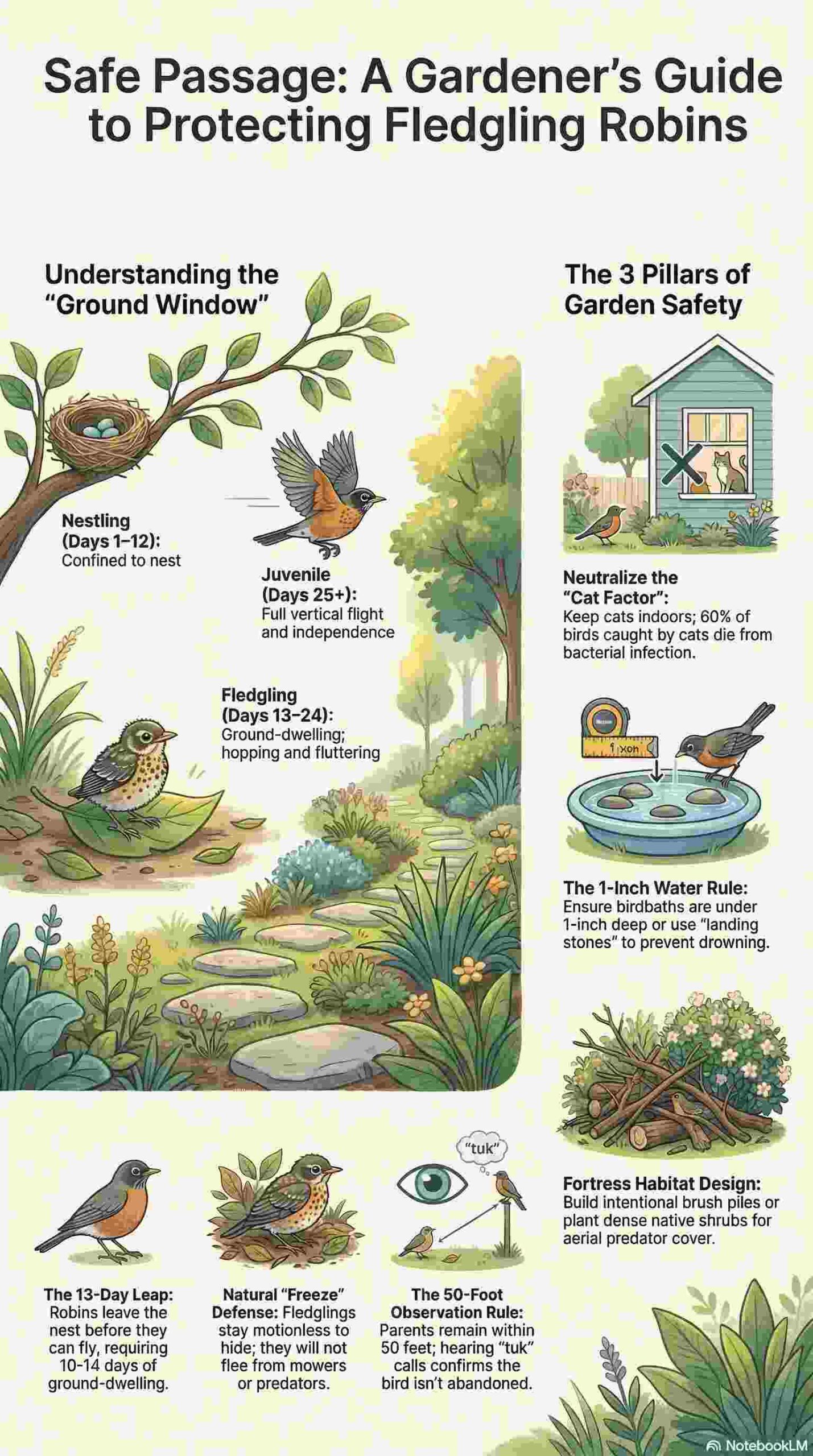
Creating a safe sanctuary is easier when you can see the entire habitat architecture in one place. Use our comprehensive infographic below as a quick-reference guide for 1-inch water depths, intentional brush piles, and the critical ‘Safe Move’ protocol to ensure every fledgling in your garden survives its first week on the ground.
Conclusion: Garden Stewardship for Fledgling Success
Protecting young American robins requires understanding that habitat security determines survival more than rescue intervention. The prevention-focused approach addresses primary mortality factors through strategic garden modifications rather than attempting to substitute for parental care that continues throughout the ground-dwelling phase.
The four-pillar protection strategy encompasses cat exclusion during 10-14 day peak vulnerability, shallow water provision preventing drowning, mowing protocol avoiding mechanical injury, and dense cover creation providing refuge from aerial predators. These evidence-based interventions neutralize preventable mortality sources while respecting natural developmental processes allowing robin biology to proceed unimpeded.
Success manifests through fledglings successfully navigating the vulnerable ground phase, developing flight capability, and achieving independence under parental guidance. The garden stewardship role provides safety infrastructure supporting this natural progression rather than interfering with parent-offspring relationships evolved over millions of years to maximize survival through the critical post-fledging window.
For additional information on American robin ecology and backyard bird conservation, explore guides on attracting American robins to your backyard, understanding seasonal robin diet shifts, and interpreting robin songs and calls. Learning about bird-friendly garden design principles and immediate care for injured fledglings provides comprehensive context for supporting complete avian life cycles from nesting through independence.