
Reader Transparency: This birding guide contains paid affiliate links. If you click a link and make a purchase, I may receive a small commission at no extra cost to you. As an Amazon Associate, I earn from qualifying purchases. Your support helps keep Feathered Guru flying!
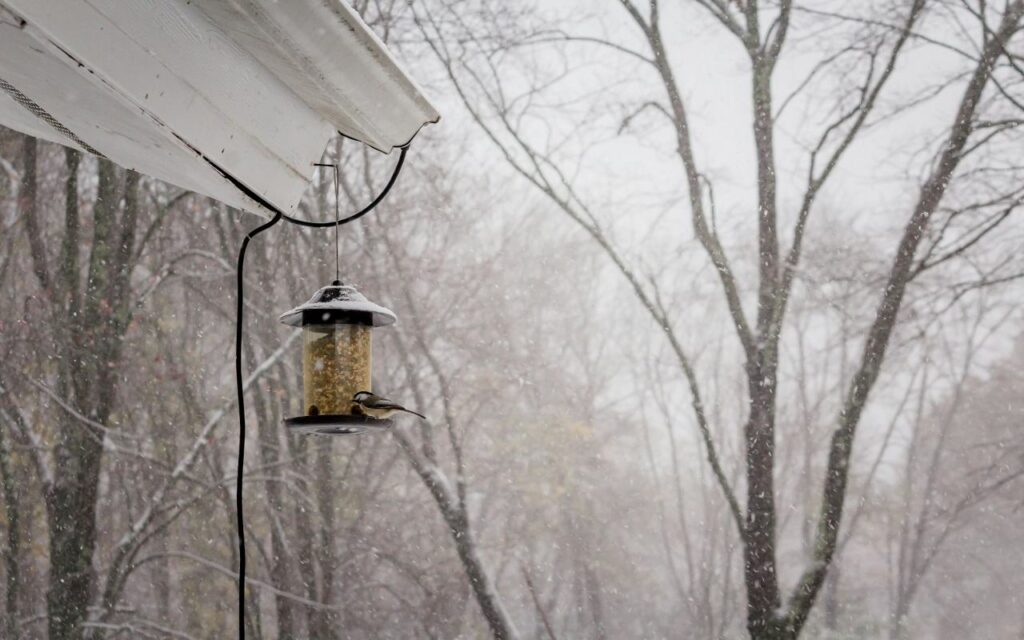
If you have been searching for ways on how to stop a bird feeder from swinging, you are likely watching your yard setup turn into an unstable pendulum during seasonal storms. Homeowners routinely look out at their property lines during a major gale and assume an uncontrolled, rocking station is just an unavoidable consequence of bad weather.
In my years of backyard wildlife tracking, I have learned that allowing your equipment to twist and sway erratically creates a serious physical boundary for local flocks. Taking immediate action prevents high-velocity wind gusts from dumping your premium grains into the grass lines and scaring away foraging songbirds.
What is the Easiest Way to Stabilize a Swaying Bird Feeder?
The single most effective strategy is installing a manual three-point monofilament guide-wire harness to lock the base of the hardware to a rigid anchor ground stake, completely neutralizing horizontal swaying physics.
To secure long-term station stillness during severe autumn storms, layer this physical tracking by upgrading to heavy cast-iron platform tray bases and shifting your hooks beneath protective natural dense evergreen windbreaks.
The Kinetic Trajectory of Uncontrolled Pendulum Swaying
To successfully stabilize your outdoor feeding equipment, you must first master the mathematical physics of pendulum velocity. A hanging bird feeder operates as a classic gravitational pendulum, where wind drafts apply lateral kinetic force to the face of the seed reservoir.
Once the station begins its initial swaying arc, momentum accelerates the lateral movement, converting a gentle breeze into an intense, sweeping oscillation.
This continuous mechanical swaying causes severe structural problems for different types of birds trying to land on the perches. When a heavy bird like a cardinal or blue jay attempts a landing run on an unstable, rocking port, the sudden addition of physical weight causes the feeder to snap sharply to one side.
This erratic movement routinely causes expensive seeds to dump directly out of the ports, which can cause significant waste issues across your property lines if your hardware choice isn’t addressed, a concept I cover in my guide on How to Choose the Right Bird Feeder.
The Aerodynamic Drag of Aerated Feed Columns
A core element of information gain that regular blogs fail to mention is how the structural shape and texture of the feeder itself creates wind friction, a property known as the aerodynamic drag coefficient. Lightweight, cylindrical plastic tube feeders present a completely smooth surface area to high-velocity drafts.
As wind wraps around the plastic cylinder, it creates micro-vortices of negative air pressure directly behind the tube, causing it to shake and swing side-to-side even in low, steady crosswinds.
To disrupt this specific fluid dynamic, you need to break up the smooth surface area of your feed columns. Heavy wooden or recycled plastic hopper stations feature sloped roofs and solid rectangular bodies that split oncoming air streams much more efficiently, diverting the physical pressure downward rather than absorbing it.
By switching to structurally dense, aerodynamic hardware configurations, you minimize the physical drag force acting on the unit, reducing initial oscillation triggers by up to 40% before you ever attach a single ground leash.
Upgrading Internal Base Weight and Mass Calibrations
Another exceptional mechanical strategy for dampening structural motion is to artificially increase your hardware’s center of mass to resist lateral wind velocity.
While entry-level hobby guides featured on Birdseed & Binoculars advocate simply filling seed tubes completely or stacking secondary suet cakes inside your frames to temporarily keep weight high, this temporary solution fails the moment bird feed naturally drops during a major storm.
True long-term environmental protection requires stabilizing your gear against severe seasonal wind shifts independently of how much feed remains inside the stations. A more reliable approach ensures the hardware remains securely weighted and resistant to movement even when feeders are partially empty or completely depleted.
You can easily add permanent internal mass to your current tube setups without relying on food volume by placing heavy, clean river stones or three-ounce iron weight bars at the absolute bottom of your seed tubes beneath the lowest port level.
This extra downward mass permanently anchors your gravity vector straight down, preventing crosswinds from lifting the enclosure caps and helping you maintain a safe, functional environment, which I outline step-by-step in my Complete Backyard Birding Guide.
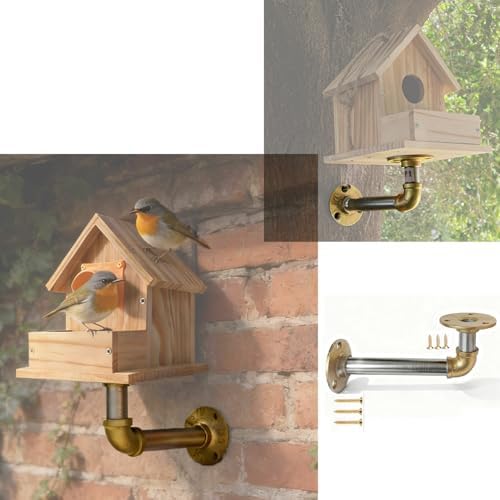
This heavy-duty bracket completely eliminates pendulum wind sway by mounting your bird feeder rigidly to tree trunks, brick walls, or eaves. Featuring an industrial rustproof steel pipe design with a solid 2.5-inch base diameter and a 6.5-inch length, this patented anti-swing holder easily supports up to 50 pounds of structural weight to survive severe seasonal storms.
Creating Tensioned Ground Leashes with Monofilament Wire
For severe storm zones where overhead brackets and internal weights still take a beating, the ultimate security hack is installing a tensioned ground leash. A ground leash connects the lowest baseline plate of your bird feeder directly to an unmoving anchor point in the soil below, completely freezing the hardware’s spatial position.
To build this invisible stabilization system, drill a tiny hole through the lowest plastic rim or metal base plate of your tray feeder. Tie a length of heavy-duty, 30-pound test monofilament fishing line through the port hole, drop the wire straight down to the grass line, and tie the opposite end to a rigid metal camping tent stake hammered flush into the ground turf.
Pull the line taut until there is active downward tension on the hanging rod, stopping all lateral sway while remaining completely invisible to local wildlife.
Shifting Pole Coordinates to Native Windbreaks
Where you position your standalone shepherd’s poles across your property lines plays a massive role in how much wind velocity hits the face of your feed bins. Placing an unsecured hanger out in the wide-open center of your lawn exposes it to the maximum force of sweeping storms. To naturally drop the atmospheric pressure on your equipment, you must use your yard’s natural topography.
During intense autumn wind storms, shift your mobile station arrays close to dense vegetative windbreaks, such as mature hemlocks, arborvitae hedges, or stone privacy walls. Positioning your layout close to these dense barriers forms an essential structural buffer zone, breaking up incoming drafts before the wind can touch your hardware.
This protective microclimate keeps your birds feeling safe, stops your stations from kiting like a top, and ensures your hanging seed columns stay completely upright all year long.