
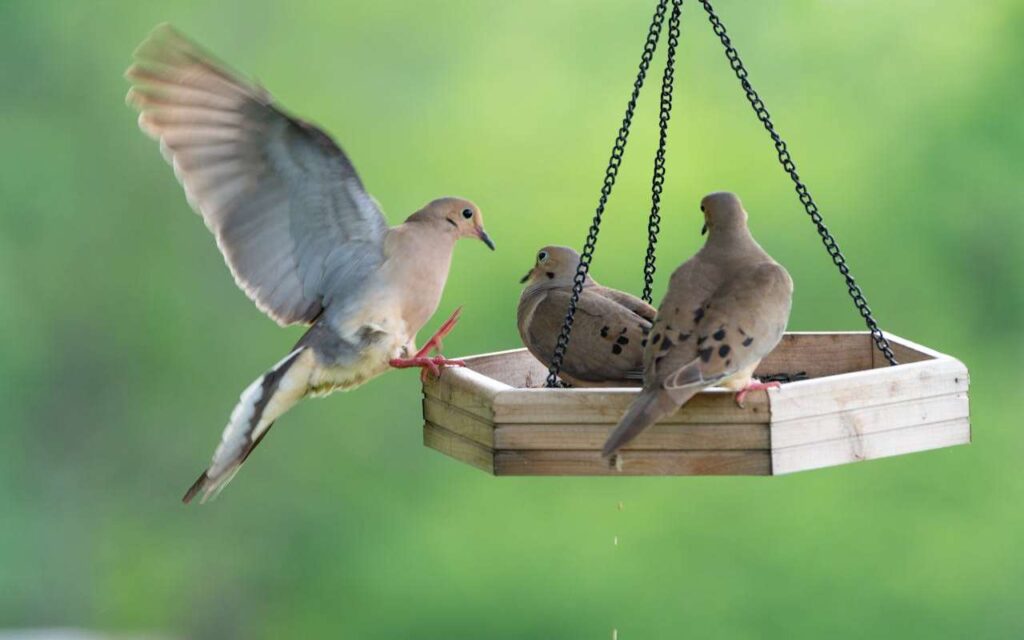
You know that soft, melancholic cooing that drifts through the neighborhood on summer mornings? That’s the mourning dove, one of the most recognizable bird sounds in North America. If you love that sound and want to hear it right in your own backyard, you’re in luck. If you’re wondering how to attract mourning doves to your backyard, it isn’t complicated, and once these gentle birds realize your yard has what they need, they often stick around for the long haul. and once these gentle birds realize your yard has what they need, they often stick around for the long haul.
I’ve had mourning doves nesting in my backyard for the past five years 🙂. Every spring, a pair returns to the same precarious stick nest tucked under my patio eaves, and by summer, I’m sipping my morning coffee while their haunting calls float by. It’s become part of my routine, and honestly, I wouldn’t give it up for anything. If you want mourning doves stopping by your yard regularly, I’ll show you exactly what to do.
- Feed favorite seeds: millet, safflower, sunflower, cracked corn.
- Use low feeders or scatter seeds on bare ground.
- Provide clean, shallow water; moving or heated baths help.
- Plant dense shrubs and native seed-producing plants for shelter.
- Install simple elevated platforms for safe nesting.
- Keep cats indoors and reduce predator perches.
- Limit pesticides and tolerate some “weeds” for natural food.
- Be patient: once found, doves return regularly.
Understanding Mourning Doves: Why They’re Unique
Show Transcript
0:00
You know that sound, that soft, kind of mournful cooing you hear on a quiet morning? That’s the Mourning Dove. And if you’ve ever thought, “Man, I wish I heard that more often,” then you’re in the right place. I’m going to show you exactly how to make your backyard their favorite spot.
0:16
I’m speaking from experience here. For five years in a row, the same pair has shown up right under my patio eaves. That sound has become the soundtrack to my spring and summer, and I want you to have that too.
0:32
So what’s the secret? What makes a yard irresistible to these gentle, loyal birds? The good news is it’s not complicated. You don’t need fancy gear, it’s really just about understanding what they’re looking for: a little food, a little safety. Provide that, and they’ll keep coming back.
0:51
Think of this as your blueprint for creating the perfect dove habitat. We’ll go step by step, what to feed them, how to make them feel safe, and how to give them a place to call home.
1:06
Here’s the game plan: we’ll go over their favorite seeds, why low feeders are best, the kind of water source they love, and why good cover is so important. We’ll even talk about nesting spots and how to protect them from predators. And yes, patience is part of it, but it’s worth it.
1:22
Everything starts with one number: 99%. That’s how much of a Mourning Dove’s diet is just seeds. They’re total seed-eating specialists. If you understand that one fact, you’re already most of the way there.
1:38
Because they’re so focused on seeds, they’re ground feeders. But here’s something most people miss, unlike finches that crack open seeds, doves swallow them whole. That small detail changes how you should feed them.
1:55
So knowing they eat on the ground and swallow seeds whole, let’s talk about setting the perfect dinner table. White millet is their absolute favorite. If you only offer one seed, make it that. Safflower is another great choice because starlings usually leave it alone. Cracked corn and sunflower hearts are also excellent options.
2:18
These birds eat 12 to 20 percent of their body weight every day, so they’ll definitely appreciate a full feeder.
2:30
When it comes to feeders, forget hanging tube feeders, Mourning Doves aren’t built for that kind of acrobatics. They like flat, low setups like platform feeders or trays. Honestly, even scattering seed on the ground works great.
2:46
Here’s a big tip: where you place the feeder matters as much as the type. Doves are cautious. Set it near shrubs or a tree so they have somewhere to fly if a hawk comes by. If it’s out in the open, they’ll feel too exposed and nervous.
3:06
Once food is taken care of, let’s talk about keeping them around. If you want them to raise a family, they’ll need a safe place to nest. Mourning Doves build simple, flimsy nests, sometimes just a few twigs. You can help by mounting an 8×8-inch board under an eave or sturdy branch to give them a solid base.
3:38
Planting helps too. Try seed-producing plants like sunflowers or coneflowers for natural food sources, and dense shrubs like juniper or arborvitae for cover. The more hiding spots, the safer they’ll feel.
3:58
Next, water. A clean bird bath is a must. Doves prefer it shallow, only two or three inches deep. A small solar fountain or dripper really helps because moving water catches their attention.
4:21
Just like feeders, place the bath where they can see danger coming but still feel secure. And if you live somewhere cold, a heated bird bath in winter makes a huge difference.
4:31
Now, let’s talk about safety. What are the biggest threats to Mourning Doves in a typical backyard? Two things: cats and hawks.
4:45
The most important thing you can do is keep cats indoors. It’s a huge help for all ground-feeding birds. For hawks, trim low branches they might use as perches and keep those dense shrubs handy so doves can escape quickly.
5:01
When you finally start hearing that soft coo while you drink your morning coffee, remember, it’s not a sad sound. It’s the male dove calling for a mate and marking his territory. It’s the sound of peace, of feeling safe, of home.
5:25
That’s what this is all about: creating a small pocket of calm in your own backyard. It doesn’t take much. Scatter some millet, set out a shallow dish of water, and plant a few good bushes.
5:37
Do that, and these gentle, peaceful birds will find you, and make your mornings a little quieter and a lot more beautiful.
All from Feathered Guru.
Before attracting mourning doves (Zenaida macroura), it helps to understand what makes them different from other backyard visitors. Unlike songbirds that feast on insects during breeding season, mourning doves eat almost exclusively seeds. We’re talking 99% of their diet comes from grains and seeds, they’re some of the most seed-dependent birds in North America.
According to the Cornell Lab of Ornithology, mourning doves are granivores, preferring small, easily digestible seeds they can swallow whole without cracking. They don’t dig or scratch like chickens; instead, they pick up visible seeds from the ground and eat what’s readily available. This feeding behavior directly influences how you attract them and what feeders work best.
Mourning doves are also the most frequently hunted bird species in North America, which means they’ve developed keen awareness of potential danger. They’re skittish compared to chickadees or finches, often taking off at the slightest disturbance. Understanding this nervousness helps you create spaces where they feel safe enough to settle in and eat.
Physically, mourning doves are graceful, slender birds about 11 inches long with distinctive long, pointed tails and small heads. According to Audubon, their soft, drawn-out calls sound like laments (hence the name), and when they take off, their wings make a sharp whistling sound. That combination of appearance and sound makes them unforgettable once you start paying attention.
What Do Mourning Doves Eat: Creating the Perfect Menu
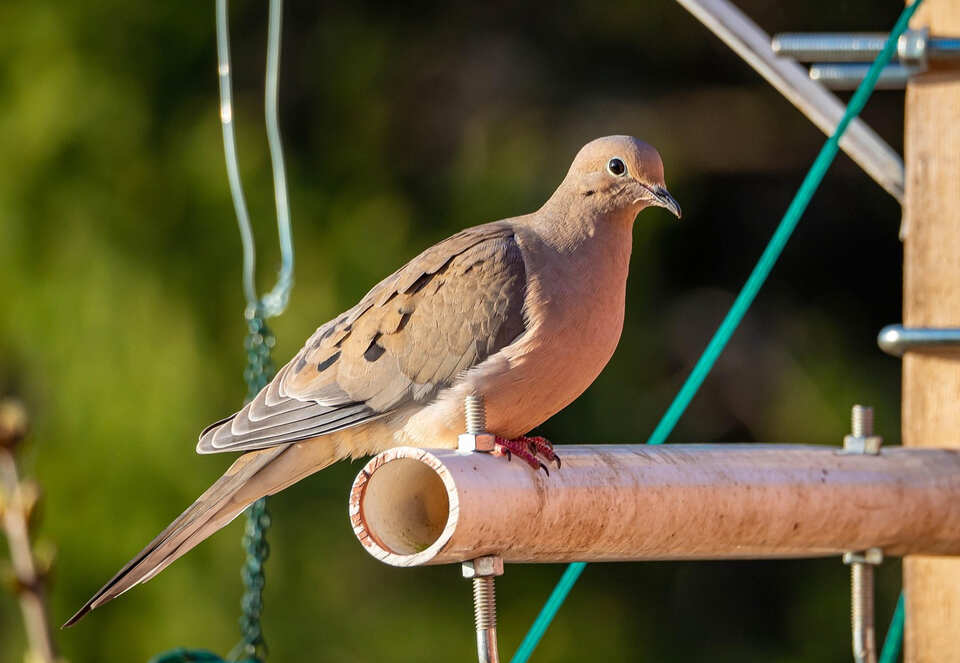
Understanding what do mourning doves eat is essential for attracting them successfully. These birds are specialists in seed consumption, and certain seeds bring them back repeatedly.
Millet, particularly white millet, is the gold standard. Mourning doves adore it, and according to research from Birdfact, doveweed (also called Tropic Croton) is another seed that attracts doves to the same feeding spots over and over again. If you plant doveweed specifically to attract doves, you’ll have a natural food source that keeps them coming back seasonally.
Safflower seeds are excellent choices that also discourage unwanted pest birds like starlings and grackles. Mourning doves absolutely love them, and the bitterish taste that repels other species doesn’t bother doves at all. Sunflower seeds, particularly black oil sunflower, are also reliable attractants. According to Wikipedia, doves show preference for rapeseed, corn, millet, safflower, and sunflower seeds.
Cracked corn works exceptionally well, especially mixed with millet. Mourning doves eat roughly 12 to 20 percent of their body weight daily, so offering hearty seeds like corn provides the substantial meals they need. Wheat, barley, and other grains appeal to doves, though they’re not as universally attractive as millet or safflower.
Pine nuts, sweetgum seeds, and pokeberry seeds are natural favorites when available. If you’re planting specifically to attract mourning doves, these native plant options create long-term food sources that support them through seasons. Research from Garden Bird Feeder notes that doves prefer small, easily digestible seeds, so stick with seed sizes they can swallow whole.
One crucial note: doves occasionally eat berries or snails, but seeds comprise about 99% of their diet. They’re picky in their simplicity. Don’t overthink it, stick to quality seeds, and doves will visit regularly.
Do Mourning Doves Come to Feeders: Attracting Them Successfully
The straightforward answer: yes, do mourning doves come to feeders, but they have specific preferences about feeder types and placement that differ from most backyard birds.
Mourning doves are ground feeders. Unlike finches, chickadees, or woodpeckers that work elevated feeders, doves prefer eating from the ground or from platform feeders positioned close to earth level. They’ll sometimes perch on plants and eat from there, but their natural feeding behavior involves scouring the ground for scattered seeds.
According to Wild Bird Unlimited, doves prefer open-style feeders with wide ledges positioned close to the ground. Platform feeders or tray feeders work excellently. Simply scatter millet, safflower, or cracked corn directly on the ground under your feeders and watch doves arrive within days. IMO, this is the simplest approach: spread seeds on bare ground, step back, and let nature do its thing.
Elevated hopper or tube feeders don’t work as well for doves because they require perching at uncomfortable angles. Even when doves do use elevated feeders, they seem stressed and hurried. They much prefer the security of ground feeding where they can see danger approaching and take off quickly.
Placement matters enormously. Position your feeding area near protective cover, shrubs, trees, or brush piles where doves can flee if threatened. A bare patch of ground in wide-open lawn stresses doves. They need escape routes and sightlines to predators. According to research from the Cornell Lab, doves perch on telephone wires and forage on the ground, constantly scanning for danger.
Keep feeding areas clean and remove old, moldy seed regularly. Doves, like all birds, are susceptible to aspergillosis (a fungal disease) if they eat contaminated seed. Fresh seed is always better than seed that’s been sitting in wet conditions.
Mourning Dove Feeders: Tools That Work
Mourning dove feeders don’t need to be complicated. Simple solutions work best for these straightforward birds.
Platform feeders close to the ground are ideal. These can be simple wooden or plastic trays, or you can build your own from scrap materials. The key is that they offer ample space for doves to land, select seeds, and feel relatively secure. Metal mesh bottoms allow water drainage, keeping seeds fresh longer. Wire mesh also prevents seed from compacting into a soggy mess.
Ground feeding stations are even simpler: just scatter seed directly on bare ground or on landscape fabric to prevent the seed from mixing with soil. This mimics their natural feeding behavior and makes doves feel comfortable. I personally use a large piece of burlap spread on my patio, scatter seeds on top, and let doves help themselves. It’s low-tech but highly effective.
Low tray feeders with protective roofs provide weather protection while still positioning seed close to the ground. These work well in areas with regular rain or snow. The roof keeps seed dry while remaining accessible to ground-feeding doves.
Hopper feeders with multiple feeding ports and large perches can work for doves, but they’re less ideal than ground-level options. If your only option is an elevated hopper, position it as low as possible and fill it with doves’ preferred seeds.
Never use feeders with spinning mechanisms or other deterrents designed to exclude large birds. Doves aren’t aggressive feeders; they’re gentle and polite, typically arriving when other birds have moved on. They don’t need exclusion devices, they naturally spread feeding throughout the day.
Creating Nesting Spots: How to Get Mourning Doves to Nest in Your Yard
If you want mourning doves becoming permanent residents, providing nesting spots for mourning doves and learning how to get mourning doves to nest in your yard transforms them from visitors to breeding pairs.
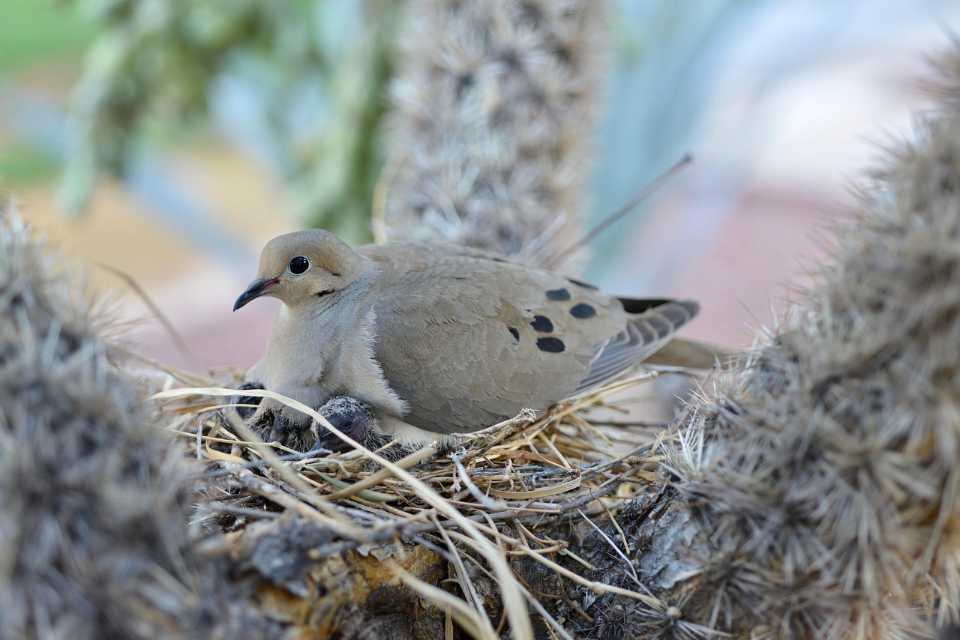
Mourning doves are minimalist nest builders. According to Birdfact, they construct simple stick nests in trees, shrubs, or on artificial platforms. They nest on the ground occasionally, but it’s risky because ground nests face predation from raccoons, cats, and snakes. Elevated sites provide better protection.
You can place platform nest boxes in trees, on building ledges, or under eaves. The platforms need minimal design: an 8 by 8 inch base is sufficient, with an 8-inch ceiling height. Some people simply nail rough wooden platforms to tree branches or building sides. Doves don’t need fancy construction; they just need stable flat surfaces.
Research from Birds and Blooms shows that mourning doves build nests incredibly quickly. Once a pair commits to a site, they’ll construct the nest and begin egg-laying within days. Position platforms in areas with dense vegetation nearby that provides cover and protection 🙂
Dense shrubs, evergreen trees, and thick vines all attract nesting doves. According to Oklahoma State University, plant dense shrubs or evergreen trees in your yard to provide both nesting sites and protective roosting areas. Doves roost in dense thickets or evergreens at night, particularly during winter when they flock together at roost sites.
Mounting platforms 10-15 feet high provides better predator protection than ground or low nest sites. However, doves will sometimes nest in lower locations if suitable protection exists. The key is offering multiple options so they can choose what works best for their specific yard conditions.
One important note: keep cats inside during nesting season. According to Wikipedia, during nesting, corvids, grackles, house cats, and rat snakes all threaten mourning dove nests. Keeping doves safe from predators means managing threats, particularly free-roaming cats that hunt ground-feeding birds relentlessly.
Dove-Friendly Plants: Natural Food and Shelter
Creating dove-friendly plants establishes a sustainable food and shelter system that supports doves year-round without total dependence on feeders.
Native plants are your best option. Plant species that naturally occur in your region because they’ve evolved to thrive locally and produce food at times when doves need it most. Doves rely on plant seeds, particularly from species like amaranth, canary grass, pokeberry, and other wild plants native to your area.
For Northeastern US, I recommend planting birch, oak, hickory, and ash trees that produce seeds doves eat. Dogwood, serviceberry, elderberry, and viburnum provide berries alongside seeds. Coneflowers, sunflowers, and zinnias provide late-season seeds that doves cache through winter.
Dense shrubs create protective shelter critical for roosting doves. Evergreens like arborvitae, juniper, and spruce provide winter protection from cold wind. Deciduous shrubs like privet, viburnum, and buckthorn offer nesting sites with leafy cover in spring and summer.
When selecting plants, focus on dense, thick varieties rather than open-branched selections. Doves need cover where they can hide from predators. A single tall shade tree in an otherwise open yard provides less value than multiple medium shrubs creating thickets where doves feel protected.
Dove Bird Bath Ideas: Water Matters
Providing clean water through dove bird bath ideas becomes essential, particularly during summer heat or winter freezes when natural water sources freeze solid.
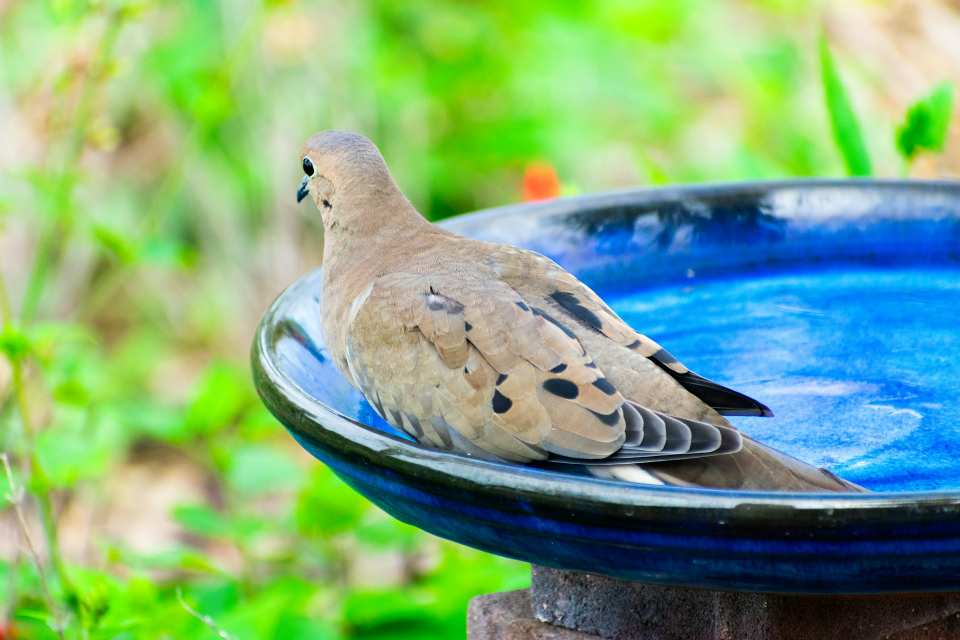
Standard bird baths work perfectly for doves. Position them in open areas where doves can see predators approaching. According to research, ground-feeding birds like doves are vulnerable to ambush from aerial predators and ground predators, so sight lines matter. A bird bath under thick tree cover that blocks visibility makes doves nervous.
Shallow water is ideal for doves. They prefer water 2-3 inches deep where they can wade and drink safely. Birds with their legs submerged in deep water feel trapped and vulnerable. Shallow waters allow quick escapes if danger approaches.
Moving water attracts doves more reliably than still water. The sound and motion draws birds from greater distances and indicates fresh, flowing water. Solar fountains or misters create movement that appeals to doves. I added a simple solar fountain to my bird bath, and visitation increased noticeably within days.
Multiple water sources spread throughout your yard give doves options. When predators threaten one location, doves have alternatives. This redundancy keeps them coming back consistently.
Keep water sources clean and refresh them daily, particularly during warm weather when algae and bacteria develop quickly. Dirty water transmits diseases among bird populations. Change water completely rather than just topping it off; bacteria accumulate in standing water.
During winter, heated bird baths become essential. Mourning doves survive winters in most of their range, and providing unfrozen water sources significantly impacts their survival. I’ve had doves visiting my heated bath in subzero temperatures, which shows how critical reliable water becomes during harsh conditions.
Attracting Doves Naturally: Beyond Feeders
Attracting doves naturally means creating holistic habitat that supports them through all seasons without total reliance on feeders.
Plant native seed-producing plants extensively. According to Lyric Wild Bird Food, doves eat grains and seeds from wild grasses, weeds, and herbs. If you eliminate weeds entirely from your yard, you’re removing natural dove food. Consider leaving certain areas unmowed or creating designated wild patches where seed-bearing plants can grow.
Tolerating some “weeds” is essential for supporting doves. Chickweed, crabgrass, pigweed, and other plants humans typically remove are actually valuable dove foods. Creating designated areas where these plants thrive provides natural, renewable food sources.
Dense cover from shrubs and small trees reduces predation pressure and provides roosting sites. Doves need visual security constantly. Open lawns with isolated shade trees stress them. They thrive in yards with complex layering: ground cover, shrubs, and trees creating multiple height levels.
Reduce pesticide and herbicide use. Doves that eat insects from plants poisoned with broad-spectrum chemicals face potential toxicity. Additionally, reducing insect control preserves the occasional insect doves consume and the seeds from flowering plants unsprayed with herbicides.
Provide nesting platforms as discussed earlier. The combination of natural cover plus artificial nest sites creates optimal nesting habitat.
Keeping Doves Safe from Predators
Keeping doves safe from predators directly impacts whether doves survive and successfully raise young in your yard.
According to Wild Bird Watching, hawks and falcons prey on adult mourning doves, while ground predators including cats, raccoons, opossums, grackles, crows, and snakes threaten eggs and nestlings. Ground-feeding behavior makes doves particularly vulnerable to predators.
Keep cats indoors. This is non-negotiable if you want to support mourning doves. Cats kill doves with alarming efficiency. Even outdoor-only cats hunt ground-feeding birds successfully. If you love doves (or any backyard birds), keep your cats inside. FYI, indoor cats live longer, healthier lives anyway.
Minimize predator perches. Remove dead branches that provide hunting platforms for hawks. Prune tree branches that overhang dove nesting and feeding areas. Create clear sight lines so doves can see aerial predators approaching before they strike.
Plant dense cover in multiple locations. Thick shrubs and evergreens provide escape routes when predators appear. Doves that lack nearby cover to flee into face higher predation rates. The thicker and denser your protective plantings, the safer your doves become.
Eliminate ground predator access to nesting platforms. Baffles, guards, and strategic platform placement prevent cats and raccoons from reaching nests. Platforms 10-15 feet high with nothing climbing nearby offer better protection than lower structures.
Remove rat snakes and other predators from nesting areas. If you find snakes threatening active nests, relocate them to appropriate habitats away from your yard. While predators have ecological value, protecting backyard birds requires managing direct threats to nests.
Why Mourning Doves Coo
That soft, haunting “coo-oo” isn’t just background noise, it’s dove talk. Males do most of the cooing, usually to attract a mate or claim their territory. You’ll also hear it when a pair is nesting or when one dove is calling to find the other. Basically, if you’re hearing that gentle sound often, it means your yard feels safe enough for them to stick around.
Here’s a deeper look at what their cooing really means →
Conclusion: Building a Dove Sanctuary
Attracting mourning doves to your backyard creates a rewarding connection to nature that lasts year after year. These gentle, persistent birds ask for surprisingly little: reliable seeds, clean water, protective cover, and safe nesting sites. Once you provide these basics, doves establish your yard as part of their territory and return reliably through seasons.
The combination of ground-level feeders stocked with millet and safflower, bird baths offering fresh water, dense protective shrubs and trees, and secure nesting platforms creates an environment where mourning doves flourish. Add native plants producing natural seeds, and you create habitat that supports doves independent of feeders.
What I love most about attracting mourning doves is the consistency. Unlike migratory birds that vanish seasonally, doves stay year-round once established. I hear their characteristic cooing in spring during courtship, summer during nesting, fall during migration shifts, and even on mild winter days. They’ve become as much part of my backyard as the old oak tree or the fence line.
Start simple: scatter millet on the ground and add a bird bath. Within a week, you’ll likely have your first mourning dove visit. Keep the seeds fresh and water clean, and the visits will become regular. Add protective cover and nesting platforms, and you might find yourself hosting nesting doves come spring.
Last May, I watched a pair of mourning doves raise two nestlings in a platform I mounted under my shed roof. Those chicks grew from naked, blind hatchlings to fledglings in just over two weeks. Watching them take their first wobbly flights while their parents called encouragement from nearby branches remains one of my favorite backyard memories. That kind of connection to nature is possible when you create the conditions mourning doves need to thrive.