
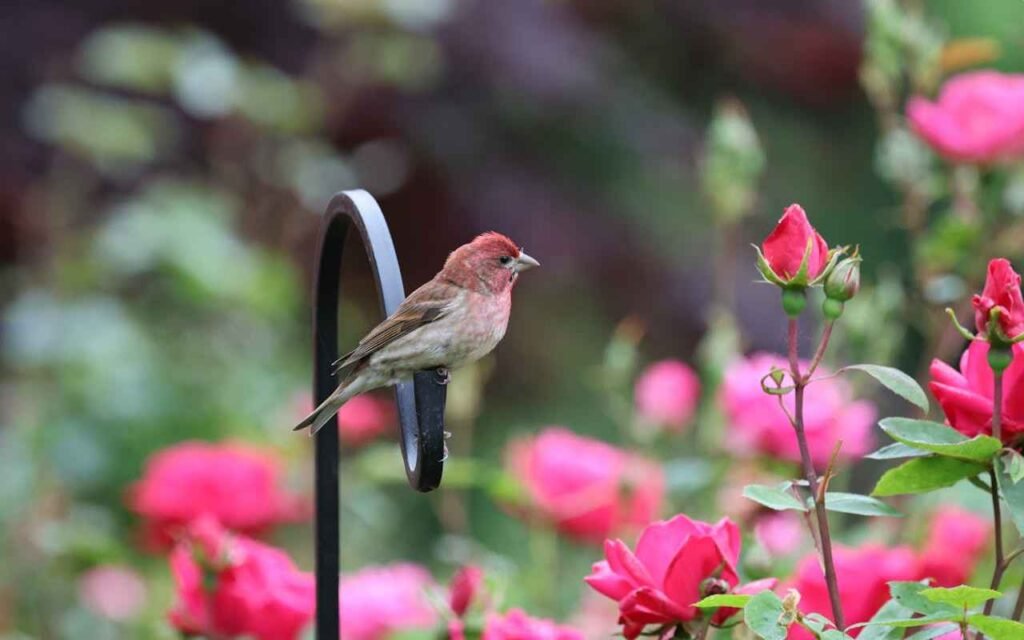
If you have ever wondered what the benefits are of using native plants for birds, the answer is simple. Growing them turns a standard lawn into a thriving avian sanctuary. Standard bird feeders lack the macro-nutrients wild flocks need for nesting and harsh weather. Regionally adapted flora creates a self-sustaining ecosystem. It supplies the high-fat foods and structural cover birds have relied on for thousands of years.
Success requires shifting from cosmetic gardening to functional vegetation layering. Matching native plants with local insect biomass supports breeding pairs in summer. It also protects resident flocks through winter. This guide outlines the exact choices needed to maximize your yard’s wildlife potential.
What Are the Best Native Plants to Support Birds?
The best native plants to support birds are locally adapted shrubs, trees, perennials, and evergreens that naturally provide essential food, shelter, and nesting sites across all seasons.
To maximize your habitat’s success, pair your vegetation with a water source, use organic pest control, and leave leaf litter and dead branches to provide vital cover and insect foraging grounds for native species.
Watch How Native Plants Help Backyard Birds Thrive
To see these dynamic landscaping strategies in action, watch our explainer video highlighting the unique visual layout patterns and ecological benefits of native gardening. Check out the explainer video below to witness how birds interact with structural vegetation layers before diving into our deep seasonal data below.
Why Regular Bird Feeders Cannot Match Native Gardens
While standard bird feeders are excellent tools for up-close observation, relying solely on commercial seed mixes introduces significant ecological imbalances. Store-bought birdseed typically lacks the diverse array of amino acids, moisture content, and complex fats that birds extract naturally from wild foraging biomes.
Furthermore, poorly maintained feeding stations risk spreading hazardous avian diseases like Salmonella among high-density bird populations. You can explore our foundational guide on responsible bird feeding to understand how to manage your manual stations without putting local flocks at risk.
Native vegetation completely eliminates these artificial risks by distributing food safely across a broad canopy landscape. Regionally adapted plants produce raw foods that birds recognize instinctively, matching their metabolic cycles flawlessly throughout the year.
Transitioning your yard to a living habitat ensures your yard provides continuous support without leaving dangerous nutritional gaps when your physical feeders run completely empty.
How Plants Provide Food for Birds All Year Long
Maintaining a constant stream of local birds requires careful selection of flora that yield resources at different times of the year. This staggered seasonal production prevents abrupt food shortages, giving your local wildlife a dependable baseline of fuel across all four seasonal shifts.
What Birds Eat in the Spring
Springtime is defined by high-protein nesting demands. Breeding adults shift their focus entirely to hunting caterpillars to feed their rapidly growing nestlings. Native oak trees function as the ultimate engine for this nesting cycle, as their foliage acts as an exclusive host for over 500 species of native caterpillars.
This incredible insect density is why ecologists classify oak trees as a critical keystone species. According to the milestone multi-year field study published in Biological Invasions regarding the Effects of Non-Native Plants on Insects, native canopy trees host up to 35 times more sustainable insect biomass than non-native ornamental alternatives, providing the critical feeding volume needed to sustain local nests.
To locate the specific keystone trees native to your zip code, use the National Audubon Society Native Plant Finder Database to map out your initial landscaping footprint safely.
What Birds Eat in the Summer
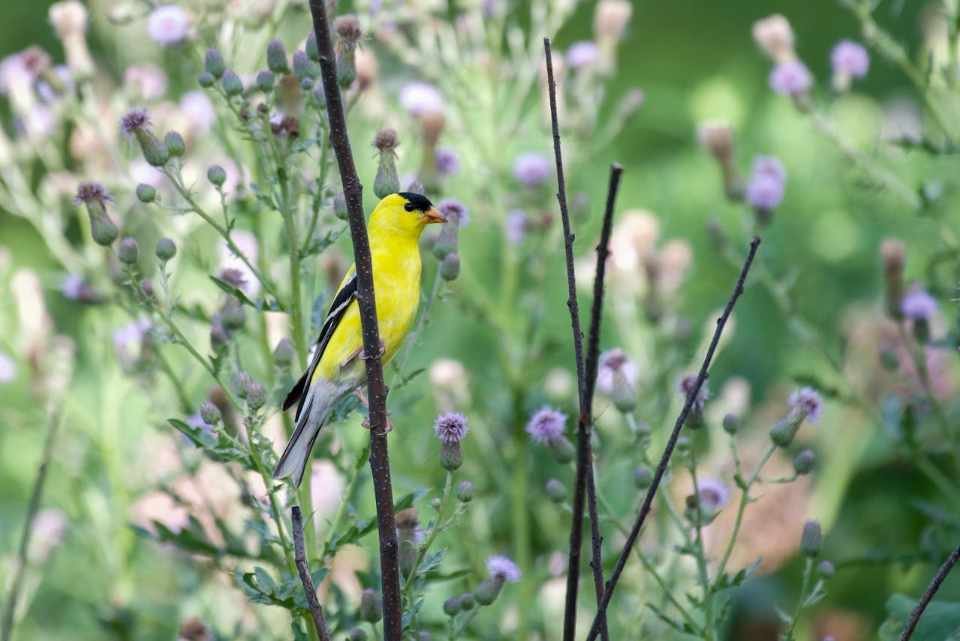
During the mid-summer months, birds rely heavily on native perennial wildflowers and grasses to supply both raw seeds and active insect forage. Sunflowers, coneflowers, and black-eyed Susans act as natural feeding trays, producing small, oil-rich seeds that finches, sparrows, and grosbeaks love.
Simultaneously, these bright blooms attract an array of native pollinators, which serves as a highly efficient hunting playground for flycatchers and warblers. If your goal is to draw color to your garden during the warmest months of the year, read our specific breakdown on how to attract finches with backyard plants to maximize your summer bloom layouts.
What Birds Eat in the Fall
The autumn months require immediate fat accumulation to fuel long-distance migrations and early winter fat storage. Birds look specifically for lipid-rich berry shrubs like sumac, spicebush, and arrowwood viburnum. Unlike non-native invasive berries, which are high in simple sugars but lack fat, native fall fruits provide the dense fatty-acid profiles required to power birds over hundreds of miles of flight.
This selective seasonal feeding strategy was proven in a landmark nutritional field study by researchers Smith and McWilliams on Sacred Heart University, which demonstrated that migrating passerines explicitly select native fruits with high lipid concentrations over low-energy alternatives to rebuild their energy reserves rapidly.
These critical biological metrics are fully reinforced by the Cornell Lab All About Birds Native Plants Newsroom, which highlights the essential relationship between regional insects, native flora foliage, and autumn avian fat quality.
What Birds Eat in the Winter
Winter survival is a pure test of calorie management, as small resident birds must maintain high core body temperatures through freezing nights. Hardy evergreens like pines, cedars, and junipers become the focal point of winter foraging.
These species yield persistent winter berries and seed cones that stay clear of snow cover, providing an essential food reserve when alternative ground forage is frozen solid.
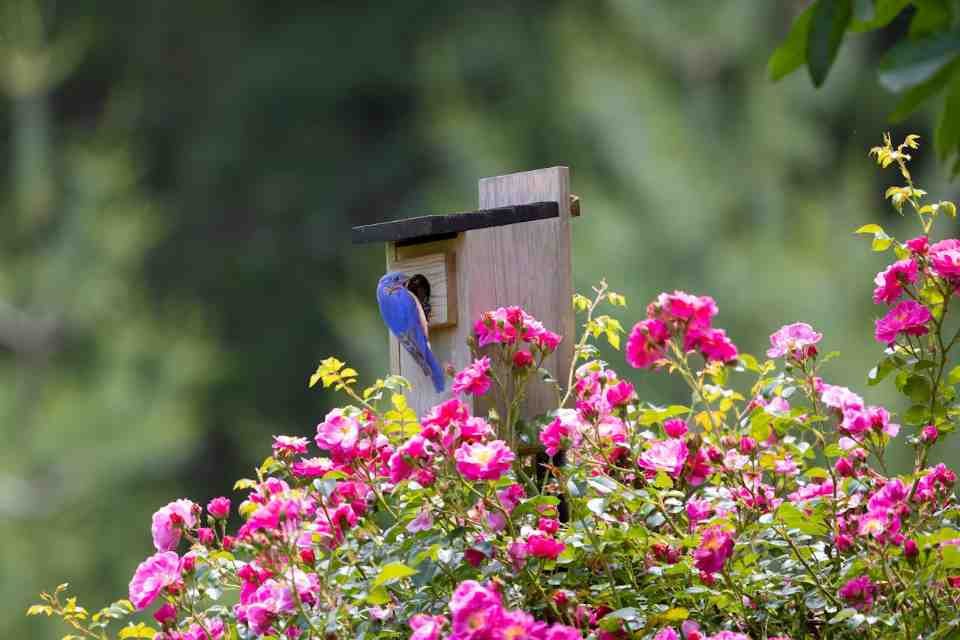
Quick Guide to Native Plants and Bird Species
The reference table below outlines exactly which native plant groups support specific backyard bird families, ensuring you choose the right flora for your target species:
| Plant Type | Premium Native Examples | Attracted Bird Families | Dominant Value Season |
|---|---|---|---|
| Flowering Shrubs | Serviceberry, Spicebush, Red-osier Dogwood | Cardinals, Bluebirds, Thrushes, Mockingbirds | Spring through Autumn |
| Deciduous Trees | Native Oak, Sugar Maple, Paper Birch | Woodpeckers, Chickadees, Nuthatches, Warblers | Year-Round Value |
| Perennial Flowers | Purple Coneflower, Black-eyed Susan, Milkweed | Finches, Goldfinches, Hummingbirds, Orioles | Mid-Summer Core |
| Coniferous Evergreens | Eastern Red Cedar, White Pine, Common Juniper | Sparrows, Wrens, Towhees, Winter Finches | Late Winter Peak |
| Hardy Berry Bushes | Smooth Sumac, Winterberry Holly, Highbush Cranberry | Robins, Bluebirds, Waxwings, Catbirds | Autumn through Winter |
How to Create Safe Hiding and Nesting Spots
Food is only one half of the habitat equation; to get birds to stay permanently, your yard must offer physical security from predators, harsh weather, and external disruptions. Birds utilize distinct canopy levels to navigate safely, meaning you should arrange your landscaping to mimic a natural forest edge. Review our expert blueprints on bird-friendly garden design to learn how to structure your landscape layers vertically for maximum protection.
To build a high-performance visual buffer, prioritize these native vegetation structures:
- Thick Spiky Shrubs: Species like winterberry holly develop dense branch arrays and sharp leaves that keep birds completely safe from hunting hawks or neighborhood cats.
- Layered Branch Systems: Native dogwoods and maples provide horizontal branch networks that offer ideal support frames for building strong open cup nests.
- Evergreen Winter Shelters: Pines and cedars maintain tight, insulating foliage all year, shielding local birds from subzero winds and heavy winter snow.
- Natural Cavity Snags: Keeping dead tree trunks standing gives woodpeckers and bluebirds the exact soft, decaying wood centers they require to excavate nesting cavities.
How to Add Water Features That Match Your Plants
Pairing your native plantings with an active water source is a powerful way to accelerate your yard’s wildlife activity. Water functions as both a hydration source and a vital grooming asset, as birds must bathe regularly to remove debris and lock their feather barbs together for proper flight insulation.
Positioning a shallow birdbath directly within the shade of your flowering shrubs provides a highly effective layout loop. The native vegetation draws active insects directly to the water’s edge, giving passing warblers and flycatchers a high-yield hunting zone. For maximum safety, ensure the water basin maintains a maximum depth of two to three inches, and incorporate a small solar bubbler or water dripper.
The persistent audio cue of moving water acts as a beacon, guiding migrating flocks straight down into your garden landscape. You can learn how to manage these features safely without harsh treatments by reading our step-by-step tutorial on how to clean a bird bath without chemicals to preserve your sanctuary’s integrity.
How to Keep Your Garden Safe Without Chemicals
Reaching for synthetic sprays to treat garden pests is a catastrophic mistake if your goal is to attract birds. Chemical pesticides and non-selective insecticides completely wipe out the caterpillar, beetle, and spider populations that songbirds depend on to feed their chicks, effectively starving out the local population.
Furthermore, many commercial garden chemicals persist deeply within the local soil matrix, creating chronic toxic exposure risks for ground-foraging birds.
The most effective alternative is to practice highly targeted Integrated Pest Management (IPM). By planting a diverse mix of native species, you naturally encourage colonies of helpful predatory insects like ladybugs, lacewings, and garden spiders.
These native predators will successfully manage your garden pest populations without introducing toxic side effects to the environment. If a specific localized outbreak requires immediate attention, utilize gentle organic treatments like neem oil, horticultural insecticidal soaps, or raw diatomaceous earth to solve the issue safely.
Simple Ways to Take Care of Your Native Garden
While native plants require significantly less manual maintenance than non-native lawns once their root systems are fully established, practicing a light-touch maintenance routine ensures the ecosystem remains productive.
Implement these basic maintenance rules to preserve your yard’s natural balance:
- Leave Seasonal Leaf Litter: Allowing fallen autumn leaves to decay naturally under your shrubs fosters a rich insect biome, providing ground-foraging birds with a premium winter food source.
- Delay Autumn Garden Cleanup: Keep your dead perennial flower stalks standing through the winter to allow goldfinches and sparrows to harvest the remaining seed heads safely.
- Monitor for Invasive Plants: Actively pull non-native weeds that attempt to encroach on your garden, ensuring your native flora keeps full access to soil nutrients and water.
- Practice Conservative Pruning: Trim dead tree branches solely to preserve human safety, leaving raw snags and horizontal perching branches intact to act as hunting lookouts for local birds.
Frequently Asked Questions About Landscaping for Birds
What exactly counts as a native plant?
Native plants are defined as specific flora species that have grown naturally within a distinct geographic region for thousands of years without human intervention. They are perfectly attuned to the local climate, historical rainfall levels, and native wildlife populations, making them the ideal choice for supporting your regional ecosystem.
Can non-native plants provide the same value to local birds?
No, non-native plants typically fail to support local wildlife effectively. Many exotic ornamental plants produce fruits or seeds that native birds cannot digest comfortably, and they rarely host the specific insect larvae that nesting birds require to raise their young.
How long does it take for birds to discover a new native garden?
Local bird species like chickadees, titmice, and wrens will typically begin investigating new native plantings within a few weeks of installation. As your shrubs mature and insect densities climb over the first season, the overall frequency and variety of your avian visitors will increase dramatically.
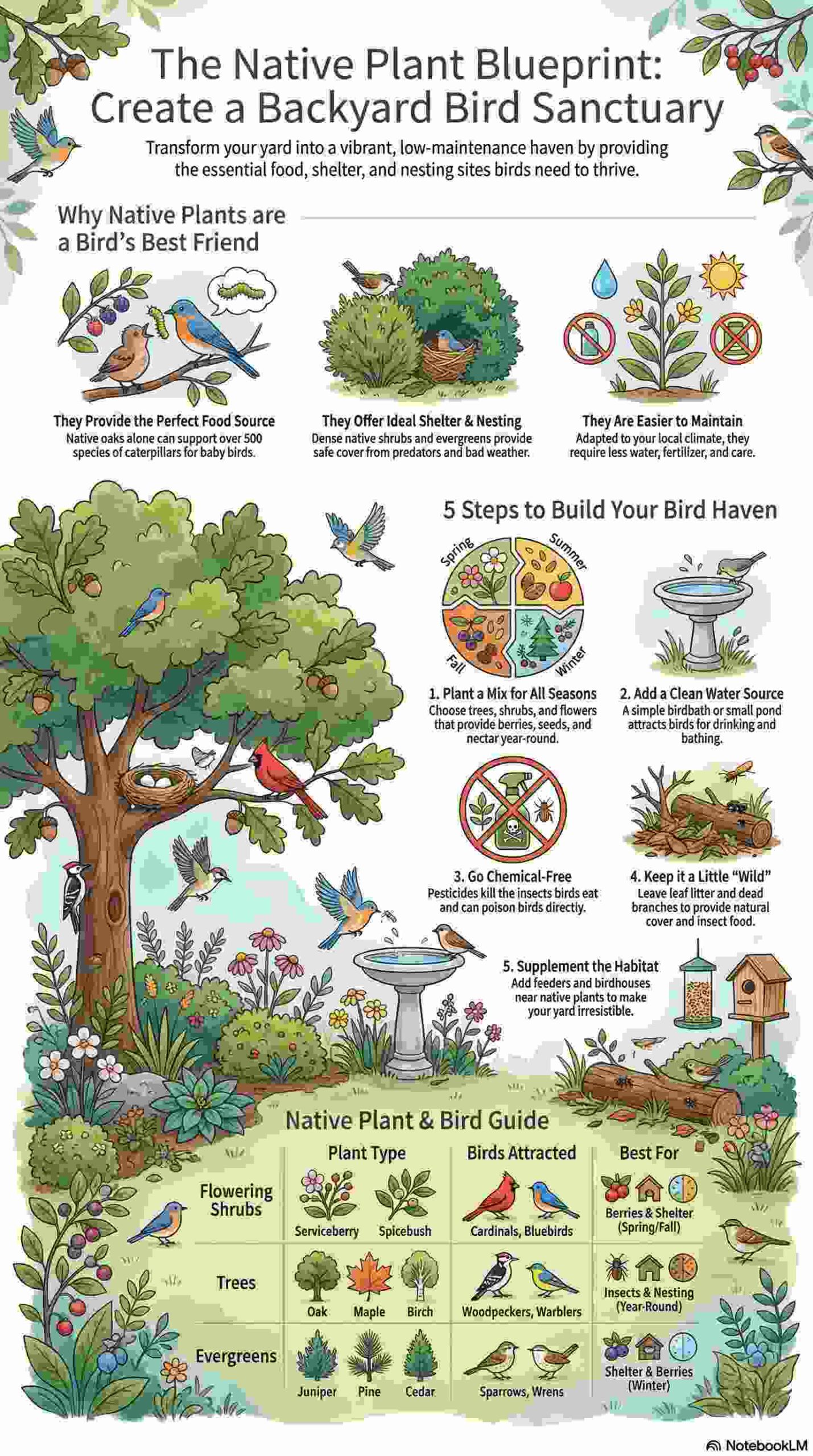
Quick Reference: Native Plants That Help Birds
This infographic highlights how native plants for birds provide food, shelter, and nesting support, making it easy to see which species benefit your local wildlife throughout the year.
Why Sustainable Native Habitats Outperform Manicured Suburban Lawns
Stepping back and assessing the long-term ecological return of your landscape reveals that a diverse native habitat is infinitely superior to a standard manicured lawn. Perfectly mowed turf grass functions as an environmental dead zone, offering zero food value, zero physical concealment, and zero nesting support for North American songbird species.
By replacing high-maintenance turf grass with native flowers, heavy mast trees, and dense berry clusters, you replace an empty green expanse with a vibrant avian sanctuary. Embracing a slightly wild, layered landscaping style allows you to step away from costly mowing loops and chemical fertilizers while playing a central role in protecting local bird conservation.