
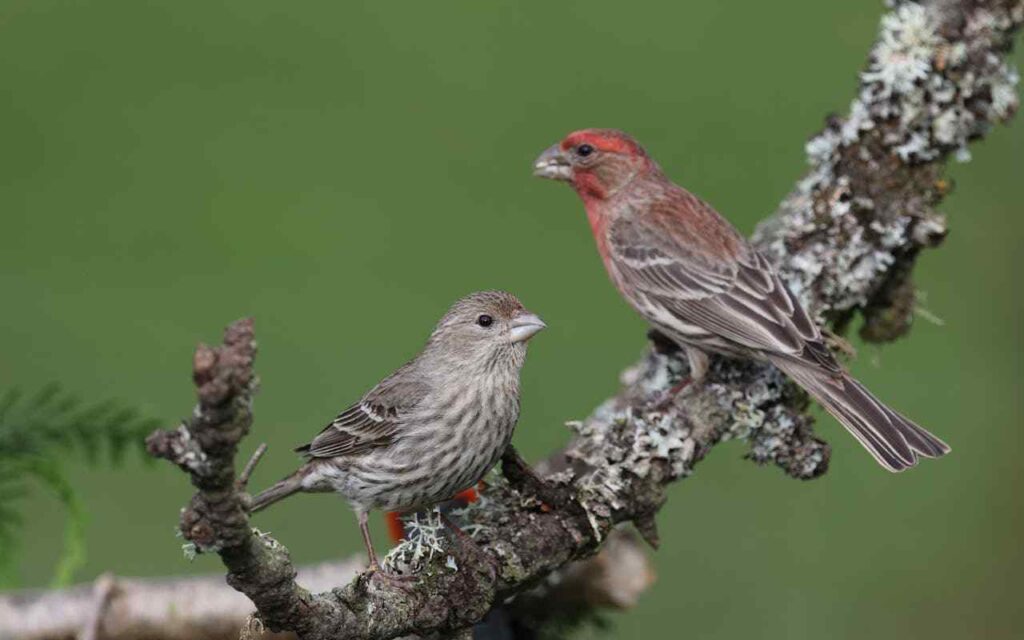
I’ll never forget the morning I found a tiny nest tucked into my hanging basket. I immediately wondered, where do finches build their nests, it was so delicate and perfectly made that I honestly thought my neighbor had set it up as a joke. Then I spotted the finch, a bright goldfinch with those striking yellow and black markings, and realized she had chosen my porch as her home.
If you’re noticing finches around your yard or hoping to attract them, this is for you 🙂. Learning what they look for in a nesting spot gives you a real window into their lives. Whether it’s a surprise nest on your porch or setting up a finch-friendly space, this guide will show you how and why finches pick their favorite spots.
- House finches nest on porches, ledges, hanging baskets, and trees.
- Goldfinches prefer shrubs and tall trees near thistle plants.
- Nests are small cups made of plant down, feathers, and grass.
- Finches rarely reuse nests; most seasons get a fresh one.
- Nesting height is usually 5–15 feet for safety and visibility.
- To attract finches: offer nyjer seed, native plants, and nesting materials.
- Protect nests from predators and watch from a distance.
- Pairs coordinate feeding and nest defense to raise chicks.
How Finches Choose Safe Nesting Spots
In this short explainer video, you’ll see the exact places finches prefer to nest, the materials they use, and what makes a spot feel safe enough to raise chicks.
Show Transcript:
0:00
Have you ever looked out your window and noticed a tiny feathered neighbor setting up shop right on your porch? You might be hosting one of nature’s most clever and underrated architects. Today we are going to explore the hidden world of finches nesting right under our noses.
0:17
That moment of pure surprise and wonder when you realize you are sharing your space with someone is unforgettable. It is not just a random bundle of grass in your hanging basket. It is a home. A home deliberately chosen and carefully built.
0:31
Have you seen this before? Maybe tucked into a wreath on your front door, on a high ledge under the eaves, or deep inside a bushy plant. That little nest connects you directly to the incredible story we are about to unfold.
0:50
You find one of these amazing little nests. Who is the tiny builder behind it all? Let’s go over the essentials, including how to identify the most common finches and what makes their nesting habits unique.
1:03
Two finches are most likely to be spotted. On one side, the house finch. They get started early in spring and love using our houses and other structures. On the other, the goldfinch. They wait until mid to late summer because they rely on thistle plants to seed before starting their family.
1:29
Now that we know the builders, let’s look at the nests themselves. These are not messy piles of twigs. They are incredible feats of miniature architecture. A finch nest is a masterpiece, carefully woven, insulated, and structured for a safe nursery.
1:56
The nest is only about 3 to 7 inches across, small enough to fit in your hand but tough enough to withstand wind and rain. The exterior may look rough, but the interior is a soft, safe cradle for a whole family.
2:13
Inside the nest is the clutch, a set of eggs laid at one time. Finches usually lay two to six pale blue or greenish eggs. Each egg is a promise of a new generation tucked safely in the woven cup.
2:31
House finches adapt to human structures like porches and hanging baskets, while goldfinches prefer natural settings, building near shrubs and thistle plants. It is a story of city living versus country living, bird style.
2:52
But what makes a nest a home is the family life inside. Finches pair up for a season, and both parents are incredible co-parents. While the female incubates the eggs, the male stands guard and brings food. Once the chicks hatch, both parents feed the rapidly growing family tirelessly.
3:31
The timeline is fast. Eggs are laid on day one, hatch about two weeks later, and just two more weeks after that, the babies are ready to fledge. The entire journey from egg to flying bird takes less than a month.
3:58
What can we do to help? This is where we move from observers to guardians. Creating a finch-friendly backyard is simple.
4:10
Put out favorite foods like nyjer seed in a special feeder. Keep native plants and shrubs for natural food and shelter. Offer nesting materials like bits of cotton or brushed-out pet fur.
4:26
Protection is crucial. Avoid pesticides and watch for predators, especially outdoor cats. These small actions make a big difference for your feathered neighbors.
4:37
Next time you see a tiny finch in your yard, you will know the story of architecture, family, and survival unfolding right outside your window. Are you ready to become a guardian for these tiny architects? Your backyard is not just a yard. It is a potential nursery for the next generation.
Understanding Finch Nesting Habits and Seasons
Finches don’t follow a single nesting timeline like many birds do. Finch nesting season varies dramatically depending on the species and your geographic location. House finches typically start nesting in late spring (April through May), while goldfinches nest later, often in mid to late summer (July and August). This timing difference matters because goldfinches actually wait until thistle plants have produced seed for feeding their young.
Finch nesting behavior reveals something interesting about their adaptability. These birds are incredibly flexible when it comes to location selection. They’ll nest in natural settings (trees and shrubs), but they’re equally comfortable building right on your porch, in planters, or in decorative wreaths. I’ve learned that this flexibility is both a blessing (you get to watch nesting happen) and a potential problem (if you’re not expecting it).
Ever wondered why finches show up so reliably in the same spots year after year? They have excellent memory and actually prefer reusing successful nesting locations. In fact, do finches reuse nests is one of the most common questions I get, and the answer is: sometimes yes, but typically they build fresh nests each season, even if in the same general area.
What Do Finch Nests Look Like
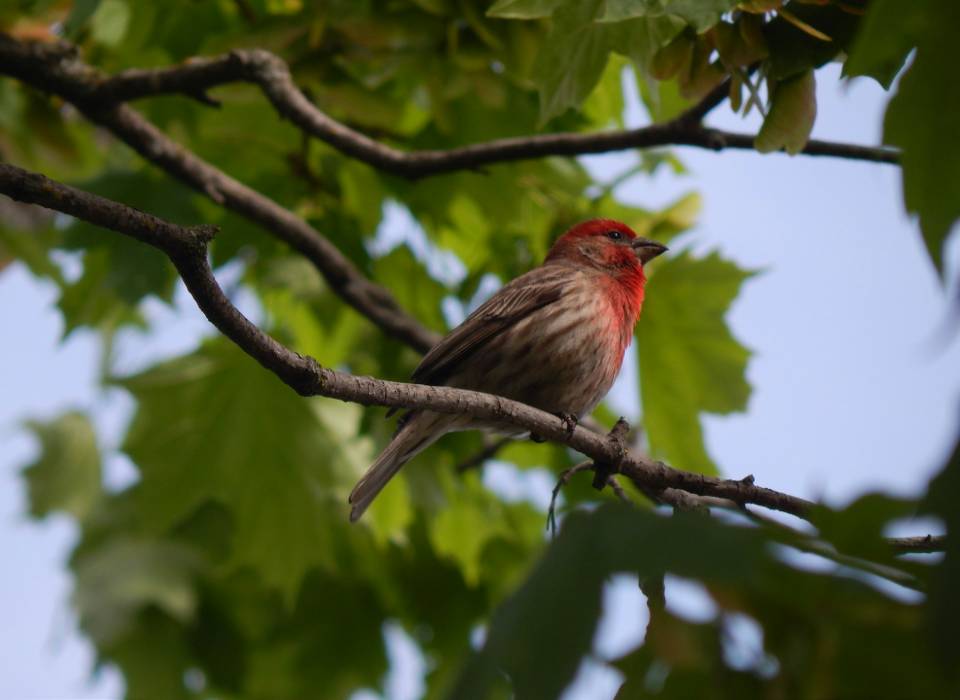
What do finch nests look like is actually a great question because understanding their appearance helps you spot them. Finch nests are remarkably small and delicate, often no bigger than a golf ball or slightly larger. The finch nest materials vary by species, but most finches weave together plant down, hair, feathers, and fine grass to create an incredibly soft cup.
The exterior of a finch nest is usually loose and somewhat shabby in appearance, almost like someone started building a nest and didn’t quite finish. But don’t let that fool you, inside, they’ve created an insulated nursery lined with the softest materials available. House finch nests tend to be slightly bulkier than goldfinch nests, and they often contain more structural plant material.
According to the Cornell Lab of Ornithology, house finches build nests in a variety of locations including deciduous and coniferous trees, as well as on buildings using vents, ledges, street lamps, ivy, and hanging planters. A finch’s nest typically measures 3-7 inches in overall width, with the inside cup measuring 1-3 inches across.
The finch eggs in nest are typically pale blue or greenish, and females usually lay 2-6 eggs per clutch. The eggs are absolutely tiny, you could fit several in the palm of your hand.
Finch Nesting Locations: Where House Finches Choose to Build
Where do house finches build nests is a question with surprisingly flexible answers. House finches are urban and suburban specialists, and they’ve adapted beautifully to human environments. They regularly build on building ledges, in gutters, on porch fixtures, and literally anywhere with a bit of shelter from rain and wind.
I’ve discovered house finches nesting in the most unexpected places, hanging baskets on my porch, light fixtures above doorways, and even in the gap between my siding and fascia board. They seem to prefer locations that provide overhead protection but offer easy access for the parents. Finch nesting locations often cluster near reliable food sources, so if you have feeders stocked with nyjer seed or other finch favorites, expect nests nearby.
Finch nest height typically ranges from 5-15 feet high, though they’ll nest lower if good protection exists. They prefer locations with some concealment from predators but adequate visibility so parents can monitor the area. The more I watch finch behavior, the more I realize they’re strategic, they pick spots that balance safety, accessibility, and resource proximity.
Goldfinch Nesting: A Different Approach
Where do goldfinches build nests follows slightly different rules than house finches. Goldfinches prefer more natural settings and show strong preference for tall trees, particularly near thistle plants and dandelion patches. They’re far more likely to build in shrubs and trees rather than on human structures, though exceptions exist.
Goldfinches delay nesting until late summer specifically because they depend on mature thistles for seed to feed their young. This is actually brilliant evolutionary timing, the babies hatch right when their preferred food source is abundant.
Research published in the Journal of Ornithology examined urbanization’s effects on nest-building behavior in birds including House Finches, demonstrating that these birds actively select nest materials and locations that maximize reproductive success. The study confirmed that goldfinches synchronize their nesting with thistle seed availability, nesting significantly later than most North American songbirds to coincide with peak food resources.
Their nests are even tinier than house finch nests, often barely visible among tree branches. I’ve walked right past goldfinch nests dozens of times without noticing them until the adults flew out in alarm. Finch nest in flower pot scenarios are rarer with goldfinches, they stick to natural locations almost exclusively.
Do Finches Mate for Life?
Here’s something people often ask: do finches mate for life? The answer is more nuanced than you’d expect. House finches typically form seasonal pair bonds, meaning they stay together for a breeding season but may choose different partners the following year. They’re socially monogamous during the breeding period, with males actively defending territories and helping raise young.
Goldfinches follow similar patterns, forming pairs during breeding season but not necessarily maintaining lifelong partnerships. However, if a pair successfully raises multiple broods together, they’re more likely to pair up again in subsequent seasons. FYI, this is less about romance and more about proven reproductive success, birds are practical like that.
The pair bond strengthens through shared responsibilities. Males bring food to incubating females, both parents feed nestlings, and they coordinate nest defense. I’ve watched house finch pairs work together seamlessly, with the male standing guard while the female arranges nesting materials. It’s genuinely impressive teamwork.
Creating a Finch-Friendly Nesting Environment
If you want to attract finches to nest in your yard, you need to create conditions that meet their specific needs. First, provide abundant food sources, especially nyjer seed feeders. Finches make nesting location decisions partly based on proximity to reliable food, and you can definitely influence this with smart feeder placement.
Second, maintain natural vegetation or at minimum keep your landscaping somewhat wild. Tall flowers, shrubs, and trees give finches options beyond your porch. I’ve found that areas with native plants and seed-producing flowers attract way more finches than manicured lawns. According to the National Audubon Society, native plants provide the best food sources for finches and supply natural nesting materials like plant down and soft fibers.
Third, avoid pesticides, which kill the insects that supply protein for growing chicks. Fourth, provide nesting materials. You don’t need anything fancy, leave pet fur, cloth scraps, or plant down accessible near potential nesting sites. Finches will actively collect these materials, and providing them encourages nesting.
Finally, plant native species that produce seeds late in summer (like thistles and coneflowers), which align with goldfinch nesting season. Our guide on native plants for birds covers specific species that support finch populations.
The Challenge of Finches Nesting on Your Porch
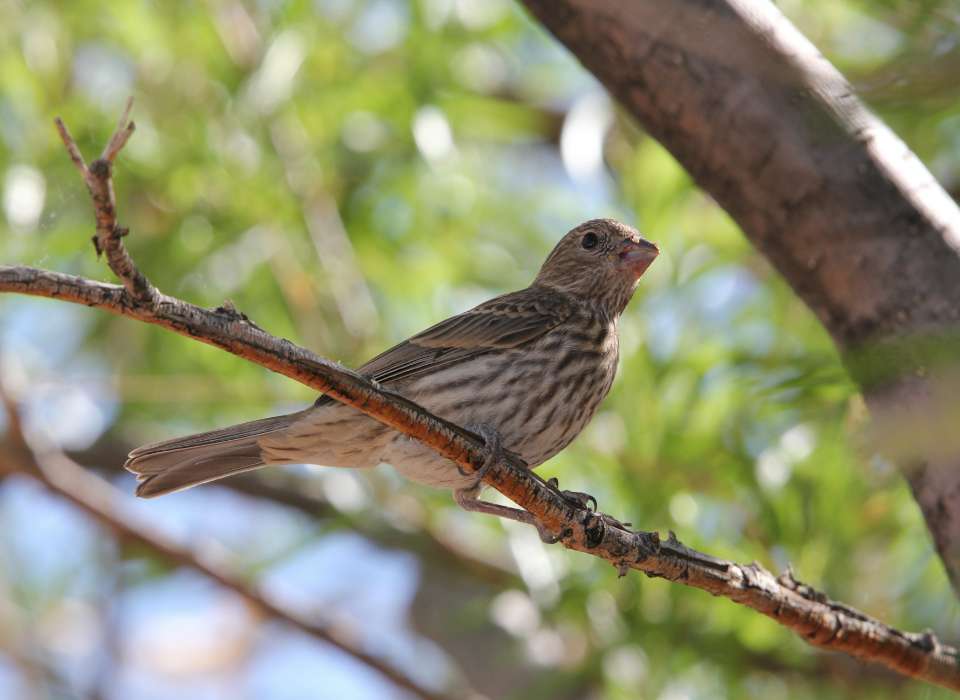
Here’s the reality: how to stop finches nesting on porch is one of the most frequent questions I receive, and the answer isn’t always simple. If finches have chosen your porch, they’ve essentially decided your space meets their survival needs better than alternatives. This is actually flattering in a weird way, they trusted your home with their babies.
Finch nest in hanging basket situations are incredibly common because hanging baskets provide perfect shelter. If you don’t want them there, remove hanging baskets before nesting season starts (early April for house finches). Once nesting begins, you legally can’t remove active nests or eggs in most areas. The U.S. Fish and Wildlife Service enforces the Migratory Bird Treaty Act, which protects most finch species and prohibits disturbing active nests.
If you find a finch nest in wreath or other decoration, I recommend embracing it. Watch the nesting process unfold. It’s genuinely one of the coolest natural events you’ll witness. The parents work tirelessly, feeding chicks approximately every 15-20 minutes during daylight hours. How long finches stay in nest is typically 12-14 days before fledging, so you’re looking at roughly three weeks from nest completion to baby birds leaving.
Finding and Monitoring Finch Nests
How to find finch nests requires patience and careful observation. Listen for finch calls, they’re distinctive and surprisingly loud for such tiny birds. Watch feeding patterns; if finches are regularly entering specific areas, they likely have nests nearby. Look up, particularly in trees, hanging baskets, and porch fixtures.
Finch nesting safety should be your priority when monitoring nests. Never touch eggs or nestlings, never remove nesting materials, and never allow predators access to nesting sites. Keep your distance and observe from inside or a distance that doesn’t cause parents to abandon the nest.
A study published in Ecology and Evolution examined how urban living influences finch nesting success, finding that despite some challenges like anthropogenic debris in nests, urban finches often demonstrate successful nesting outcomes when human disturbance remains minimal.
The research confirms that reasonable observation from non-invasive distances does not impact finch nesting success, so you can watch from your window without concern. If you’re interested in broader strategies for supporting nesting birds, check out how to encourage birds to nest in your garden.
If you’re trying to attract finches to nest, your best bet is providing nyjer feeders year-round, maintaining some natural vegetation, and creating a pesticide-free environment. Everything else, the actual location, nest construction, egg laying, and chick rearing, the finches will handle themselves. For more on supporting finches specifically, visit how to attract finches to your yard.
Understanding Different Finch Species and Their Preferences
Not all finches follow identical nesting patterns. House finches are adaptable generalists, thriving in urban, suburban, and natural settings. Goldfinches remain more particular, preferring natural vegetation and delaying nesting until late summer. If you’re wondering where goldfinches build nests versus house finches, remember: goldfinches choose trees and shrubs; house finches choose anywhere convenient with shelter.
Purple finches and other less common species show their own preferences. According to research from the Cornell Lab of Ornithology on Purple Finches, purple finches prefer to nest far out on the limb of a coniferous tree, occasionally in deciduous trees. Nests can be 2.5 feet up to 60 feet off the ground and are often built under an overhanging branch for shelter. They’re less likely to use human structures, though they will if options are limited.
For detailed comparisons of finch types and how their behaviors differ, our resource on house finch vs purple finch breaks down behavioral differences that directly affect nesting choices. Understanding these differences helps you anticipate where finches will nest and what conditions encourage or discourage nesting activity.
Protecting Baby Birds and Nest Safety
Once finches establish nests on your property, finch nesting safety becomes your responsibility. Predators like cats, raccoons, and larger birds pose significant threats to vulnerable nestlings. Position feeders and known nesting areas away from ambush points where predators can hide.
Keep outdoor cats indoors during nesting season, especially if you’ve spotted finch nests nearby. A single outdoor cat can decimate local bird populations, and nestlings are particularly vulnerable. I’ve learned this the hard way after losing an entire nest to a neighbor’s cat. According to the American Bird Conservancy, cats kill approximately 2.4 billion birds annually in the United States, with ground-nesting and recently-fledged birds being especially at risk.
If you notice predator activity near nests, consider installing protective barriers or relocating feeders (though never move active nests). For comprehensive guidance on this topic, our article on how to protect baby birds from predators offers specific tactics that work.

FAQ’s: About Finch Nesting
Do finches reuse nests?
They rarely do. Most finches construct fresh nests each season, even if building in the same location. House finches might use the same nest structure for a second brood if the first one was successful, but they won’t reuse nests from previous years. Goldfinches almost never reuse nests.
How long finches stay in nest before they can fly?
Nestlings typically fledge (leave the nest) at 12-14 days old. Parents continue feeding them on the ground for another week or two after that. So total dependency on the nest itself lasts roughly two weeks, but family unit dependency extends longer.
What do finch eggs in nest look like?
Finch eggs are tiny, pale blue or greenish, and speckled with subtle markings. They’re roughly the size of a pea, which always shocks people seeing them for the first time. A typical clutch contains 4-5 eggs, though 2-6 is normal.0
Can I move a finch nest if it’s inconveniently placed?
Legally, probably not without a permit. The Migratory Bird Treaty Act protects most finch species, and active nests cannot be disturbed. Your best option is to let the nesting cycle complete, then remove the nest location before next season.
Do house finches and goldfinches compete for nesting sites?
Minimally. They have different nesting season timing and location preferences. House finches nest early on human structures; goldfinches nest later in trees. Competition is rare because they essentially inhabit different nesting niches.
What should I do if I find a finch nest on my porch?
Leave it alone and enjoy the show. Monitor from a distance, ensure predators can’t access it, and watch the nesting cycle unfold. It’s genuinely one of the best natural education opportunities your property offers.
How do finches choose specific nesting locations?
Finches evaluate food proximity, shelter quality, predator exposure, and past success (if applicable). They’re surprisingly intelligent about location selection. Hanging baskets score high because they offer shelter and are often near windows where food-providing humans exist.
Do finches mate for life?
They typically don’t. They form seasonal pair bonds and may reunite if previous breeding attempts succeeded, but they’re not lifelong partners like some bird species. They’re practical about reproduction rather than sentimental.
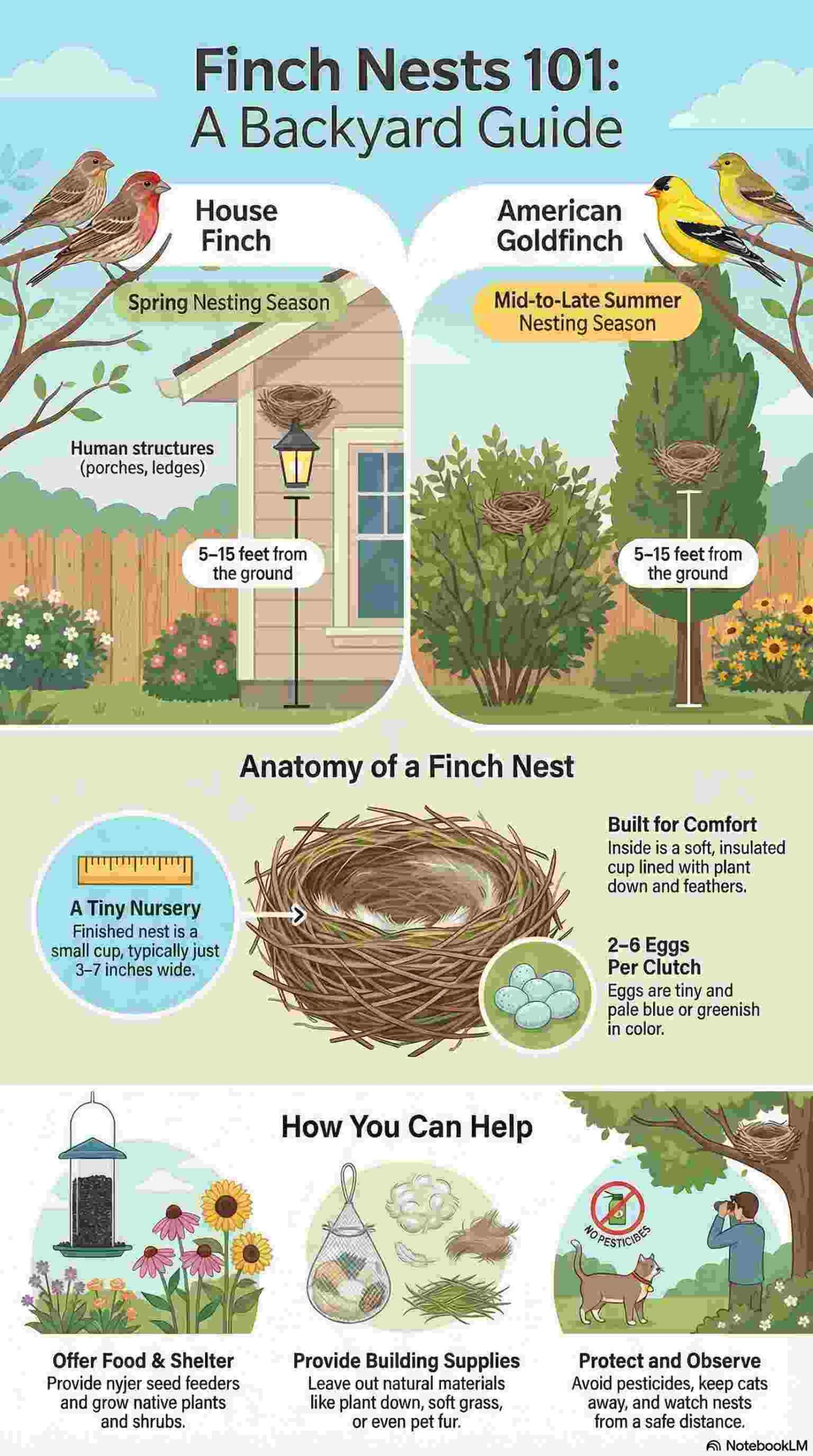
Finch Nesting Locations at a Glance
This infographic summarizes the most common places finches build their nests, along with the materials they use and what makes each spot appealing.
Final Thoughts: Appreciating Finch Nesting in Your Space
Understanding where finches build their nests transforms these tiny birds from background noise into fascinating neighbors. Whether you’re dealing with a finch nest in a hanging basket situation or actively trying to attract finches to nest through habitat management, you’re participating in something genuinely special.
Finches demonstrate remarkable adaptability and intelligence in their nesting choices. They evaluate your property, assess resources, and make strategic decisions about where to invest their reproductive effort. When they choose your porch, your wreath, or your tree, they’re essentially saying your space provides what they need to successfully raise the next generation.
I went from being annoyed about a finch nest in my hanging basket to actively celebrating every finch family that nests on my property. I’ve learned that finch nesting season brings unparalleled opportunities to observe nature at its finest. Tiny eggs hatch into tinier chicks that transform into fully fledged birds in mere weeks.
So if finches show up to nest on your property this year, consider yourself lucky. Create the conditions they need, food, shelter, and safety, and you’ll witness one of nature’s most remarkable transformation stories unfold right outside your window.