
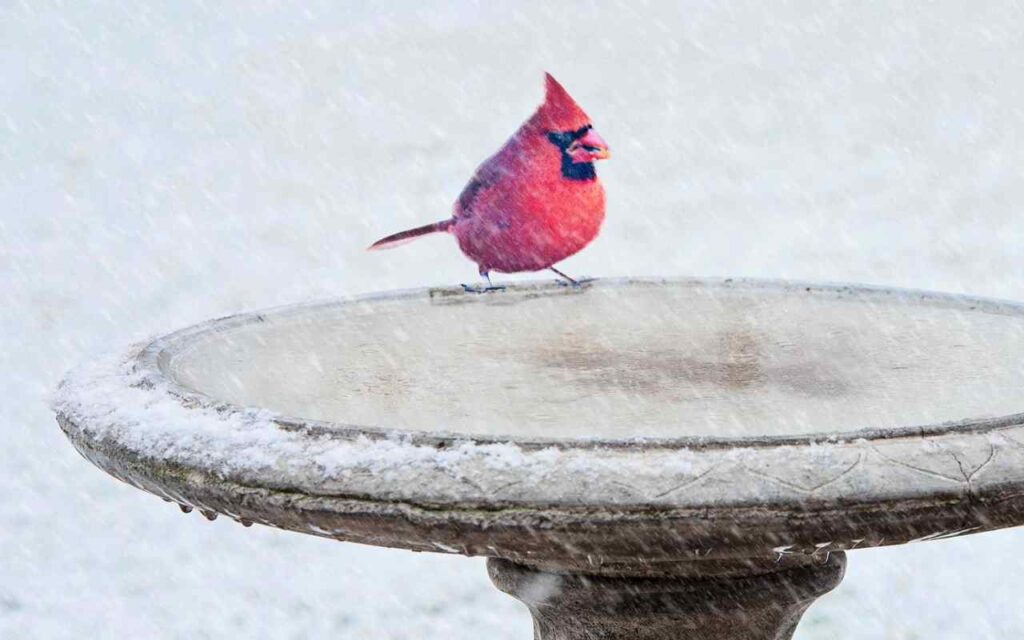
Last January, I watched a chickadee land on my frozen birdbath, peck at the ice hopefully, then fly away. That tiny moment broke my heart and made me realize just how crucial knowing how to keep bird baths from freezing in winter really is. While I was focused on keeping feeders full, I had completely overlooked the fact that water is just as important as food during freezing weather. When everything freezes solid, birds struggle to survive without it.
Keeping a birdbath ice-free during winter isn’t just nice, it’s genuinely life-saving for your feathered visitors 🙂. Fresh water in cold weather becomes a critical resource they desperately need but can’t always find. This guide walks you through everything from heated bird baths to clever DIY tricks, proper placement strategies, and safety tips that actually work when temperatures plummet.
- Birds need liquid water to drink and preen.
- Heated baths work best; save energy with thermostats.
- DIY: submersible heaters, bulbs, or solar units.
- Non-electric: sun, wind shelter, floating balls, warm water.
- Keep baths clean; refill often and use shallow edges.
- Place near feeders and cover; avoid salt or antifreeze.
Why Birds Still Need Water in Winter
How birds drink water in winter is trickier than most people realize. You’d think birds could just eat snow for hydration, right? Wrong. Melting snow inside their bodies actually costs precious calories they can’t afford to waste. Birds need liquid water they can drink directly without expending energy converting ice to usable hydration.
Importance of fresh water for birds in cold weather extends beyond just drinking. Birds use water for preening, maintaining their feathers’ insulation properties. Clean, properly aligned feathers trap air efficiently, creating the insulation layer that keeps birds warm. Dirty or damaged feathers can’t do this effectively, and birds without bathing access struggle to maintain feather condition.
Show Transcript
If you love watching the birds in your backyard, then this explainer is definitely for you. We’re going to talk about something that’s super simple but absolutely critical: a way you can provide a real lifeline for them during the toughest time of the year.
You know, it often starts with a moment just like this. You look out your window and see a tiny bird just desperate for a drink, pecking away at a solid block of ice. It’s just heartbreaking to see, right? And it points to a huge problem that’s easy to forget about when we’re so focused on keeping our feeders full.
Because the truth is, when the world freezes solid, finding liquid water becomes a real life-or-death struggle for these little guys. Your frozen bird bath might be the only potential water source for miles. So, let’s jump into a few really simple ways you can fix this and keep that water flowing.
Okay, let’s dive into this first. Now, this might sound a little backward, but in the dead of winter, water can actually be more important for a bird’s survival than food. Let’s break down exactly why that is.
A lot of people think, “Well, there’s snow everywhere, right? Can’t they just eat that?” It seems like a pretty logical solution, but for a bird, the reality is far more dangerous. Yeah, see, that’s a big no. It’s actually a surprisingly dangerous idea.
To melt that snow inside its tiny body, a bird has to burn a huge amount of its precious energy—energy it desperately needs just to stay warm through a long, cold night. So, here’s the key takeaway: eating snow can actually make a bird colder and seriously threaten its survival.
And it’s not just about thirst. Liquid water is essential for a couple of other critical things. First, preening. This is how birds meticulously clean and arrange their feathers to create that perfect, fluffy, insulating layer of air. If their feathers aren’t clean, they just can’t stay warm.
And, of course, just like us, they need water to stay hydrated. Dehydration in the winter can be just as deadly as starving.
So, before we get to the solutions, it really helps to understand the enemy here: the freeze itself. Let’s take a quick look at what makes our bird baths turn into little ice rinks so darn fast.
As you can see here, a few key things are at play. Shallow water is going to freeze way, way faster than deeper water. A bird bath made of metal loses its heat almost instantly, while plastic or concrete will hold on to it just a little bit longer.
And, well, this one’s pretty obvious: a bath that’s out in a windy, shady spot is going to freeze solid long before one that’s tucked away in a sunny, sheltered corner.
Okay, so we get the problem. Now, let’s get to the good stuff: the solutions. Here’s a look at your toolkit for fighting the freeze, and we’ve got options for every budget—from high-tech to completely free. This chart breaks it down really nicely.
At the very top, you’ve got the most effective method, hands down: dedicated heated bird baths. Then you have some really clever DIY options that are a bit cheaper but still work great. And finally, some no-power-needed tricks that are free and can still make a big difference. Let’s explore each of these.
All right, the gold standard without a doubt is a purpose-built heated bird bath. They’ve got smart thermostats built right in that keep the water just above freezing, which saves energy. The models with heaters integrated into the basin tend to be the most durable.
And while solar sounds great, electric models are just way more reliable, especially on those freezing, cloudy days. Honestly, it’s the easiest set-it-and-forget-it solution.
But—and this is completely non-negotiable—you have to be safe. Anytime you’re mixing electricity and water outside, you must use an outdoor-rated extension cord, and it has to be plugged into a GFCI outlet (ground fault circuit interrupter). This is absolutely crucial for preventing any accidents. Please be safe.
Now, if you’re more of a do-it-yourself kind of person, there are some fantastic options. You can get a submersible deicer that you just drop right into the bath you already have.
If you live somewhere with milder, sunnier winters, a solar heater might be all you need. And then there are some really clever low-cost alternatives like the light bulb method we’re about to talk about, or even just using a heated pet bowl.
Okay, let’s break down this light bulb trick because it’s actually genius. All you do is take a low-wattage bulb, like 40 to 60 watts, in a safe fixture. Then you cover it with a big overturned terracotta pot—the kind with the hole in the bottom—and place your bird bath right on top of that pot. The gentle heat radiates upwards.
Believe it or not, it’s often enough to keep the water from freezing solid, even down to about 20° F.
But what if you don’t have an outlet nearby? No problem. You still have options. Just moving your bath to a sunny, south-facing spot that’s sheltered from the wind can make a huge difference. Tossing a ping-pong ball in there is a classic trick: the slightest breeze moves it around and stops ice from forming a solid sheet.
Even simple things like adding some warm water in the afternoon or putting dark rocks in the basin to soak up the sun’s heat can buy you hours of liquid water.
And this brings us right back to that key idea: location, location, location. A few simple tweaks to where and how you set up your bath can have a surprisingly big impact on how long it stays ice-free.
First off, try to get your bird bath up off the frozen ground. That’ll stop the cold from just sucking the warmth right out. You can even insulate the base with some straw or foam. Placing it a little closer to your house helps too, because it’ll catch a tiny bit of heat radiating from your walls.
And remember, using things like shrubs or a wall as a natural windbreak is a simple but super effective strategy.
Okay, another really important safety checklist. We already covered the electrical cords, but I want to be crystal clear here: never add salt, antifreeze, or any other chemicals to the water. They are toxic. They are poison to birds.
Also, try to avoid unheated metal baths in the deep freeze because a bird’s wet feet can literally freeze right to the cold metal. And one last simple tip: don’t fill the bath all the way to the top. Water expands when it freezes, and it can easily crack your basin.
Finally, let’s talk about maintenance. Because once you’ve got your setup, just a little bit of regular care is what will turn it into a true winter haven that the birds can rely on all season long.
Keeping the water source healthy and clean is so easy. Just keep it topped up with fresh water every couple of days. Give it a good scrub once a week with just hot water—no soap or chemicals—and pop out any ice that forms. Remember, clean water is just as important as liquid water for keeping birds healthy and their feathers in perfect insulating condition.
And here it is, the final piece of the puzzle. If you want to make your yard absolutely irresistible to winter birds, think like a bird and create a one-stop shop. If you place your feeders and some natural cover, like shrubs or a brush pile, close to your water source, you create the perfect little ecosystem. Birds are smart. They will flock to a place that offers reliable food, water, and safety all in one convenient spot.
When you get right down to it, it all comes back to this: whether you go with a fancy heated bath or just a simple well-placed basin, it’s the consistent daily attention that really matters. That small effort you make can genuinely be the difference between life and death for the birds in your neighborhood.
So, let’s end with this. I promise you, seeing birds happily drinking from your bath in the middle of a snowstorm is one of the most rewarding winter experiences you can have. Your daily check-in isn’t just a chore—it’s a promise you’re making to them. Those birds really are counting on you.
Winter dehydration kills birds just like starvation does. When every natural water source freezes, birds face serious survival challenges. Your ice-free birdbath might literally be the only liquid water available for blocks or even miles, especially during extreme cold snaps. I’ve watched cardinals, woodpeckers, and even hawks visit my heated bath during subzero spells, species I never see during warm weather.
A study published in Proceedings of the National Academy of Sciences examining lethal dehydration risk found that high rates of evaporative water loss needed for thermoregulation can deplete bird body water pools to lethal levels, with climate change increasing the frequency and severity of dehydration risk during heat waves.
Ever wondered why you see more birds at water sources during winter than summer? Summer offers puddles, streams, and dewdrops everywhere. Winter eliminates these options almost completely. That simple birdbath becomes premium real estate when temperatures drop.
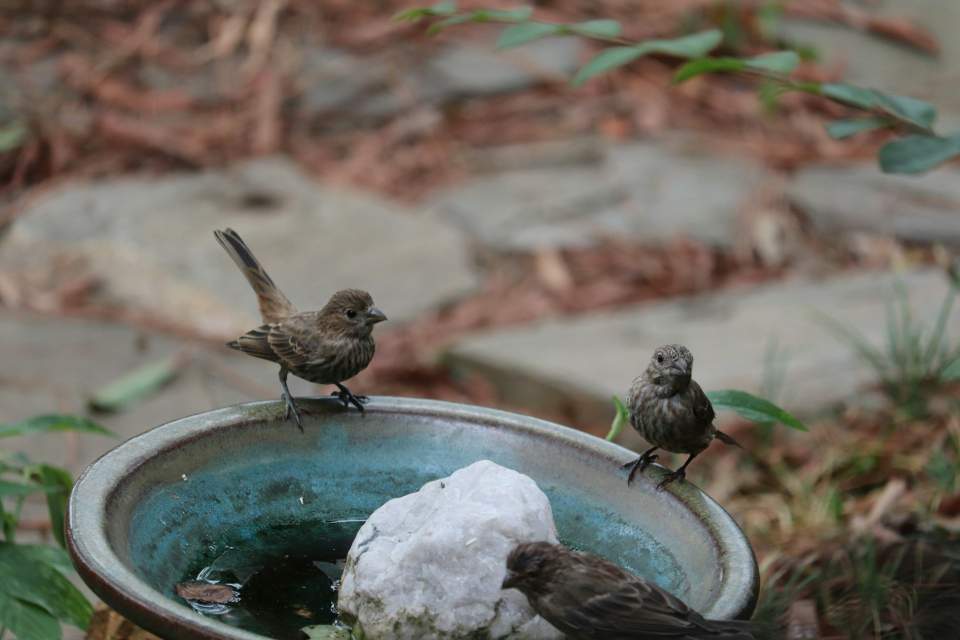
The Problem: Why Birdbaths Freeze So Fast
Bird bath water in freezing temperatures follows simple physics, but understanding the specifics helps you fight the freeze. Water freezes at 32°F obviously, but several factors determine how quickly your bath turns to solid ice.
Shallow water freezes faster than deep water because there’s less thermal mass to cool. Most birdbaths are intentionally shallow (1-2 inches deep) for bird safety, which unfortunately means they freeze rapidly. That perfect summer depth becomes a liability in winter when overnight temperatures plummet.
Material matters enormously. Metal baths conduct heat away from water incredibly fast, they’re basically ice machines in winter. Stone and concrete baths fare better due to lower thermal conductivity, but they still freeze. Plastic baths hold heat slightly longer than metal but crack easily if you don’t prevent ice expansion. I learned this the hard way after losing two plastic baths to freeze damage.
Protect bird bath from cracking in cold means either using heaters or draining baths completely before hard freezes. Ice expansion cracks containers from the inside out. I’ve seen beautiful ceramic baths destroyed in single overnight freezes because owners forgot to protect them.
Placement compounds freezing problems. Shady locations, wind-exposed areas, and spots far from buildings (which radiate some warmth) all accelerate freezing. My north-facing bath freezes solid by 8 PM even on relatively mild winter evenings, while my south-facing bath near the house stays liquid hours longer.
Heated Birdbaths: The Easiest Way to Keep Water Liquid
Heated bird baths represent the most reliable solution if you have access to electricity. I resisted buying one for years (they seemed expensive and complicated), but honestly, getting a plug-in bird bath was the best birding investment I’ve made.
Thermostatic bird bath de-icer models activate automatically when temperatures approach freezing and shut off when water warms up. This saves electricity and prevents overheating water in mild weather. My thermostatically controlled bath runs maybe 6-8 hours daily during typical winter conditions, using surprisingly little power compared to what I expected.
Best heated bird baths 2025 feature built-in heaters rather than separate de-icer units you add later. Integrated systems last longer and provide more even heating. I use a Farm Innovators model that’s survived four winters without issues, the investment (around $60) has been worth every penny watching birds drink reliably all winter.
Electric vs solar birdbath heaters presents an interesting comparison. Electric heaters work consistently regardless of weather or sun angle. Solar heaters cost nothing to operate but struggle on cloudy days and during the coldest periods when you need them most. IMO, solar makes sense only in mild-winter climates with abundant sunshine. Northern regions need electric reliability.
Safety absolutely matters with heated bird bath setups. Use only outdoor-rated extension cords designed for cold weather. Indoor cords become brittle and dangerous in freezing temps. Always plug into GFCI outlets that protect against electrical shorts, water and electricity require serious respect. I run my cord along fence lines where it’s visible but protected from foot traffic and lawn equipment.
According to guidance from the National Audubon Society on winterizing your yard for birds, many kinds of birds bathe in and drink from open water in frigid weather. They recommend purchasing a plastic birdbath with a built-in heater or converting a summer birdbath by adding a heater, noting that baths on pedestals are ideal for reducing risks from predators.
DIY Heated Birdbath Options
If you don’t want to buy a complete heated system, DIY heated bird bath solutions work surprisingly well. I started with DIY approaches before investing in purpose-built equipment, and several methods delivered solid results.
Use a Submersible Bird Bath Heater
Submersible bird bath de-icer units drop into your existing bath and heat water from inside. These simple plug-in devices cost $20-40 and work with any waterproof container. I used one for two winters in my concrete pedestal bath before upgrading to an integrated system.
Installation is literally just “drop it in and plug it in.” Most models include thermostats preventing water from overheating. The main limitation is you need an existing bath in good condition (no cracks) since you’re adding an electrical element to water. Also, birds sometimes peck at the heater unit itself, though I’ve never seen one damaged by this.
Bird bath de-icer safety requires checking the unit regularly for cord damage and ensuring it stays submerged. If water levels drop exposing the heating element, it can overheat and fail. I check mine every morning during cold snaps, adding water as needed.
Try a Solar Bird Bath Heater
Solar bird bath heater units work beautifully in sunny, mild-winter climates. They’re essentially small solar panels connected to heating elements, zero operating costs, easy installation, and no cords to manage. I tested one during a mild winter, and it kept water liquid on sunny days when temps hovered around 25-30°F.
The limitations become obvious during harsh winters. Cloudy days mean no heating. Extreme cold overwhelms the modest heat output. Snow covering the solar panel means zero function. If you live in the sunny Southwest or Pacific Coast with mild winters, solar makes sense. If you’re in Minnesota or Maine? Don’t waste your money.
Make a Homemade Heater
Homemade bird bath heater projects range from simple to elaborate. The light bulb method works: place a ceramic light fixture with a 40-60 watt incandescent bulb inside an upturned terracotta flowerpot, set your birdbath on top. The bulb generates heat that radiates upward through the pot into the bath bottom, slowing freezing.
I tried this method one winter. It worked okay down to about 20°F, below which water froze anyway. The setup looks weird (basically a flowerpot pedestal with a cord coming out), and you need weatherproof electrical connections. It’s more of an experiment than a permanent solution.
Heated pet bowls offer another option. They’re designed to keep outdoor pet water liquid and work equally well for birds. I’ve used heated dog bowls as birdbaths with good success, they’re durable, thermostatically controlled, and relatively inexpensive ($25-45). The only downside is depth; most pet bowls are too deep for small bird safety, so I add rocks creating shallow areas.
Non-Electric Ways to Keep Birdbaths Ice-Free
Non-electric ways to keep bird baths ice-free work best in moderate climates or as supplements to electric methods. These techniques won’t prevent freezing during extreme cold, but they extend liquid-water availability during mild winters or shoulder seasons.
Move your bath into morning sun. South-facing placement maximizes solar heating during the day. My south-side bath stays liquid 3-4 hours longer than my shaded north-side setup even during identical weather. Sunlight provides free heating that genuinely extends usable time.
Place the bath near sheltering structures. Evergreens or building walls block wind, reducing heat loss through evaporation and convection. Wind chill affects water temperature just like it affects ours, moving air strips heat away rapidly. I moved one bath under an evergreen overhang and noticed it stayed liquid noticeably longer.
Floating ball method bird bath involves placing a small ball (ping pong balls work great) in the water. The ball moves with wind, creating surface agitation that slows ice formation. It doesn’t prevent freezing completely, but it delays it by disrupting the ice crystal formation process. I keep several ping pong balls in my baths, they’re cheap, effective, and birds ignore them completely.
Use of warm water in bird bath helps temporarily. Refilling with warm (not hot, you don’t want to shock birds) water during afternoon extends liquid availability for several hours. I pour warm water into my non-heated bath around 3 PM during cold days, which keeps it liquid through evening bird activity hours. It freezes overnight, but I repeat the process next afternoon.
Dark rocks placed in shallow baths absorb solar heat and radiate it into surrounding water. This works only on sunny days obviously, but every hour of extended liquid water helps. I use flat black stones positioned where sunlight hits directly, they genuinely warm surrounding water noticeably.
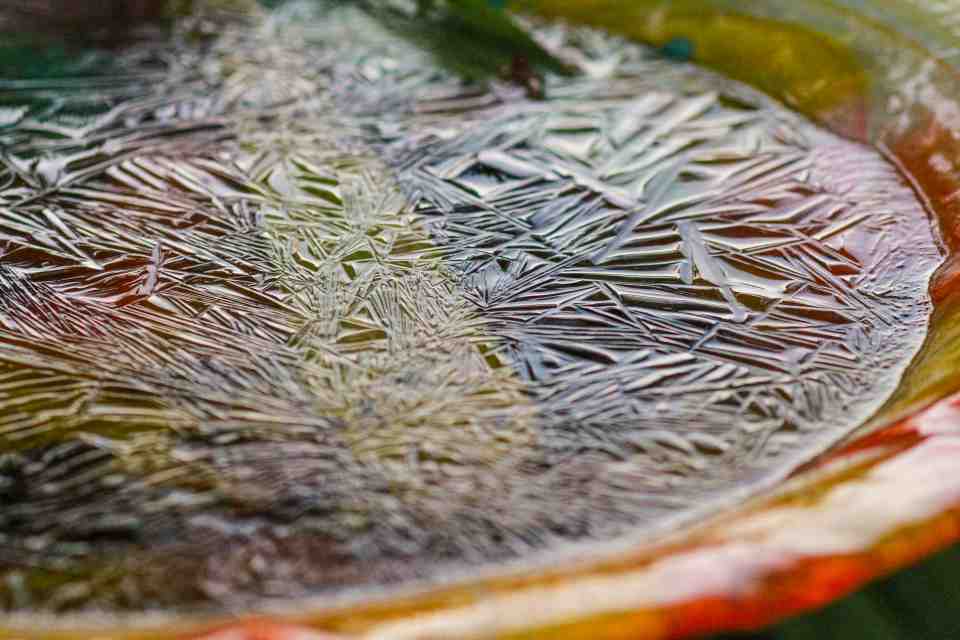
Placement and Insulation Tips That Make a Big Difference
Placement of bird bath in winter sun single-handedly determines success or failure of non-electric methods. South-facing exposure with maximum daily sun provides critical free heating. I’ve documented 15-20°F temperature differences between sunlit and shaded baths even when placed just 10 feet apart.
Raise baths off the ground when possible. Ground contact conducts heat away rapidly. Pedestal baths or wall-mounted designs reduce heat loss compared to ground-level basins. My pedestal bath stays liquid about 30 minutes longer than my ground-level basin during identical conditions.
Insulating bird bath bases reduces heat conduction into frozen ground. I wrap my concrete pedestal with straw bales during winter, which insulates the base and slows freezing. You can also use foam insulation, wood blocks, or any material creating an air gap between ground and bath. It looks a bit unusual, but function beats appearance during survival season.
Position baths near buildings if possible. Houses radiate surprising amounts of heat even through insulated walls. My bath positioned 5 feet from my house wall stays liquid longer than identical baths 20 feet away. The microclimate near structures provides measurable benefits. According to research from the Cornell Lab of Ornithology on Bird Friendly Winter Gardens, providing water near shelter and food sources creates optimal winter conditions for bird survival.
Wind protection matters enormously. Even gentle breezes accelerate freezing through evaporative cooling. Positioning baths in sheltered alcoves, behind hedges, or near windbreak structures extends liquid time significantly.
Safety Mistakes to Avoid
Never, ever use salt in bird bath water to prevent freezing. Salt is toxic to birds and will harm or kill them. This includes rock salt, table salt, or any chemical de-icers. Birds drink the water and preen with it, salt exposure damages kidneys, causes dehydration, and kills. Just don’t do it.
Don’t use metal containers unless you’re heating them electrically. Unheated metal freezes instantly in cold weather and becomes dangerously cold to bird feet. I’ve seen birds reluctant to land on frozen metal baths even when desperately thirsty. Stick with stone, concrete, or plastic for non-heated applications.
Bird bath de-icer safety means regularly inspecting electrical equipment. Cords crack in cold weather, connections corrode, and heating elements fail. I check my heated bath weekly during winter, looking for frayed cords, testing GFCI function, and ensuring water levels remain appropriate. One inspection takes two minutes and prevents potential disasters.
Never use antifreeze or automotive chemicals near birdbaths. These products are lethal to birds in tiny amounts. Even residues can cause serious harm. Keep all chemical de-icers far away from bird areas. The National Wildlife Federation emphasizes that providing clean, ice-free water during winter is one of the most important steps homeowners can take to support local bird populations.
Don’t overfill heated baths. Water expands when freezing, and overfilled baths can crack even with heaters if power fails overnight. I fill baths to about 75% capacity, leaving expansion room for emergencies.
Keep It Clean: Maintenance in Freezing Weather
Maintenance tips for winter bird baths matter just as much as summer upkeep. Cold water doesn’t stop bacterial growth, it just slows it. Algae, bacteria, and bird waste still contaminate water requiring regular cleaning.
How often to refill bird bath in winter depends on usage and weather. I refill every 2-3 days minimum, more frequently during heavy use periods. Fresh water prevents ice buildup around edges and ensures clean drinking water. Heated baths evaporate faster than you’d expect, so I check water levels daily.
Clean baths weekly during winter using hot water and scrub brushes. I avoid harsh chemicals (they’re unnecessary and potentially harmful), using physical scrubbing and hot water for sanitation. According to Audubon’s guidance on feeding birds safely in winter, birdbaths should be replaced with fresh water frequently, ideally daily or every other day, to prevent mosquitos, algae, and bacterial growth, with regular scrubbing using vinegar solution followed by a rinse. Drain the bath completely, scrub all surfaces removing algae and droppings, rinse thoroughly, and refill.
For more on maintaining clean feeding and watering stations, see how to clean a bird bath without chemicals which covers hygiene practices that apply to birdbaths as well.
Remove ice daily if it forms overnight in non-heated baths. Ice buildup reduces water capacity and creates uneven surfaces birds struggle navigating. I crack ice carefully (avoiding damaging the bath itself) and discard it away from the bath area. Research published in the Journal of Experimental Biology on bird dehydration effects found that even short-term water deprivation (approximately 20 hours) significantly elevated baseline corticosterone levels and plasma osmolality in house sparrows, demonstrating that water restriction has critical physiological consequences for birds during winter months.
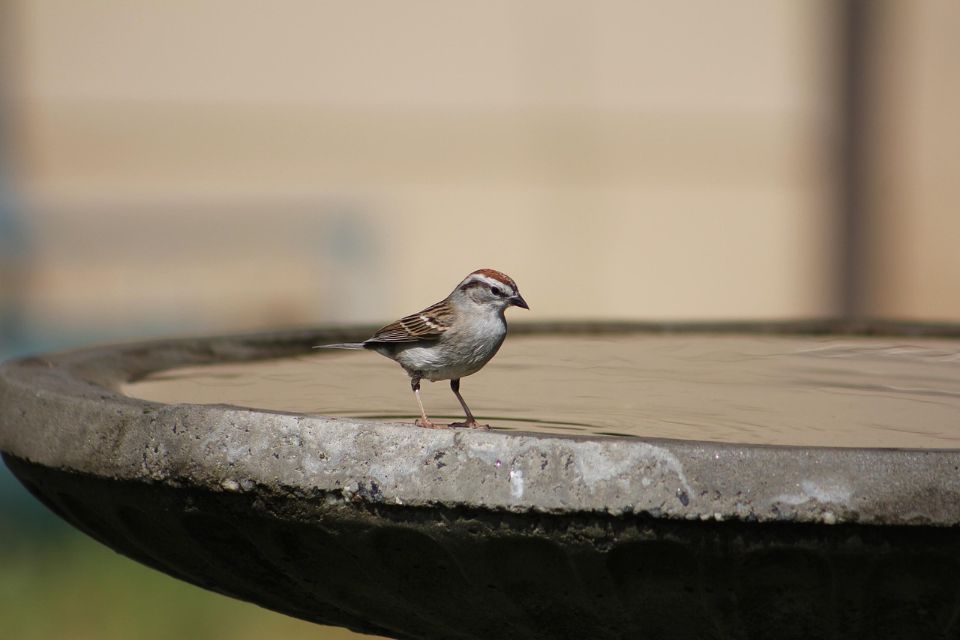
Attracting Birds to a Winter Birdbath
Attract birds to winter bird bath setups by combining water with other resources. Birds prefer one-stop locations offering food, water, and shelter simultaneously.
Position feeders near your birdbath. Birds visiting feeders naturally investigate nearby water sources. My feeder-bath combination station sees triple the traffic of my isolated bath 30 yards away. The convenience factor matters, birds conserve energy using co-located resources. For strategies on setting up effective winter feeding stations, see our article on how to create a fall bird feeding station.
Backyard bird care in winter includes providing cover near water sources. Dense shrubs or evergreens within 10-15 feet offer escape routes from predators. Birds won’t visit exposed baths where they feel vulnerable. I planted juniper shrubs near my main bath, and bird visits increased noticeably once the shrubs matured.
Provide shallow edges for small birds. Chickadees, kinglets, and warblers need depth under 1 inch for safe bathing and drinking. I add flat stones creating graduated depths from 1/2 inch to 2 inches, accommodating species of all sizes. Watching tiny birds confidently approach shallow areas while larger birds use deeper sections shows how much edge design matters.
Consider multiple water sources if your yard attracts substantial winter bird populations. I maintain three baths: one heated near the house, one solar-heated in the sunny back corner, and one non-heated that I refill with warm water daily. This distribution reduces crowding and serves more birds simultaneously. For comprehensive approaches to winter bird support, check out how to attract birds during winter and feeding birds in winter. You can also explore bird-friendly garden design for habitat planning that includes water features year-round.
Final Thoughts: Small Efforts, Big Impact
Keeping birdbaths ice-free during winter isn’t complicated, but it does require daily attention. Simple habits, checking water levels, refilling with warm water, cleaning regularly, make enormous differences for birds struggling through harsh months.
Heated bird baths represent the gold standard if you can swing the investment. Plug-in bird bath models provide reliable, consistent performance that DIY methods can’t match. But even without electricity, smart placement of bird bath in winter sun, use of warm water, and insulating bird bath bases all extend liquid availability meaningfully.
The effort pays off in ways beyond just “helping birds” (though that alone justifies everything). Watching birds visit your ice-free bath during brutal cold provides genuinely uplifting moments during dreary winter months. Those cardinals drinking confidently while snow swirls around them? That chickadee preening carefully in 10°F weather? These scenes remind you that small actions create real impact.
Check your birdbath daily this winter. Birds are counting on you, whether they know it or not 🙂