
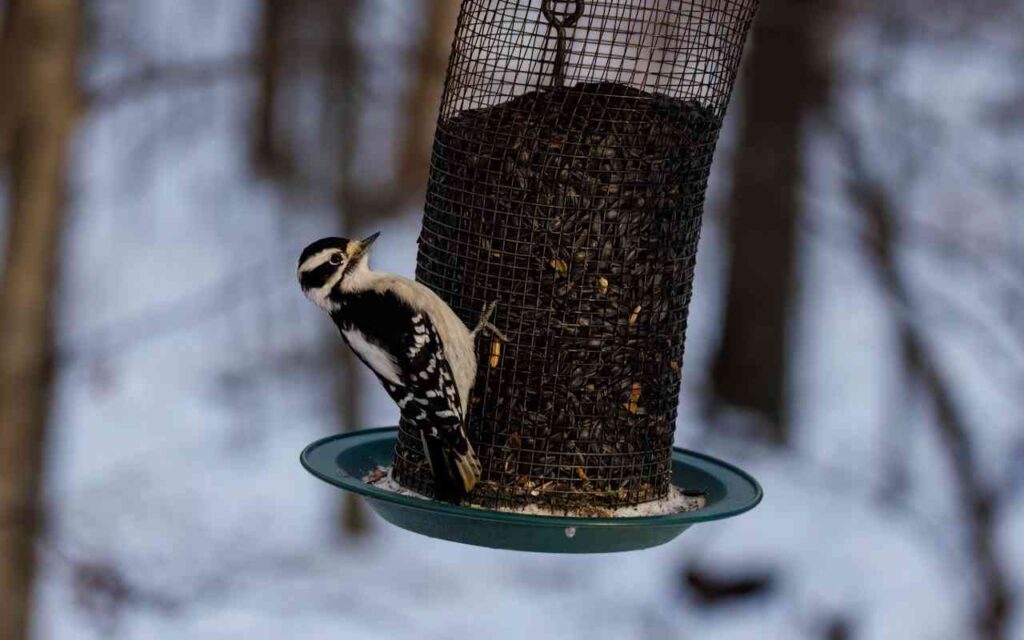
Winter turns backyard bird feeding from a casual hobby into a vital lifeline, making it important to know what bird seed to use in winter feeders. When snow and ice cover natural food sources, the seeds you provide can mean the difference between survival and starvation for overwintering birds. Not all seeds hold up in freezing temperatures, so choosing poorly wastes money and leaves birds hungry.
A detailed metabolic study of Black-capped Chickadees found their maximal thermogenic capacity rises by 34% in winter, reflecting the huge energy needed to stay warm. The right seeds help birds meet these demands, and this guide breaks down which options offer the best nutrition, attract the most species, and perform reliably in winter conditions. 🙂
- Winter birds need high-fat seeds to survive freezing temperatures.
- Black oil sunflower seed is the best all-around winter seed for most species.
- Nyjer seed is essential for winter finches like goldfinches and siskins.
- Suet and seed-suet blends provide the highest caloric boost during extreme cold.
- Safflower works well where squirrels or starlings are a problem.
- Low-fat seeds like millet and cracked corn should only be supplemental.
- Avoid cheap mixes with filler grains that birds reject in winter.
- Fresh seed, dry feeders, and regular cleaning matter as much as seed choice.
What Bird Seed to Use in Winter Feeders Explained
Show Transcript:
0:00
Hey, welcome to the explainer. Today we’re talking about your backyard bird feeder, but we’re not just looking at it as a hobby. We’re going to turn it into a science-backed lifeline for the birds.
0:07
I’ll cover exactly what they need this winter so they don’t just survive, but truly thrive.
0:16
So let’s dive in. Here’s a question for you: is your bird feeder a lifeline or a liability? That might sound harsh, but it’s something to think about seriously.
0:29
When temperatures drop, the choices you make can literally mean life or death for the birds that rely on your feeder. Look at this number: thirty-four percent. That’s how much more energy a tiny chickadee needs just to survive a single winter day.
0:44
That’s a massive energy debt they have to pay off every day just to stay warm. And this brings us to our first major topic: winter’s hidden crisis. For small birds, winter is more than feeling cold.
0:56
It’s a constant metabolic emergency where every calorie they can find goes toward generating the heat they need to survive. To help them properly, we have to understand the science behind it.
1:15
It’s all about providing the right kind of fuel. And to do that, you first need to understand the extreme biological challenge these birds face when the world freezes over.
1:29
Here’s a word for you: thermogenesis. It sounds complicated, but it’s simple and essential. It just means producing heat by burning fuel. In winter, thermogenesis becomes a bird’s number one job, and it consumes a massive amount of energy.
1:51
Think about how their needs change throughout the year. In summer, they need protein to grow feathers and raise young. In winter, the focus flips completely. Fat becomes the most critical nutrient because it’s concentrated, high-octane fuel for generating life-saving heat.
2:10
Now that we understand the problem, let’s look at solutions. And we’re not talking about just any seeds. These are the winter superfoods proven by research to help birds survive the harsh season.
2:27
First, the undisputed champion: black oil sunflower seeds. Their fat content can reach forty percent, and their thin shell makes energy easy to access, especially for tiny birds like chickadees and titmice.
2:48
The Cornell Lab of Ornithology calls black oil sunflower seeds the single most important seed for winter feeders. That’s a strong endorsement from one of the top bird research institutions in the world.
3:02
Next up is suet. It’s not a seed, but it’s essential. With eighty to ninety percent fat content, it delivers an unmatched caloric punch for insect-eating birds like woodpeckers and nuthatches.
3:19
Why does it matter so much? A study found chickadees with access to high-energy food had a sixty-nine percent survival rate over winter. Those without access had only thirty-seven percent. A well-stocked feeder literally doubles their chances of reaching spring.
3:44
Another strategic pick is safflower seed. It’s packed with fat, but its slightly bitter taste keeps squirrels and starlings away. This lets you focus on feeding cardinals, finches, and other backyard favorites.
4:00
Now, let’s talk about support seeds. They’re not the main course, but they play important roles in creating a diverse, effective feeding station. Peanuts are an energy powerhouse for larger birds like jays. White proso millet is essential for ground-feeding birds like juncos.
4:31
Cracked corn isn’t ideal for winter nutrition, but it works as a distraction feed. Placing it away from main feeders keeps squirrels and jays busy, leaving high-fat food for smaller birds.
4:50
It’s also crucial to avoid common mistakes that can turn your feeder into a hazard. Even with the best seed, a small oversight can harm the birds you’re trying to help.
5:17
The number one hidden threat is mold. Wet or spoiled seed can grow aspergillus, a deadly fungus. Birds inhaling spores risk severe respiratory infections.
5:35
The solution is simple. Follow a four-step cleaning routine: toss old seed, scrub the feeder with a dilute bleach solution, rinse thoroughly, and ensure it’s completely dry before refilling.
5:52
Avoid cheap seed mixes with filler grains, which birds ignore. Be consistent. Empty feeders during cold snaps break trust. Never use old or rancid seed; if it smells off, it’s no longer nutritious.
6:19
Here’s your winter action plan in three steps. First, start with the best fuel: black oil sunflower seeds. Second, keep feeders clean and dry to prevent disease. Third, be consistent. Keep food available until spring arrives.
6:50
Remember, a bird feeder is more than decoration. It’s an active part of your local ecosystem. By following these evidence-based guidelines, you’re helping to write a story of survival for your backyard birds.
7:07
So, here’s the final question: this winter, what story will your backyard tell?
Why Winter Seed Selection Differs From Other Seasons
Winter bird feeding operates under fundamentally different biological and environmental constraints than warm-weather feeding. Understanding these differences is essential for selecting appropriate seed types.
Metabolic Demands and Caloric Density
Research tracking winter bird energetics found that basal and maximal metabolic rates typically increase during winter for small birds overwintering in cold climates. This dramatic increase requires seeds with maximum caloric density per gram consumed.
Fat content becomes the critical metric during winter. While protein matters for feather maintenance and immune function, dietary fat provides the concentrated energy necessary for thermogenesis—the metabolic heat production that keeps birds alive through subfreezing nights. Seeds containing 35-50% fat by weight significantly outperform lower-fat alternatives for winter survival.
Studies on chickadee behavior show that winter energy demands are extremely high, and models of daily energy use suggest that meeting these demands would require dozens of seeds a day if birds relied on seed alone.
According to a winter bird feeder use and energy expenditure study, this highlights the importance of high‑fat foods like black oil sunflower seed in cold weather. These high‑energy seeds help birds maintain body heat and survive extreme cold, even though they also eat insects and other natural foods.
Field observations support this pattern. According to the Cornell Lab of Ornithology, a single Black-capped Chickadee may consume around 50 sunflower seeds per day in winter. Cornell also notes that chickadees often grab one seed at a time and fly off to eat it, balancing rapid calorie intake with predator avoidance.
Seed Performance in Freezing Conditions
Not all seeds maintain quality equally when exposed to freeze-thaw cycles, moisture, and prolonged cold. Seeds with hard outer shells provide natural protection against moisture infiltration, which causes seed spoilage and mold growth. This physical characteristic becomes increasingly important during winter when precipitation alternates between rain, sleet, and snow.
Mold growth in feeders poses serious health risks to birds. Research published on aspergillosis in wild birds confirms that keeping bird feeders free of moldy substrates is essential, as Aspergillus spores can cause serious and often fatal respiratory infections when inhaled.
Temperature stability also affects seed palatability. Black oil sunflower seeds contain oils that stay relatively fluid even at extremely cold temperatures, maintaining digestibility when other options become less palatable.
Top-Tier Winter Seeds: The Research-Backed Essentials
Based on comprehensive field studies and nutritional analysis, certain seeds consistently outperform others for winter feeding across diverse regions and bird populations.
Black Oil Sunflower Seeds: The Winter Standard
Black oil sunflower seeds represent the single most important seed for winter feeders, supported by decades of ornithological research. According to Cornell Lab experts, black oil sunflower seeds have been cultivated to have higher fat content than regular sunflower seeds and their thin shells make them easier for birds to crack open.
These seeds contain 28-40% fat content by weight (sources vary on exact percentages, with most citing 28-40% range), providing exceptional caloric density. Their thin shells allow easy access for small-billed birds like chickadees, nuthatches, and finches, while also protecting the seeds from winter moisture.
Research on winter bird feeding documented that supplementary food given to birds during winter can have carryover effects into the subsequent breeding season, with birds living on provisioned sites showing advanced laying dates and increased fledging success.
The protein content of black oil sunflower seeds (15-25%) also supports the feather maintenance necessary for proper insulation. Winter birds must keep plumage in optimal condition, as feather degradation directly compromises thermoregulatory capability.
Expected winter visitors to these feeders include cardinals, titmice, blue jays, woodpeckers, and numerous other species. This single seed type will satisfy the majority of winter backyard birds in most regions.
Nyjer (Thistle) Seeds: Specialized Finch Nutrition
Nyjer seeds, despite their small size, contain approximately 40% fat content and prove essential for winter finch populations. American Goldfinches, Pine Siskins, and Common Redpolls—species that overwinter in northern regions—depend heavily on high-fat small seeds that match their bill morphology and feeding behavior.
One challenge with nyjer involves moisture management. These small seeds can clump when wet, blocking specialized finch feeder ports. Research recommends feeders with adequate drainage and rain guards to prevent moisture accumulation. Birds cannot access clumped nyjer, rendering the seed worthless regardless of its nutritional quality.
For maximum effectiveness, offer nyjer in dedicated tube feeders with small ports designed specifically for finch bills. Mixed feeders containing nyjer alongside larger seeds result in significant waste, as finches scatter other seeds while foraging.
Suet and Seed-Suet Blends: Maximum Caloric Density
While technically not a seed, suet deserves discussion in any comprehensive winter feeding guide due to its unmatched fat content (80-90%) and proven survival benefits. A landmark study by researchers Brittingham and Temple in Wisconsin found that chickadees with access to feeders had a 69% overwinter survival rate compared to only 37% for those without supplemental food, with the survival difference most pronounced during extreme cold events below 0°F for five or more days.
Modern seed-suet blends combine rendered animal fat with high-quality seeds, creating offerings that attract seed-eating species while providing maximum caloric density. These blends particularly benefit woodpeckers, nuthatches, chickadees, and titmice—species that naturally consume insects during warmer months and require high-protein, high-fat foods year-round.
Quality matters significantly with suet products. Premium suet maintains consistency in cold temperatures while inferior products become rock-hard and inaccessible below 20°F.
Safflower Seeds: Strategic Selection Benefits
Safflower seeds contain approximately 38% fat content and offer a unique strategic advantage: most squirrels and some aggressive bird species like European Starlings and Common Grackles avoid them due to their slightly bitter taste.
Cardinals, chickadees, titmice, nuthatches, and House Finches readily consume safflower seeds. The seeds’ hard shells provide excellent moisture protection during winter, and their white color makes them easy for birds to locate against snow backgrounds.
Studies comparing safflower to black oil sunflower show that safflower tends to attract fewer species overall because its thicker shell and lower appeal mean many small‑billed birds skip it in favor of sunflower.
According to research from Virginia Tech’s wild bird feeding guide, black oil sunflower draws the most species, while safflower appeals to a smaller subset. However, safflower still provides an effective solution in yards where squirrels or starling flocks dominate feeders, allowing you to reduce nuisance visits without expensive squirrel‑proof hardware.
Second-Tier Winter Seeds: Supplemental Options
While top-tier seeds should form the foundation of winter feeding programs, certain supplemental seeds provide variety and attract specialized species.
White Proso Millet: Ground-Feeding Bird Support
White proso millet contains approximately 3-4% fat content—dramatically lower than oil seeds—but plays an important role for ground-feeding species like juncos, native sparrows, doves, and towhees. These species prefer foraging on or near ground level and often ignore elevated feeders stocked with oil seeds.
The low fat content makes millet a poor primary winter seed, but its inclusion supports species diversity. According to studies on winter bird identification, Dark-eyed Juncos—one of the most abundant winter visitors across much of North America—show strong preferences for millet scattered on the ground or offered in platform feeders.
Millet performs poorly when wet, quickly becoming moldy and unpalatable. Research recommends offering only small quantities that birds will consume within 1-2 days, particularly during wet winter weather.
Peanuts: High Protein and Fat Combination
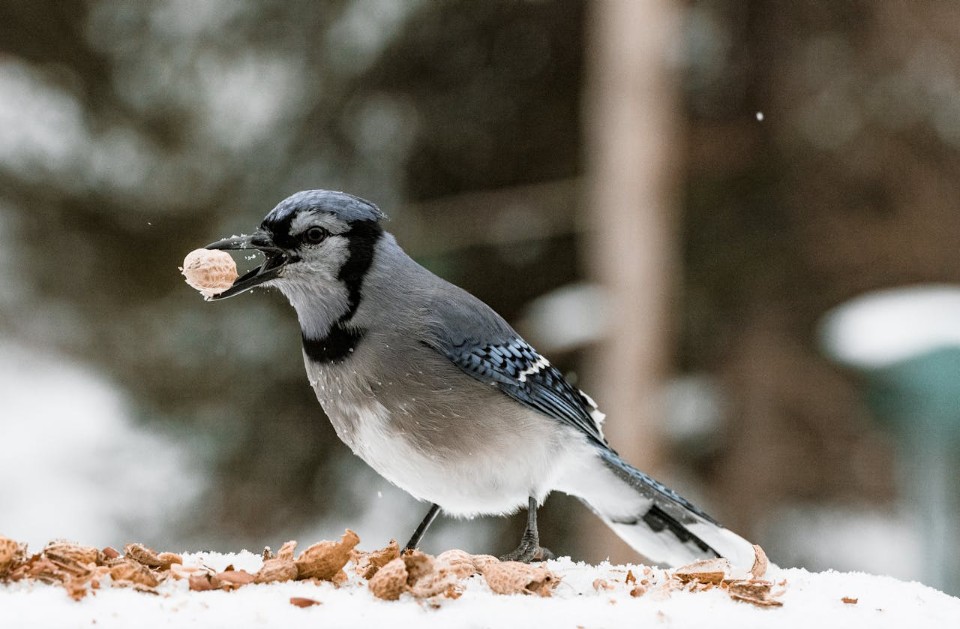
Peanuts (technically legumes, not seeds) contain approximately 49% fat and 25% protein, making them exceptional winter nutrition. Woodpeckers, jays, nuthatches, and chickadees increase peanut consumption during the coldest winter periods, with some individuals caching peanut pieces for later retrieval.
Whole peanuts in the shell provide entertainment value as birds work to extract kernels, though this requires significant energy expenditure. Shelled peanut pieces offer more efficient caloric access, which proves more beneficial during extreme cold when energy conservation matters most.
Mold represents the primary concern with peanut feeding. Aflatoxin-producing molds colonize peanuts stored in humid conditions, creating toxins potentially fatal to birds. Purchasing peanuts specifically labeled for wildlife feeding is strongly recommended, as these products undergo testing for aflatoxin contamination.
Peanut pieces should be offered in specialized mesh feeders that allow drainage and air circulation. Soggy peanuts remaining in feeders develop dangerous molds within 3-5 days during winter’s wet-freeze-thaw cycles.
Cracked Corn: Budget Option With Limitations
Cracked corn contains only 4-5% fat content, making it nutritionally inferior to oil seeds for winter feeding. However, its low cost and strong attraction for certain species—particularly jays, doves, juncos, and sparrows—explains its continued popularity.
Field research demonstrates that cracked corn works best as a “distraction feed” placed away from premium seed feeders. Jays and squirrels preferentially consume corn when available, reducing pressure on more expensive black oil sunflower offerings.
Corn spoils rapidly when wet and attracts rodents more aggressively than other seeds. Research recommends offering cracked corn in small amounts at a time and elevating feeders to reduce ground-level rodent attraction, according to Canadian Wildlife Health Cooperative feeder strategy recommendations.
During extreme cold (below 0°F/-18°C), the low fat content makes corn inadequate as a primary food source. Birds visiting feeders stocked primarily with corn during arctic outbreaks may struggle to meet metabolic demands, according to research on feeding birds in winter conditions.
Seeds to Avoid in Winter Feeders
Not all seeds marketed for bird feeding provide appropriate winter nutrition, and some create more problems than benefits.
Red Milo and Filler Grains
Cheap seed mixes frequently contain red milo, wheat, oats, and other filler grains that most desirable bird species reject. These seeds are kicked from feeders uneaten, creating waste piles beneath feeders that attract rodents and promote disease transmission.
Birds cannot afford to waste energy sorting through poor-quality mixes during winter. Time-allocation studies show that birds spend 40-60% longer at feeders containing filler-heavy mixes compared to feeders stocked with pure black oil sunflower, increasing their exposure to predators and weather.
Overly Processed or Flavored Seeds
Seeds coated in artificial flavoring, coloring, or excessive salt pose potential health risks. Birds’ salt tolerance varies by species, and excessive sodium intake can cause renal stress in small-bodied birds during periods when natural water sources freeze.
“Vitamin-enriched” seeds provide no proven benefits, as birds obtain necessary micronutrients from diverse natural diets. The premium prices for these products represent marketing rather than nutritional science.
Feeder Management for Winter Seed Success
Even premium seeds fail to support birds effectively without proper feeder management and maintenance strategies.
Preventing Moisture and Mold
Mold represents the primary seed quality threat during winter. A field experiment published in Scientific Reports found that rural house finches showed increased infection from parasites when feeders were left uncleaned, and that daily cleaning with diluted bleach solution over a 5-week period successfully decreased parasite burden, demonstrating that routine feeder cleaning can be critical for ensuring the health of visiting bird species.
A study on parrot feed contamination found that Aspergillus species were isolated from 72.7% of tested samples, highlighting the widespread nature of mold contamination risk in bird feeds when proper storage and management aren’t maintained.
Studies recommend feeders with effective roof coverage and drainage holes that prevent water accumulation. Tube feeders without drainage become mold incubators during winter’s freeze-thaw cycles.
Cleaning frequency should increase during winter. Research suggests cleaning feeders every 2 weeks minimum, or weekly during wet conditions. A 10% bleach solution (1 part bleach to 9 parts water) effectively kills mold spores and bacteria.
Managing Refill Frequency
Overfilling feeders wastes money and compromises seed quality. Experts recommend offering only as much bird seed as birds are likely to eat in a few days and cleaning feeders regularly to prevent mold and contamination, which helps maintain seed freshness and reduces attraction of rodents and other pests, according to Project FeederWatch.
This frequent-refill approach also gives you a chance to inspect feeders for damage, mold, or other issues. Birds benefit more from consistently fresh seed than from large volumes that slowly deteriorate.
Seed storage is important, too. Seeds kept in garages or sheds without climate control deteriorate faster than those stored indoors in sealed, rodent-proof containers.
Preventing Waste and Ground Accumulation
Seed waste beneath feeders creates multiple problems: rodent attraction, disease transmission vectors, and sprouting vegetation that requires spring cleanup. Platform feeders and tray feeders with screens catching hulls significantly reduce ground accumulation compared to tube feeders alone.
Guidance on responsible bird feeding emphasize the importance of regular ground cleanup, particularly in areas where seed accumulation might attract rodents near home foundations.
Common Winter Feeding Mistakes That Undermine Bird Health
Even well-intentioned feeding programs can inadvertently harm birds when certain critical errors occur.
Using Old or Rancid Seeds
Seed oils undergo oxidation over time, creating rancid seeds that birds may reject or that provide diminished nutritional value. Black oil sunflower seeds stored properly maintain quality for approximately 3-6 months, while seeds stored in warm, humid conditions deteriorate within weeks.
Rancid seeds smell musty or unpleasant to humans—if you detect off odors, birds likely do as well. Studies show that birds demonstrate clear preferences for fresh seeds when offered choices.
Inconsistent Feeding Schedules
Research examining bird behavior around feeders demonstrates that chickadees remember reliable feeder locations and incorporate them into their daily foraging routes.
Inconsistent feeding—periods of abundance followed by empty feeders—forces birds to expand foraging territories and may reduce survival during extreme weather events. If you begin winter feeding, research strongly recommends maintaining consistency through the entire cold season.
Ignoring Feeder Hygiene
Disease transmission at dirty feeders potentially outweighs the benefits of supplemental feeding. Research on wild bird aspergillosis found that disease development is often secondary to stressors, with 133 birds diagnosed over 22 years showing various disease patterns linked to environmental exposure.
The concentration of multiple bird species at feeders creates ideal disease transmission conditions. Species like Pine Siskins show particular susceptibility to salmonella, with outbreaks regularly occurring at feeders during winter irruptions.
If you observe lethargic birds, birds with fluffed plumage sitting motionless, or dead birds near feeders, immediately remove feeders, clean them thoroughly with 10% bleach solution, and leave them down for at least 2 weeks to interrupt disease transmission cycles.
Water Availability: The Overlooked Winter Essential
While this article focuses on seed selection, water availability proves equally critical during winter and directly affects how efficiently birds process seeds.
Metabolizing snow requires significant energy expenditure—energy better allocated to thermogenesis. Guidance on how to keep bird baths from freezing in winter demonstrate that heated bird baths dramatically increase feeder visitation rates during cold periods.
Birds require water for both drinking and feather maintenance, as proper preening maintains the insulative properties of plumage essential for winter survival.
Adapting Seed Selection as Winter Progresses
Winter feeding requirements change as the season progresses, and research supports adjusting seed offerings accordingly.
Early Winter (November-December)
Early winter typically sees maximum species diversity as resident birds establish winter territories and late migrants pass through. Offering diverse seed types during early winter helps identify which species will overwinter locally, allowing you to optimize seed selection for January-February conditions.
This period also allows birds to learn feeder locations before extreme weather arrives. Research published in Current Biology tracking hundreds of wild chickadees shows that birds use spatial learning and memory to locate reliable food sources, with the spatial learning and memory task in the study lasting four days during each year of testing as birds learned which feeders provided rewards.
Mid-Winter (January-February)
Mid-winter represents the most physiologically demanding period. Research examining climate effects on body condition in Australian passerines found that fairy-wrens experienced a 9% loss of body mass after just one day of cold, wet weather exposure, demonstrating the severe metabolic stress birds face during harsh winter conditions.
This period requires maximum emphasis on high-fat seeds. Field studies demonstrate that birds visiting feeders stocked primarily with low-fat seeds like millet and cracked corn show poorer body condition than birds accessing high-fat options.
Mid-winter often brings the year’s worst weather—ice storms, deep snow, and extended arctic outbreaks. Research confirms that feeder visitation increases dramatically during severe weather events, sometimes doubling or tripling compared to moderate winter days.
Late Winter (March)
Late winter transitions into early breeding season for many resident species. Observations on when birds start nesting in spring indicates that some species like chickadees and titmice may begin nest site selection in late February or early March, even while snow remains on the ground.
During this transition, bird nutritional requirements shift slightly toward higher protein intake supporting egg production. However, continuing high-fat seed offerings through March benefits birds more than attempting to match the protein increases naturally occurring in their wild diet.
Late winter migrations begin in many regions, with early returning species like Eastern Bluebirds appearing in late February or March.
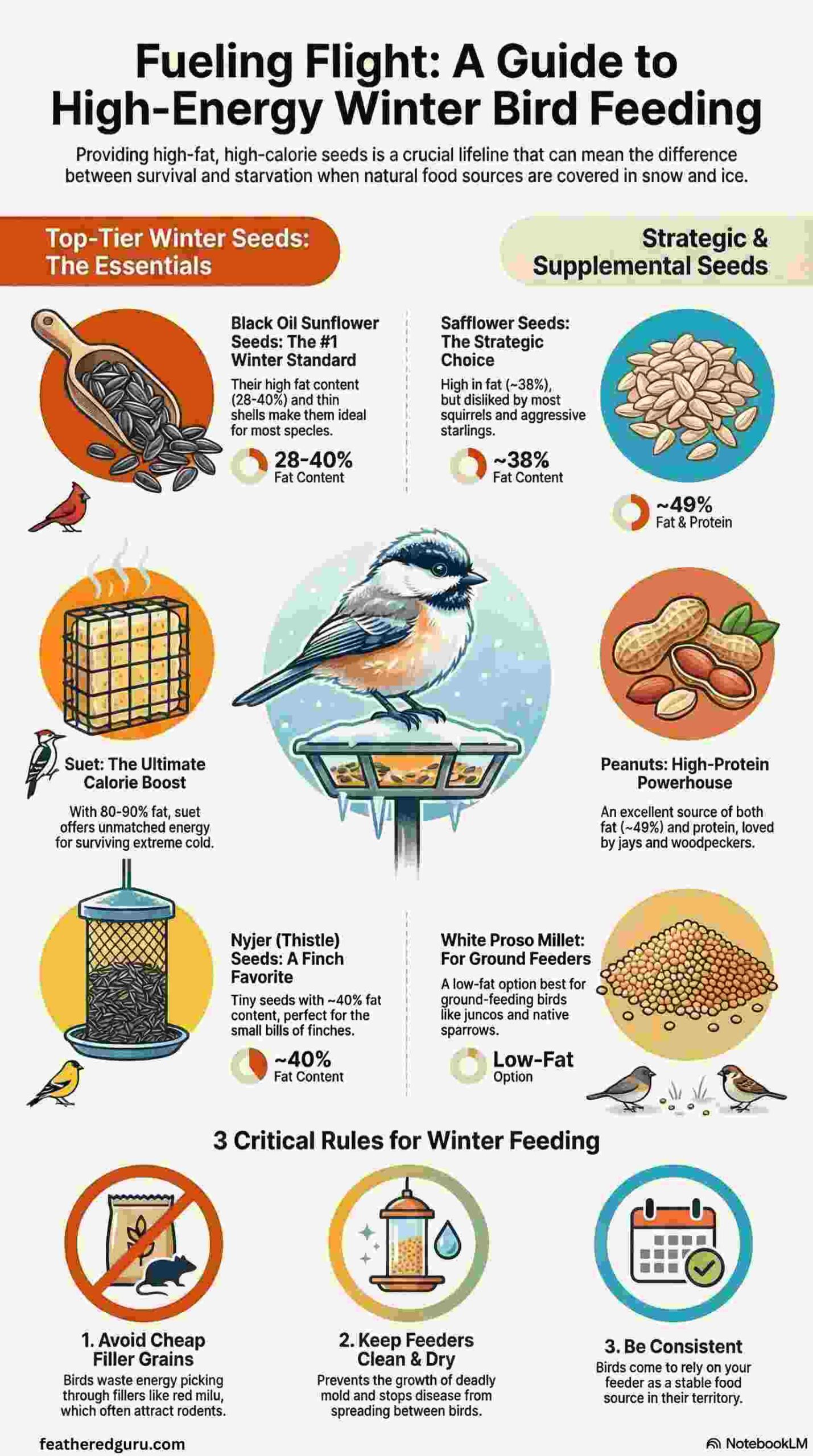
Winter Bird Seed Essentials at a Glance
Quickly see the top seeds and tips that will attract the most birds to your winter feeders.
Conclusion: Implementing a Research-Based Winter Feeding Program
Effective winter bird feeding combines optimal seed selection with proper feeder management and realistic expectations about outcomes. Research consistently demonstrates that black oil sunflower seeds form the foundation of successful winter feeding programs across virtually all North American regions and bird communities.
Supplementing with nyjer for finches, suet for maximum caloric density, and strategic use of safflower creates a comprehensive feeding program supporting maximum species diversity. Lower-fat seeds like millet and cracked corn play limited but valuable roles for ground-feeding specialists when offered in appropriate quantities.
Seed quality, storage conditions, feeder hygiene, and feeding consistency matter as much as seed selection itself. Well-managed feeders stocked with modest quantities of premium seeds provide far greater benefits than poorly maintained feeders overflowing with cheap mixed seeds.
Winter feeding represents an evidence-based opportunity to support bird survival during the year’s most physiologically demanding period. By selecting seeds aligned with bird nutritional requirements rather than marketing claims, you create a feeding program that genuinely benefits the species visiting your yard.
Consider beginning with a single feeder stocked with black oil sunflower seeds, then expanding based on the species visiting and your budget capacity. This simple approach provides more bird-supporting value than complex multi-feeder installations stocked with inappropriate seeds.
For additional guidance on winter bird support, explore resources on how chickadees survive winter, attracting birds during winter months, and creating a complete backyard birding environment.