
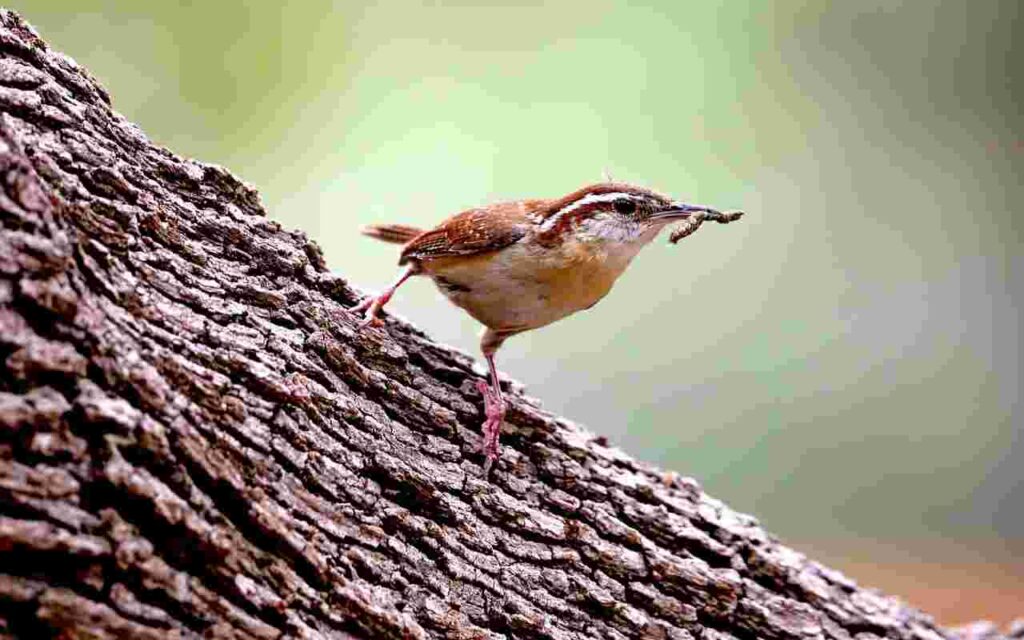
Ever wondered what insects attract birds in summer? Most songbirds shift from seeds to protein-rich prey like caterpillars, beetles, spiders, and other arthropods during the breeding season. Understanding which insects appeal to specific species can transform your garden into a productive summer bird habitat, helping parent birds raise healthy broods that may consume thousands of insects per nesting attempt.
This guide breaks down which insects common summer birds prefer, which species target particular prey, and safe, evidence-based ways to support thriving insect populations without pesticides. Creating diverse, natural habitats encourages bird activity while maintaining balanced ecosystems and predator-prey interactions 🙂.
- Most songbirds switch from seeds to insects during summer breeding season.
- Caterpillars are the #1 food for nestlings, with thousands needed per brood.
- Native trees like oaks, cherries, and willows support the most caterpillars.
- Beetles provide year-round protein and are hunted by woodpeckers, bluebirds, and wrens.
- Spiders are high-protein prey and essential for chickadees, warblers, and hummingbirds.
- Flying insects fuel swallows, martins, flycatchers, and swifts.
- Grasshoppers and crickets peak in late summer and feed open-habitat birds.
- Aphids and tiny insects support gleaning birds like chickadees and titmice.
- Native plants, leaf litter, dead wood, and “messy” zones boost insect populations.
- Avoiding pesticides is critical for healthy summer bird food webs.
Summer Bird Food Explained: Which Insects Matter Most
For a quick visual explanation of which insects birds depend on most during summer, watch the short explainer video below.
Show Transcript:
0:00
If you think the birds in your backyard are just living off the seeds you put out, think again. During the summer, a hidden food web unfolds that’s essential for raising baby birds. So what are they really eating? Let’s dive in.
0:15
Here’s a striking number: 9,000. That’s how many caterpillars a single pair of chickadees may need to feed one brood. That one fact alone changes how we should think about our summer backyard habitats.
0:38
For most songbirds, summer isn’t about seeds. Over 95% of species switch their diet to insects to fuel the next generation. Baby birds cannot digest seeds—they require soft, protein-rich meals, which come primarily from insects.
1:14
Caterpillars are the top choice. For example, northern cardinals feed their chicks about 75% caterpillars during breeding season. Caterpillars are soft, safe to swallow, and packed with protein and calories, making them perfect for young birds.
2:19
But it’s not only caterpillars. A healthy backyard bird habitat functions like a natural buffet with many insect options. Caterpillars peak in spring and early summer, while beetles serve as a year-round staple for adult birds and specialists like woodpeckers.
2:57
Even hummingbirds need insects. About 80% of a hummingbird’s diet comes from spiders and tiny insects. Nectar feeders mainly provide energy, but protein comes from insects, essential for breeding and survival.
3:38
Each bird has a role. Swallows catch flying insects, woodpeckers dig larvae from trees, bluebirds hunt grasshoppers, and warblers pick caterpillars off leaves. This diversity maintains a balanced summer ecosystem.
4:15
How can you help? You don’t need a huge yard. Planting native trees and plants is the most effective strategy. A single native oak can support over 500 caterpillar species, whereas non-native ornamentals may support only 50. Without native plants, your yard may look lush but function as a food desert for birds.
4:35
Three simple steps can transform your yard:
- Plant native species—they form the foundation of the food web.
- Avoid pesticides—poisoning insects harms the birds that rely on them.
- Embrace a little yard “mess”—leaves, old flowerheads, branches, and logs provide shelter for insects and food for birds.
5:16
Even small yards contribute to a global system where birds eat 400 to 500 million metric tons of insects each year. Every caterpillar, beetle, or larva your backyard supports is a critical part of this life-sustaining system.
5:59
Next time you watch birds in your yard, ask yourself: is your backyard a thriving ecosystem or a food desert? With native plants, chemical-free gardening, and insect-friendly habitats, you can make your yard a vital summer haven for birds.
Caterpillars: The Primary Summer Food Source
Caterpillars represent the single most important insect group for summer songbirds across North America and worldwide. According to research published in this Grand Canyon insectivorous bird diet study, a study of six insect-eating bird species found that caterpillars were the most important food source for nesting birds. The research examined ash-throated flycatchers, Bewick’s wrens, Bell’s vireos, Lucy’s warblers, yellow warblers, and yellow-breasted chats, finding that caterpillars made up a similar portion of the diet in each species.
Nutritional Value of Caterpillars
According to Audubon research, a single clutch of Carolina chickadee chicks can feast on upward of 9,000 caterpillars in the weeks between hatching and taking flight. In North America, more than 100 species depend on caterpillars as part of their diet, and larvae provide a majority of the diets for birds like the Tennessee warbler, red-eyed vireo, and rose-breasted grosbeak.
Research from the Food and Agriculture Organization of the United Nations documents that dried caterpillar is more than 50 percent protein by weight and contains 430 calories per 100 grams. This exceptional nutritional density explains why birds preferentially seek caterpillars over other available insects during the energetically demanding breeding season.
Research by Doug Tallamy explains why caterpillars dominate nestling diets despite numerous other insects being available. Caterpillars are soft, easily swallowed, and won’t rip the throats of nestlings. Parent birds could feed grasshoppers, crickets, mayflies, syrphid flies, snipe flies, leafhoppers, click beetles, caddisflies, sow bugs, centipedes, millipedes, or spiders, but they don’t. The caterpillar’s physical properties make it the ideal nestling food.
Bird Species That Depend on Caterpillars
According to research, yellow warblers greedily consume larval lepidopterans, which make up about 60 percent of the warbler’s diet. Some of the most dedicated predators of caterpillars are the worm warblers, who search trees and their trunks through the southeastern United States and Central America for their prey.
Chickadees represent perhaps the most extensively studied caterpillar consumers. According to National Wildlife Federation research, during the breeding season, Carolina chickadees and other birds need more than 5,000 caterpillars per clutch. Parent birds vary from site to site in how many times they visit nests with food, with some arriving with single caterpillars while others show up with beaks full of three to four insects.
Northern cardinals, titmice, robins, and thrushes all consume caterpillars extensively during summer. According to research, caterpillars make up about three-quarters of northern cardinal diets during breeding season when they feed them to nestlings.
Native Plants and Caterpillar Production
The connection between native plants and caterpillar abundance cannot be overstated. According to Wesleyan University research, nutritious trees like black cherry can increase by 90 percent a caterpillar’s risk of being taken by foraging birds because the most nutritious tree species harbor the greatest number of caterpillars.
Research demonstrates that each species of tree has a different associated set of caterpillar species living on it, with native oaks supporting over 500 different species of caterpillars. This stands in stark contrast to non-native ornamental plants, which according to Tallamy’s research, host approximately one-tenth the number of caterpillars compared to all-native plantings.
Beetles: Year-Round Protein Sources
Beetles represent another critical insect group for summer birds. According to research published in The Science of Nature, birds around the world eat 400 to 500 million metric tonnes of beetles, flies, ants, moths, aphids, grasshoppers, crickets, and other arthropods per year. In temperate forests and agricultural habitats, caterpillars and beetles are particularly common prey of insectivorous birds.
Beetle Diversity and Availability
Research on insectivorous bird diets published in Naturwissenschaften identifies beetles (Coleoptera) as one of several arthropod orders frequently consumed by birds worldwide. Beetles are available across more of the year compared with caterpillars, which peak during specific seasons. Birds feed on adult beetles, larvae, and pupae, with different species specializing in different beetle life stages.
Bird Species That Target Beetles
Woodpeckers represent specialist beetle hunters. According to observations, great spotted woodpeckers use their lengthy tongues to find invertebrate prey, particularly beetle larvae hidden in bark and wood. During summer when beetle populations peak, woodpeckers expand their diet to include greater beetle diversity.
Nuthatches probe bark for beetles, treehoppers, ants, caterpillars, and scale insects that woodpeckers may have missed. According to research, pygmy and brown-headed nuthatches even craft tools from bark bits to pry up and expose insects hidden in crevices.
Bluebirds pluck beetles from vegetable gardens and study the ground from low perches for grasshoppers, crickets, and beetles in tall grass. Wrens, titmice, and chickadees all consume beetles regularly, with species like Pacific wrens eating larger beetles alongside smaller insects like mites and flies.
Encouraging Beetle Populations
Supporting beetle diversity requires maintaining varied habitat structures. According to guidance on bird-friendly garden design, leaving dead wood, fallen logs, and standing snags provides essential beetle breeding habitat. Many beetle species require decaying wood for larval development, with adults emerging to become bird food.
Reducing lawn area and allowing areas of longer grass supports ground beetles, which many bird species hunt by hopping along the ground. Diverse native plantings host specialized beetles that feed on specific plant families, increasing overall beetle abundance and diversity.
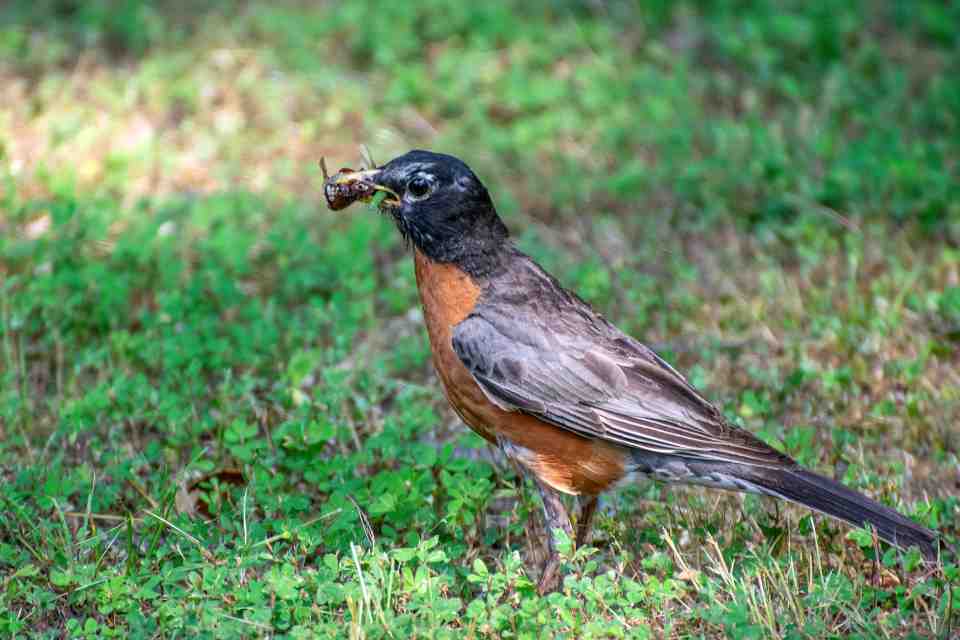
Spiders: Essential Protein Packages
Spiders play a surprisingly critical role in summer bird diets despite not being insects. According to research on bird predation effects on spider populations, data from 17 field experiments showed that spider communities were often significantly affected by bird predation, demonstrating the importance of spiders as prey.
Nutritional Value and Availability
Spiders provide abundant, high-protein prey that birds can access year-round. According to research, spiders’ abundance and high protein content make them attractive prey. These arachnids are important for insect-eating birds like chickadees, wrens, and nuthatches, which often consume spiders, particularly during nesting seasons when energy requirements peak.
Research comparing spider and insect predation found that the global predation impact of insectivorous birds (400-500 million tons annually) approximates that of spiders (400-800 million tons annually), highlighting the massive scale of bird-spider predation interactions.
Bird Species That Hunt Spiders
According to Tallamy’s research, hummingbirds obtain 80% of their diet from insects and spiders rather than nectar. If gardens lack insects and spiders, no amount of hummingbird feeders can support hummingbird populations. For guidance on attracting hummingbirds, establishing spider-rich habitat proves as important as providing nectar sources.
Chickadees glean aphids, scale insects, and beetles from plants while also catching spiders from vegetation and bark. Warblers actively hunt spiders on forest edges and in disturbed habitats. Wrens probe decaying wood and upturned roots where spiders concentrate.
Supporting Spider Populations
Creating spider habitat requires embracing garden “mess.” Spiders thrive in leaf litter, brush piles, dense vegetation, and undisturbed corners. According to research, leaving areas with accumulated organic matter supports spider populations that become essential bird food.
Avoiding pesticides proves particularly critical for spiders, as many insecticides kill spiders along with insects. Spiders provide natural pest control while serving as bird food, creating mutually beneficial relationships within garden ecosystems.
Flying Insects: Aerial Insectivore Prey
Flying insects including flies, moths, butterflies, bees, wasps, and various other winged arthropods support specialized aerial insectivore bird populations.
Flies and Small Flying Insects
According to Cornell Lab research on aerial insectivores, species in the swallow and martin, swift, nightjar, and flycatcher families eat flying insects as their primary food source year-round. Their diets include dragonflies, damselflies, flies, mayflies, caddisflies, true bugs, bees, ants, wasps, beetles, butterflies, moths, and spiders.
Barn swallows prefer flies, which they catch in flight, but also eat other flying insects like beetles, bees, wasps, winged ants, and even butterflies and moths. Violet-green swallows feed on flying insects such as flies, leafhoppers, aphids, beetles, and winged ants that they catch and eat while flying.
Tree swallows serve as food generalists, eating whatever flying insects are available. According to Minnesota research, researchers identified 482 different insect genera in tree swallow diets, including flies, beetles, and moths, confirming that these birds feed nestlings the most abundant available food.
Moths Versus Butterflies
According to research by Desiree Narango, a postdoctoral researcher at the University of Massachusetts, Amherst, “For the most part, moths are more abundant and palatable than butterflies.” The Audubon research notes that twilight and night-flying moths of all ages emerge to face an unrelenting onslaught of predators including birds. Swallows, swifts, nightjars, and flycatchers have experienced some of the most significant population losses of all bird groups in North America since 1970, correlating with moth and butterfly declines.
Bees and Wasps
According to research documented by Desiree Narango, “In general, bees are not highly preferred insects.” Eastern kingbirds, scarlet tanagers, and summer tanagers eat bees whenever the opportunity arises, but most birds don’t actively seek them out. The majority of birds that prey on bees catch the insects while in flight and consume them whole.
Some species like bee-eaters have evolved techniques to remove stingers from bees before consumption, beating them against branches to detach sting and venom glands. This specialized behavior allows exploitation of an abundant but dangerous food source.
Grasshoppers, Crickets, and Other Orthopterans
Grasshoppers and crickets provide important seasonal food sources, particularly in open habitats and during late summer abundance peaks.
Seasonal Availability
According to ScienceDirect research on field crickets, adults appear beginning in July, and eggs are deposited in August and September, with the presence of adults in late summer and autumn earning them the common name of “fall” field cricket. UK Wildlife Trust research confirms that grasshopper adults are present from June until late autumn, making both groups especially numerous during late summer and early fall when their high protein levels prove beneficial for migrating birds and parents with growing chicks.
Research on grassland bird diets indicates that grasshoppers (Orthoptera) are usually an essential component in the diets of grassland birds, representing specialized food sources in open habitat ecosystems.
Bird Species That Hunt Orthopterans
Bluebirds study the ground from low perches for grasshoppers and crickets in tall grass, with eastern and western bluebirds spotting caterpillars and insects in grass more than 50 yards away. Horned larks feed on grasshoppers, beetles, and caterpillars in alpine and grassland environments.
Flycatchers, including willow flycatchers and olive-sided flycatchers, sally from perches to catch flying grasshoppers and crickets mid-air. Many sparrow species hunt grasshoppers and crickets along ground surfaces in areas with tall grass and herbaceous vegetation.
Encouraging Orthopteran Populations
Supporting grasshopper and cricket populations requires maintaining areas of unmowed grass and diverse herbaceous plants. According to Cornell Lab guidance, letting open spaces grow up with long grasses and wildflowers creates habitat for these insects along with many flying insect species.
Native warm-season grasses provide superior orthopteran habitat compared to non-native lawn grasses. Species like little bluestem, switchgrass, and Indian grass support diverse grasshopper communities that become bird food throughout summer and fall.
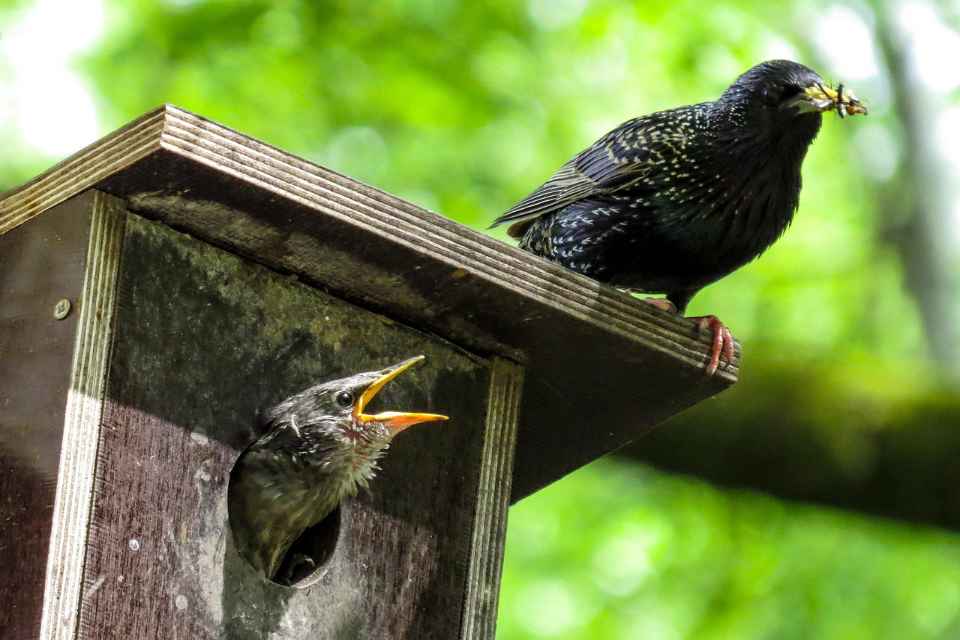
Aphids, Leafhoppers, and Small Insects
Tiny insects including aphids, leafhoppers, scale insects, and similar species provide essential food for many insectivorous birds despite their small size.
Importance for Gleaning Birds
Chickadees glean aphids, scale insects, and beetles from plants, making hundreds of feeding trips daily during breeding season. Titmice search for caterpillars, ants, aphids, and treehoppers while hanging upside-down or sideways on branches.
According to research, violet-green swallows and other aerial species catch leafhoppers and aphids while flying, demonstrating that even tiny insects support larger bird species when available in sufficient abundance.
Native Plants and Aphid Dynamics
While gardeners often view aphids as pests, they represent important bird food. Native plants support aphid species that evolved alongside North American birds, creating food webs that benefit both plants and birds. Birds provide natural aphid control while obtaining nutrition, eliminating need for pesticide interventions.
According to research on attracting songbirds in summer, accepting higher insect populations including aphids benefits birds directly, with species removing thousands of insects from gardens throughout summer in natural pest management.
Safely Encouraging Insect Populations
Supporting healthy insect populations requires specific management strategies that benefit both insects and the birds that depend on them.
Eliminating Pesticides
According to Cornell Lab guidance, 95-98% of North American songbirds feed insects to their young, and those insects need pesticide-free environments to thrive. Chemical pest control undermines summer songbird attraction by eliminating the insects that birds need for nestling nutrition.
Research demonstrates that even low-level pesticide exposure reduces insect populations below thresholds necessary for successful bird reproduction. Birds function as natural pest control, removing thousands of caterpillars and other insects without chemical interventions.
Creating Diverse Habitat Structures
According to bird-friendly garden design principles, properties with multiple vegetation layers including ground cover, low shrubs, tall shrubs, understory trees, and canopy trees support the greatest diversity of insect species, which in turn supports diverse bird communities.
Leaf litter provides habitat for insects, snails, and spiders that become bird food. Dead flower heads support ongoing insect activity while ensuring fall and winter food availability. Fallen tree limbs create habitat for invertebrates that birds consume.
Maintaining Messy Zones
Research consistently emphasizes that “messy” garden areas support the highest insect diversity. Leaving areas measuring at least 10 by 10 feet with thick leaf litter, fallen branches, and tall grass creates ground-level insect habitat. These zones provide both insect breeding sites and foraging areas where parent birds find the thousands of insects required for successful nestling care.
Unmowed grass areas support grasshoppers, crickets, and numerous other insects. Brush piles harbor beetles, spiders, and overwintering insects. Standing dead wood provides essential habitat for wood-boring beetles whose larvae become woodpecker food.
Water Features for Insect Production
Water features attract and support many insect species. Dragonflies and damselflies require water for breeding, with larvae developing in ponds and streams before emerging as flying adults. According to research on aerial insectivores, dragonflies and damselflies represent important prey for swallows, swifts, and flycatchers.
Even small water features like shallow dishes or bird baths support insects. Mosquitoes and other flies breed in standing water, becoming food for aerial insectivores. However, changing water every 2-3 days prevents problematic mosquito populations while still supporting beneficial insect diversity.
Seasonal Timing of Insect Availability
Understanding seasonal patterns in insect emergence and abundance helps explain bird behavior and optimal habitat management timing.
Spring Emergence
According to research, insects emerge earlier as early spring temperatures warm due to climate change. Some bird species nest earlier to match changing insect phenology, but constraints on other parts of their life cycles limit how well they can track advancing insect activity.
The synchronization between nestling needs and caterpillar abundance proves critical. Research on great tits in the Netherlands found that birds depend heavily on caterpillar emergence, synchronizing reproductive timing so young will have suitable food sources available.
Summer Peak Abundance
Insect populations typically peak during mid to late summer, corresponding with later nesting attempts and fledgling care periods. According to research, grasshoppers and crickets become especially numerous in late summer and early autumn, supporting late-season reproduction and migration preparation.
Fall Transitions
As temperatures cool in fall, insect activity decreases and many species enter dormancy or complete life cycles. According to research, strictly insectivorous birds follow food sources and migrate to warmer climates, while omnivorous species alter diets to include more seeds and berries as insects become scarce.
Regional Differences in Insect-Bird Relationships
Insect communities vary dramatically by region, creating different food webs that support distinct bird assemblages.
Eastern Forests
Research from Wesleyan University in Connecticut examined caterpillar communities on different tree species, finding that black cherry trees offered particularly rich caterpillar forage while beech and red maple offered more limited resources. These differences in tree species composition directly affect breeding songbird populations.
Western Grasslands
According to research, grassland bird diets emphasize grasshoppers, crickets, and other Orthoptera that dominate open habitat insect communities. Species composition differs markedly from forest birds, with grassland specialists requiring different habitat management approaches.
Desert Environments
The Grand Canyon research examining six insectivorous species found that caterpillars remained the most important food item even in desert environments, though overall insect abundance and diversity differs from temperate forests.
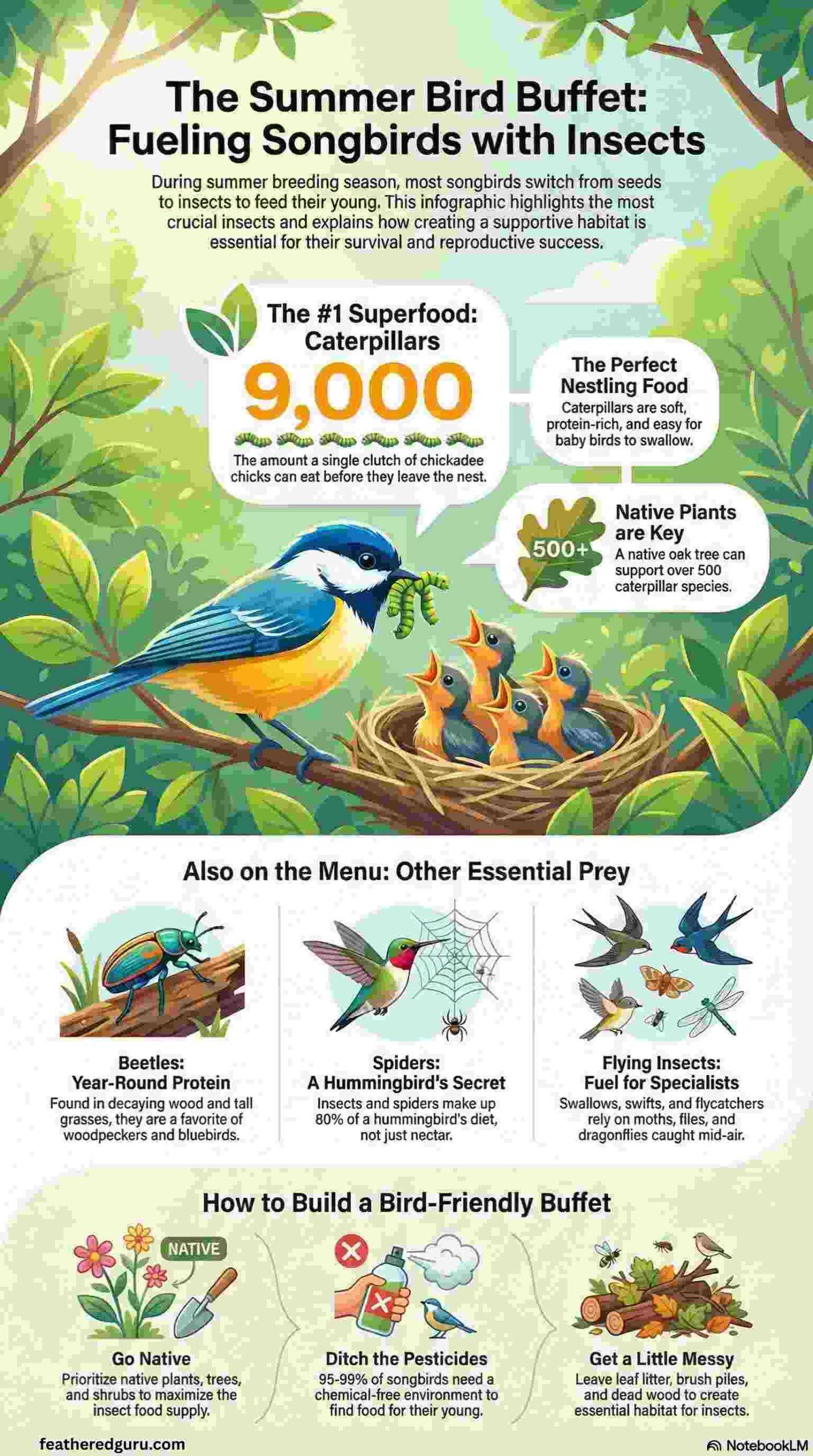
What Insects Attract Birds in Summer (Visual Summary)
This visual guide breaks down the key insects birds rely on in summer and why each one matters for healthy backyard bird populations.
Conclusion
Summer bird populations depend fundamentally on insect availability, with caterpillars representing the single most critical prey group for the majority of North American songbirds. Research demonstrates that a single clutch of chickadees requires up to 9,000 caterpillars, illustrating the massive insect consumption necessary for successful reproduction. Beetles, spiders, flies, grasshoppers, and numerous other arthropod groups supplement caterpillar-based diets, providing protein-rich nutrition throughout the breeding season.
The connection between native plants and insect abundance cannot be overstated, with research showing that native trees like oaks support over 500 caterpillar species while non-native ornamentals host approximately one-tenth that number. This disparity in insect-supporting capacity directly determines whether properties can sustain breeding bird populations or function as ecological dead zones regardless of other habitat features.
Safely encouraging insect populations requires eliminating pesticide use, creating diverse habitat structures with multiple vegetation layers, maintaining “messy” zones with leaf litter and fallen wood, and embracing natural garden aesthetics that prioritize ecological function over conventional tidiness. These practices support the 400-500 million tons of insects that birds consume annually worldwide, enabling successful reproduction during summer’s critical breeding period.
Understanding which insects attract specific bird species allows targeted habitat management. Caterpillar specialists like chickadees, warblers, and vireos require extensive native tree plantings, while aerial insectivores like swallows and flycatchers need open areas with abundant flying insects. Providing diverse insect prey through thoughtful native plant selection and chemical-free management creates summer bird habitat that supports thriving populations during the season when successful reproduction determines long-term conservation outcomes.