
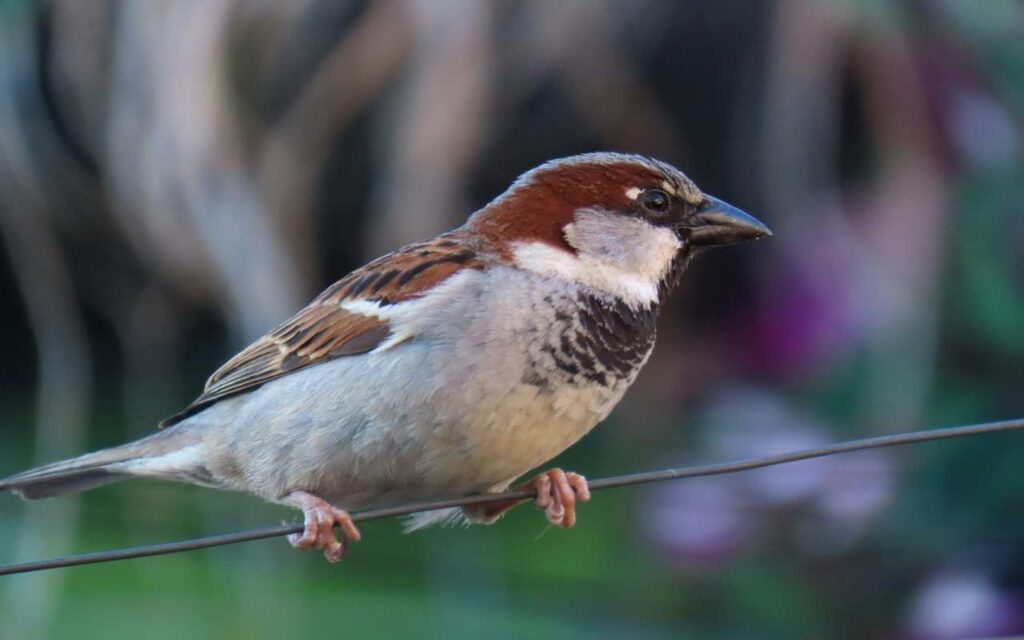
The House Sparrow is everywhere. It sits on the café table, pecks at the parking lot, and nests in the gap above your front door. Because it is so familiar, most people assume there is nothing left to discover about its lifestyle. That assumption is wrong.
Beneath the ordinary brown-and-grey exterior of Passer domesticus is an evolutionary marvel with genomic adaptations shared only with humans and dogs. From its 11,000-year-old starch mutation to its subterranean coal-mine colonies, there are dozens of fun facts about house sparrows that reveal a biological dossier far more complex than their common appearance suggests.
With nearly 5,000 published research papers to its name, this bird possesses a dominance-signaling system visible to the naked eye and a recorded lifespan approaching 16 years. These are the most surprising secrets of a bird most people stop seeing the moment they recognize it.
Quick Answer: What are some fun facts about House Sparrows?
The most fascinating fact about House Sparrows is their unique AMY2A starch gene mutation, which allowed them to evolve alongside humans by digesting agricultural grains, a trait they share with dogs. Socially, they operate in a strict bib hierarchy where the size of a male’s black throat patch signals his dominance and age. These resilient birds are also record-breakers, having established a self-sustaining breeding colony 2,000 feet underground in a Yorkshire coal mine and possessing the rare ability to swim underwater to escape predators.
Decoding the Sparrow: A Visual Masterclass
Before we dive into the specific secrets, watch the video below for a frame-by-frame breakdown of the sparrow’s most complex biological “hacks.” We’ve condensed 11,000 years of evolutionary forensic data into this video to show you exactly how this bird re-engineered its own DNA to thrive alongside us
Show Transcript:
0:00
Let’s talk about the house sparrow. It might seem like just another common bird, but there is a fascinating story hiding in plain sight on city streets around the world.
0:09
For years, I ignored them. These small brown birds felt like background noise, just hopping around patios and stealing crumbs. They seemed too ordinary to be interesting.
0:20
Then I discovered something surprising. Scientists have published nearly 5,000 research papers on the house sparrow. That completely changed how I saw this bird.
0:38
So I started digging deeper. What I found was incredible. The story of the house sparrow is closely tied to human history, going back over 10,000 years.
1:01
Genetic research shows that house sparrows split from their wild ancestors around the same time humans began farming in the Fertile Crescent. Their evolution is directly linked to ours.
1:21
As humans began growing grains, both people and certain animals adapted to a starch-rich diet. House sparrows evolved similar genetic traits to digest carbohydrates, just like humans and even dogs.
1:50
This means the house sparrow is not just a bird living near people. It is a species that evolved alongside human civilization, adapting to farms, cities, and food sources we created.
2:05
There are still wild sparrow species that avoid humans and feed on natural seeds. But the house sparrow, Passer domesticus, formed a close relationship with human environments.
2:23
They even developed stronger skulls to crack tougher seeds from crops. This is a bird shaped by human activity over thousands of years.
2:29
Once I understood that, I started watching them more closely. Their behavior is far more complex than it first appears.
2:46
Take the male sparrow’s black chest patch, known as the bib. It is not just for appearance. It signals dominance, age, and status within the flock.
3:06
The larger and darker the bib, the more dominant the male. Other sparrows recognize this instantly, which helps maintain social order without constant fighting.
3:22
What is even more interesting is how the bib develops. Males do not grow it larger over time. Instead, they reveal it.
3:32
Their feathers grow with pale tips that wear down over winter. By spring, the most active birds have the darkest and most visible bibs, just in time for breeding season.
3:47
Their communication is just as advanced. That constant chirping is actually a system of calls that shares information about food and danger.
3:58
Sparrows adjust their calls depending on risk levels. Faster or more urgent calls can signal danger, while calmer calls invite others to feed.
4:11
The more I learned, the more I saw them as incredibly adaptable birds. House sparrows are among the most successful urban birds on the planet.
4:24
They have been found living and breeding deep underground in coal mines, surviving entirely on human-related environments.
4:42
They can tolerate extreme heat, survive in cold climates, and even drink salty water. Some have been observed swimming underwater to escape predators.
4:59
They have even learned to trigger automatic doors at stores to access food. Their intelligence and adaptability are remarkable.
5:10
Their real advantage is not surviving in wild environments. It is surviving alongside humans. Cities, towns, and buildings are their natural habitat.
5:28
But this relationship is complicated. House sparrows are also highly aggressive and territorial birds.
5:39
Research shows they have attacked over 70 other bird species, especially when competing for nesting sites.
5:45
In North America, where they are not native, they pose a serious threat to cavity-nesting birds like eastern bluebirds and swallows.
6:02
They often take over nest boxes and may destroy eggs or attack chicks and adult birds. This behavior makes them one of the most controversial backyard birds.
6:19
Their breeding behavior is also complex. Even in what looks like stable pairs, DNA studies show that many nests contain chicks from multiple fathers.
6:36
One well-known example of their impact is the Domino incident in the Netherlands, where a single sparrow disrupted a world record domino setup.
6:54
The response to that event showed how divided people are. In some regions, sparrows are considered pests, while in others they are declining and need protection.
7:09
Life is not easy for them either. Most house sparrows do not survive their first year, but those that do can live surprisingly long lives.
7:17
The oldest recorded wild sparrow lived nearly 16 years, which is impressive for such a small bird.
7:25
Looking back, my perspective completely changed. What once seemed like a boring, common bird is actually a resilient species with a deep connection to human history.
7:40
Now when I see a house sparrow at a café or in my yard, I see something very different. I see a survivor, an adaptable species, and a bird shaped by thousands of years of coexistence with people.
7:58
It makes you wonder what other everyday wildlife we overlook, and what hidden stories are right in front of us if we take the time to notice.
Evolutionary Forensics: The DNA of a Global Colonizer
Fact 1: The 11,000-Year Starch Mutation
When humans began farming cereal grains around 11,000 years ago in the Fertile Crescent, a small sparrow began living alongside the harvest. Over the following millennia, that association left a permanent mark on the bird’s genome.
A landmark 2018 study published in the Proceedings of the Royal Society B (PMC), Ravinet et al., used comparative genomics to identify the strongest signal of positive selection in the house sparrow genome. It sits in a region containing the gene AMY2A, part of the amylase family associated with starch digestion. The same gene family underwent parallel adaptation in humans and dogs as agriculture spread.
This means the house sparrow, humans, and domesticated dogs all independently evolved enhanced starch-processing capacity as a direct result of the Neolithic revolution. The bird eating crumbs off your restaurant table is doing so with machinery that the grain economy helped build.
Fact 2: The Skull of a Specialist
The same genomic study identified a second strongly selected region: the gene COL11A, which regulates craniofacial and skull development. In humans, mutations in this gene produce Marshall’s syndrome, characterized by increased skull thickness and altered facial structure.
In house sparrows, the selection signal at COL11A is thought to have produced a larger beak and more robust skull optimized for cracking the harder seeds of cultivated crops, which have thicker shells than many wild grass seeds. The sparrow’s bill is often dismissed as unremarkable. In reality it is the output of thousands of years of selection pressure applied by human agriculture.
Fact 3: They Are Not Actually Sparrows
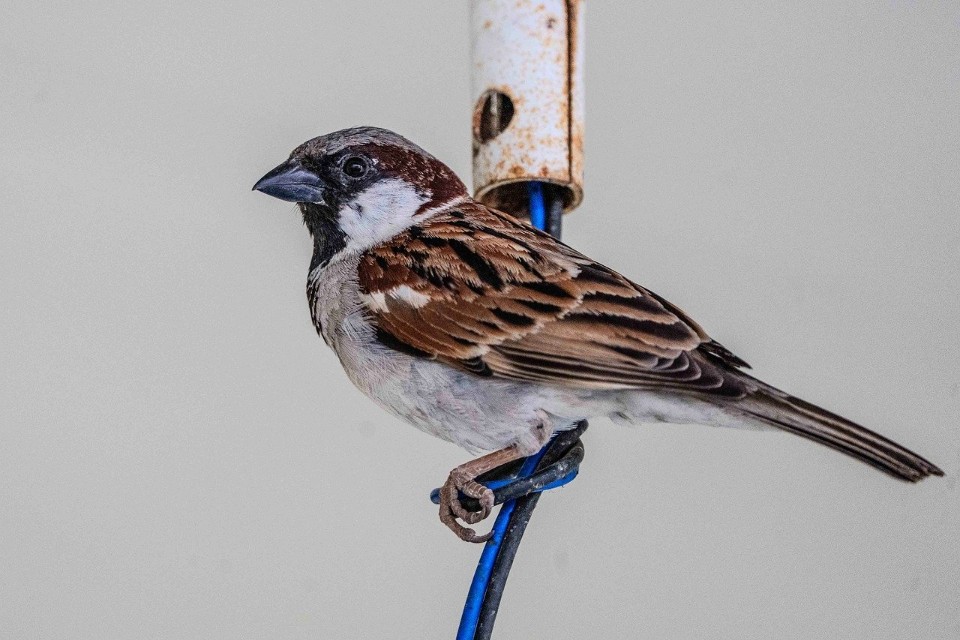
House sparrows belong to the family Passeridae, the Old World sparrows, not to the family Passerellidae, which contains the native North American sparrows like the Song Sparrow and White-throated Sparrow. The two groups share a superficial resemblance and a common name but are not closely related.
Old World sparrows are more closely allied to weaver finches than to the sparrows that occupied the American continent before European settlement. When colonists introduced house sparrows to Brooklyn in 1851, they were inserting a member of an entirely different avian lineage into an ecosystem that already had its own sparrow community. The confusion in naming has persisted ever since.
Fact 4: The Commensal Split
Coalescent modeling in the Ravinet et al. genome study estimates that the commensal house sparrow lineage diverged from its ancestral Bactrianus subspecies approximately 11,000 years ago, matching almost exactly the archaeological timeline of early agriculture in the Middle East.
The Bactrianus subspecies, which lives on the Central Asian steppes and has not adopted a commensal lifestyle, lacks the same genomic signatures of selection at AMY2A and COL11A. It migrates, eats natural grass seeds, and avoids humans. In effect, it represents what the house sparrow looked like before it entered into its long partnership with human civilization.
Social Forensics: Military Precision and Secret Languages
Fact 5: The Bib is a Visual Resume
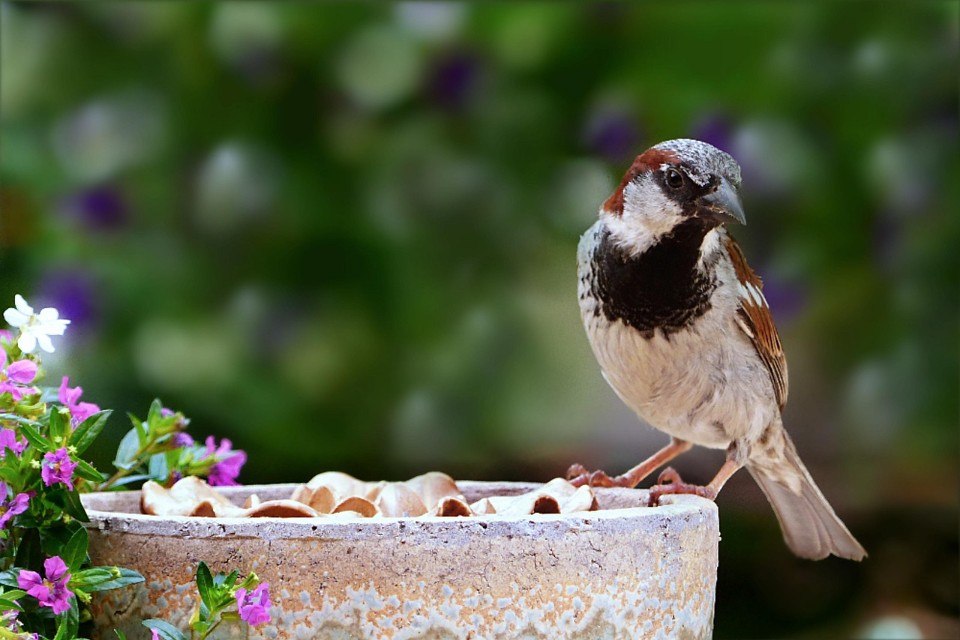
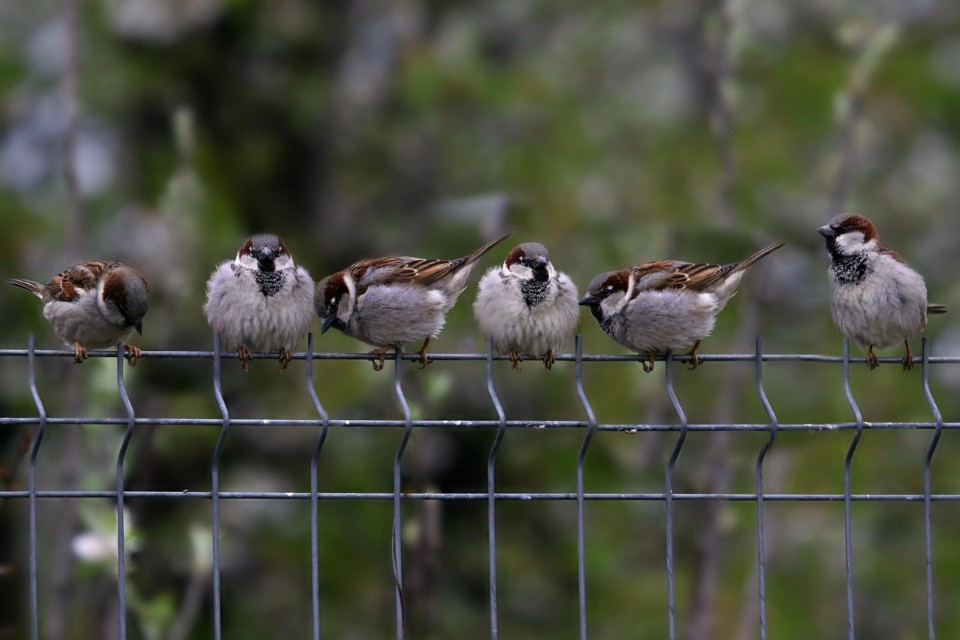
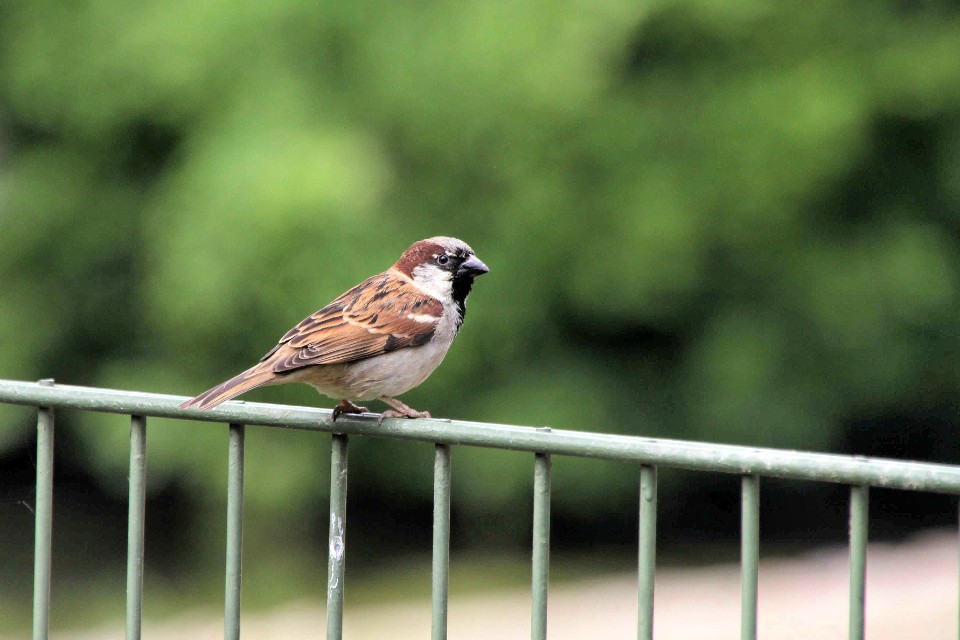
The black throat patch on a male house sparrow is not just a field mark. It is a status signal that carries information about the male’s age, dominance rank, and competitive ability, and it is readable by every other sparrow in the flock without a single fight being necessary.
A meta-analysis of studies on bib function published in Behavioral Ecology (Oxford Academic), Nakagawa et al. 2007, found that the relationship between bib size and fighting ability was strong and robust across multiple studies. Bib size increases reliably with age, and large-badged males initiate a higher proportion of their fights and win more of them.
The system functions as a visual shortcut that reduces the energetic cost of constant physical confrontation.
Fact 6: The Bib Changes With the Season
In late winter, the male house sparrow’s bib visibly grows larger without any new feather growth. The mechanism is feather abrasion: the pale buff tips of the throat feathers wear off through preening and dust bathing, progressively exposing more of the dark melanin pigment beneath.
Males with larger underlying bibs reach their full breeding coloration earlier in the season. This gives dominant males a timing advantage in mate acquisition and territory establishment, before the first clutches are even laid.
Fact 7: The “Chirrup” Recruit Call
When a lone house sparrow discovers a food source, it does not eat quietly. It broadcasts a specific vocalization, the “chirrup” or recruitment call, which signals to nearby flock members that a safe food site has been found. This is the mechanism by which a single scout bird can anchor an entire flock to a new feeding station within hours.
Research published in Behavioral Ecology and Sociobiology (Springer, Elgar 1986) found that pioneer sparrows chirruped less frequently when the food source was close to a safe perch and far from perceived threats, and more frequently in riskier contexts. The call rate is calibrated to the predation risk the bird is assessing. It is not random noise; it is a conditional broadcast signal.
Fact 8: The “Air Sensor” Hack
House sparrows have been repeatedly documented hovering in front of automatic door sensors at supermarkets, airports, and fast-food restaurants to trigger the doors and gain entry to food sources inside. The behavior has been observed on multiple continents.
This is not accidental contact. Video documentation shows sparrows making multiple approaches to the sensor zone specifically, with the door-opening result clearly associated with the behavior. It is a learned foraging innovation, and once one bird in a colony acquires it, social learning accelerates its spread through the local population.
Fact 9: The 5,000-Paper Research Record
The house sparrow is one of the most studied organisms in the history of biology. According to Cornell Lab of Ornithology’s All About Birds, nearly 5,000 scientific papers have been published using the house sparrow as a study species, covering everything from circadian rhythms and neuroendocrinology to population genetics and urban ecology.
Its ease of capture, tolerance of captive conditions, year-round breeding in many climates, and its position at the intersection of urban and agricultural ecosystems make it an almost ideal model organism. Much of what is known about avian stress hormones, immune function, and extra-pair paternity in socially monogamous birds was first established using house sparrow subjects.
Survival Secrets: Extreme Habitats and Unusual Skills
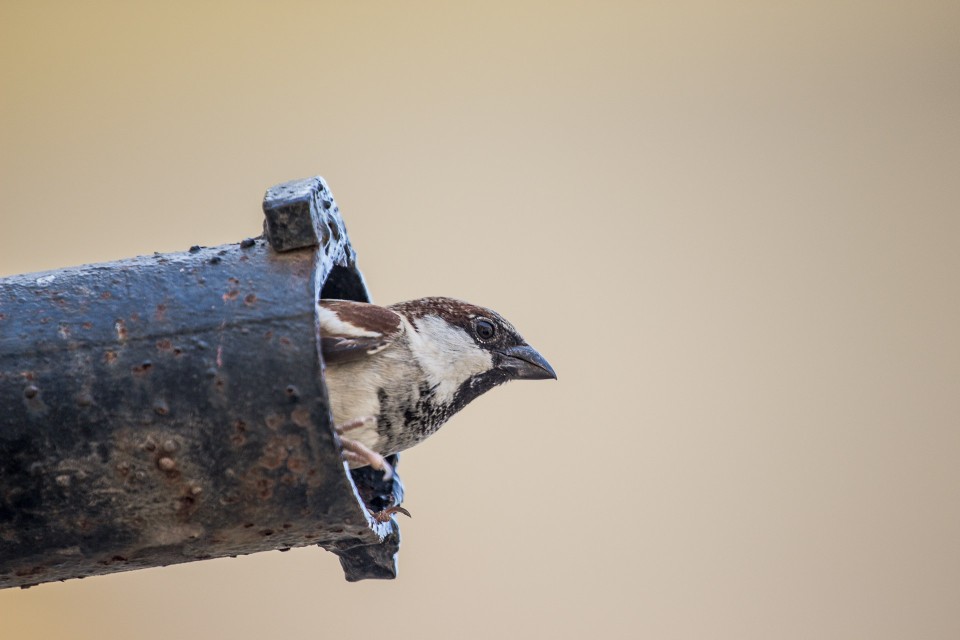
Fact 10: The Coal Mine Colony
In 1978, house sparrows were found nesting and breeding at the bottom of a Yorkshire coal mine called Frickley Colliery, located 640 meters (approximately 2,100 feet) below the surface. The birds had followed mining equipment and workers underground and established a fully functional colony in the artificial warmth and food scraps of the mine environment.
This is the most extreme underground nesting record for any bird species and illustrates the degree to which house sparrows have decoupled their habitat requirements from natural environmental conditions. Where there are humans and food, house sparrows can apparently follow.
Fact 11: From Death Valley to the Rockies
House sparrows have been documented at elevations ranging from approximately 280 feet below sea level at the edges of Death Valley, California, to over 10,000 feet above sea level in Himalayan mountain communities. This altitudinal range of more than 10,000 feet is exceptional for a small passerine bird.
The common thread across all these extremes is human settlement. House sparrows do not exist in Death Valley wilderness or at 10,000-foot ridgelines. They exist at those elevations precisely where there are mining camps, mountain villages, livestock facilities, or tourist infrastructure providing food and shelter. The bird is not adapting to extreme environments; it is adapting to the humans who occupy them.
Fact 12: The Brackish Water Tolerance
House sparrows can drink brackish water at salinity levels approaching half that of seawater without becoming dehydrated, a physiological tolerance that most small passerine birds do not have. This gives them access to water sources in arid and coastal environments that exclude most other species of similar size.
In desert regions where fresh water is scarce, this tolerance is a meaningful competitive advantage. Combined with their ability to extract some moisture from food, it allows house sparrows to maintain populations in semi-arid environments that would stress or kill most other granivorous birds of comparable body size.
Fact 13: The Underwater Escape
House sparrows have been documented swimming short distances underwater as an escape behavior when threatened by aerial predators. The behavior is uncommon but has been observed in multiple field contexts and is consistent with the species’ general behavioral flexibility in response to predation pressure.
Most small passerines panic and scatter when flushed by a hawk. The underwater option represents a last-resort tactic in situations where cover is limited and flight is already compromised. It demonstrates a level of behavioral versatility that is not typical of the group.
The Dark Side: Fierce Competitors
Fact 14: The 70-Species Siege
A scientist in 1889 documented cases of house sparrows aggressively attacking 70 different bird species in defense of nest sites. This record, still cited in contemporary ornithological literature, reflects the house sparrow’s exceptionally aggressive nest-hole defense behavior.
House sparrows do not merely compete for nest holes; they actively evict occupants. Eastern Bluebirds, Tree Swallows, Purple Martins, and Prothonotary Warblers are among the North American native species most frequently displaced.
In the worst documented cases, house sparrows have killed adult birds and nestlings inside nest boxes to claim the cavity, a behavior that makes them one of the most consequential invasive species for native cavity-nesting birds on the continent.
Fact 15: Extra-Pair Paternity and DNA Proof
House sparrows are socially monogamous. Pairs form, share nest duties, and raise young together. Genetically, however, the picture is more complicated. DNA microsatellite analysis, first applied to house sparrows before any other bird species, established that a significant proportion of chicks in any given nest were fathered by males other than the social partner.
The foundational microsatellite parentage study, Griffith et al. 1999, published in the Biological Journal of the Linnean Society (Oxford Academic), analyzed two populations and found extra-pair paternity rates of 10.5% of offspring in a Kentucky mainland population, with a notably lower rate of 1.3% on the isolated island of Lundy, UK.
The variation between sites could not be explained by breeding density or genetic diversity alone, leaving the underlying drivers still actively debated. In practical terms, the male helping feed a brood of four chicks statistically has a meaningful chance of not being the genetic father of at least one of them.
Fact 16: The Italian Sparrow Hybrid Species
Approximately 10,000 years ago, as the commensal house sparrow expanded westward through Europe, it encountered the Spanish Sparrow (Passer hispaniolensis) in the Mediterranean region. The resulting hybridization produced a stable lineage now recognized by most major taxonomic authorities as a distinct species: the Italian Sparrow (Passer italiae).
Genetic studies, including Hermansen et al. (2011) in Molecular Ecology and Runemark et al. (2018) in Nature Ecology and Evolution, demonstrated that the Italian Sparrow’s genome is a mosaic of both parent species, with house sparrow DNA dominant in genes related to starch digestion and DNA repair, and Spanish Sparrow DNA dominant in genes affecting external appearance.
It breeds on the Italian Peninsula and several Mediterranean islands and is now largely reproductively isolated from both parents. A hybrid that became its own species, living freely across Italy, is one of the more remarkable evolutionary outcomes of the house sparrow’s 11,000-year association with humans.
Fact 17: The “Dominomus” Incident
In 2005, a female house sparrow famously dubbed the Domino Sparrow disrupted a world record attempt in the Netherlands by knocking over several thousand dominoes that had been arranged over weeks of preparation. The bird was subsequently killed by pest controllers, triggering a significant public controversy and a national discussion about the status of an increasingly rare urban species
The incident illustrated both the house sparrow’s fearlessness around human activity and its paradoxical conservation status in parts of Europe, where populations have declined by 80% or more since the 1980s. The “Dominomus” became an unlikely symbol of a species that had spent millennia adapting to human environments now struggling as those environments changed faster than it could follow.
Quick Stats: The Blink-Test Recap
Fact 18: Longevity Record: 15 Years and 9 Months
The oldest known house sparrow was a female banded in Texas who reached 15 years and 9 months of age. A long term population study of individually marked house sparrows published in the Journal of Animal Ecology by Jensen et al. 2004 tracked birds across Norwegian islands. This research found that the average lifespan in the wild is approximately 2 years and that fewer than 20 percent of wild individuals survive to age 3.
The study also determined that variation in lifetime reproductive success is driven primarily by annual reproductive output rather than by individual longevity. The gap between average and maximum lifespan in house sparrows is extreme because most die within their first year from predation or starvation.
Fact 19: Metabolic Demand: Eating Up to 30% of Body Weight Daily
House sparrows need to eat 12% to 20% of their body weight per day under normal conditions, with the demand rising steeply in cold weather as the cost of thermoregulation increases. For a 30-gram bird, that translates to roughly 4 to 9 grams of seed per day under mild conditions and substantially more during winter cold snaps.
The energy demand of a small bird relative to its body mass is counterintuitive to most people. A 150-pound human eating 15% of their body weight daily would consume over 22 pounds of food. The house sparrow’s foraging urgency is not gluttony; it is the energetic reality of a warm-blooded animal maintaining a constant core temperature in a body the size of a thumb.
Fact 20: The Nesting Marathon
In warm climates, a single house sparrow pair can raise up to 5 or 6 broods per season, with a new clutch initiated within days of the previous brood fledging. Each clutch contains 3 to 5 eggs, incubation lasts 11 to 14 days, and fledging occurs at 14 to 17 days post-hatch.
The theoretical maximum reproductive output of a single productive pair over one season, if every clutch succeeded, would be 20 to 30 fledglings. In practice, predation, weather, and food shortage reduce this substantially. But the biological potential for rapid population recovery, even after severe winter losses, is one of the key reasons house sparrow populations can absorb enormous hunting pressure while remaining numerically stable.
Fact 21: The Speed Record
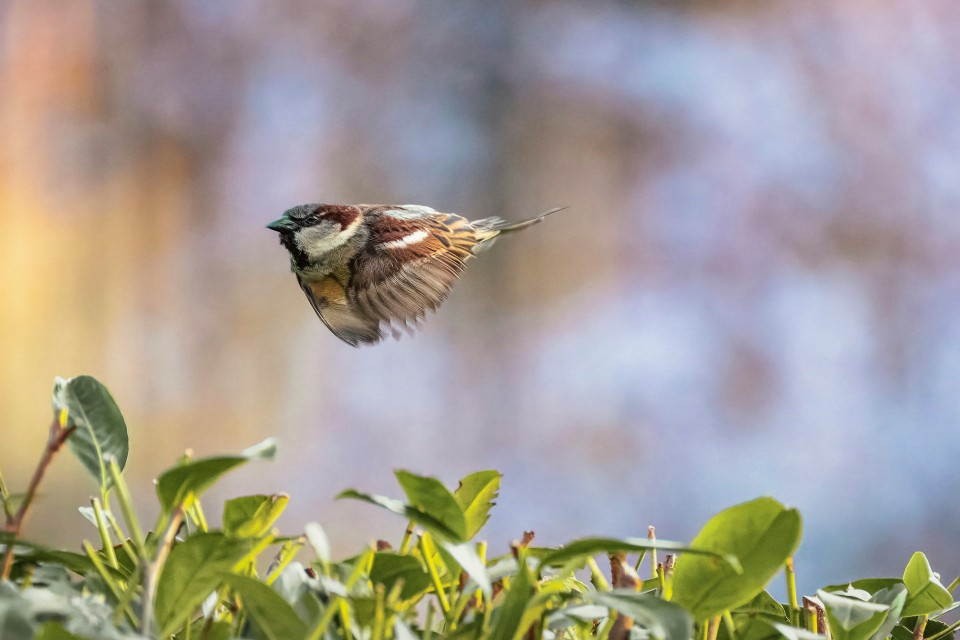
House sparrows fly at a direct, flapping pace averaging about 45.5 kilometers per hour (roughly 28 mph), with a wingbeat rate of approximately 15 beats per second. The flight is direct and non-undulating, without the bounding pattern of many other small passerines.
At full speed, a flushed house sparrow covers distance surprisingly quickly for a bird weighing 30 grams. The straight-line flight path, combined with the rapid altitude gain when flushing from ground level, makes them capable of reaching cover before most predators complete their approach.
Fact 22: The 4,800-Entry Bibliography
The Committee for Ecology of the Polish Academy of Sciences has maintained a bibliography of the genus Passer for decades. As of recent counts, the bibliography contains over 4,800 entries. No other single genus of small passerine bird has generated a research literature of comparable scope.
This extraordinary volume of research reflects both the scientific tractability of the species and the depth of human interest in an animal that has shared our spaces for ten millennia. The house sparrow has been used to study urbanization ecology, sexual selection, immune function, stress physiology, population genetics, and the evolutionary consequences of domestication, often serving as the pioneer species for questions that were later extended to other taxa.
Fact 23: The Self-Sustaining Hybrid
The Italian Sparrow is not simply a hybrid curiosity. It is a functioning, reproductively isolated species that is maintaining itself through its own breeding population without ongoing hybridization input from either parent species. It has been doing so for thousands of years.
In the narrow contact zone between the Italian Sparrow and the house sparrow in the Alps, interbreeding does occasionally occur. But genomic studies show that both species maintain distinct gene pools despite this contact, with reproductive barriers holding even in sympatry. A hybrid that achieves this level of independence from its parents is one of the clearest examples of hybrid speciation in vertebrates.
Fact 24: Dust Bathing as Parasite Control
House sparrows take frequent and vigorous dust baths, flicking soil and dust over their body feathers with the same motions they use when water bathing. The behavior is functional, not decorative: dust particles work their way into feather barbules and under feather shafts, absorbing the oils that ectoparasites like mites use as habitat and dislodging lice mechanically.
In areas where dust bathing sites are available, house sparrows will defend them against other sparrows, treating them as a resource worth territorial effort. The same species that incorporates nicotine-laden cigarette filters into its nests is managing its parasite load through multiple simultaneous chemical and physical strategies.
Fact 25: The 30 Years and 4 Months Record That Isn’t a Sparrow
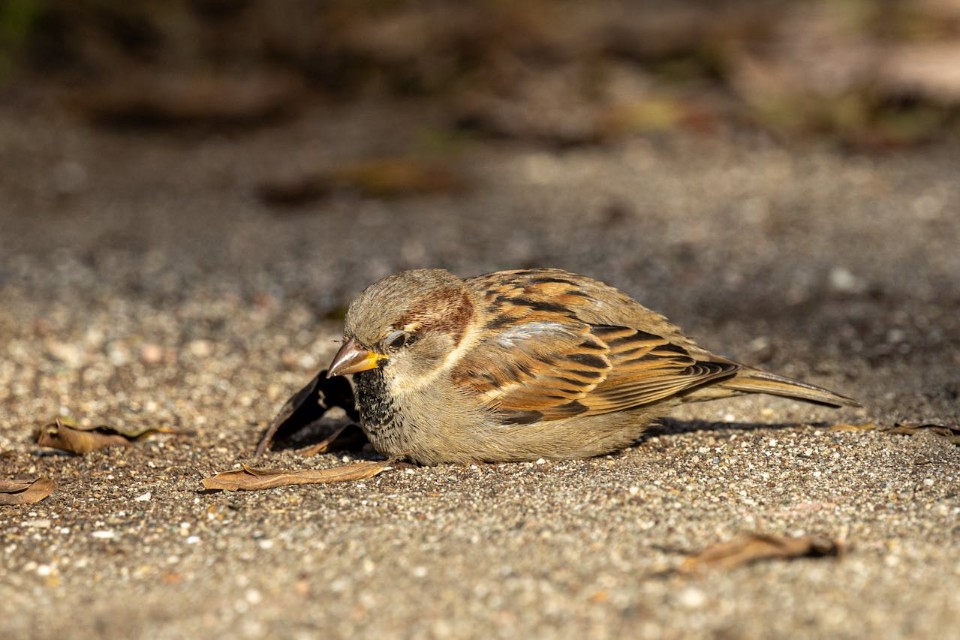
The oldest recorded house sparrow lived to 15 years and 9 months, remarkable for a species whose average first-year survival is well below 50%. For context, the oldest known mourning dove reached 30 years and 4 months, and the oldest known European starling exceeded 20 years. Small passerines rarely approach the theoretical maximum lifespans that captive conditions can occasionally produce.
The gap between average and maximum in wild house sparrows tells the story of the species: high reproduction, high mortality, and a population that replaces itself constantly rather than persisting through long individual lifespans. The strategy is not longevity. It is resilience through abundance. For the last 11,000 years, it has been working.
Understanding the House Sparrow
The house sparrow is common in the way that water is common. Its abundance makes it easy to ignore, even as it does something remarkable. It is a bird that co-evolved with human civilization, carries the genetic signatures of that partnership in its genome, and has spread to every habitable corner of the planet by learning to exploit the ecological niches that humans create wherever they go.
For more on how these behavioral and biological traits play out at your feeder and in your yard, our guide to house sparrow habits covers the full spectrum of social, foraging, and nesting behavior across all seasons.
If you are managing feeder competition, our article on how to keep house sparrows away from feeders translates this biology into practical deterrence. And our guide to what house sparrows eat covers the full diet picture, from their millet preference at backyard feeders to the agricultural grain diet that drove the genomic adaptations described in this article.
The House Sparrow Blueprint: At-A-Glance
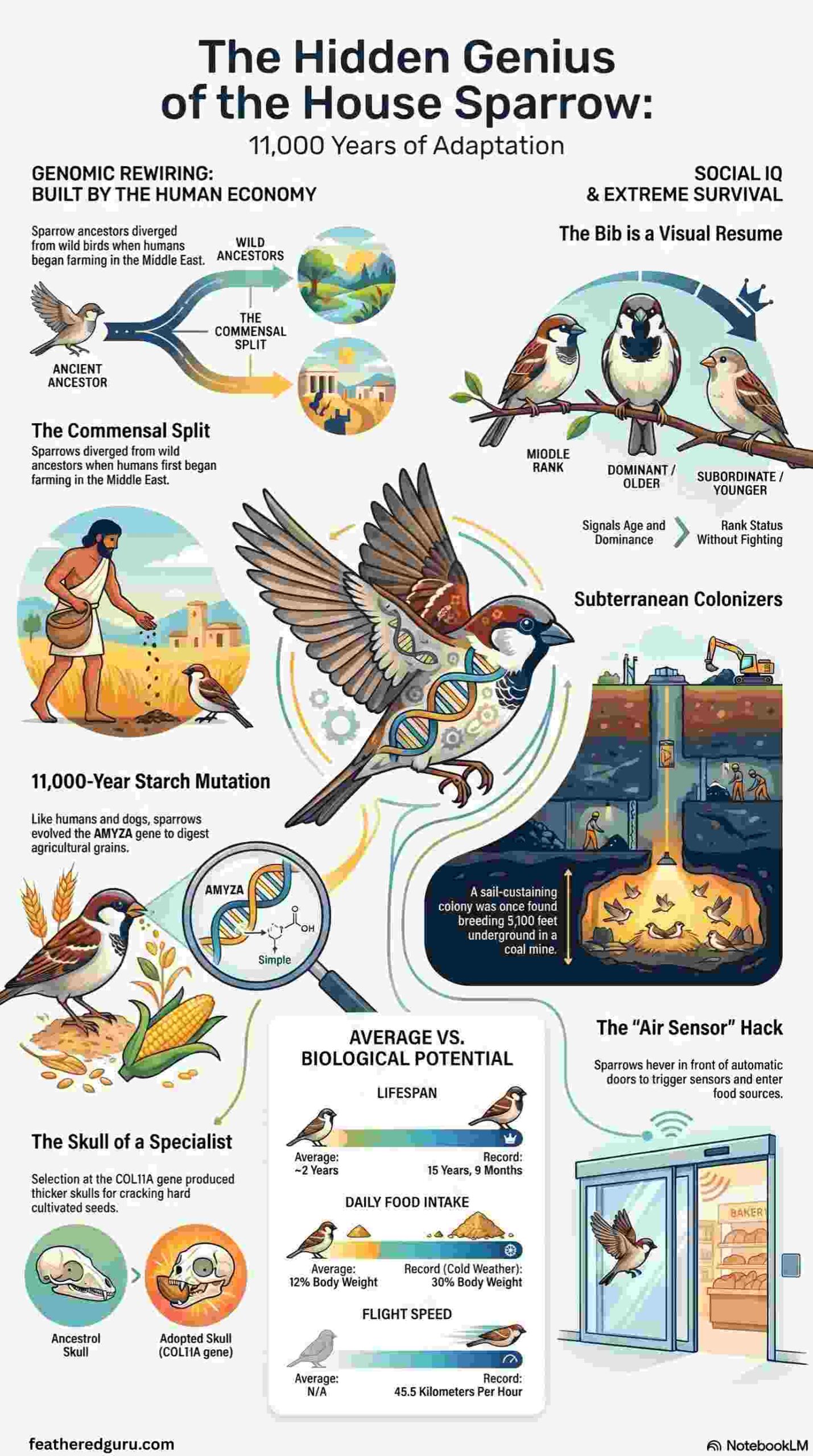
We’ve covered the deep genomic history and the fierce social structures, but how do all these “secrets” fit together in the daily life of a sparrow? The infographic below synthesizes our 25-point dossier into a single visual master key.
Use this guide to quickly identify:
- The Identification Suite: How to read “Bib Size” and “Feather Abrasion” in the field.
- The Survival Specs: A recap of the metabolic demands and flight speeds that keep them alive.
- The Global Footprint: A map of the “Commensal Split” that allowed them to colonize every continent.
Conclusion: Beyond the Ordinary
The House Sparrow is proof that biological marvels don’t just exist in remote rainforests—they live in our parking lots and backyard feeders (p. 1). From the AMY2A starch mutation shared with our own DNA to their 2,000-foot-deep coal mine colonies, these birds are the ultimate testament to evolutionary resilience.
By understanding the “secret dossier” of Passer domesticus, you’re no longer just seeing a common bird; you’re witnessing 11,000 years of human-driven evolution in real-time. Whether they are hacking automatic door sensors or swimming underwater to escape a hawk, the House Sparrow has mastered the art of living alongside us by any means necessary.