You can no longer hand-feed birds at Cherry Hill Gate due to strict City of Burlington animal control bylaws that prohibit feeding wildlife on all public park lands and Royal Botanical Gardens trails. While chickadees and nuthatches along the Hendrie Valley boardwalks still approach visitors out of habit, anyone caught leaving seeds or ground-feeding face warnings and heavy municipal fines.
Cherry Hill Gate Field Logistics
- Trailhead Access Point: 1131 Plains Road West, Burlington, Ontario (Hendrie Valley Sanctuary)
Parking Infrastructure: Paid municipal lot ($5.00 hourly / $15.00 daily maximum managed via the PASSPORT mobile application)
Terrain Profile: Flat, crushed limestone pathways transitioning into elevated wooden boardwalk systems
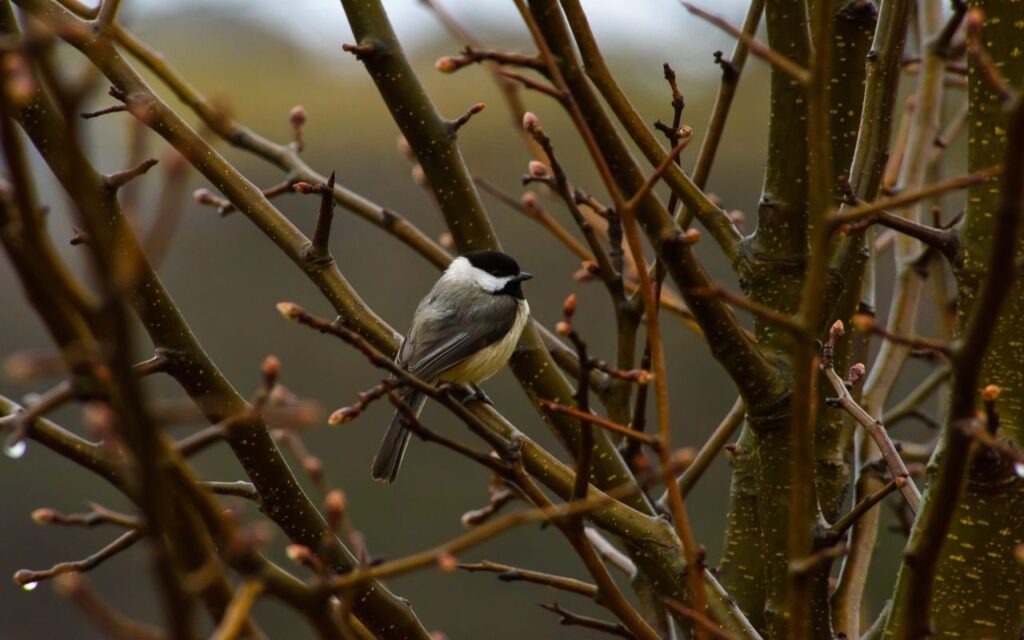
Target Avian Species: Black-capped Chickadees (Poecile atricapillus)
Optimal Wildlife Viewing Window: Monday through Friday, 7:00 AM – 9:30 AM (October through April)
The Royal Botanical Gardens Trail Policy & Conservation Ethics
The Royal Botanical Gardens (RBG) Nature Trails System spans over 27 kilometers of ecologically sensitive terrain inside the Hendrie Valley Nature Sanctuary. While visiting the elevated wooden boardwalks to interact with songbirds is a popular regional tradition, the RBG conservation department enforces strict wildlife management regulations to protect the integrity of the ecosystem.
To help look after the sanctuary, it helps to know exactly why the city and the park have moved to ban all public feeding on the trail systems.
The Impact of Public Hand-Feeding
In the past, small-scale seed sharing with Black-capped Chickadees, White-breasted Nuthatches, and Tufted Titmice was considered low-impact. However, the massive surge in trail visitors has completely altered natural foraging behaviors.
Constant food handouts cause wild songbirds to neglect their natural roles in controlling insect populations. This change creates an ecological imbalance throughout the valley.
Ground Mammal Feeding Pressures
Feeding ground-dwelling mammals, including chipmunks, red squirrels, grey squirrels, raccoons, and coyotes, is explicitly illegal. Handouts drive localized population spikes that result in severe trail erosion from excessive burrowing along the paths.
It can also reduce an animal’s natural fear of people, increasing the risk of aggressive encounters, especially around young children.
Wild Waterfowl Protection Limits
Please do not feed the ducks and swans swimming in Grindstone Creek. Giving them bread, snacks, or dumping huge piles of seed on the ground causes serious health problems, makes them depend on handouts, and messes with their natural winter migration patterns.
Leftover food also rots in the shallow water. This creates dangerous bacteria that can make the whole flock sick.
Large Avian Predator Attractants
Leaving loose piles of seed on wooden handrails or observation decks to attract large birds results in uneaten food decaying on the trail structures. This waste serves as a primary attractant for nocturnal pests, rats, and raccoons.
These mammalian pests prey directly upon the eggs and nestlings of the very songbirds visitors are trying to protect.
Understanding the Legal Feeding Ban at Hendrie Valley
The transition from a casual nature trail to a strictly enforced non-feeding zone is a direct response to severe habitat degradation. Local municipal enforcement teams now actively monitor the boardwalk loops to preserve the valley’s wildlife.
The Problem with Outside Food Fillers
When visitors brought grocery store birdseed mixes to the trails, tree-dwelling songbirds systematically rejected the filler ingredients like red milo, wheat berries, and cracked corn. The birds would scoop the mixture out of their hands and scatter it onto the dirt pathways.
This discarded seed rotted on the floor. The rotting process altered the soil chemistry and drew ground pests into sensitive avian nesting sites.
Snack Hazards
Avoid feeding wild birds processed foods like breadcrumbs, crackers, chips, sugary cereals, and salted nuts. While these foods aren’t necessarily poisonous, they provide little nutritional value and can replace the high-fat, protein-rich foods birds rely on to maintain body heat during cold winter weather.
Too much salt can cause rapid dehydration and kidney issues in tiny birds that weigh less than a single AA battery.
How to Responsibly View Wildlife at Cherry Hill Gate
You can still enjoy close-up wildlife encounters along the Grindstone Creek boardwalk loops without disrupting the local habitat or breaking city bylaws. Following a passive viewing protocol allows you to observe natural songbird behaviors safely.
Step 1: The Perimeter Scan
Proceed approximately 150 meters down from the main parking lot trailhead until you cross the secondary wooden boardwalk suspended over Grindstone Creek. Look for active foraging flocks moving through the low shrub layers, specifically dogwood and willow thickets.
Listen for the distinct, high-pitched vocalizations of the chickadees moving naturally through the brush.
Step 2: Utilizing Optical Equipment
Instead of trying to lure birds down to your hands with food, use a quality pair of binoculars or a telephoto camera lens to bridge the distance. Stationary observation allows you to watch chickadees hunt for native seeds and hidden insects along the tree bark.
This passive method lets you appreciate their natural survival instincts without making them dependent on people.
Step 3: Motion Control and Predatory Signaling
Keep your movements slow and deliberate while standing on the wooden observation platforms. Avoid making sudden hand gestures or direct eye contact with approaching birds, as songbirds possess an innate evolutionary fear of forward-facing eyes.
By leaning quietly against the trail railings and remaining motionless, wild birds will naturally drop down to branches just a few feet away from you.
Location Logistics: Parking, Passes, and Peak Activity Calibration
Navigating the transit zones around the Royal Botanical Gardens requires a clear understanding of local municipal parking enforcement boundaries to avoid unexpected fines.
The physical trailhead is located at 1131 Plains Road West in Burlington, Ontario. The primary parking lot is managed explicitly by the City of Burlington Municipal Parking Division, meaning standard RBG membership parking passes are not valid in this specific lot.
Drivers must pay immediately upon arrival using the kiosk machine or via the PASSPORT mobile parking application using Zone 5045. Access to the physical trail network itself remains completely free of charge.
Because Cherry Hill Gate is so easy to get to from anywhere in the Greater Toronto Area, the trails get incredibly busy on weekends between 10:30 AM and 3:30 PM. All those big crowds usually scare the birds away and drive them high up into the trees.
This crowd activity significantly lowers your chances of seeing them clearly. The absolute best window to visit is Monday through Friday from 7:00 AM to 9:30 AM, when wildlife activity along the valley floor peaks.
Extending the Route: Connecting Your Excursion
Once you finish your wildlife viewing experience at the main boardwalks, the Hendrie Valley Sanctuary offers seamless connection points to some of the most productive habitats in the Golden Horseshoe.
Proceed to the South Pasture Swamp Trail
Follow the connected trail markers southward along the edge of the marshland. This trail segment leads directly to deep-water lookouts where you can observe nesting Bald Eagles hunting fish over Cootes Paradise.
For detailed field notes on tracking these massive raptors across the local waterways, explore our backyard bird identification guide to isolate distinct juvenile plumage markers from adult coloration fields.
Transitioning Your Seasonal Backyard Care
Because public trails are now strictly non-feeding zones, establishing a safe sanctuary on your own property is the best way to enjoy close-up bird interactions. If you want to support beautiful wintering species right from your kitchen window, explore our complete operational overview detailing what do cardinals eat in the winter to build an advanced, predator-proof backyard station that keeps local songbirds safe and thriving year-round.
Frequently Asked Questions on Hand Feeding Birds
Can I bring my dog to Cherry Hill Gate?
No. Dogs are strictly prohibited on the Cherry Hill Gate trails and within the entire Hendrie Valley Nature Sanctuary, even if they are kept on a short leash. The presence of domestic pets triggers a heavy stress response in nesting wildlife and disrupts natural bird foraging behavior.
Do the birds at the trails carry diseases?
While wild birds can naturally carry avian pathogens, the risk of transmission to humans is exceptionally low. As an absolute safety baseline, never touch your eyes, nose, or mouth while on the trails, and thoroughly wash your hands with warm water or sanitizing gel immediately after your hike.
What other bird species can I see here?
Depending on the season, visitors can regularly spot Wood Ducks, Great Blue Herons, Belted Kingfishers, Hooded Mergansers, Pileated Woodpeckers, and over fifteen species of migrating warblers canopy-feeding throughout the valley.