
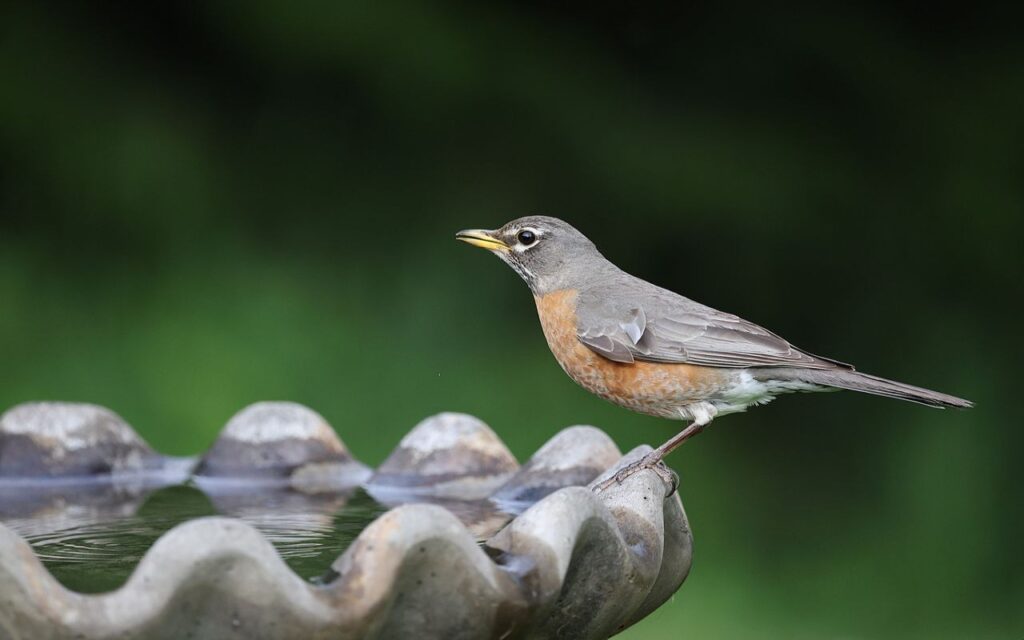
Keeping starlings away from bird baths is the only way to prevent aggressive, late-summer fledgling flocks from completely dominating your backyard resources. If you leave your deep, classic concrete basins completely unprotected, these highly adaptable invasive birds will quickly push out smaller native songbirds and turn your peaceful yard setup into a hostile environment.
This aggressive behavior creates a stressful environment that completely frightens away desirable yard species like American Goldfinches, Ruby-throated Hummingbirds, and Baltimore Orioles. To protect your summer sanctuary, this guide explains how to modify your water presentation using mechanical and behavioral adjustments that exploit the physical limitations of the starling.
Quick Answer: What is the most effective way to keep starlings away from bird baths?
The single best method is dropping the water depth below 1.25 inches with smooth river stones to stop starlings from submerging their chest plumage.
To build a comprehensive defense, combine this shallow baseline with high-frequency water misters or motorized drippers to disrupt their vision, install a 2×2 inch wire mechanical exclusion grid, or set up a deep, still decoy water pool on the far corner of your property.
Summer Water Feature Management Metrics
- Primary Targeted Threat: European Starling summer fledgling flocks
- Core Vulnerability Target: Physical weight limitations and high-frequency wave disruptions
- Optimal Basin Water Depth: Restricted strictly between 0.5 inches and 1.25 inches maximum
- Sanitization Frequency: Bi-weekly chemical flush utilizing specialized non-hazardous solutions
- Desirable Species Protection Window: Continuous tracking from sunrise through late evening sunset hours
The Physics of Starling Bathing Dynamics
Understanding why starlings choose to target your water features requires a close look at their physical dynamics. Starlings are heavy, robust birds that weigh between 75 and 100 grams.
They possess strong leg muscles designed for walking along lawns and flat fields. This physical build makes flat, shallow concrete or stone bird baths an ideal platform for their vigorous communal bathing habits.
Unlike a small goldfinch that delicately dips its chest into the water edge, starlings submerge their entire lower bodies. They flap their long wings at high frequencies to spray water backward across their plumage.
This motion creates severe water displacement, causing the water to splash out over the rim of the basin. The rapid loss of water ruins the presentation of the feature and forces smaller songbirds to find water elsewhere.
Additionally, starlings are highly social birds that forage and bathe in tightly packed groups. When a few scouts land on a wide bird bath basin, their vocal signals draw in the rest of the flock.
The weight of multiple heavy birds standing on the rim can tip over light plastic or resin structures. This tipping can crack your equipment and ruin your yard setup.
How Surface Waves Disrupt the Flock
Starlings prefer calm, still, predictable pools where they can easily watch for predators while cleaning their feathers. When you add a continuous water dripper or a pressurized fine mist line directly over the center of the pool, you completely alter the surface tension of the water. This creates constant, moving target ripples across the basin surface.
- Still Pools: High starling attraction due to easy footing and clear vision fields.
- Moving Ripples: Heavy starling disruption because it continuously alters their sight lines and footing.
- Fine Water Mist: Total starling deterrence by triggering their natural avoidance reflexes.
The shifting motion of moving ripples interferes with how a starling tracks movement around them, making them feel vulnerable to predators. This sense of danger triggers their natural avoidance reflexes, causing them to leave the area.
Smaller songbirds like hummingbirds and warblers absolutely love fine water mists, and they will dart through the spray to clean their feathers while the starlings watch from the distant roof lines.
Adjusting Basin Depth Limits
If you use a deep, classic concrete bird bath, you are accidentally inviting large flocks of starlings to use it. Starlings require a water depth of at least two to three inches to perform their full communal splashing routines.
By dropping the water level down to less than an inch, you take away their ability to submerge their chest feathers. This simple change completely ruins the value of the pool for them.
To keep the water level low without refilling the basin multiple times a day, you can line the bottom of the pool with flat, smooth river stones. Stack the stones carefully until the water depth stays between 0.5 inches and 1.25 inches maximum.
Desirable yard birds like finches, chickadees, and nuthatches can easily use the shallow spaces between the rocks to drink and splash safely. The heavy starlings will find the shallow water frustrating and will move on to find deeper pools elsewhere.
Mechanical Exclusion Grid Parameters
When a starling flock refuses to leave your yard, you can use a mechanical barrier to block them out entirely. This layout uses physical size restrictions to protect your water features. You can build a protective grid over the top of your bird bath using dark, vinyl-coated garden wire.
- Grid Mesh Openings: Exactly 2.0 inches by 2.0 inches maximum.
- Internal Clearance: 4.0 inches of vertical head room above the water.
- Permitted Species: Goldfinches, Chickadees, House Finches, and Nuthatches.
- Excluded Nuisances: European Starlings, Common Grackles, and Blue Jays.
Desirable songbirds can easily slide through the two-inch openings to reach the water below. Starlings have a wide wingspan and broad shoulders that prevent them from dropping through the grid squares.
When they try to land on the wire cover, it flexes under their heavy weight. This instability scares them away while keeping the pool safe for smaller birds.
Preventing Disease and Algal Blooms
Starlings carry a high volume of dangerous avian pathogens and parasites. Because they bathe in large, crowded packs, they leave behind heavy amounts of organic waste, dander, and droppings inside the basin. This waste creates a dangerous breeding ground for bacteria like Salmonella and Avian Influenza, which can easily spread and wipe out your local bird populations.
According to the official Audubon Guide on the European Starling, these birds thrive in close contact with human environments and suburbs, making clean water management critical to your yard’s safety. Empty the dirty water onto your grass and spray the basin with a non-hazardous cleaning mixture of one part white vinegar to nine parts clean water.
Let the solution soak for ten minutes to kill off any hidden bacteria or growing algal blooms. Then rinse the basin thoroughly with a hose before refilling it.
Never use harsh household chemical cleaners, bleach, or synthetic pool tablets in your bird baths. These strong chemicals can strip the natural protective oils right off a bird’s feathers, leaving them vulnerable to summer downpours. Stick to a natural vinegar wash to keep your equipment clean and safe.
Rebalancing Your Summer Yard Resources
To successfully manage starlings, you must look at how water is presented across your entire property. If you completely block them from your main bird bath, they may try to crowd around your backyard feeders or target your garden rows.
You can solve this problem by setting up a secondary, low-cost water feature at the far back corner of your yard. Place this decoy pool far away from your main birding areas, right under an open tree line.
Fill the decoy basin with deep water and leave the surface completely still. The starling flocks will naturally gather around this easy target pool, leaving your main feature clean and quiet.
This setup keeps your primary bird bath free for goldfinches and chickadees to enjoy right outside your windows.
Mastering Your Summer Sanctuary Strategy
Controlling aggressive starling flocks is only your first step toward building a peaceful backyard refuge. Complete your summer management plan by optimizing your feeding stations and heat-wave resources.
- Secure Your Feeding Stations: Prevent bully birds from stealing your premium seed blends. Check out our complete guide on how to deter starlings from bird feeders to protect your investments.
- Defeat the July Heat: Clean, safe water is critical for songbird survival during peak summer temperatures. Read our seasonal guide on how to keep birds hydrated during summer to keep your local wildlife thriving.
Frequently Asked Questions on Managing Summer Bird Baths
Will shiny scare tape keep starlings away from my water features?
Reflective tape and shiny hanging discs can provide temporary relief because the flashing light startles incoming scouts. However, starlings are highly intelligent birds that learn quickly; within a week, they will realize the tape is not a real threat and will ignore it completely.
Can I use a chemical bird repellent in the water basin?
No. You must never add any chemical repellents, taste deterrents, or liquid additives to a bird bath. These products can easily poison wild birds or ruin the insulating properties of their feathers, which can be fatal.
Do starlings prefer elevated or ground-level bird baths?
Starlings prefer elevated pedestal baths because the high vantage point allows them to watch for local predators while they clean themselves. Moving your main feature down to the ground and adding dense plants around it can help deter them, as they dislike tight spaces.
Summary Checklist for a Starling-Free Bird Bath
Drop the Basin Depth
Fill the basin with smooth river stones. Keep the water level restricted between 0.5 and 1.25 inches. This physically stops heavy starlings from submerging their bodies.
Disrupt the Surface Tension
Install a motorized dripper or a pressurized fine mist line over the pool. Continuous moving ripples alter starling sightlines. The moving water triggers their avoidance reflex by making them feel vulnerable.
Install a Wire Exclusion Grid
Build a protective wire canopy using dark, vinyl-coated garden wire. Space the grid mesh openings at exactly 2.0 inches by 2.0 inches maximum. Provide 4.0 inches of vertical head room above the water line.
Sanitize Without Harsh Chemicals
Flush the basin bi-weekly to eliminate dangerous dander, organic waste, and pathogens. Spray the surface with a mixture of one part white vinegar to nine parts water. Avoid synthetic tablets or bleach that strip protective oils from feathers.
Establish a Distant Decoy Station
Place a low-cost, secondary decoy water feature at the far back corner of your yard. Position it deep under an open tree line and leave the surface completely still. Starlings will choose this easy target pool, leaving your main feature clear.