
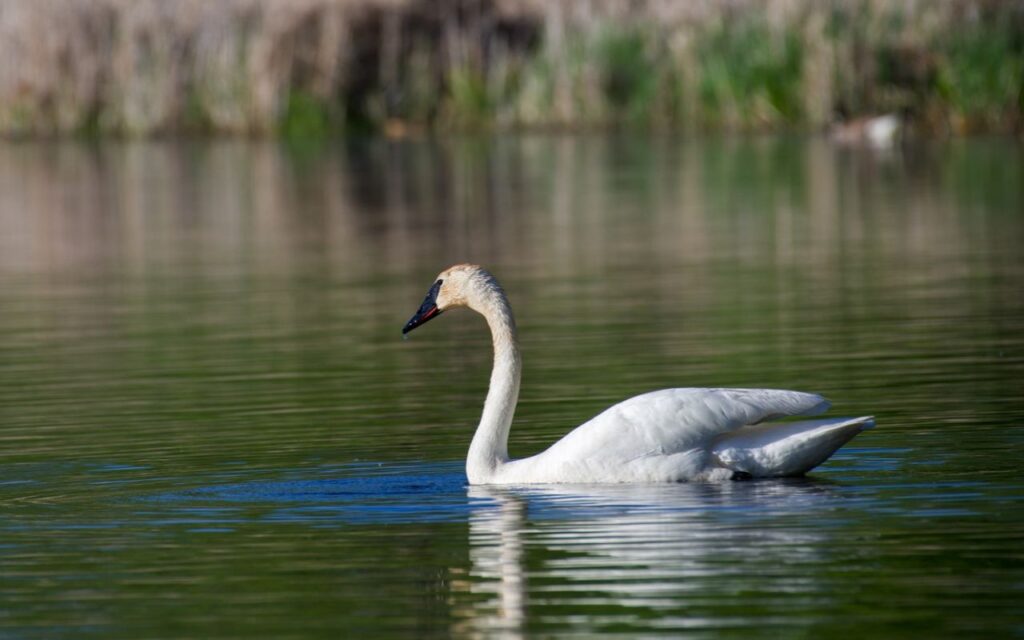
Trumpeter Swans arrive at LaSalle Park in Burlington, Ontario, during the final weeks of November, with the population rapidly expanding to peak numbers between January and February. This designated waterfront sanctuary on the north shore of Lake Ontario serves as one of the most critical overwintering habitats in Eastern Canada, hosting over 200 swans until they depart for northern nesting grounds in late March.
LaSalle Park Winter Waterfowl Logistics
- Observation Location: LaSalle Park Waterfront and Boat Launch, 50 North Shore Boulevard East, Burlington, Ontario
- Parking Infrastructure: Free municipal surface lot directly adjacent to the marina and beach front
- Terrain Profile: Flat, paved parking pathways grading into low sand-and-pebble shoreline beaches
- Target Avian Species: Trumpeter Swans (Cygnus buccinator), Canvasbacks, Long-tailed Ducks, Greater Scaup
- Optimal Wildlife Viewing Window: Late November through late March, with peak activity numbers clustering in January and February
The Precise Trumpeter Swan Arrival Timeline
The migration timeline of the Trumpeter Swan (Cygnus buccinator) into Halton Region is dictated entirely by northern freshwater freeze patterns. Unlike smaller migratory songbirds that follow strict genetic calendar triggers, these massive waterfowl, the largest native birds in North America, will delay their southern movement as long as inland lakes in northern Ontario, Algonquin Provincial Park, and western Quebec remain ice-free.
They require massive expanses of open water to execute their heavy, runway-like takeoffs. This means a sudden northern freeze-up triggers a rapid, synchronized mass flight south toward Lake Ontario.
The Late November Vanguard Phase
The first vanguard of the LaSalle Park winter flock consistently touches down between November 15th and November 30th. These initial arrivals are typically mature breeding pairs accompanied by their gray-plumaged cygnets, which are juveniles born earlier in the spring.
These family units utilize the sheltered harbor of Burlington Bay to rest after a multi-hundred-kilometer flight path along Lake Ontario’s shoreline. At this stage, the birds are highly active in the early mornings, re-establishing their seasonal feeding territories along the shallow western shoreline.
The January and February Peak Assembly
As deep winter sets in during early January, inland lakes solidify completely under sub-zero arctic fronts, forcing the remaining northern populations to migrate south to survive. By mid-January, the LaSalle Park shoreline numbers swell to their absolute maximum, creating an impressive population of 150 to 200+ individual swans tightly packed along the waterfront.
This intense concentration is heavily supported by the Ontario Trumpeter Swan Restoration program. Dedicated local volunteers monitor, tag, and safely feed the wintering flock to ensure high survival rates through the harshest winter fronts.
The Late March Departure Window
The flock remains tightly clustered along the Burlington waterfront until mid-March, when seasonal weather transitions begin. As daylight hours expand and southern Ontario temperatures rise, the swans exhibit increased vocalizations, dynamic head-bobbing displays, and practice short, thunderous display flights across the bay.
Depending on the speed of the spring thaw in northern territories, the entire wintering flock will lift off and migrate back to their northern wilderness nesting grounds by the final week of March. This leaves the waterfront completely empty by April 1st.
The History of the Ontario Trumpeter Swan Restoration Program
To fully understand why these birds gather so densely in Burlington, visitors must understand the historic conservation efforts that rescued the species from the brink of extinction. By the early 20th century, the Trumpeter Swan was completely extirpated from Ontario due to relentless commercial hunting for their skins, meat, and feathers.
For decades, a wild Trumpeter Swan was a completely nonexistent sight anywhere in Eastern Canada. In 1982, a visionary biologist named Harry Lumsden launched the Ontario Trumpeter Swan Restoration program from his home base in southern Ontario.
The mission was to re-establish a self-sustaining wild population using captive-bred birds and wild eggs sourced from healthy populations in Alaska. Lumsden and a network of dedicated citizen-science volunteers realized that for these reintroduced birds to survive the brutal Canadian winters without natural migratory instincts, they needed dedicated, ice-free winter sanctuaries where they could safely monitor their health.
LaSalle Park was selected as a primary restoration hub due to its unique underwater topography and winter water patterns. The tireless work of local volunteers over the past four decades turned a small handful of experimental birds into a thriving, self-sustaining population that now numbers over a thousand across the province. Every swan you see at LaSalle Park today is a direct descendant of this monumental, human-led conservation victory.
Decoding the Yellow and White Identification Tags
When observing the swans at LaSalle Park, readers will immediately notice large, highly visible plastic tags wrapped around the wing skin or stamped onto heavy leg bands. These are not tracking collars, nor do they harm the birds; they are vital field identification markings deployed by conservation researchers.
- Core Identification Tag: Bright Yellow (Ontario Restoration Program Core Fleet)
- Secondary Migratory Tag: White or Red (Inter-Provincial and US Migratory Transits)
- Alphanumeric Code Layout: Three Characters (e.g., K14, H32, P97)
- Central Reporting Hub: Trilateral Reporting via Citizen-Science Wildlife Forums
The bright yellow tags are the signature marking of the Ontario restoration project. Each tag features a unique combination of numbers and letters printed in bold black ink that can be read from a distance using standard binoculars or a telephoto camera lens. By noting the exact code, the color of the tag, and whether it is on the left or right wing, visitors can actively participate in citizen science.
Reporting these numbers directly to the official Trumpeter Swan Conservation Ontario Reporting Hub allows researchers to map out the exact lifespan, breeding success, mate selection, and local travel routes of individual birds as they move between Burlington and their northern wilderness nesting sites.
LaSalle Park Waterfowl Conservation & Non-Feeding Regulations
The LaSalle Park waterfront is a highly regulated municipal environmental zone. Because Trumpeter Swans are still recovering from historical population drops, their modern biological stability remains fragile.
The City of Burlington works directly alongside local conservationists to enforce strict zero-feeding guidelines. Visitors must explicitly understand that providing any outside food items directly threatens the wild safety of these birds.
The Dangers of Feeding Birds Junk Food
Under no circumstances should public visitors ever bring bakery products, bread, crackers, popcorn, or raw grains to the shoreline. Feeding bread to growing cygnets causes a permanent, irreversible structural wing deformity known as Angel Wing. The high carbohydrate and low vitamin profiles of bread cause the carpal joints in the wing to grow faster than the surrounding muscle tissue, forcing the primary feathers to flip outward. This completely destroys the bird’s ability to fly, creating a rapid death sentence in the wild.
Even raw grain mixtures offered by well-meaning visitors cause the swans to stop foraging for natural underwater vegetation. This creates severe nutritional deficiencies and changes their wild survival habits.
Shoreline Pollution and Disease Triggers
Dumping loose seed blends or food scraps along the pebble beach creates severe environmental hazards. Discarded, uneaten food does not dissolve cleanly in the shallows. It sinks to the bottom of the shallow beach bed, where it rots and fuels the growth of toxic algal blooms and dangerous bacteria.
This contamination triggers sudden outbreaks of avian botulism and avian influenza. These water pathogens can rapidly wipe out an entire wintering flock in a matter of days.
The Role of Official Volunteer Feeds
The only feeding permitted at LaSalle Park is conducted strictly by authorized volunteers from the Ontario Trumpeter Swan Restoration program. These certified monitors track individual health and provide a carefully measured diet of specialized waterfowl pellets only when deep lake ice completely cuts off the swans’ access to wild aquatic plants. Public handouts disrupt this scientific management and draw unwanted nocturnal rodents to the park footprint.
Step-by-Step Guide to Safely Viewing the Swans
Observing birds that weigh up to 30 pounds with an eight-foot wingspan requires careful personal coordination to ensure user safety and prevent wildlife panic. Follow this precise shoreline protocol when visiting the Burlington waterfront this winter.
Step 1: Locating the Main Beach Assembly Zone
Upon entering the main parking lot at 50 North Shore Boulevard East, avoid walking toward the high elevated playground structures or the upper park pavilions. Proceed directly down the asphalt incline toward the marina boat launch and the low sand-and-pebble beach lining the western edge of the park.
The Trumpeter Swans gather almost exclusively on this low-bank shoreline because it provides easy foot transit out of the deep lake currents and shelters them from harsh northern wind blocks.
Step 2: Maintaining Safe Wildlife Distance Parameters
While the LaSalle Park swans are highly habituated to human presence due to years of public interaction, they remain wild animals with immense physical power. Maintain a minimum distance of ten feet from the leading edge of the flock.
Never attempt to touch a swan’s neck or back, and never walk directly into the middle of a resting group. If a swan lowers its neck parallel to the ground, pumps its head vertically, or begins hissing loudly, it is signaling intense territorial distress. Back away slowly immediately. A defensive adult male swan can easily strike hard enough to break a camera lens or bruise a limb.
Step 3: Managing Cold-Weather Equipment Maintenance
The biting winter winds blowing off Lake Ontario can drop temperatures at the water’s edge by five to ten degrees compared to the upper parking lot. Wear insulated, waterproof winter boots, as the shoreline sand is often a mixture of freezing slush and wet pebbles.
If you are bringing digital cameras or binoculars to track the swans’ leg bands, keep your spare batteries tucked inside an inner jacket pocket close to your body heat. Sub-zero waterfront temperatures will rapidly drain lithium-ion battery cells within 30 minutes of open exposure.
Understanding Winter Water Depth & Diving Patterns
To locate the best photography vantage points along the LaSalle waterfront, a basic understanding of swan foraging physics is highly beneficial. Trumpeter Swans are dabbling ducks, meaning they do not dive completely underwater like diving ducks.
Instead, they tip their bodies forward, raising their tails into the air while extending their long necks straight down to tear up aquatic plants from the lake floor. This foraging method restricts their feeding zones to shallow waters between two and four feet deep.
At LaSalle Park, a natural underwater limestone shelf runs parallel to the pebble beach, creating a large, shallow platform where water levels remain perfectly calibrated for dabbling birds. Just beyond this limestone shelf, the lake bed drops off sharply into deep harbor channels.
While the swans stay safely on the shallow shelf to feed, large rafts of diving ducks gather over the deep drops. Canvasbacks and Greater Scaup dive up to twenty feet down to collect mollusks and deep-water weeds. This separation creates a distinct, dual-layered wildlife viewing experience right from the shoreline edge.
Extending the Route: Connecting Your Excursion
Once you finish your winter swan-watching experience at LaSalle Park, you can easily turn your day into a complete, high-performance regional birding tour.
Proceed to the Hendrie Valley Boardwalks
Drive exactly ten minutes north to visit Cherry Hill Gate, where you can experience close-up wildlife viewing along the sheltered creek beds. For a complete manual on how to successfully visit the local bird populations there without running into city bylaw fines, consult our comprehensive guide on hand-feeding birds at Cherry Hill Gate to look at the new non-feeding rules.
Transitioning Your Seasonal Backyard Care
Observing the immense nutritional demands of wintering waterfowl often inspires wildlife enthusiasts to audit their own properties. If you want to transform your home into a secure sanctuary that supports migratory species during the freezing months, explore our complete operational overview detailing how to manage your feeding birds in winter to build an advanced, predator-proof backyard station that keeps local songbirds safe and thriving year-round.
Frequently Asked Questions on Hand Feeding Birds
Why do the swans gather at LaSalle Park instead of flying further south?
LaSalle Park features a unique underwater geographic layout where warm currents and natural springs prevent this specific section of Burlington Bay from completely freezing over, even during extreme Canadian winter fronts. This guarantees the swans permanent, year-round access to open water and underwater aquatic plants.
Can I track the yellow or white plastic wing tags on the swans?
Yes. Many of the Trumpeter Swans at LaSalle Park wear large, brightly colored wing tags or leg bands stamped with unique letter-and-number codes. These tags are managed by the Ontario Trumpeter Swan Restoration program. Visitors can note these codes and report their sightings online to help scientists track the lifespan and migration movements of individual birds.
What other winter waterfowl can I see at LaSalle Park?
The ice-free pocket of water attracts thousands of migratory diving ducks. Visitors can regularly spot large rafts of Greater Scaup, Canvasbacks, Buffleheads, Common Goldeneyes, and the striking Long-tailed Ducks feeding just beyond the swan flock.
Is LaSalle Park wheelchair accessible during the winter months?
The upper park pavilions and the main asphalt path leading down to the marina boat launch are fully accessible. However, the sandy beach area where the swans cluster consists of loose pebbles, snow packs, and shifting ice chunks, which can make wheelchair navigation directly at the water’s edge highly challenging without assistance.
What should I do if I see an injured or tangled swan at the park?
Do not attempt to capture or handle the swan yourself. The adult birds are immensely strong and can cause severe injury when cornered. Instead, immediately contact the local Burlington Animal Services division or report the bird’s location and yellow wing-tag code directly to the volunteer monitors stationed at the waterfront pavilion.