
Reader Transparency: This birding guide contains paid affiliate links. If you click a link and make a purchase, I may receive a small commission at no extra cost to you. As an Amazon Associate, I earn from qualifying purchases. Your support helps keep Feathered Guru flying!
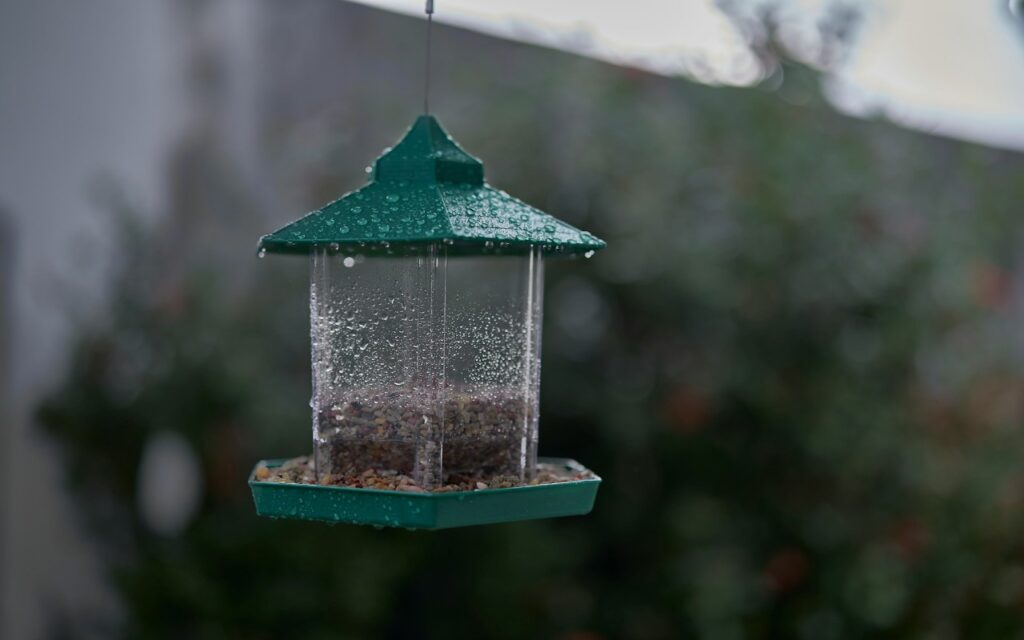
Figuring out how to keep bird seed dry in feeders during a torrential downpour is a vital skill for any dedicated backyard wildlife archivist. Homeowners routinely look out at their drenched yards and assume a standard retail weather roof is enough to protect their localized feeding stations from moisture damage.
In my years of backyard wildlife tracking, I have learned that basic out-of-the-box equipment fails completely during intense seasonal rain storms. If you neglect this environmental protection, the resulting hydrostatic saturation will trigger rapid fungal spoilage and lethal mold outbreaks inside your port reservoirs.
What is the Best Strategy to Keep Bird Seed From Getting Wet?
The single most effective method is mounting a wide, clear polycarbonate weather dome baffle extending six inches past your feeder ports, paired with manual modification of your bottom seed trays to install precision drainage weep holes.
To maximize long-term grain dryness during heavy storms, layer this physical shield by shifting your hardware beneath natural dense tree canopy covers and switching to non-porous, moisture-resistant acrylic tube feeders.
The Lethal Chemistry of Aspergillus and Hydrostatic Saturation
To successfully protect your backyard feeding setup, you must first master the microscopic hazards of grain saturation. Raw wild bird seeds are highly porous organic matrices packed with volatile plant lipids and complex proteins.
When exposed to persistent ambient humidity or direct rainwater, these grains undergo rapid hydrostatic absorption, swelling inside plastic configurations and clogging open feeding channels.
This damp, enclosed environment creates an ideal breeding ground for microscopic fungal pathogens, most notably Aspergillus flavus. As detailed by the Oklahoma State University Extension, improper moisture control at backyard feeding stations allows these molds to thrive, secreting toxic secondary metabolites known as aflatoxins.
When local songbirds consume contaminated grains, they face severe respiratory failure, systemic internal hemorrhaging, and acute neurological dysfunction.
Understanding the exact methods required to maintain continuous dryness is a vital prerequisite for managing a healthy backyard sanctuary, which I detail further in my guide on How to Prevent Mold in Bird Feeders.
The Deflection Physics of Polycarbonate Weather Guard Shields
The initial physical line of defense against severe weather control is a heavy-duty, overhead weather shield. Most commercial bird feeders are sold with decorative metal caps or narrow plastic roofs that fail instantly when strong crosswinds blow rain horizontally across your yard.
To achieve full deflection control, you need to install an expansive, clear polycarbonate baffle that extends at least five to six inches past the outermost edge of your lowest feeding port.
These massive clear domes are designed to leverage the surface tension and kinetic trajectory of falling water droplets, funneling the downward force of a storm safely past your feed columns.
By opting for clear acrylic variations rather than opaque covers, you maintain absolute visibility of incoming finches and chickadees while keeping the immediate air column bone dry.
This structural upgrade ensures that even during high-velocity wind storms, your primary seed column stays pristine and entirely free from direct water contact.

- ADJUSTABLE DOME FOR BIRD ACCESS CONTROL: Raise or lower the clear dome to adjust feeding space for different bird sizes….
- ROTATING DOME HELPS DETER SQUIRRELS: The hanging dome rotates when squirrels attempt to perch, making it harder for them…
- RAIN-RESISTANT DESIGN HELPS PROTECT SEED: The clear dome helps shield seed from rainfall, while drainage holes allow exc…
Modifying Base Enclosures with Precision Drainage Ports
Even with an elite polycarbonate umbrella installed, wind-driven moisture can still enter through individual feeding ports. Once water penetrates a tube or hopper chamber, gravity pulls it to the base, where it creates a dense, stagnant paste that rots your grain layers.
To stop this internal water accumulation, you must manually upgrade your hardware’s baseline ventilation system.
Examine the plastic or metal bottom cap of your tube feeders. If the manufacturer left out passive drainage, use a drill and a clean one-eighth-inch bit to install three to four precision weep holes through the lowest baseline tray.
These customized modifications allow entering rainwater to drain away immediately rather than settling into your feed reservoirs.
This passive airflow framework keeps your seed loose and prevents the clumping issues addressed in my comprehensive guide to How to Prevent Bird Seed Waste.
Advanced Tray-Drying Mechanics and Rot Prevention Timelines
For open platform and tray feeders, managing standing water requires a shift from enclosed deflection to aggressive evaporation physics. Metal mesh bottom inserts are vastly superior to solid wood or plastic basins because they allow full 360-degree air circulation to pass entirely beneath the seed layer.
When driving rain hits an open mesh tray, water passes immediately through the screen gaps via gravity, allowing natural wind currents to dry the remaining seed core within hours of a storm’s passing.
Even with premium mesh hardware installed, you must maintain a strict extraction timeline for any grain that gets damp during a severe storm pattern. Leaving wet sunflower chips sitting on a tray for more than 48 hours allows deadly bacterial films to lock onto the wooden frames.
If a heavy autumn storm front drops consistent water for several straight days, temporarily empty your open platform trays entirely, allowing the mesh screens to air dry until the weather system clears your property lines.
Leveraging Microclimate Placement and Vegetation Canopies
Where you arrange your standalone feeder poles across your property lines drastically alters its exposure to seasonal storms. Placing a feeding station out in the wide-open middle of your lawn exposes the hardware to the maximum velocity of wind and driving rain.
To mitigate this intense environmental pressure, you must position your setup within a protective backyard microclimate. During major storms, shift your mobile pole hooks beneath the dense overhang of mature coniferous or deciduous trees, such as white pines or oaks.
As highlighted by Maine Audubon, utilizing the natural shelter of nearby woody trees and dense evergreen foliage protects your localized feeding layouts by acting as a critical buffer zone.
This calculated placement absorbs the harsh atmospheric impact of the storm before water can touch your port caps. Just make sure your poles are situated ten feet away from jumping points to ensure local squirrels cannot leap onto your rain guards.