
Reader Transparency: This birding guide contains paid affiliate links. If you click a link and make a purchase, I may receive a small commission at no extra cost to you. As an Amazon Associate, I earn from qualifying purchases. Your support helps keep Feathered Guru flying!
You know that frustrating feeling when you look out at your beautifully manicured backyard lawn, only to see a chaotic, unsightly patch of invasive weeds and wild grasses erupting directly beneath your hanging stations? If you are desperately searching for ways how to keep bird seed from sprouting under feeder poles, realizing that un-shelled commercial grains will perpetually germinate the moment they hit damp soil can save your turf grass from total ruin.
The truth is that you do not have to give up feeding your favorite local songbirds just to preserve your grass. Wild seeds require specific temperature and moisture parameters to take root, which means you can easily use basic physical barriers and rapid thermal kitchen techniques to permanently sterilize the food supply before it ever drops to the ground.
How Do You Keep Bird Seed From Sprouting Under a Feeder?
To keep bird seed from sprouting under a feeder, bake raw mixes flat on a tray at 300°F (149°C) for 30 minutes to permanently kill internal plant embryos. Alternatively, upgrade your inventory to pre-hulled, shell-less meats like naked sunflower hearts, which naturally decompose within forty-eight hours of hitting damp grass before roots can ever establish.
The Thermal Solution: Oven Penetration vs. Kitchen Fire Hazards
The fastest home remedy to deactivate dropped seeds is to apply a targeted heat barrier right on a metallic baking sheet. Plant embryos inside wild grains are highly sensitive, requiring an internal core temperature of 140°F (60°C) to permanently kill their ability to grow.
Because a dense pile of raw birdseed acts as a heavy layer of insulation, setting your conventional home oven to 300°F (149°C) for 30 minutes is necessary to ensure ambient heat penetrates completely to the center of the pile. To bypass this insulation barrier without scorching the seed’s natural oils, implement an advanced pre-roast moisture flash hack heavily discussed among lawn enthusiasts on GardenWeb.
- Mist the Tray: Spray your raw seed tray lightly with a fine mist of water right before placing it into the oven.
- The Flash Steam Effect: This tiny surface moisture layer instantly flash-boils into localized steam to carry thermal energy straight through the water-resistant outer hulls.
- Embryo Deactivation: This deep steam penetration snaps the internal plant embryo instantly at its core without risking smoke or fire hazards.
However, executing this thermal treatment at home carries a major fire hazard that backyard birders must monitor closely. Seeds like sunflower, safflower, and peanuts are packed with natural, volatile plant oils that can easily overheat, smoke, and ignite when subjected to sustained oven roasting.
Furthermore, attempting to microwave birdseed in a paper bag is incredibly dangerous because intense localized hot spots will ignite the dry chaff and paper instantly. If you choose to roast your mixes, keep your layers under an inch thick, monitor the tray continuously, and let the batch cool completely before filling your cylinders.
⚠️ CRITICAL KITCHEN SAFETY NOTICE: Never leave a roasting tray unattended. Because high-lipid wild bird grains are rich in natural volatile oils, overheating them can cause immediate smoking or flash ignition. Always maintain layers under one inch, monitor the oven window continuously, and absolutely never substitute a conventional oven with a microwave, which creates localized thermal friction spikes that ignite dry hulls instantly.
The Pre-Hulled Shift: Removing the Germination Shield
If you want to completely avoid the safety risks and hassle of baking every bag of feed, you must modify your bulk seed inventory to eliminate the reproductive protective shield entirely. Standard striped sunflower seeds and heavy millet grains are wrapped in tough, water-resistant outer hulls that shield the internal plant embryo from fungi and early decay.
Upgrading your yard stations to a specialized, high-performing choice like the Kaytee Premium Songbird Blend Wild Bird Food is the absolute easiest way to satisfy local birds while taking control of your lawn footprint.
When birds drop un-hulled kernels into your lawn, those tough outer casings allow the seed to sit safely in damp grass for weeks until the temperature is perfect for sprouting.
According to seasonal property cleanup guides published by The National Audubon Society, leaving thick layers of wet, moldy, or spoiled seed casings to collect on the ground is highly dangerous because it spreads diseases like salmonellosis and aspergillosis among your wild birds while actively attracting residential rodents.
Pre-hulled sunflower hearts and chipped meats possess zero outer armor. The second these exposed naked nutmeats drop onto your soil, backyard humidity and ground bacteria immediately compromise the naked core. Instead of sending down root lines, the exposed hearts dissolve and decay within forty-eight hours of hitting damp grass.
Shifting to exposed, naked nutmeats keeps your lawn immaculate, an inventory upgrade we cover extensively in our foundational guide on how to prevent bird seed waste.

• High-energy formula features pure pre-hulled sunflower hearts.
• Premium variety attracts cardinals, finches, and buntings.
• Year-round nutrition fuels flocks through seasonal drops.
• Pre-hulled design rots within 48 hours to prevent sprouts.
Matching Your Inventory to Ground-Feeding Cleaners
Shifting to shell-free options is a fantastic way to protect your turf, but it helps to know which seeds offer the lowest sprouting risk. Ground-feeding birds like juncos and towhees will happily clean up your tray’s overflows, but only if you fill it with the ingredients they prefer.
Use this quick guide to choose a mix that matches your backyard cleanup goals:
Seed Type Sprout Risk Level What It Does to Your Lawn Sunflower Hearts & Chips Zero Risk They have no outer protective shell. They cannot germinate and will break down naturally if left uneaten. Hulled Millet Low Risk Great for ground-feeders. It offers a much lower cleanup and sprouting burden than intact millet. In-Shell Sunflower High Risk Highly nutritious, but dropped intact seeds and discarded shell piles will rapidly trigger lawn sprouts. Generic Grocery Mixes Extreme Risk Packed with cheap filler grains. Birds will actively sort through them and throw unwanted seeds straight into your grass.
The Physical Barrier Layer: Deploying Raised Catch Trays
When persistent foraging birds continue to fling seed sideways out of your tube ports, you must intercept the debris mid-air using heavy infrastructure adjustments. According to the master food profile charts managed by All About Birds, different backyard species have strict preferences for specific seed types, meaning that if you offer a generic commercial blend, birds will actively sort through the ports and toss undesired grains straight onto the ground.
Installing a highly expansive drainage platform like a durable iBorn Bird Seed Catcher Tray directly under your vertical stations creates a reliable mechanical safety net to handle these discarded extras.
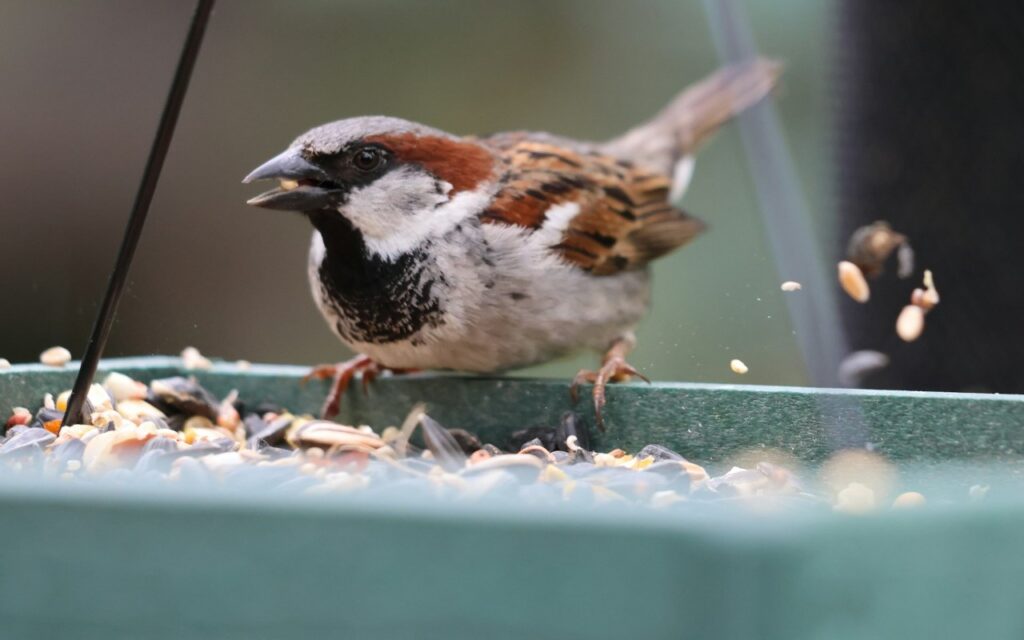
Suspended by durable hanging cords, this extra-large platform captures up to 90% of all rejected grains before they can touch your turf grass. The wide, 13.6-inch chew-resistant dish creates a secure secondary feeding zone where ground-hugging species like juncos, finches, and towhees can consume the leftovers safely without creating ground clutter.
To stop rainwater from collecting in the base and naturally sprouting the trapped grains, deploy a custom DIY plant-saucer screen hack. Line your catcher floor with a loose, easily replaceable piece of window screen rather than permanently gluing it down.
Forum communities note that heavy winter ice and aggressive squirrels will eventually rip or warp permanent mesh screens. By keeping the mesh loose, if a squirrel chews it or freezing rain stretches it out, you can simply pull the damaged screen out and swap it for a fresh piece in under two minutes, keeping your seeds dry and elevated.
Restricting seed-to-soil contact completely breaks the weed cycle, a yard protection layout I dive into step-by-step across my specialized blueprint on how to deter starlings from bird feeders.

• Wide platform intercepts falling seeds cleanly
• Chew-resistant frame withstands intense squirrel damage
• Universal hanging cord secures below feeders
• Open design fits multiple birds at once
The Hidden Threat: Preventing Your Catcher from Becoming a Seedbed
Installing a catch tray is only half the battle. If you leave fallen seed sitting in a tray during rainy or highly humid weather, the grains will swell, sprout, and anchor their root lines straight into the hull debris. When this happens, your raised tray accidentally becomes an elevated, protected greenhouse bed for the very weeds you are trying to stop!
To permanently break this cycle, implement a strict weather-based maintenance schedule. Inspect your catcher floor immediately after every major rainstorm. During wet or humid summer stretches, empty the accumulated debris every 2 to 3 days.
Always dump out the old, clumped material completely instead of simply pouring fresh seed on top of a damp layer. Let the tray air out and dry fully before hanging it back up to ensure your food stays completely sterilized.
The Mulch and Geotextile Ground Cover Rule
If you are managing heavy hanging brackets positioned directly over high-maintenance garden beds, you must isolate the underlying soil using a combination of landscaping cloth and loose organic aggregates. Allowing rejected grains to settle directly into bare, cultivated garden soil creates an endless weeding nightmare that chokes out your delicate perennial flower roots.
To establish a clean zone, excavate a four-foot radius directly beneath your bracket poles, dropping the ground level down by roughly three inches. Lay down a double layer of professional-grade woven geotextile weed-blocking cloth across the bare dirt floor, securing the perimeter lines with heavy steel landscape staples.
However, as emphasized in regional UC Master Gardener horticultural overviews and weed management metrics published by the UC Statewide IPM Program, a fabric-and-mulch combination will not permanently stop weed seeds from germinating over the long term.
Over several seasons, falling organic matter and decomposing cedar wood mulch break down into a thin layer of rich compost right on top of the fabric sheet. When messy songbirds drop seeds, those kernels will readily sprout within that top layer of decayed organic dust and eventually push their root systems straight through the woven fibers of your underlying weed cloth.
To permanently defeat this soil breakdown loop, introduce a proprietary calcified sub-base barrier. Right before you shovel the three inches of bark mulch over your geotextile cloth, dust the top of the bare fabric sheet with a heavy coating of agricultural lime powder.
As the top layer of wood mulch decomposes over the years into compost, rainwater will pick up the limestone dust underneath. This reaction creates a highly alkaline, high-pH chemical barrier directly on the fabric face.
Most wild bird seeds, particularly millet and sunflower grains, require a slightly acidic to neutral soil microclimate between 6.0 and 7.0 pH to successfully trigger their internal gibberellic acid dormancy break.
When dropped bird seeds sprout in the top mulch layer and send down root lines, their root tips hit this intense 8.5+ pH agricultural lime crust. The extreme alkalinity immediately induces osmotic shock and severe nutrient lockout, causing the descending roots to chemically wither and stop growing instantly.
This creates a permanent, non-toxic chemical barrier across your feeding perimeter. This advanced landscape block pairs naturally with the seasonal preparation tips outlined in our manual on setting up a fall bird feeding station.
Establishing Seasonal Station Rotation Paths
Sometimes, despite your best hardware efforts, high traffic levels will cause a slow accumulation of organic debris that wears down your grass. Pigeons, starlings, and sparrows will crowd feeding lines, creating constant ground friction that wears down your turf and drives seed deep into the dirt. Reclaiming your lawn’s health requires strategic, seasonal station migration paths.
Never leave a heavy multi-port pole array in the exact same backyard coordinate patch for more than three consecutive months. By systematically moving your bracket spikes ten feet to the left or right each season, you give the underlying grass a chance to recover.
Rotating your stations spreads out the environmental impact footprint, preventing permanent dead patches from forming on your property, a maintenance routine we enforce heavily when adjusting regional layouts for common backyard birds.