
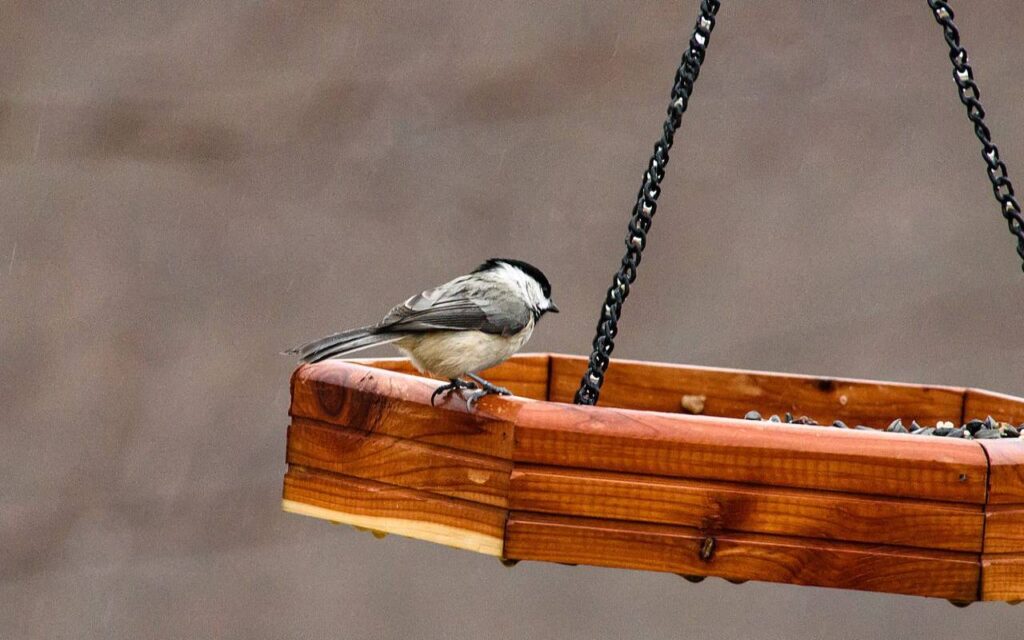
Mastering winter bird feeding with premium no mess bird seed requires balancing high caloric demands with strict debris management to protect your property. Conventional blends filled with fibrous hulls lead to thick mounds of discarded waste that rot under melting snowpack. Backyard hobbyists frequently discover that these conventional seeds create foul, sodden ground sludge that kills turfgrass and attracts pests.
By eliminating outer shells and selecting high-density lipid sources, you preserve ground cleanliness while providing songbirds with immediate metabolic energy. These strategies combine field ornithology research with winter backyard mechanics to keep feeding zones spotless all winter long. Adopting a zero-waste configuration safeguards your lawn and ensures local flocks stay healthy through freezing weather.
Hulled Sunflower Lipids and Shell-Free Caloric Efficiency
Standard black oil sunflower seeds force birds like Black-capped Chickadees and Tufted Titmice to crack open tough outer hulls at the feeder perch, leaving piles of woody waste beneath the snow.
De-hulled sunflower hearts, also known as sunflower chips, remove this physical waste entirely while delivering roughly 40 percent lipid and 20 percent protein profiles directly to the bird.
When every scrap of food dropped on the snow is completely edible, ground-foraging species like Dark-eyed Juncos and Native American sparrows quickly clean up fallen pieces.
Inexpensive commercial wild bird blends usually contain red milo, cracked corn, and wheat, which common winter songbirds intentionally kick out of the feeder to search for oily seeds.
Discarding these filler grains reduces the volume of scattered waste beneath your hanging stations by half. The most effective shell-free seeds for clean winter operations include specific targeted profiles:
- Coarse sunflower chips that offer dense fats without shedding exterior fibrous casings
- Hulled white proso millet suited for native winter sparrows feeding off ground snow crusts
- Roasted, unsalted peanut pieces that eliminate fragile peanut shell flakes in the lawn
- Pre-split Nyjer seed hearts that prevent wet, black thistle husks from staining concrete patios
Switching to clean, hull-free ingredients slightly increases the initial purchase cost per pound, but it eliminates discarded seed mass entirely. You pay exclusively for digestible fuel rather than woody structural refuse that smothers your turf through early spring thaw cycles.
Hardware Mesh Trays and Snowpack Waste Catchment
Snow accumulation obscures dropped feed, leading to deep, frozen layers of mixed moisture, bird feces, and uneaten fats. Installing wide catch trays directly beneath tubular and hopper feeders stops dislodged particles before they ever contact the ground crust.
Experienced forum enthusiasts often modify feeders by affixing broad, perforated acrylic platforms or rustproof 0.25-inch galvanized hardware cloth trays suspended directly under the main perches.
These under-feeder catch platforms function as secondary feeding platforms for clumsy ground feeders like Northern Cardinals and Mourning Doves that struggle with narrow perch pegs.
Catch trays also prevent heavy wet snow from forming a solid frozen cap over falling morsels, allowing small songbirds to retrieve clean remnants throughout the day. When configuring waste-containment catch systems on your feeder poles, apply these hardware parameters:
- Utilize a minimum 18-inch diameter tray to capture scattered particles deflected laterally by wing flutters
- Ensure the catch platform features fine drainage perforations to allow melting snowmelt to drain freely without pooling
- Install 12-inch clear polycarbonate weather domes above hopper perches to deflect horizontal sleet and driven snow
- Mount tray systems at least 5 feet above the ground snowpack line to keep foraging catches away from browsing rodents
Emptying catch trays every two days keeps the snow underneath pristine and prevents seed clump consolidation. It also prevents the accumulation of dense organic pulp, which becomes almost impossible to scrape off patio stones once trapped in sub-zero ice.
Suet Render Integrity and Melting Viscosity Hazards
Rendered beef tallow cakes offer vital thermal survival calories during winter freezes, but unrefined fats become gummy, greasy, and messy. Low-quality suet containing unrendered suet tissues softens under direct winter sunlight, dripping rancid grease onto snow banks and wooden decking below.
High-grade suet must undergo triple-rendering, which clarifies the fatty acids and elevates the melting point to preserve structural stability across variable temperatures. Greasy suet droppings pose a severe physical danger to wild birds if sticky lipids transfer to avian plumage.
Feathers fouled by softened animal fat lose their microscopic interlocking barbule geometry, eliminating their natural thermal insulation and causing fatal hypothermia during wet winter nights. You can avoid greasy ground contamination and feather degradation through specific equipment selections:
- Pure beef kidney tallow cakes triple-filtered to remove connective moisture and loose animal tissue
- Inverted hanging suet cages that require clingers like Nuthatches and Woodpeckers to feed from below, denying perching space to messy Starlings
- Suet log feeders fitted with drilled 1.5-inch recessed holes that force birds to extract individual bites without crumbling the cake
- Unsweetened peanut butter blended with coarse cornmeal rather than pure vegetable oils that liquefy under solar heat
Keep raw kitchen grease, bacon drippings, and soft fats out of your yard feeders entirely. These unrendered fats harbor high levels of salt and volatile compounds that ruin exterior surfaces and destroy plumage waterproofing.
Aspergillus Contamination and Sub-Snow Hygiene Protocols
Whenever wet snow encases dropped organic food, a warm subnivean microclimate forms directly against the soil surface. This insulated, damp zone accelerates the growth of Aspergillus fumigatus, an aggressive environmental fungus that adapts rapidly to freezing and thawing moisture cycles.
Songbirds foraging on moldering seeds beneath a thawing snow layer inhale or ingest these spores, causing acute avian aspergillosis, a severe respiratory disease that can cause rapid mortality across localized flock populations.Chemical additives such as glycerin or alcohol must never be added to bird baths, food hoppers, or winter water systems to stop freezing.
These substances destroy the hydrophobic natural waxes on avian feathers, causing moisture to penetrate down to the downy underlayer. Maintain pristine hygiene through rigorous hardware cleaning routines:
- Submerge soiled non-porous feeder components in a 1:9 bleach-to-water dilution soaking solution every two weeks
- Avoid pouring boiling water directly onto clear polycarbonate feeder reservoirs, which warps and micro-cracks synthetic plastics
- Scrape away localized snow build-up directly under your feeding stations using a flat steel ice chopper before mold colonies anchor
- Scatter clean wood shavings or straw over frozen clearance zones to make dropped hull-free chips visible and easily swept
Frequent targeted cleanings take only minutes when using clean-feed formulas because there are no gummy masses of hulls cemented into the lawn. The result is a sterile, pathogen-free wintering yard that protects migrating and resident birds from systemic respiratory pathogen exposure.
Microclimate Feeder Spacing and Collision Geometry
Clean winter feeding requires planning how birds enter, exit, and interact with the feeding station during inclement weather. Frantic movements from crowded feeding stations fling seeds wide across your yard, spreading debris beyond your primary catchment systems.
Distributing smaller, specialized feeding stations across separate yard zones disperses flock density, reduces territorial agitation, and stops chaotic debris scatter. Feeder positioning also dictates bird strike safety against nearby home windows.
According to standard Audubon collision prevention guidelines, feeders must sit either within 3 feet of exterior window glass or further than 30 feet away. The physical dynamics of these distances prevent winter collisions and keep associated debris neatly consolidated:
- Mount small suction-cup window hoppers within 3 feet of exterior panes so departing birds cannot generate fatal flight velocity
- Maintain a minimum clearance of 30 feet from glass if you prefer pole-mounted feeding arrays to provide open deceleration corridors
- Position hanging feeding stations inside natural windbreaks, such as the leeward side of evergreen conifers, to reduce windblown seed scatter
- Suspend feeder arrays over crushed gravel runs or paved brick walkways instead of open lawn to facilitate daily snow sweeping
Clustering shell-free, high-lipid foods within these verified safety corridors eliminates widespread lawn contamination. Your winter feeding station remains a clean, high-efficiency metabolic resource for birds throughout the harshest months of the season.