
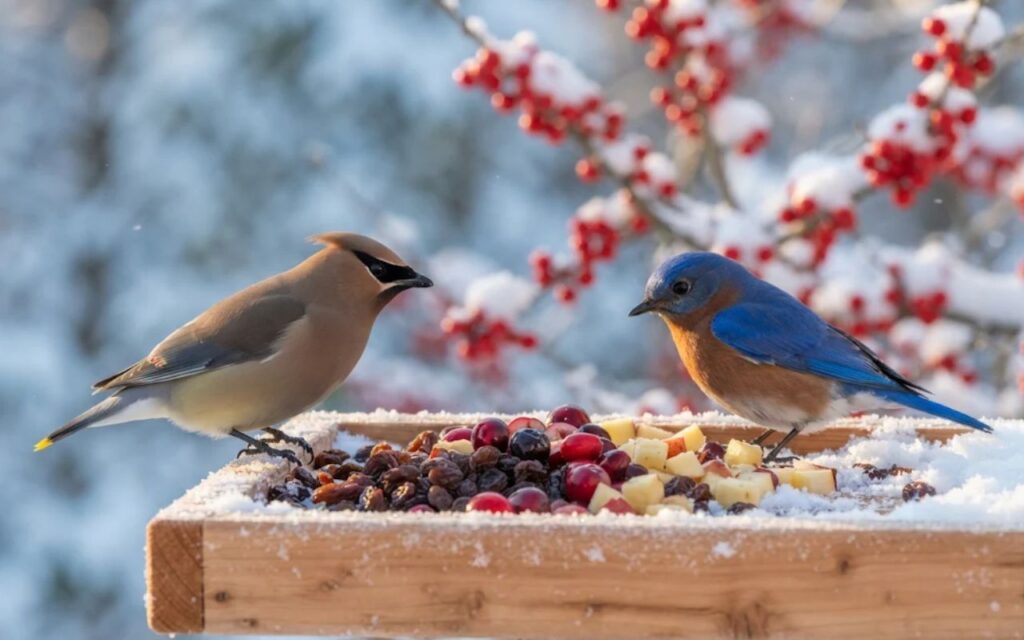
The best winter berries for birds include persistent native shrubs such as winterberry holly, serviceberry, and flowering crabapple, paired with feeder-friendly dried and fresh fruits like unsulfured raisins, Zante currants, dried cranberries, and cored apples. Soaking dried fruit in a 2:1 ratio of warm water for 10 to 15 minutes before serving restores moisture, prevents swallowing hazards, and provides critical late-winter calories for American Robins, Cedar Waxwings, and Eastern Bluebirds.
When freezing temperatures lock up insects and earthworms, fruit-eating backyard birds rely heavily on persistent winter berries. By February and March, however, hungry flocks have stripped most native holly, dogwood, and crabapple trees bare.
Offering properly rehydrated dried fruits and cold-hardy fresh fruits at your feeding station bridges that late-winter hunger gap. Knowing the exact soaking ratios, outdoor freeze windows, and toxic lookalikes to avoid turns your yard into a reliable winter haven for soft-billed birds.
Quick-Glance Summary: Winter Berries & Dried Fruits for Birds
- Top Pantry Dried Fruits: Unsulfured raisins, Zante currants, dried cranberries (low-sugar or unsweetened), dried blueberries, and diced dried apples or apricots.
- Best Fresh Winter Fruits & Berries: Fresh cranberries (halved or thawed from frozen), cored and chopped apples, blueberries, and halved seedless grapes.
- Mandatory Prep Ratio: Soak dried fruits in 1/2 cup warm water per 1/4 cup fruit (a 2:1 ratio) for 10 to 15 minutes, then drain and blot dry before serving.
- Best Persistent Native Shrubs: Winterberry holly (Ilex verticillata, Zones 3–9), American cranberrybush viburnum (Zones 2–7), flowering crabapple (Zones 4–8), and eastern redcedar (Zones 2–9).
- Pet & Wildlife Safety: Keep raisins and currants on elevated platform feeders out of reach of dogs, and never serve avocado or apple seeds.
Why Late Winter Is the Hardest Season for Fruit-Eating Birds
Seed-cracking birds like Northern Cardinals and Black-capped Chickadees thrive on sunflower seeds and safflower all winter long. Soft-billed frugivores (fruit-eaters) such as Eastern Bluebirds, American Robins, and Cedar Waxwings have slender beaks built for swallowing whole berries and soft insects rather than cracking tough seed hulls.
During early winter, wild flocks feed on high-sugar berries that cling to branches after autumn leaf-drop. Many persistent fruits actually improve after repeated freeze-thaw cycles, a natural softening process known as bletting that bursts fruit cell walls and converts starches and astringent tannins into sweet, digestible sugars.
By late winter, once those wild berry crops are exhausted and before spring insects emerge, rehydrated dried fruits and platform-fed fresh berries provide essential carbohydrates for daily survival.
Best Dried & Fresh Fruits to Offer at Backyard Feeders
According to winter feeding guidance from the Cornell Lab of Ornithology’s Project FeederWatch, fruit-loving songbirds readily visit platform feeders stocked with simple kitchen fruits:
- Unsulfured Raisins & Zante Currants: The single most popular winter fruit offering for Eastern Bluebirds, American Robins, and Northern Mockingbirds. Always choose plain, unsulfured raisins without added oils, sugar glazes, or sulfur dioxide preservatives.
- Dried or Fresh Cranberries: Fresh cranberries can be sliced in half or frozen and thawed to soften the skin, while unsweetened dried cranberries offer concentrated energy for waxwings and woodpeckers.
- Chopped Apples & Pears: Core and dice fresh apples into bite-sized 1/4-inch cubes, or press apple halves onto tree branches for robins, orioles, and woodpeckers.
- Dried Blueberries & Chopped Apricots: High in antioxidants and natural fruit sugars, making them ideal high-energy additions to suet mixes or platform trays.
Winter Berries & Dried Fruits Compared
Choosing between store-bought dried fruit, fresh produce, and persistent native shrubs depends on temperature, budget, and which species visit your yard:
| Fruit or Berry Type | Required Prep | Top Attracting Species | Freezing Weather Window |
|---|---|---|---|
| Soaked Unsulfured Raisins & Currants | 2:1 warm water soak for 10–15 min; blot dry | Eastern Bluebirds, American Robins, Mockingbirds | Stays pliable ~45–60 min at 25°F; ~15–20 min below 10°F |
| Fresh or Thawed Cranberries | Slice raw berries in half or freeze and thaw whole | Cedar Waxwings, Pine Grosbeaks, Woodpeckers | Thawing breaks tough outer skin so smaller beaks scoop pulp fast |
| Diced Fresh Apples | Remove all seeds and core; dice into 1/4-inch cubes | American Robins, Northern Flickers, Hermit Thrushes | High water content freezes solid within 30 min below 20°F |
| Native Winterberry & Crabapple Shrubs | Zero prep; plant male and female cultivars together | Cedar Waxwings, Robins, Bluebirds, Ruffed Grouse | Natural sugars act as antifreeze, softening in midday sun |
Step-by-Step: How to Prep Dried Fruit for Sub-Zero Temperatures
Dry, leathery raisins straight out of the box can be difficult for small birds to swallow and absorb moisture inside a bird’s crop. Follow this exact prep method so soaked fruit stays soft outdoors as long as possible:
- 1. Use a 2:1 Warm Water Soaking Ratio: Combine 1/2 cup warm tap water (105°F to 115°F) with 1/4 cup unsulfured raisins, currants, or diced dried apples in a small bowl. Let soak for 10 to 15 minutes until plump and tender.
- 2. Drain and Blot Thoroughly Dry: Pour the fruit into a fine mesh strainer and blot it dry with a paper towel. Eliminating surface water is critical: at 25°F (-4°C), blotted raisins stay pliable for 45 to 60 minutes, whereas wet raisins freeze to metal or wood trays in under 10 minutes. Below 10°F (-12°C), even blotted fruit freezes within 15 to 20 minutes, so serve tiny rations right when birds are actively feeding at dawn.
- 3. Chop Larger Pieces: Slice large dried apricots, figs, or prunes into pea-sized bits (1/4 inch) so bluebirds and waxwings can swallow them whole without choking.
- 4. Mix Into Suet for Deep Freezes: When temperatures stay below 10°F all day, press chopped dried cranberries and raisins directly into soft suet cakes; the high-fat tallow insulates the fruit and keeps it chewable in extreme cold.
Top Persistent Native Berry Shrubs for Long-Term Winter Food
If you want to plant perennial winter food sources that outlast store-bought feeders, the National Audubon Society’s Native Plants Database highlights several cold-hardy shrubs whose berries persist deep into winter:
- Winterberry Holly (Ilex verticillata, USDA Zones 3–9): A deciduous native holly that drops its leaves in autumn to reveal bright scarlet berry clusters eaten eagerly by robins, bluebirds, and waxwings in January and February. Plant one male pollinator shrub with matching bloom time within 40 to 50 feet of female berry-producing shrubs.
- Persistent Flowering Crabapples (Malus cultivars, USDA Zones 4–8): Choose small-fruited, persistent varieties (such as ‘Red Jewel’, ‘Prairifire’, or ‘Sugar Tyme’) whose 1/2-inch or smaller persistent fruits stay on branches through winter rather than dropping and rotting in October.
- American Cranberrybush Viburnum (Viburnum opulus var. americanum, USDA Zones 2–7): Produces tart red berries that soften after hard frosts and serve as vital emergency rations in February.
- Eastern Redcedar (Juniperus virginiana, USDA Zones 2–9): Its dusty-blue berry-like cones supply high-fat winter calories alongside dense evergreen shelter from freezing winds.
Dangerous Fruits, Seeds & Pet Safety Rules
While pantry fruits are a winter lifesaver, certain common kitchen scraps, ornamental berries, and pet hazards require strict caution:
- Apple, Pear, Cherry, and Peach Seeds/Pits: Fruit pits and apple cores contain amygdalin, which releases toxic cyanide when crushed or digested. Always core apples and pit stone fruits before dicing.
- All Parts of the Avocado (Flesh, Skin, and Pit): Avocado flesh, skin, and pits contain persin, a fungicidal toxin that causes lethal cardiac and respiratory distress in birds.
- Rhubarb Leaves: High in soluble oxalic acid, which is toxic to wildlife.
- Dog Toxicity Warning (Raisins & Currants): While safe for birds, raisins and Zante currants are severely toxic to dogs and can cause acute kidney failure even in small amounts. If you have dogs in your yard, never scatter raisins on the ground; serve them exclusively in elevated platform feeders fitted with seed catchers.
- Non-Native Invasive Berries (Nandina domestica): Widely planted ornamental Nandina (heavenly bamboo) berries contain cyanogenic glycosides that have caused mass fatal poisoning in Cedar Waxwings that gorge on them in winter.
Frequently Asked Questions
Can birds eat raisins in winter without soaking them?
Soaking raisins in warm water for 10 to 15 minutes is strongly recommended. Dry raisins are tough for small beaks to swallow, especially in freezing temperatures, whereas plump rehydrated raisins provide both easy calories and vital winter hydration.
How do I keep fruit from freezing solid on my bird feeder?
Blot soaked dried fruit completely dry on a paper towel before putting it out, serve small morning portions that birds finish within 20 to 45 minutes, and place your platform feeder in a sunny, wind-sheltered spot. On sub-zero days, press dried fruit directly into suet cakes so the fat keeps pieces soft.
What is the best feeder type for winter berries and dried fruit?
A low-rimmed covered platform feeder or a specialized bluebird mealworm and fruit dish mounted safely off the ground works best. Avoid tube feeders with tiny seed ports, which clog immediately when loaded with soft fruit.