
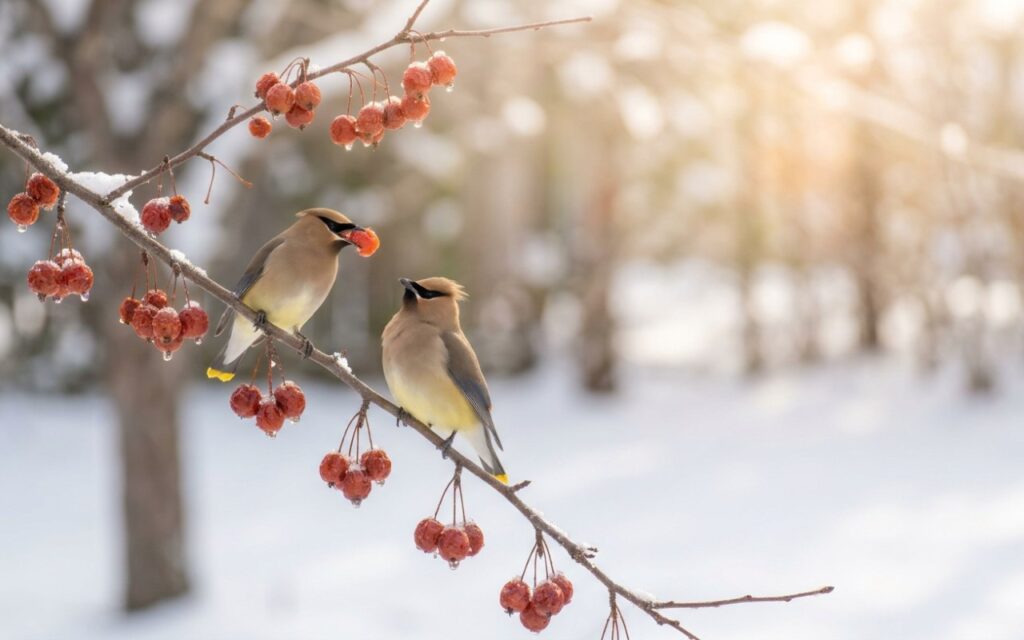
Yes, backyard birds can genuinely become intoxicated by eating fermented berries, most often in late winter and early spring when repeated freeze-thaw cycles convert fruit sugars into ethanol. Fruit-eating species such as Cedar Waxwings, Bohemian Waxwings, and American Robins are most affected because they gorge rapidly on overripe crabapples, hawthorns, and mountain ash berries before their livers can metabolize the alcohol.
Every late winter, wildlife rehabilitators receive calls about flocks of waxwings or robins stumbling across snowy lawns, swaying on low branches, or flying erratically into patio doors. While it looks alarming, this seasonal behavior is a well-documented biological phenomenon caused by wild yeast fermentation inside persistent winter fruit.
Understanding how fruit ferments on the branch, which species are most susceptible, and how to safely protect an intoxicated bird from predators and windows helps you respond properly when it happens in your yard.
Quick-Glance Summary: Birds & Fermented Winter Berries
- Yes, It Is Real: Overripe berries clinging to trees through winter undergo natural fermentation during warm afternoon thaws, producing ethanol (alcohol).
- Most Affected Species: Cedar Waxwings, Bohemian Waxwings, American Robins, and Pine Grosbeaks, especially immature first-winter birds that gorge without restraint.
- Peak Season: Late winter through early spring (February to April), when daytime sun warms frozen fruit above 40°F (4°C) and activates wild yeasts.
- Common Culprit Trees: Persistent flowering crabapples, mountain ash (rowan), hawthorn, winterberry holly, and pyracantha (firethorn).
- How to Help Safely: Keep pets indoors, close blinds on nearby windows, and if a bird is helpless on the ground in freezing cold or near predators, place it gently inside a ventilated, dark cardboard box in a quiet, cool room for 2 to 4 hours until it recovers.
The Science: How Winter Berries Ferment on the Branch
Persistent winter berries do not rot right away in autumn because cold temperatures preserve their skins and high sugar concentrations act as natural antifreeze. However, two seasonal processes turn those berries alcoholic by late winter:
- Freeze-Thaw Cell Rupture: Repeated winter freezing and thawing bursts microscopic cell walls inside the fruit pulp, releasing concentrated fruit sugars and juice.
- Wild Yeast Fermentation: Naturally occurring yeasts (Saccharomyces and wild airborne strains) living on berry skins consume those exposed sugars whenever midday sun warms the fruit above freezing, producing ethanol and carbon dioxide inside the intact berry skin.
Because a hungry flock of waxwings can strip hundreds of berries off a single crabapple tree in minutes, individual birds often ingest a high dose of ethanol relative to their tiny body weight (an adult Cedar Waxwing weighs only 1.1 ounces / 32 grams).
Why Waxwings, Robins, and Juvenile Birds Are Most Affected
According to wildlife veterinary reports highlighted by the National Audubon Society’s guide to intoxicated birds and the Missouri Department of Conservation, anatomy and feeding habits determine which backyard species get impaired:
- Cedar & Bohemian Waxwings (Esophageal Fermentation & Rapid Gorging): Waxwings possess an unusually large liver (roughly 5 percent of their total body mass) and produce high levels of alcohol dehydrogenase (ADH), an enzyme that breaks down ethanol quickly. However, because waxwings lack a true crop and store swallowed whole berries inside an expandable esophagus, berries continue fermenting internally while competitive flocks gorge faster than even their oversized livers can clear the alcohol.
- Immature First-Winter Birds (Higher Vulnerability): Wildlife pathology studies note that juvenile waxwings and young robins suffer higher intoxication rates and mortality than adults during berry-fermentation events, both because their liver enzyme systems are less conditioned to clear ethanol and because they lack learned avoidance of over-fermented fruit.
- American Robins & Thrushes (High Risk): Late-winter flocks of robins binge on softened crabapples and hawthorns before earthworms thaw, leading to temporary loss of coordination, drooping wings, and unsteadiness.
- Seed-Eating Birds (Very Low Risk): Northern Cardinals, chickadees, and finches crack open seeds rather than swallowing whole fermented berries, so they rarely experience ethanol intoxication.
Signs a Bird Is Intoxicated vs. Injured or Sick
Because ethanol intoxication can mimic window-strike trauma or neurological illness, observe the bird carefully from a distance before intervening:
| Condition | Visible Symptoms | Context Clues | Best Action |
|---|---|---|---|
| Fermented Berry Intoxication | Swaying on perches, stumbling when hopping, fluttering weakly, alert eyes | Multiple waxwings or robins nearby feeding on overripe crabapples or berries | Protect from cats and windows; allow 2 to 4 hours to sober up |
| Window Strike Concussion | Fluffed motionless posture, closed eyes, tilted head, blood at beak/nostrils | Found directly beneath a reflective glass window or sliding door | Place in a dark ventilated box and contact a licensed wildlife rehabilitator |
| Avian Disease (e.g., Conjunctivitis / Salmonellosis) | Swollen crusty eyes, matted head feathers, lethargy lasting all day | Often seen near crowded seed feeders rather than berry trees | Sanitize feeders with a 1:9 bleach-to-water solution and contact a rehabilitator |
How to Safely Help a “Drunk” Backyard Bird
Intoxication itself rarely harms a bird directly; secondary accidents, such as flying into glass windows, falling into snowbanks, or getting caught by outdoor cats and hawks while impaired, are the real dangers. Follow these four steps if you spot impaired birds in your yard:
- 1. Bring Pets Inside Immediately: Keep dogs and outdoor cats indoors until the flock finishes feeding and recovers coordination.
- 2. Cover Nearby Windows: Close blinds, draw curtains, or place temporary exterior decals on glass windows facing fruiting crabapple or mountain ash trees so disoriented birds do not collide with reflections.
- 3. Use a “Sober-Up” Box Only If Exposed to Danger: If a bird is stumbling helplessly on open ground in sub-freezing weather or near predators, gently scoop it up using a soft towel and place it inside a small, unlined cardboard box with air holes (never put water bowls inside, as an impaired bird can drown). Keep the box in a quiet, dim, predator-free space (such as an unheated mudroom or garage above 50°F / 10°C) for 2 to 4 hours, then release it outdoors once you hear active fluttering inside.
- 4. Never Force Food or Water: Do not drip water into an intoxicated bird’s beak, as impaired swallowing reflexes can cause fatal aspiration into the lungs.
Frequently Asked Questions
Can birds die from eating fermented berries?
Yes, although death is almost always caused by secondary trauma rather than alcohol poisoning itself. Wildlife veterinary pathology reports, including a 2012 Journal of Ornithology study by Kinde et al., have documented Cedar Waxwings fatally injured after colliding with windows, plexiglass, and fences while flying under the influence of ethanol, as well as rare cases of liver rupture after gorging heavily on fermented berries.
How long does it take for a bird to sober up from fermented berries?
Thanks to high levels of alcohol-metabolizing liver enzymes, most songbirds clear the ethanol and regain normal flight coordination within 2 to 4 hours.
Should I cut down crabapple or berry trees to stop birds from getting drunk?
No. Persistent winter berries are an essential, life-saving calorie source for native birds during harsh weather, and fermentation only occurs during brief late-winter thaw windows. Adding bird-safe window decals or hanging exterior paracord strips in front of windows near fruiting trees protects birds year-round without removing vital wildlife habitat.