
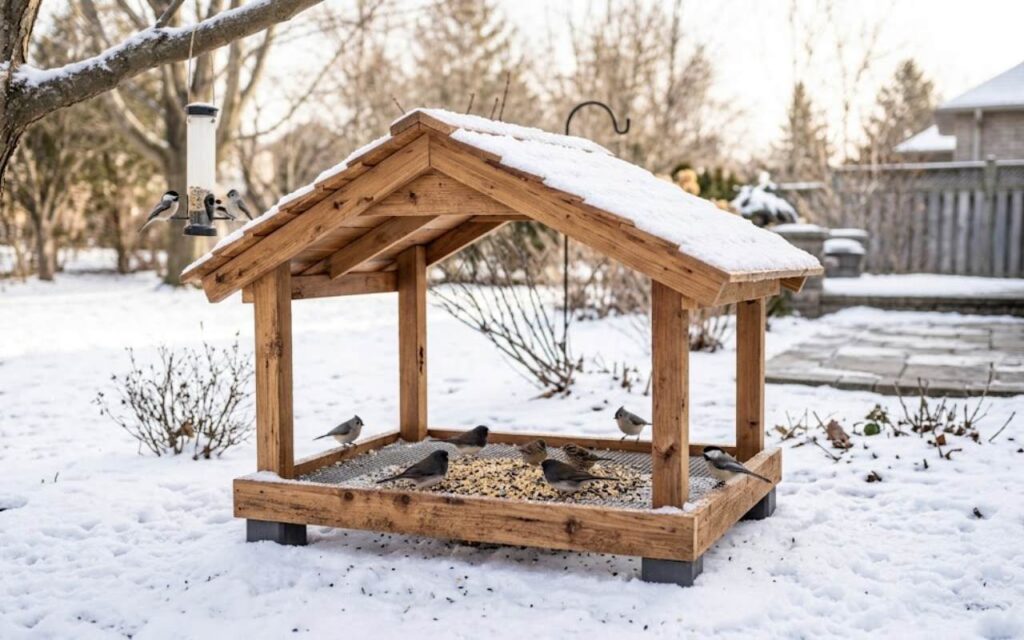
Building a dedicated weather-proof ground feeding station requires an understanding of how native ground-foraging birds interact with their immediate physical environment. Dark-eyed juncos, fox sparrows, and white-throated sparrows naturally forage by bilateral scratching, kicking leaf litter backward to uncover hidden fallen seeds.
Elevating feed into traditional hanging tubes disrupts this instinctive behavior, yet simply scattering grain across bare soil exposes wildlife to fatal pathogens and damp conditions. A successful station must mimic the ground plane while defending seeds from lateral rain, heavy snow drifts, and saturated soil moisture.
By integrating durable hardware mesh, angled runoff covers, and strategic yard placement, you provide a stable cold-weather refuge for native sparrows throughout harsh winter months.
Microhabitat Selection and Predator Clearance Geometry
Ground-feeding birds are uniquely vulnerable to ambush by neighborhood cats and raptors like sharp-shinned hawks. Setting a platform directly beside dense, low-growing shrubs gives outdoor felines a concealed stalking lane within striking distance.
Conversely, placing a feeder in the middle of a barren lawn leaves small birds exposed to aerial predators without an escape route. The ideal station placement balances cover with an open line of sight.
Place the structure roughly ten to fifteen feet away from brush piles or tree canopies. This distance provides juncos with a fast flight corridor to dive into shelter while preventing ground predators from executing a leap without detection.
Window placement geometry also plays a vital role in preventing deadly impacts. Backyard birds flushed from the ground by sudden movements can easily collide with reflective home glass. Align the ground setup within three feet of your home windows, or shift it farther than thirty feet away to comply with established Audubon safety guidelines.
- Ten to fifteen feet of clearance from dense evergreen cover balances immediate predator escape paths with feline sightline safety.
- Zero to three feet of distance from house glass prevents high-velocity collisions if feeding birds flush suddenly.
- Greater than thirty feet of spacing gives panicked birds enough visual runway to bank away from building surfaces.
- A south or southeast exposure protects the feeding floor from prevailing northwest winter winds and driving sleet.
Hardware Cloth Drainage Floors and Moisture Deflection
The primary point of failure for wooden ground trays is moisture retention. Solid plywood bases trap rain runoff and melted snow, turning seed mixtures into a cold, sodden sludge within hours. This standing water accelerates bacterial decomposition and rots traditional lumber platforms from the inside out.
Replacing solid wood floors with framed steel wire mesh creates instant bottom drainage and high airflow. A floor lined with 0.25-inch galvanized hardware cloth allows rain to pass directly down to the earth while retaining small grains like millet.
Raising the frame two to four inches off the ground using composite rot-proof risers keeps the wire from touching damp dirt or absorbing soil frost. Overhead protection requires a broad, sloped shield that deflects falling precipitation well past the edges of the base tray.
Standard eighteen-inch polycarbonate domes or slanted cedar roofs provide overhead shelter, but they must feature low side clearance. Native sparrows prefer low, open entries that deter larger bullies like blue jays and crows from monopolizing the feeding deck.
- Frame dimensions of eighteen by twenty-four inches constructed from western red cedar or rot-resistant composite decking board.
- A 0.25-inch galvanized steel hardware cloth floor stapled with stainless steel fasteners along the perimeter.
- Four-inch composite corner footers to elevate the wire base completely above pooling mud and ground freeze.
- A steep polycarbonate or cedar awning angled at a minimum twenty-degree pitch to shed snow load away from the feeding floor.
Low-Profile Baffles and Rodent Exclusion Architecture
Ground stations naturally attract non-target scavengers like deer mice, brown rats, and eastern gray squirrels. If a ground platform is left unsecured, nocturnal rodents quickly establish scent trails and contaminate the food with urine and droppings.
Overcoming this problem requires physical barriers rather than dangerous chemical repellents or unverified ultrasonic gadgets. One community-tested yard hack involves building an exclusion cage surrounding the platform using 1.5-inch vinyl-coated poultry wire.
This grid size allows sleek-bodied sparrows and juncos to hop freely into the feeding area while blocking adult squirrels, raccoons, and domestic cats. The cage should fit like a detachable lid over the drainage tray to facilitate quick morning refills.
For open ground stations, nocturnal rodent access must be cut off completely by removing the seed tray at dusk. Placing the feeding tray inside a secure, locking metal bin each evening breaks rodent feeding habits permanently.
Restricting total daytime food volume to what the flock can consume before sunset ensures no residual grain remains on the wire floor overnight.
- An external excluder enclosure made from 1.5-inch wire mesh to bar squirrels while permitting small songbirds easy entry.
- A fully removable interior tray system for rapid indoor storage during wet night freezes.
- Smooth aluminum edge flashing wrapped around wooden corners to eliminate gnawing grip surfaces for mice.
- Daily ration portioning calibrated to bird activity, ensuring complete food consumption by late afternoon.
Seed Chemistry and Aflatoxin Mitigation in Damp Cold
The energetic demands of winter thermoregulation require juncos and sparrows to consume energy-dense grains packed with raw lipids. Dark-eyed juncos thrive on white proso millet and finely cracked corn, which provide easily digestible carbohydrates to fuel nocturnal shivering.
White-throated sparrows prefer high-oil black oil sunflower kernels and safflower, which offer the dense fats necessary to endure sub-freezing nights. Improper seed management in wet conditions introduces fatal hazards to the flock.
When cracked corn or milo sits in sustained moisture, it becomes an ideal breeding substrate for the fungus Aspergillus flavus. This mold produces potent aflatoxins that destroy avian liver function, leading to silent, severe backyard mortality events.
Never mix grains with artificial anti-clumping powders, and avoid applying glycerin to trays as a freeze-prevention tactic.
Glycerin coats and mats avian feathers, permanently destroying downy insulating structures and causing rapid hypothermia in freezing rains. Fresh, high-grade seed placed in modest batches remains the safest way to deliver clean calories.
- White proso millet serves as the primary dietary staple for dark-eyed juncos, towhees, and american tree sparrows.
- Black oil sunflower chips supply dense plant fats without creating discarded hull debris that traps ground moisture.
- Safflower seed provides a bitter outer hull that naturally discourages persistent house sparrows and common grackles.
- Coarse cracked corn must be dispensed sparingly and discarded immediately after heavy downpours to prevent aflatoxin development.
Maintenance Protocols and Sub-Freezing Sanitation Cycles
A permanent ground feeding station concentrates wild birds into an unnaturally tight space, drastically raising the risk of horizontal disease transmission. Avian conjunctivitis, salmonellosis, and trichomonosis spread readily through communal platforms contaminated with accumulated feces.
A strict sanitation protocol prevents your yard station from transforming into an ecological trap. Cleaning schedules must adjust to the temperature and precipitation of the winter season.
The wire drainage floor should be swept clear of seed fragments and droppings daily using a stiff-bristled steel brush. Weekly deep cleaning requires thoroughly soaking the platform in a standard 1:9 bleach-to-water dilution for ten minutes to neutralize fungal spores and bacterial colonies.
Avoid pouring boiling water over clear polycarbonate roofs or plexiglass side panels. Boiling water causes immediate thermal shock, warping rigid plastic components and clouding the protective transparent shields. Rinse the sanitized parts with clean tap water, and let the entire assembly dry thoroughly before refilling it with dry, room-temperature seed.
- A stiff wire deck brush to dislodge stubborn fecal matter and wet seed residues each morning.
- A weekly ten-minute immersion wash utilizing a 1:9 household bleach dilution for complete sterilization.
- Thorough air-drying cycles before refilling, because damp mesh causes dry seed to freeze into solid blocks.
- Regular rake-outs of the soil footprint below the elevated mesh frame, covering wet droppings with clean playground sand.