
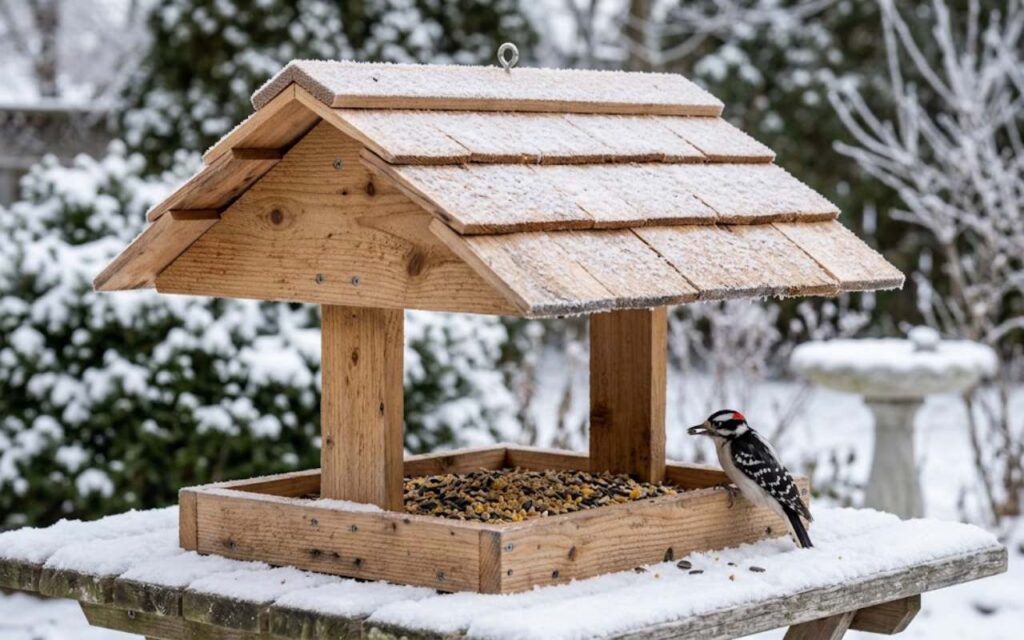
Building a durable covered platform feeder is one of the most effective ways to sustain backyard birds through severe winter weather without losing expensive feed to rot. Standard open trays quickly transform high-lipid seeds into sodden, frozen blocks during sudden snowstorms or freezing rain events.
By integrating thoughtful architectural geometry and moisture-defying materials, you create an open, fly-through feeding station that protects seed integrity while accommodating ground-foraging native species. Backyard hobbyists and field ornithologists consistently report that elevated, open-concept feeding designs reduce avian anxiety while keeping bulk rations clean and dry.
Structural Geometry and Roof Overhang Dimensions for Wind-Driven Precipitation
The primary engineering failure seen across commercial platform designs is an undersized roof that allows lateral winter precipitation to saturate the feeding deck. Wind-driven snow and driving rain rarely fall straight down; they enter feeder trays at shallow angles, instantly caking cracked corn and sunflower hearts.
To counter wind angles, the protective canopy should feature a minimum pitch of 30 degrees and extend at least 4 to 6 inches beyond the outer perimeter of the base tray on all four sides. A low-profile roof placed too close to the floor restricts feeder access for mid-sized species such as Northern Cardinals and Blue Jays, while a canopy mounted too high permits drifting squalls to coat the tray floor.
The sweet spot across specialized woodworker setups sits between 8 and 10 inches of vertical clearance between the bottom screen and the lowest point of the roof eave. Incorporating side gable angles directs runoff cleanly away from the access perches, eliminating water drip lines along the edge.
- Maintain an internal tray dimension of 14 inches by 18 inches for adequate flock dispersion.
- Cut roof rafters to provide a 4-inch minimum overhang past the feeding box frame.
- Allow 9 inches of vertical headroom between the tray deck and the roof beam.
- Secure roof apex joints with exterior silicone sealant to stop micro-seepage along the ridge.
These proportions prevent overcrowding and reduce physical squabbling among larger birds, which can inadvertently fling dry seed into the damp snow below.
Perforated Hardware Cloth Flooring and Capillary Drainage Solutions
Solid wood floors are disastrous for winter feeding stations because they trap pooling meltwater and freeze the entire seed layer into solid ice. The most resilient flooring material is 0.25-inch galvanized steel hardware cloth or powder-coated aluminum screen, which allows moisture to drain rapidly while air circulates from below.
If you run smaller feeds like nyjer or cracked millet, an underlying layer of fine window screening or perforated aluminum sheeting prevents small seeds from slipping through the wire gaps. Capillary action often causes water to cling to the bottom of wooden support rails, channeling moisture back inward toward the dry seed mass.
To stop this moisture migration, builders bevel the bottom interior edges of the wooden frame inward at a 45-degree angle beneath the screen. This creates a clean drip break that forces gravity to pull water directly downward away from the feeder frame.
- Fasten 0.25-inch galvanized hardware cloth to the underside of the outer frame using stainless steel staples.
- Route a recessed shelf or dado groove into the inner walls to drop the screen floor directly into place.
- Reinforce the screen center with a removable cedar crossbar to prevent floor sagging under heavy winter loads.
- Ensure the screen sits at least 0.5 inches below the top edge of the wooden retaining lip.
A properly tensioned wire base keeps the grain pile completely suspended above standing water, letting freezing breezes desiccate moisture naturally rather than turning the base into sludge.
Material Selection, Non-Toxic Preservatives, and Thermal Insulation
Using the wrong lumber or chemical sealants introduces structural warping and hazardous toxicity into the backyard feeding ecosystem. Western red cedar, eastern white pine, and native cypress are superior wood selections because their natural resins resist rot, fungal expansion, and insect degradation without requiring synthetic chemical pressure treatments.
Plywood and low-grade particle boards degrade quickly under continuous freeze-thaw cycles, delaminating within a single season of heavy snow exposure. Transparent polycarbonate plastic roofs are popular for light penetration, but they routinely generate internal condensation droplets on cold mornings that drip straight onto the seed pile.
Solid wooden roofing boards insulated with an exterior layer of cedar shingles or painted aluminum flashing provide superior thermal resistance, eliminating under-roof dew formation. If you choose to finish the exterior wood surfaces, use pure cold-pressed raw linseed oil or non-toxic exterior milk paint, avoiding any petroleum-based sealers on interior tray surfaces.
- Construct the primary frame and posts using 1-inch thick rough-sawn cedar or cypress boards.
- Fasten all structural points using grade 304 or 316 stainless steel screws rather than standard zinc nails.
- Avoid exterior chemical finishes on any internal surface where avian bills make physical contact.
- Install a wooden ridge cap to insulate the roof junction from rapid thermal cycling.
Selecting dense, moisture-stable timber eliminates the internal splitting that lets water enter frame joints, guaranteeing a durable platform that lasts through years of sub-zero temperatures.
Seed Physiology, Aspergillus Aflatoxins, and Cold-Weather Rations
Persistent dampness combined with variable winter temperatures transforms uneaten seed into an ideal incubator for fatal fungal pathogens. Aspergillus flavus is a dangerous environmental mold that proliferates rapidly in wet agricultural grains, generating toxic metabolic byproducts known as aflatoxins that cause acute liver damage in wild birds.
Field studies confirm that birds cannot detect low levels of fungal toxins visually, making structural moisture exclusion your best defensive barrier against catastrophic local disease spread. Seed choice also dictates how quickly rations spoil when exposed to damp atmospheric conditions.
Hull-less seeds such as sunflower chips absorb ambient humidity like a sponge, while intact black oil sunflower seeds feature natural waxy shells that provide short-term lipid protection against freezing surface slush. Safflower presents a resilient exterior that resists rapid water absorption, whereas fine nyjer seeds will quickly mold into dense mats if bottom tray aeration stalls.
- Prioritize whole black oil sunflower seeds during high-humidity winter cycles to leverage their protective outer husks.
- Offer safflower seeds in the covered tray to satisfy cardinals while naturally deterring invasive squirrels and common grackles.
- Discard any grain clumps showing visible white webbing, dark discoloration, or sour fermentation odors immediately.
- Scatter no more food than your visiting flock can completely consume within a 48-hour window.
Maintaining dry seed stores protects the high-calorie fats that native songbirds require to power their nocturnal shivering thermogenesis during extreme cold snaps.
Sanitation Protocols, Pole Mounting, and Predator Baffle Integration
Even a sheltered feeder gathers fallen husk dust, dried mud, and fecal matter over weeks of intense foraging traffic. Weekly maintenance requires scraping the screen bed with a stiff-bristled wire brush to dislodge compacted organic debris and reopen the mesh apertures.
For monthly deep cleans, soak the entire removable tray unit in a standard 1:9 bleach-to-water dilution for 10 minutes before rinsing thoroughly with cold water; boiling water should never be used on assemblies with plastic components, as high heat warps joints and cracks non-wood parts.
Strategic station placement directly influences both avian mortality and predator access. Align with Audubon guidelines by mounting the station either within 3 feet of your windows to eliminate fatal high-speed flight collisions, or place it further than 30 feet away to give startled flocks sufficient maneuvering space.
Mount the covered unit atop a rigid 4×4 cedar post fitted with an exterior metal stovepipe baffle at least 4.5 feet off the ground to exclude raccoons, mice, and squirrels.
- Mount the base of the platform feeder 5 feet above the ground to deter climbing mammalian predators.
- Maintain a clear 10-foot radial clearance from overhanging tree branches to neutralize jumping trajectories.
- Install a smooth metal stovepipe or torpedo baffle with a minimum 8-inch diameter beneath the tray platform.
- Allow the cleaned tray components to air-dry fully in the sun before reloading fresh winter grain.
Combining reliable structural shelter with proper spatial positioning gives wintering birds a safe haven where lipid-rich food remains clean, dry, and easily accessible throughout the harshest months of the year.