
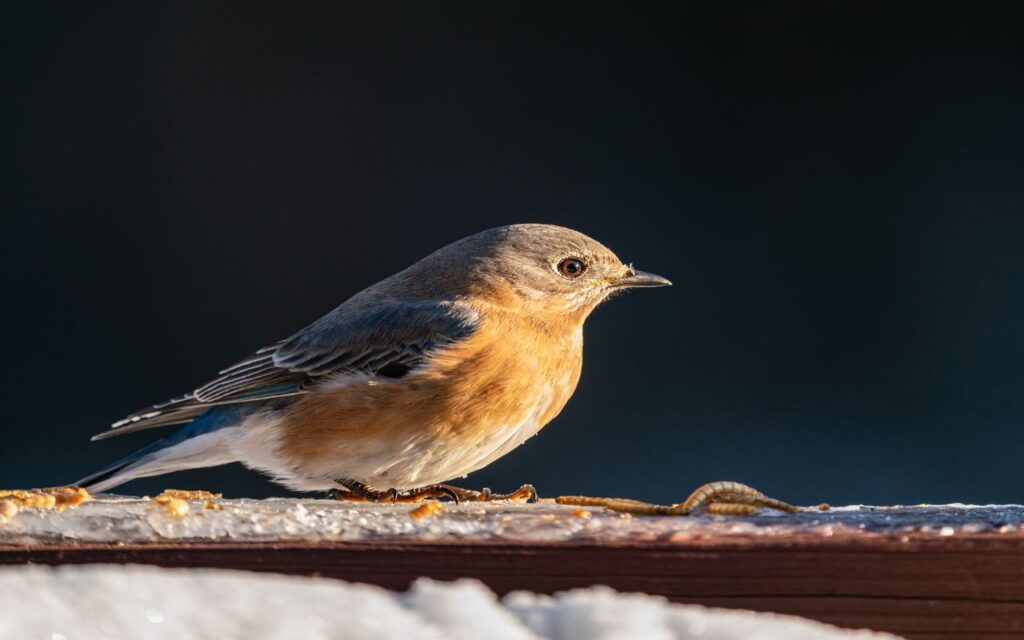
Constructing a dedicated isolated mealworm feeding station provides vital caloric support for overwintering bluebirds facing severe sub-freezing conditions. When winter weather strips away wild fruit and dormant terrestrial insects, bluebirds rely heavily on supplementary insectivorous offerings to maintain their core body temperatures through long nights.
Standard open platform feeders, however, routinely fail because aggressive non-native competitors and moisture quickly ruin the food supply. Setting up an isolated, species-restricted station ensures these delicate insectivores access high-energy fat sources without being driven away by larger flocking birds.
Starling Exclusion Geometry and Entrance Hole Dimensions
The primary failure point of any winter mealworm setup is rapid infiltration by European Starlings. Starlings lack the specialized perching agility of bluebirds, but they will clear out an exposed cup of mealworms in minutes. To stop them, an isolated station must employ physical exclusion barriers calibrated to exact anatomical dimensions.
A rigid wire mesh cage surrounding the interior feeding dish acts as the first line of defense. The physical clearance of these excluder ports must measure exactly 1.5 inches in diameter for Eastern Bluebirds, or 1.56 inches for slightly larger Mountain and Western Bluebirds. Starlings possess wider shoulder spans and deeper keels, making it mechanically impossible for them to compress their bodies through these dimensions.
- Outer excluder wire spacing: 1.5-inch by 1.5-inch vinyl-coated galvanized wire mesh
- Cedar entry holes: 1.5-inch smooth-bored circular portals drilled into opposing end panels
- Internal feeding cup clearance: minimum 2.5 inches of space between the external cage and the inner dish
- Perch specifications: zero exterior perches to prevent starlings from gaining leverage
Eliminating all external perches prevents starlings and Common Grackles from resting on the exterior frame to crane their necks inward. Bluebirds cling effortlessly to vertical wire or land directly inside an unperched entry hole, exploiting their lightweight foot structure.
Thermal Freezing Mitigation and Moisture Condensation Management
Live mealworms consist of approximately 60 percent water, meaning they freeze solid and become unpalatable when ambient temperatures dip below 32 degrees Fahrenheit. Backyard hobbyists regularly report that live larvae turn into dark, desiccated sticks within hours of morning exposure during severe cold snaps. Protecting your food supply from moisture condensation and direct frost requires structural climate shielding.
A wide, clear polycarbonate weather dome spanning at least 14 to 18 inches across the top deflects freezing rain, sleet, and drifting snow. If moisture enters the feed dish, dried mealworms absorb ambient water rapidly, initiating dangerous bacterial growth and fungal rot. A glazed ceramic or smooth glass ramekin works best as an interior mealworm vessel, retaining passive thermal mass longer than thin plastic cups.
- Weather dome diameter: 14 to 18 inches mounted centrally above the feeder roof
- Drainage requirements: 0.125-inch weep holes drilled into the floor corners of the feeding box
- Feeding dish material: thick-walled ceramic or non-porous glass with a vertical 2-inch lip
- Substrate additions: a thin layer of dry wheat bran to absorb condensation around live larvae
For extreme winter climates where temperatures remain deep in the single digits, forum mechanics often implement heated roost concepts. Placing an insulated, food-safe silicone heating mat beneath the ceramic dish keeps live larvae active above freezing without melting the feeder casing.
Live Larvae Versus Dried Lipids and Nutritional Thermodynamics
Overwintering bluebirds burn substantial lipid reserves to shiver their pectoral muscles continuously through freezing nights. Choosing between live and dried mealworms directly impacts the net caloric gain the bird receives after expending foraging energy. Live larvae offer natural movement that immediately triggers a hunting response, yet they possess lower lipid densities per gram compared to processed options.
Dried mealworms provide dense macronutrients, containing roughly 50 percent crude protein and nearly 30 percent crude fat. However, dried insects lack moisture, forcing bluebirds to seek out liquid water to process the dense protein load in freezing conditions. Providing dried worms without a nearby heated water source can place severe metabolic dehydration stress on wild birds during winter freezes.
- Live mealworm lipid content: approximately 13 to 15 percent by total weight
- Dried mealworm lipid content: approximately 28 to 32 percent concentrated fat
- Calcium-to-phosphorus ratio correction: dust dry mealworms with food-grade calcium carbonate
- Alternative cold-weather mix-ins: pure rendered beef tallow flakes and raw hulled sunflower chips
Field studies show that high phosphorus levels in pure mealworm diets can leach vital calcium from avian bone structures over long winters. Dusting your mealworms with calcium powder or blending them with small rendered suet pellets creates a balanced nutritional profile that stabilizes avian bone density and muscle health.
Hardware Baffles and Terrestrial Predator Access Deterrence
Isolating a feeding station requires mounting it in a location free from predatory ambushes and structural bridge paths. Overwintering bluebirds are vulnerable to domestic cats, raccoons, and squirrels when focused on entering enclosed feeding boxes. Suspending the feeder from a branch often fails, as climbing rodents chew through wooden frames and destabilize the balance of the unit.
The most secure setup utilizes a dedicated, smooth metal mounting conduit placed well away from jumping platforms. In accordance with standard window-strike mitigation guidelines, place the pole either within 3 feet of your home or greater than 30 feet away from reflective exterior glass. This positioning prevents disoriented bluebirds from colliding with glass windows if startled by a Cooper’s Hawk.
- Mounting pole diameter: 1-inch outer diameter rigid steel electrical conduit
- Torpedo baffle clearance: 14-inch to 16-inch wide cylinder mounted 4.5 feet off the ground
- Feeder box height: minimum 5 feet above the surrounding ground level
- Horizontal launch clearance: minimum 10 feet of open space from nearby tree limbs or fences
A heavy-duty steel stovepipe or torpedo-style baffle prevents terrestrial predators from shimmying up the metal pole. Smooth powder-coated metal prevents squirrel claws from finding purchase, keeping the mealworm station secure for target birds.
Pathogen Control Protocols and Feeder Sanitation Routines
Enclosed feeding stations experience concentrated foot traffic, which concentrates fecal matter and saliva within a confined footprint. Damp winter environments combined with organic insect debris accelerate the growth of lethal fungal pathogens. The most persistent hazard in winter feeding stations is Aspergillus flavus, a mold that produces dangerous aflatoxins in wet grain or insect remnants.
Routine chemical sanitation must be practiced weekly to keep overwintering bluebirds safe from respiratory mycosis and avian poxviruses. Remove the inner feeding cup entirely and scrub the enclosure with a stiff wire brush to clear dropped insect exoskeletons. Never use boiling water directly on cold acrylic panels, as the sudden thermal shock causes immediate spider-web cracking and material structural failure.
- Routine disinfectant solution: 1 part household chlorine bleach mixed with 9 parts cool tap water
- Deep soak duration: submerge the glass or ceramic food cup for a full 10 minutes
- Rinse protocol: flush all equipment thoroughly with clean running water until bleach odors fully dissipate
- Drying mandate: air-dry all components completely before introducing fresh dry feed or live larvae
Never use synthetic chemical coatings, glycerin, or petroleum lubricants on feeder perches or entrance holes to deter pests. Oily substances easily transfer onto avian breast feathers, destroying the interlocking barbule structure responsible for mechanical waterproofing. Once feather integrity is compromised, wild bluebirds lose their insulation layer and inevitably succumb to rapid hypothermia during wet winter nights.