
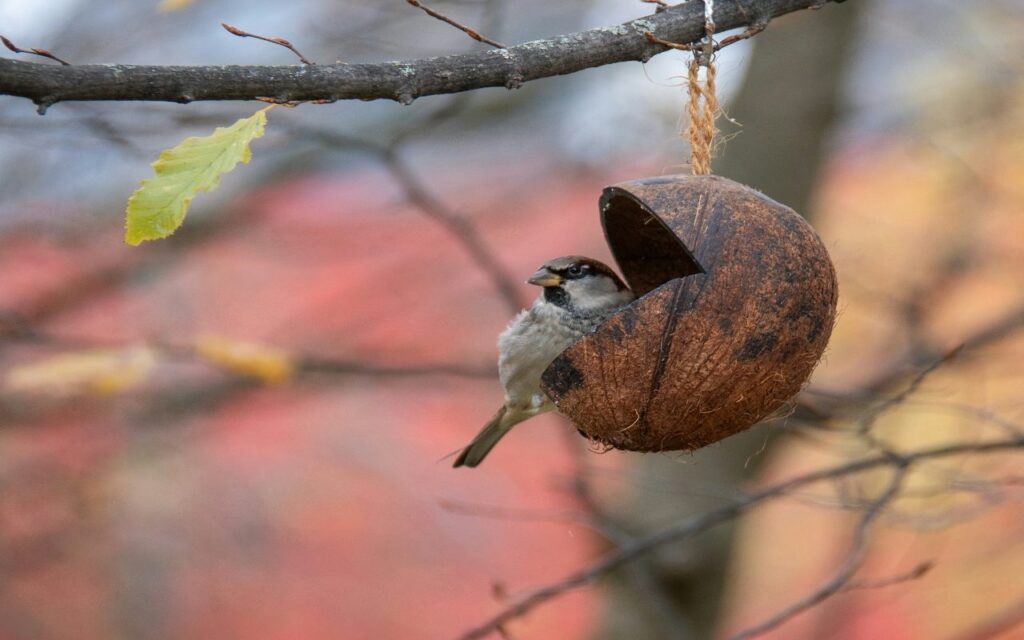
Constructing DIY coconut bird feeders for winter provides an economical, biodegradable way to supply backyard birds with high-calorie lipids during severe cold snaps. Backyard birders frequently turn to discarded coconut halves as durable, weatherproof vessels that resist biting winds far better than thin plastic alternatives.
When temperatures plunge below freezing, resident songbirds require rapid access to dense energy reserves to fuel nocturnal shivering and maintain metabolic core warmth. Utilizing organic shells provides natural texture for gripping claws while keeping synthetic microplastics out of the garden ecosystem.
Lipid Selection and Tallow Ratios for Sub-Freezing Thermal Demands
A common failure in homemade winter feed blocks is the use of improper binding fats that crumble into dust or turn rancid during temperature swings. Field ornithologists recommend pure rendered beef suet, specifically kidney tallow, because its high melting point between 104°F and 113°F ensures structural stability during unexpected daytime sun exposure.
In contrast, store-bought vegetable shortening contains high water content and hydrogenated oils that soften excessively and grease bird feathers. Feathers smeared with soft vegetable fats lose their microscopic interlocking barbule structure, compromising their thermal insulation and exposing birds to fatal hypothermia.
Pure suet sets firmly inside the coconut cavity, offering a dense lipid matrix that birds can chisel away safely with their bills. Forum hobbyists frequently report that adding dry ingredients in exact volumetric balances prevents the fat block from fracturing when struck by woodpecker beaks.
- Two parts melted pure beef tallow or rendered suet
- Two parts coarse black oil sunflower seeds or cracked sunflower chips
- One part coarse yellow cornmeal or stone-ground oatmeal
- One-half part chopped raw unsalted peanuts or tree nuts
- One-half part dried mealworms or dried black soldier fly larvae
Stir the dry components into the warm tallow only after it has cooled down to roughly 115°F to ensure suspended ingredients do not sink straight to the bottom of the shell. Pour the mixture evenly into the prepared coconut halves and chill them in a refrigerator for at least three hours until the suet solidifies completely.
Shell Hull Preparation, Cavity Desiccation, and Mold Prevention
Raw coconuts retain substantial internal moisture within their fibrous endocarp walls, creating a breeding ground for fungal spores if stuffed immediately with food. After cracking the coconut into two equal halves, scrape away every trace of the white coconut meat using a sturdy spoon or curved woodworking gouge.
Leaving raw flesh behind invites opportunistic bacteria, which ferment rapidly beneath the suet layer and spoil the entire offering. Once cleared of white meat, the fibrous shells must undergo complete dehydration before receiving any seed or suet filling.
Backyard crafters often bake hollowed shells on a baking sheet at 200°F for roughly forty-five minutes to drive deep moisture out of the outer husk fibers. This dry heat treatment kills dormant surface fungal hyphae without warping or charring the tough, lignified shell structure.
Allow the shells to cool completely to ambient room temperature before pouring any warm fat mixtures into the cavity. Introducing warm suet into a hot shell creates condensation along the interior wood boundary, promoting hidden microbial blooms.
A thoroughly dried shell remains structurally sound across multiple seasons and can be washed, boiled, and refilled repeatedly.
Drainage Engineering and Aspergillus Flavin Contamination Risks
Standing water inside an upright coconut feeder is a catastrophic hazard during fluctuating winter weather. Snow melts during sunny afternoons and pools at the bottom of the hemispherical cup, creating a soggy sludge beneath the fat cake. This damp microclimate accelerates the growth of Aspergillus flavus, a toxic fungus that produces dangerous aflatoxins capable of causing acute liver failure in foraging songbirds.
Drilling adequate relief holes through the base of the shell is non-negotiable for any open-topped feeder design. Coconut endocarps are remarkably hard, so standard wood drill bits can slip or splinter the shell if applied with excessive force. Use a high-speed steel bit, starting with a small pilot hole before expanding the aperture to ensure clean, splinter-free drainage channels.
- One central 0.25-inch hole drilled directly through the lowest point of the shell bottom
- Three secondary 0.187-inch relief holes spaced evenly around the lower perimeter slope
- One small square of clean 0.25-inch galvanized hardware cloth placed internally over holes to prevent seed loss
- Zero artificial sealants, varnishes, or chemical waterproofing sprays applied to the wood surface
Inspect these drainage holes weekly during routine feeder monitoring, using a stiff wire to clear out any frozen slush or packed seed hulls. If a feeder smells sour or displays any powdery black, white, or green discoloration along the inner shell wall, discard the entire contents immediately. Sterilize the empty shell by soaking it in a standard one-to-nine household bleach-to-water dilution before refilling it with fresh food.
Suspension Hardware Integrity and Anti-Chew Rigging Tactics
Many birders experience the frustration of waking up to find their freshly filled coconut feeder knocked to the ground and emptied by nocturnal rodents. Squirrels, raccoons, and mice quickly gnaw through natural jute, cotton twine, and light nylon cords within minutes of discovering a high-calorie suet stash. Securing the shell requires durable, bite-proof hardware that withstands both animal teeth and sub-zero wind buffeting.
The most reliable suspension method involves drilling two opposing holes roughly a half-inch below the rim of the shell and anchoring a mechanical eye bolt system. Threading galvanized or stainless steel hardware through the shell distributes weight evenly and prevents stress cracking along natural coconut grain lines. Steel cable or light jack chain should always replace vulnerable fabric cords for winter deployments.
- Two 0.187-inch marine-grade stainless steel eye bolts fitted with matching exterior washers and locknuts
- One foot of galvanized steel safety chain or 1/16-inch braided steel aircraft cable
- Two quick-locking threaded carabiner links to facilitate easy detachment for cleaning and refilling
- One smooth 12-inch or 18-inch polycarbonate weather dome mounted directly above the shell assembly
A wide overhead baffle deflects driving snow, preventing the suet block from becoming iced over during freezing rain events. Suspending the coconut from an extended shepherd crook equipped with a smooth cylindrical squirrel baffle prevents climbing critters from reaching the assembly. This suspended setup allows small clinging species like chickadees, nuthatches, and downy woodpeckers to feed comfortably without structural failure.
Spatial Deployment Protocols and Window Strike Mitigation
Placement within the yard plays an enormous role in whether a feeder supports local wildlife or inadvertently creates a predation trap. Winter birds feeding on dense suet are hyper-focused on foraging, which lowers their situational awareness and leaves them vulnerable to ambush predators like domestic cats and Cooper’s hawks.
Position coconut feeders within five to six feet of dense brush, evergreen shrubs, or coniferous trees to provide immediate escape cover. Window strikes represent another massive source of avian mortality that peaks when supplemental feeding stations are positioned incorrectly.
To eliminate dangerous mid-flight collisions, adhere strictly to the classic placement safety distance guidelines established by ornithological researchers. Feeders should either sit within three feet of window glass or be moved farther than thirty feet away from the structure.
When a feeder hangs within three feet of a window, startled birds taking sudden flight lack the velocity needed to sustain fatal blunt-force trauma if they collide with the pane. Positioning feeders beyond thirty feet gives birds ample operational airspace to recognize glass reflections and alter their flight paths safely.
Pair your properly positioned coconut feeders with visible window decals to keep foraging winter flocks safe, nourished, and healthy through the harshest winter weather.